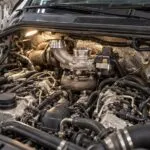
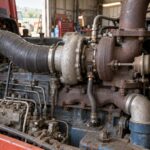
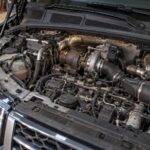
Welcome to the Holset Turbocharger Complete Model Guide, the reference PT Turbo built from more than 45 years of turning wrenches on diesel turbos. Holset (the turbocharger brand of Cummins, whose turbo business has been called Cummins Turbo Technologies since 2006) has powered everything from light-duty Ram pickups to Class 8 over-the-road trucks and industrial gensets. If you run diesel, you have almost certainly relied on a Holset unit at some point.
The naming can look like alphabet soup at first: HX, HY, HE, WH, followed by numbers and letter suffixes. Once you understand the logic, though, picking the right replacement gets a lot easier. This guide breaks down every major series, what the numbers mean, and how to choose between new and remanufactured units.
How Holset Model Numbers Actually Work
Holset model designations follow a consistent pattern once you learn to read them. The first two letters identify the series and general frame family. The digits that follow indicate the compressor wheel size and frame class.
For example, an HX35 uses a roughly 35-family compressor frame, while an HX40 steps up to a larger wheel and higher airflow. The higher the number, the bigger the turbo and the more air it can move.
Suffix letters carry critical meaning too. A “W” often denotes a wastegated housing, “VG” or “VE” indicates variable geometry, and “VGT” confirms a variable-geometry turbine. Getting the suffix wrong is the most common mistake we see when customers order replacements.
| Suffix | Meaning | Common Application |
|---|---|---|
| W | Wastegated turbine housing | HX35W, HY35W on 5.9L Cummins |
| VE / VG | Variable geometry, electronically actuated | HE341VE, HE351VE, HE400VG |
| No suffix | Fixed geometry, no wastegate | HX40, HX50 industrial units |
The HX Series: The Workhorse Line
The HX series is the backbone of Holset’s fixed-geometry lineup. These are durable, simple turbos found on medium-duty trucks, agricultural equipment, marine engines, and the legendary 5.9L Cummins.
The HX35 and HX40 are the most recognized models in the diesel performance world. The HX35W came factory on 1994 to 2002 Dodge Ram 2500 and 3500 trucks and remains a go-to platform for moderate power builds. If you own one of these trucks, our Ram 2500/3500 5.9L Cummins Turbocharger Guide covers the HX35, HY35, and HE351CW side by side.
- HX27 / HX30: Smaller frame, mid-range diesels, fast spool for lighter engines.
- HX35: ~54mm compressor, supports roughly 350 to 450 horsepower.
- HX40: ~60mm compressor, supports 450 to 600+ horsepower.
- HX50 / HX52 / HX55: Large-frame units for high-output and industrial use.
- HX60 / HX80 / HX82 / HX83: Big-bore units for Class 8 and heavy industrial engines.
Because the HX series is fixed geometry, most rely on either a wastegate or no boost control at all. That simplicity is exactly why fleet operators love them. Fewer moving parts means fewer failure points.
The HY Series: A Refined HX
The HY series sits close to the HX in frame size but with revised aerodynamics and often a wastegate tuned for emissions-era engines. The HY35W is the most familiar example, fitted to later 24-valve 5.9L Cummins Ram trucks with automatic transmissions and, in most listings, to the first common-rail trucks up to early 2004.
Compared to the earlier HX35W, the HY35W has a smaller turbine housing, which gives quicker response on the electronically controlled engines of that era. Both are wastegated. Owners frequently swap between the two, but the mounting and boost control differ, so verify before ordering.
Holset Turbocharger Complete Model Guide to the HE Series
The HE series is Holset’s newer line, and it is the most important one for modern diesels. It includes wastegated turbos (the HE351CW, HE200WG and HE400WG, for example) and Holset’s variable-geometry turbos. The variable ones use a nozzle ring that slides in the turbine housing to change exhaust flow geometry on the fly; the vanes on it do not pivot. If you want the engineering background, this overview of variable-geometry turbochargers explains the principle well.
Variable geometry lets one turbo behave like a small, fast-spooling unit at low RPM and a large, high-flow unit up top. That eliminates most turbo lag while meeting strict emissions targets. It also enables exhaust braking on many Cummins applications.
Common HE Models
- HE300VG / HE300VGT: Found on 6.7L Cummins in 2013+ Ram trucks.
- HE341VE: Early variable-geometry unit on medium-duty 5.9L Cummins ISB engines (not the Ram).
- HE351CW / HE351VE: The wastegated 5.9L Ram turbo (2004.5 to 2007) and the variable geometry 6.7L Ram turbo (2007.5 to 2012).
- HE400VG, HE451VE, HE561VE: Heavy-duty Cummins ISX applications.
- HE531V: Cummins ISM.
- HE531VE: Detroit Diesel Series 60 and PACCAR MX-13.
- HE561VE: Large-frame VGT for high-horsepower Class 8 engines.
The larger HE units power the biggest on-highway Cummins engines. If you run an ISX, our Cummins ISX Turbocharger Guide breaks down the HE400VG, HE451VE, and HE561VE differences in detail.
The trade-off with VGT units is complexity. The sliding nozzle, the electronic actuator and its position sensing all add potential failure points, and carbon buildup or a sticking actuator will trigger boost faults and derates.
The WH and Older Series
Before the HX and HE naming took over, Holset used the WH designation on many industrial and heavy-truck turbos. The H1C appeared on first-generation 5.9L Cummins engines from 1989 to 1993, and some 1994 engines carry a WH1C.
You will also see older H2 and H3 frame units on vintage Cummins big-cam engines. These are simple, rugged, and still rebuildable. If you have an antique or a restoration project, our turbo rebuild service can bring one of these back to spec rather than hunting for a discontinued casting.
Actuators: The Part That Fails First on VGT Units
On variable-geometry Holsets, the actuator does the hardest job. It constantly repositions the nozzle ring based on ECM commands, and heat cycling plus carbon buildup wear it out well before the CHRA itself fails.
Symptoms of a failing actuator include low boost, hesitation, limp mode, and stored codes for turbo actuator position. Before you condemn an entire turbo, test the actuator. Replacing it alone can save hundreds of dollars.
Not sure which actuator or turbo cross-references to your Holset application? Our team knows these platforms cold. Reach out through our contact page with your engine and part numbers.
New vs Remanufactured Holset Turbos
For most fleet and owner-operator budgets, a quality remanufactured Holset delivers the same performance as new at a significant savings. A properly rebuilt unit gets new bearings, seals, and a balanced rotating assembly, then is tested to OEM specs.
| Factor | New OEM Holset | Remanufactured |
|---|---|---|
| Price (HE351VE) | $2,936 to $5,167 (11 listings) at PT Turbo | $2,449 to $5,931 (13 listings) at PT Turbo |
| Warranty | OEM standard | Comparable when done right |
| Lead time | Often longer | Usually in stock |
Price ranges in this article are general estimates to help with budgeting, not PT Turbo quotes. Our current prices are on each product listing, and our rebuild prices are on the turbo rebuild price list.
The one place to be careful is core quality. A remanufactured turbo is only as good as the casting it started from and the shop that rebuilt it. Cracked housings, worn vane tracks, and sloppy balancing are what separate a bargain reman from one that comes back on warranty.
Buy from a rebuilder that tests every unit and backs it, and a reman Holset will run just as long as factory iron. For the vast majority of working trucks, that is the smart money.
Frequently Asked Questions
Who makes Holset turbochargers?
Holset turbochargers are now designed and manufactured by Cummins Turbo Technologies. The brand has built turbochargers since the 1950s.
What is the difference between the HX and HE Holset series?
The HX series is Holset’s traditional wastegate and fixed-geometry line, while the HE series is the newer line: it includes wastegated turbos such as the HE351CW and the variable geometry (VGT) turbos such as the HE351VE and HE300VG. The HE line is common on newer emissions-compliant diesel engines.
What vehicles use Holset turbochargers?
Holset turbos are used across a wide range of diesels, from light-duty Ram pickups to Class 8 over-the-road trucks and industrial generator sets. If you run diesel, you have likely relied on a Holset unit.
Need a Turbocharger?
PT Turbo has rebuilt and sold turbochargers since 1978. We stock remanufactured units for Cummins, Duramax, Power Stroke, Detroit Diesel, and more — backed by a 12-month unlimited mileage warranty and same-week shipping from San Bernardino, CA.
📞 (909) 824-1020 · 346 S I St. #3, San Bernardino, CA 92410 · [email protected]
More From PT Turbo
 Mercedes OM642 Turbocharger Guide: Sprinter, E350d, ML350 & GL350 Replacement
- Garrett T04B Turbocharger: Classic Garrett Design & Modern Fitment
- Land Rover TD4 2.0L Turbocharger Guide: Defender, Discovery Sport & Range Rover Evoque
- Audi 2.0L TDI Turbocharger Guide: A3, A4, A5 & Q3 Common Failures & Replacement