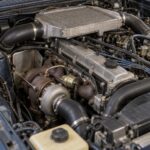
The Holset HE400VG turbocharger is the backbone of boost management on the Cummins ISX15, and when it acts up, the whole truck feels it. Sluggish throttle response, active regens that never finish, derate codes flashing on the dash, and fuel mileage falling off a cliff. If you run or wrench on ISX-powered Class 8 trucks, understanding how this variable geometry unit works, how it fails, and what your rebuild and replacement options are will save you thousands in downtime. This is the field guide we wish every ISX owner had before the tow bill showed up.
What the HE400VG Is and Where It Lives
The HE400VG is Holset’s variable geometry turbocharger built for the 15-liter Cummins ISX and later X15 platforms, primarily from the 2010 emissions era forward. It followed the HE551V, HE561VE and HE451VE of the earlier ISX generations. The “400” designates the frame size, and “VG” is Holset’s shorthand for variable geometry.
Instead of a wastegate, the HE400VG uses a sliding nozzle ring inside the turbine housing. An electric actuator, Holset’s Smart Actuator or a comparable electronic module, slides the nozzle to change the effective area of the turbine inlet. At low RPM the nozzle closes down to spool the turbo fast and drive exhaust gas recirculation flow. At high RPM it opens up to relieve backpressure and let the engine breathe. The ECM commands actuator position hundreds of times per minute based on load, boost demand, and exhaust brake requests.
That sliding nozzle is also what makes the HE400VG such an effective compression brake. When the ECM closes the nozzle on a downgrade, exhaust backpressure spikes and the engine holds the truck back hard. It is a genuine part of the ISX braking strategy, not an afterthought.
Key HE400VG Specifications
- Application: Cummins ISX15 / X15 (2010 and later emissions generations); fitment goes by part number
- Type: Single variable geometry turbocharger, sliding nozzle ring
- Actuation: Electronic Smart Actuator, CAN/PWM controlled
- Turbine housing: Integrated VG cartridge, non-serviceable nozzle ring as a standalone in most cases
- Braking: Doubles as VGT exhaust brake via nozzle closure
How the Variable Geometry System Actually Works
The mechanical heart of the HE400VG is the nozzle ring, a set of fixed vanes with a sliding shroud that moves axially to open or restrict the flow path into the turbine wheel. Soot, oil vapor, and heat cycling are the enemies here. Carbon builds up in the nozzle bore and on the slide mechanism, and the actuator that used to move the ring smoothly starts fighting resistance. That is where the trouble begins.
The electronic actuator reports its commanded position and its actual position back to the ECM. When the two do not agree, the ECM sets a fault, usually a VGT actuator or turbocharger position fault, and it will progressively derate the engine to protect it. Many mechanics chase the actuator when the real problem is a sticking nozzle ring, and just as many replace a perfectly good cartridge when the actuator or its calibration was the issue. Diagnosis order matters.
If you want a deeper walkthrough of VG operation on the smaller Cummins platform, the principles carry over directly. Our Cummins ISB 6.7L Turbocharger Guide breaks down variable geometry operation and common failure modes in detail.
Common HE400VG Failure Symptoms
The HE400VG rarely fails without warning. It tells you it is unhappy in stages. Catching it early is the difference between a cleaning or actuator swap and a full replacement plus a shop full of soot codes.
| Severity | Symptoms | Likely Cause |
|---|---|---|
| Early | Slight throttle lag, occasional VGT fault that clears, weak exhaust brake | Carbon starting to build in nozzle ring, actuator working harder |
| Moderate | Frequent regens, poor fuel economy, low boost codes, intermittent derate | Sticking nozzle ring, actuator calibration drift, position mismatch |
| Severe | Hard derate, no boost, no exhaust brake, whistling or grinding, blue smoke | Seized nozzle ring, failed actuator, worn bearings, shaft play, oil seal failure |
Blue or black smoke with oil in the charge piping points to bearing and seal wear, which means the center cartridge is done. A dead exhaust brake with a VGT position code almost always traces back to a stuck nozzle ring or a failed actuator. Chronic regen problems that a DPF cleaning does not fix frequently come back to a VGT that is not closing enough to build the exhaust temperature the aftertreatment needs.
Actuators: The Most Common Serviceable Failure
Before you condemn an HE400VG cartridge, look hard at the actuator. On many variable geometry turbos, the actuator is the single most replaced component, and swapping one is a fraction of the cost of a full turbo. A sticking nozzle can also burn out an actuator, so if you replace the actuator, verify the ring moves freely first, otherwise you will kill the new one too.
While the HE400VG uses Holset’s electronic Smart Actuator, we stock pneumatic and electronic actuators across the whole diesel VGT landscape, and matching the right unit to your turbo is what we do all day.
Not sure which actuator or turbo matches your exact ISX build and turbo part number? Contact PT Turbo with your engine serial and part numbers and we will pull the right fitment. Forty-five years in the turbo business means we have seen every ISX variant Cummins has built.
New vs Remanufactured HE400VG: Cost and Value
When the cartridge is gone, you have three paths: a brand-new OEM Holset unit, a quality remanufactured turbo, or rebuilding your existing core. All three are legitimate, and the right choice depends on your budget, downtime tolerance, and how long you plan to keep the truck.
| Option | Typical Cost Range | Best For |
|---|---|---|
| New Holset HE400VG | $3,131 to $13,412 (32 listings) at PT Turbo | Trucks under warranty, fleets wanting maximum service life |
| Remanufactured HE400VG | $3,037 to $10,903 (10 listings) at PT Turbo | Best balance of cost and reliability for most owner-operators |
| Rebuild your core | $900 to $1,100 at PT Turbo (price list) | Good cores, minimal shaft and housing damage |
A properly remanufactured HE400VG uses new bearings, seals, a balanced rotating assembly, and a cleaned or replaced nozzle ring, then gets VSR balanced and flow tested. Done right, it performs like new for a lot less money. Browse our remanufactured turbochargers to see current stock, or explore the full turbo catalog if you are cross-shopping applications.
If your core is healthy and you would rather refresh what is already bolted up, our turbocharger rebuild service tears the unit down, inspects every component, and rebuilds to spec with a balance report you can trust. PT Turbo has been rebuilding turbos since 1978, and we stock both new and remanufactured parts so you are never stuck waiting on a single supplier.
How the HE400VG Compares to Smaller Cummins VGTs
The HE400VG shares its variable geometry DNA with the pickup-truck Holset units, but it is a heavier-duty animal built for 15-liter duty cycles and far higher exhaust volumes. The core operating principle, a sliding nozzle controlling turbine flow, is the same across the family. If you also service Ram Cummins trucks, these guides map the smaller siblings and are worth a read:
- Ram 2500/3500 6.7L Cummins Turbocharger Guide: HE351VE vs HE300VG & Replacement Cost
- HE351VE vs HE300VG: Complete Comparison
The practical takeaway for anyone jumping between these platforms is that the diagnostic logic transfers but the hardware does not. A nozzle ring cleaning procedure or actuator relearn you have done on a pickup Cummins will feel familiar on the HE400VG, but the parts are not interchangeable and the duty cycle is in a different league. Treat the smaller guides as training for the concepts, not as a parts cross-reference.
What stays constant across the whole Holset VG family is that carbon and heat are what kill these turbos, and early attention to a sticking nozzle or a drifting actuator is always cheaper than waiting for a seized cartridge. Keep the nozzle moving, keep the exhaust brake sharp, and the HE400VG will outlast most of the trucks it is bolted to.
Price ranges in this article are general estimates to help with budgeting, not PT Turbo quotes. Our current prices are on each product listing, and our rebuild prices are on the turbo rebuild price list.
Frequently Asked Questions
What does the Holset HE400VG turbocharger do on the Cummins ISX15?
The HE400VG is a variable geometry turbocharger that manages boost across the entire RPM range on the Cummins ISX15. It also supports exhaust braking and active regeneration by moving the sliding nozzle.
What are common signs of a failing HE400VG turbocharger?
Typical symptoms include sluggish throttle response, incomplete active regens, derate fault codes, and a noticeable drop in fuel mileage. These often point to a sticking nozzle ring or actuator issues.
Can a stuck VGT actuator on the HE400VG cause a derate?
Yes, a stuck or failing VGT actuator can trigger boost-related fault codes and force the ECM into a derate to protect the engine. Cleaning or replacing the actuator often resolves the problem.
Further reading: Learn more about variable-geometry turbochargers.
Shopping by part number?
Every part number we stock for the Holset HE400VG is on one page, with live prices and stock: Holset HE400VG turbos and parts.
Need a Turbocharger?
PT Turbo has rebuilt and sold turbochargers since 1978. We stock remanufactured units for Cummins, Duramax, Power Stroke, Detroit Diesel, and more — backed by a 12-month unlimited mileage warranty and same-week shipping from San Bernardino, CA.
📞 (909) 824-1020 · 346 S I St. #3, San Bernardino, CA 92410 · [email protected]
More From PT Turbo
 Mitsubishi 4M41 3.2L Turbocharger Guide: Pajero, Triton & L200 Replacement
- Garrett T3 Turbocharger: Classic Design, Applications & Modern Replacement Options
- BorgWarner Schwitzer S1B Turbocharger: Agricultural & Industrial Applications
- Audi 2.0L TDI Turbocharger Guide: A3, A4, A5 & Q3 Common Failures & Replacement