Land Rover TD4 2.0L Turbocharger Guide: Defender, Discovery Sport & Range Rover Evoque
This Land Rover TD4 2.0L Turbocharger Guide covers everything a mechanic, fleet manager, or owner needs to know about the turbo system fitted to the Defender, Discovery Sport, and Range Rover Evoque. The TD4 badge has been used on several Land Rover four-cylinder diesels: a 2.0L in the first Freelander, a 2.2L built with PSA and Ford in the Freelander 2 and the early Evoque and Discovery Sport, and Land Rover’s own 2.0L Ingenium from 2015. The turbo hardware changes depending on which engine you’re working on; this guide is about the 2.0L Ingenium.
At PT Turbo, we’ve been rebuilding and supplying forced-induction parts for over 45 years, so we know these units inside out. Below we’ll break down the applications, the failure symptoms, the actuators you’ll need, and how to decide between a new and a remanufactured turbo.
Understanding the TD4 2.0L Diesel Platform
The “TD4” badge has been used across multiple Land Rover diesels, which is exactly why parts confusion is so common. The modern TD4 2.0L is part of the Ingenium diesel family, an all-aluminum four-cylinder built at Land Rover’s Wolverhampton engine plant.
Depending on tune, the 2.0L TD4 produces roughly 148 to 237 horsepower across the D150, D180, and D240 variants. Higher-output D240 versions use a twin-turbo sequential setup, while the lower D150 and D180 tunes run a single variable-geometry turbocharger.
Knowing which output you have is the first step in ordering the correct hardware. A twin-turbo D240 uses different housings and actuators than a single-turbo D150, so always verify by VIN or by the part number on the turbo’s tag before buying.
Common TD4 2.0L Applications
- Range Rover Evoque (L538 and L551) – eD4, TD4, D150, D180, D240
- Discovery Sport (L550) – TD4, D150, D180, D240
- Land Rover Defender (L663) – D200 and D240 at launch (2019 to 2021); later Defender diesels are 3.0L six-cylinder engines
- Range Rover Velar – D180, D240 (shared 2.0L Ingenium)
If you’re working on the larger 3.0L V6 diesel instead, see our companion Land Rover TDV6 3.0L Turbocharger Guide for that platform’s specifics.
How the TD4 Turbocharger System Works
Most single-turbo TD4 2.0L engines run a variable-geometry turbocharger (VGT). Moveable vanes inside the turbine housing adjust exhaust gas flow to build boost quickly at low RPM while avoiding overspeed at the top end.
On the Ingenium, vane position is controlled by an electronic actuator mounted on the turbo and commanded by the engine computer. When the actuator fails or the vane ring sticks, boost control goes out the window.
The twin-turbo D240 uses a sequential arrangement, where a smaller primary turbo spools first for low-end response and a larger secondary turbo takes over as demand rises. This design delivers strong torque but adds complexity, more actuators, more control valves, and more potential failure points.
The whole system works alongside the EGR system and the diesel particulate filter (DPF). Soot loading and carbon buildup from these emissions systems are a leading cause of premature vane sticking, so they should never be ignored when diagnosing a boost fault.
Symptoms of a Failing TD4 2.0L Turbocharger
Turbo trouble on the Ingenium diesel usually shows up gradually before it turns into a no-drive situation. Catching it early saves money and downtime, especially in fleet applications where uptime is everything.
Here’s how symptoms typically progress by severity:
| Severity | Symptoms | Likely Cause |
|---|---|---|
| Early | Slight lag, occasional whistle, minor power loss | Sticking vanes, actuator hesitation, boost leak |
| Moderate | Limp mode, boost fault codes, black smoke, hunting idle | Stuck actuator, carbon-loaded vane ring, sensor fault |
| Severe | Loud whine/grinding, blue smoke, oil in intake, no boost | Worn bearings, shaft play, seal failure, wheel contact |
Blue smoke and oil in the intercooler piping point to failed shaft seals, which means the center cartridge is worn out. A metallic grinding or whine under load usually means the compressor or turbine wheel is contacting its housing, and at that point the unit needs replacement or a full rebuild.
Common fault codes on these engines include P0234 (overboost), P0299 (underboost), and various VGT actuator position codes. Don’t just clear codes and drive, on the TD4 an unresolved boost fault often points to the actuator or vane mechanism rather than the turbo core itself.
Land Rover TD4 2.0L Turbocharger Guide to Actuators and Replacement Parts
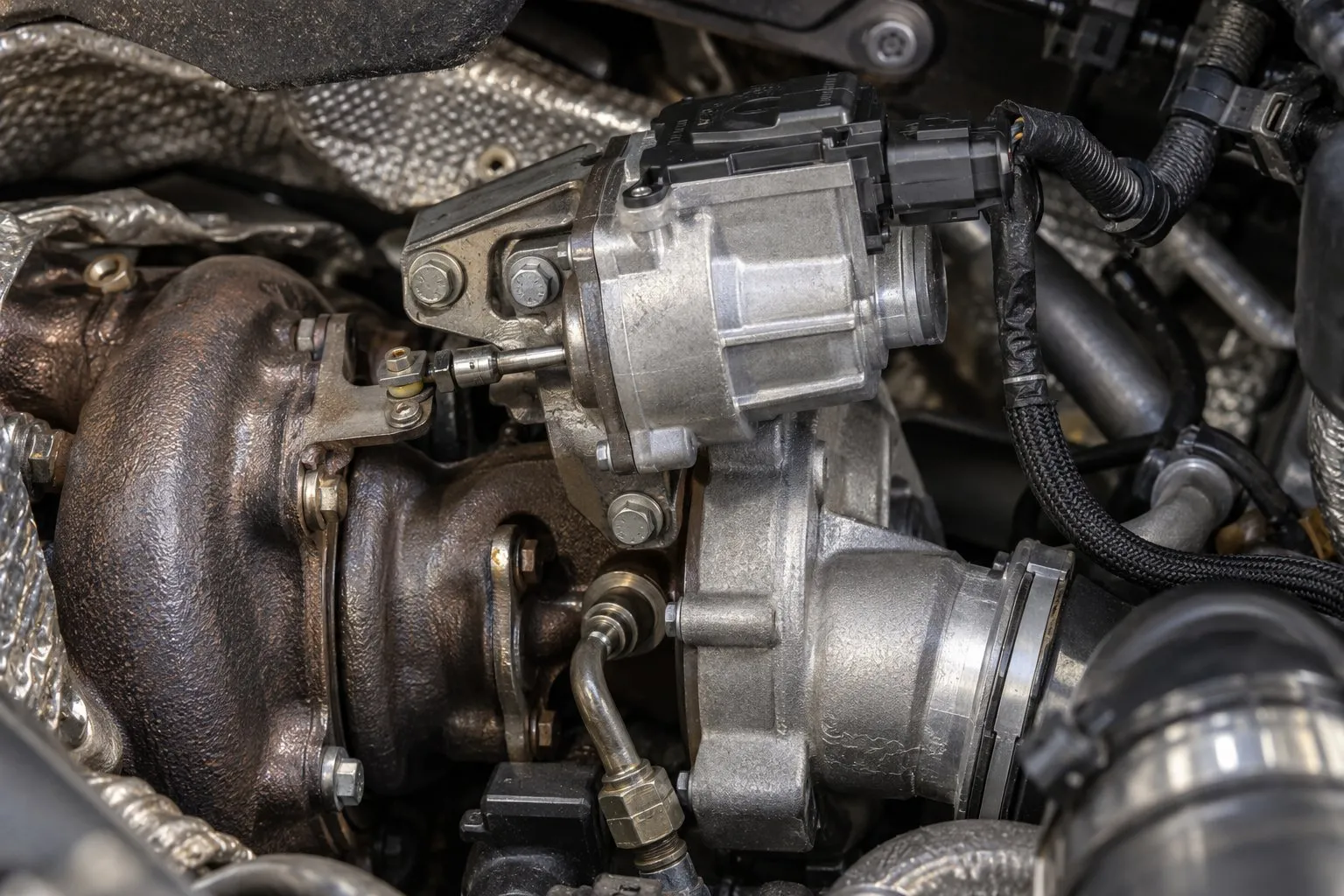
The actuator is the single most common serviceable failure on these turbos. The good news is that in many cases you can replace the actuator instead of the entire turbocharger, saving significant money if the core is still healthy.
Getting the right actuator matters. Calibration, rod length, and mounting differ between units, and an incorrectly calibrated actuator will never hold proper vane position.
If you’re not sure which actuator matches your turbo casting number, contact PT Turbo with your part numbers or VIN and we’ll confirm the correct fit before you order. Parts listings name more than one turbo maker for these platforms, and you can cross-reference OEM specs at Garrett Motion.
New vs Remanufactured: Choosing the Right Turbo
When the core itself is done, you have three real options: a brand-new OEM turbo, a quality remanufactured unit, or rebuilding your existing core. Each has its place depending on budget, availability, and how long you plan to keep the vehicle.
A properly remanufactured turbo uses your same casting with new bearings, seals, thrust components, and a balanced CHRA. On a platform where new OEM units run steep, a reman unit delivers OEM-level performance at a meaningful discount.
| Option | Typical Cost Range | Best For | Warranty Notes |
|---|---|---|---|
| New OEM turbo | Quoted by part number | Newer vehicles, warranty-sensitive fleets | Full manufacturer coverage |
| Remanufactured turbo | Quoted by part number | Best value for most owners and shops | Backed warranty, tested to spec |
| Rebuild your core | From $575 at PT Turbo (price list) | Original casting, hard-to-source units | Depends on rebuilder |
We stock both new and remanufactured turbochargers, and every reman unit is built and balanced to factory tolerances. Browse our remanufactured turbochargers or the full turbo shop to check availability for your application.
If your original casting is uncommon or you want to keep the exact factory unit, our turbocharger rebuild service restores your core with new internals and full balancing. This is often the smartest route for the sequential twin-turbo D240 setups where new units are expensive and lead times can be long.
Installation and Longevity Tips
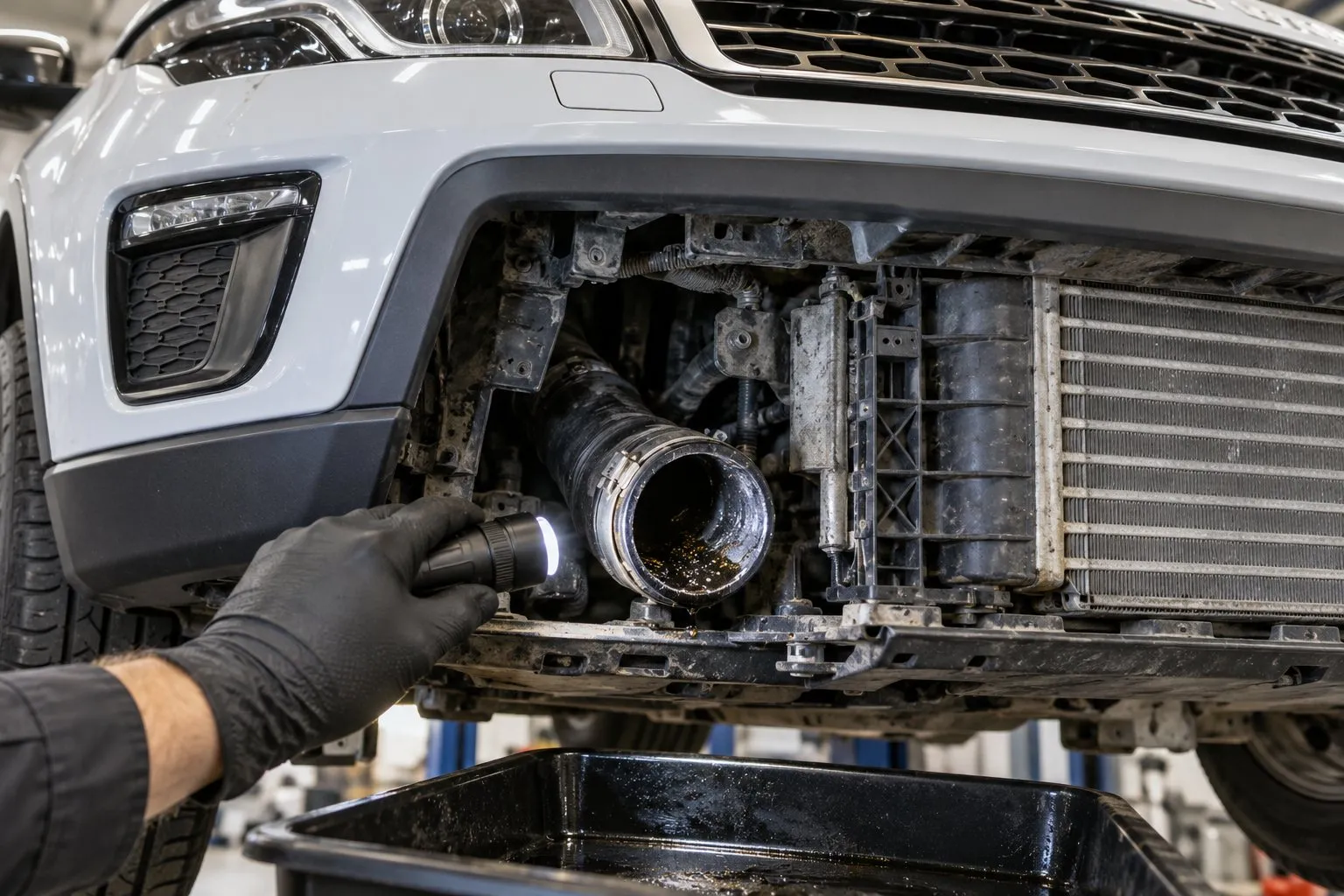
A turbo failure is often a symptom, not the root cause. Installing a new or reman unit without addressing why the last one failed is the fastest way to a repeat job.
Follow these steps to protect your investment:
- Change the engine oil and filter with the correct low-SAPS diesel spec before startup.
- Prime the turbo with clean oil and crank without starting to build pressure before firing it up.
- Inspect and clean the oil feed and drain lines, blocked drains cause seal failure fast.
- Replace the air filter and check the intercooler and piping for oil or debris.
- Verify the EGR and DPF are functioning, since soot loading kills vanes prematurely.
After installation, let the engine idle a few minutes before loading it, and do the same before shutdown when it’s been working hard. That cooldown keeps oil moving through the center cartridge and stops it from coking around the bearings, which is what kills a fresh turbo early.
On the VGT units, run a few highway pulls to help keep the vanes cycling and free of carbon. A turbo that spends its whole life at low load loads up with soot faster, so periodic hard running is maintenance, not abuse.
Get the underlying cause sorted and these TD4 turbos will go the distance. Nail the oil supply, the emissions hardware, and the actuator calibration, and you won’t be back under the hood for the same fault.
Frequently Asked Questions
Which Land Rover models use the TD4 2.0L turbocharger?
The TD4 2.0L turbo is fitted to the Defender, Discovery Sport, and Range Rover Evoque. The exact hardware varies depending on the platform and engine generation.
What engines power the Land Rover TD4 2.0L turbo system?
The TD4 badge has covered several four-cylinder diesels, including a 2.2L built with PSA and Ford; the 2.0L TD4 of the Evoque and Discovery Sport from 2015 is Land Rover’s own Ingenium engine. Turbo specifications differ between these engines.
What are common signs of TD4 2.0L turbocharger failure?
Typical symptoms include loss of power, excessive smoke, whining or whistling noises, and increased oil consumption. Early diagnosis helps prevent costly engine damage.
Need a Turbocharger?
PT Turbo has rebuilt and sold turbochargers since 1978. We stock remanufactured units for Cummins, Duramax, Power Stroke, Detroit Diesel, and more — backed by a 12-month unlimited mileage warranty. Units in stock at our shop in San Bernardino, CA ship the same day when ordered before 2 PM Pacific, Monday through Friday.
📞 (909) 824-1020 · 346 S I St. #3, San Bernardino, CA 92410 · [email protected]
More From PT Turbo
 BorgWarner Schwitzer S1B Turbocharger: Agricultural & Industrial Applications
- BMW B57 Turbocharger Guide: 530d, 730d & X5 40d Single, Twin and Quad Turbo Explained
- Garrett GT2056V Turbocharger: Mercedes OM642 & Dodge Sprinter Application Guide
- Land Rover TDV6 3.0L Turbocharger Guide: Discovery, Range Rover & Sport Applications