Land Rover TDV6 3.0L Turbocharger Guide: Discovery, Range Rover & Sport Applications
This Land Rover TDV6 3.0L Turbocharger Guide covers everything a technician or owner needs to know about the twin-turbo diesel system found in the Discovery 4, Range Rover, and Range Rover Sport, including how the sequential setup works, common failure points, actuator part numbers, and what it costs to fix it right the first time. The 3.0L TDV6 (engine code 306DT) is one of the most capable diesel V6 platforms Land Rover ever built, but its sequential twin-turbo arrangement introduces failure modes that shops less familiar with the engine often misdiagnose.
At PT Turbo we have been rebuilding and supplying turbochargers since 1978, more than 45 years of hands-on experience with everything from heavy-duty Cummins units to the tight-packaged European diesels like this one. This guide reflects what we actually see on the bench.
How the TDV6 3.0L Twin-Turbo System Works
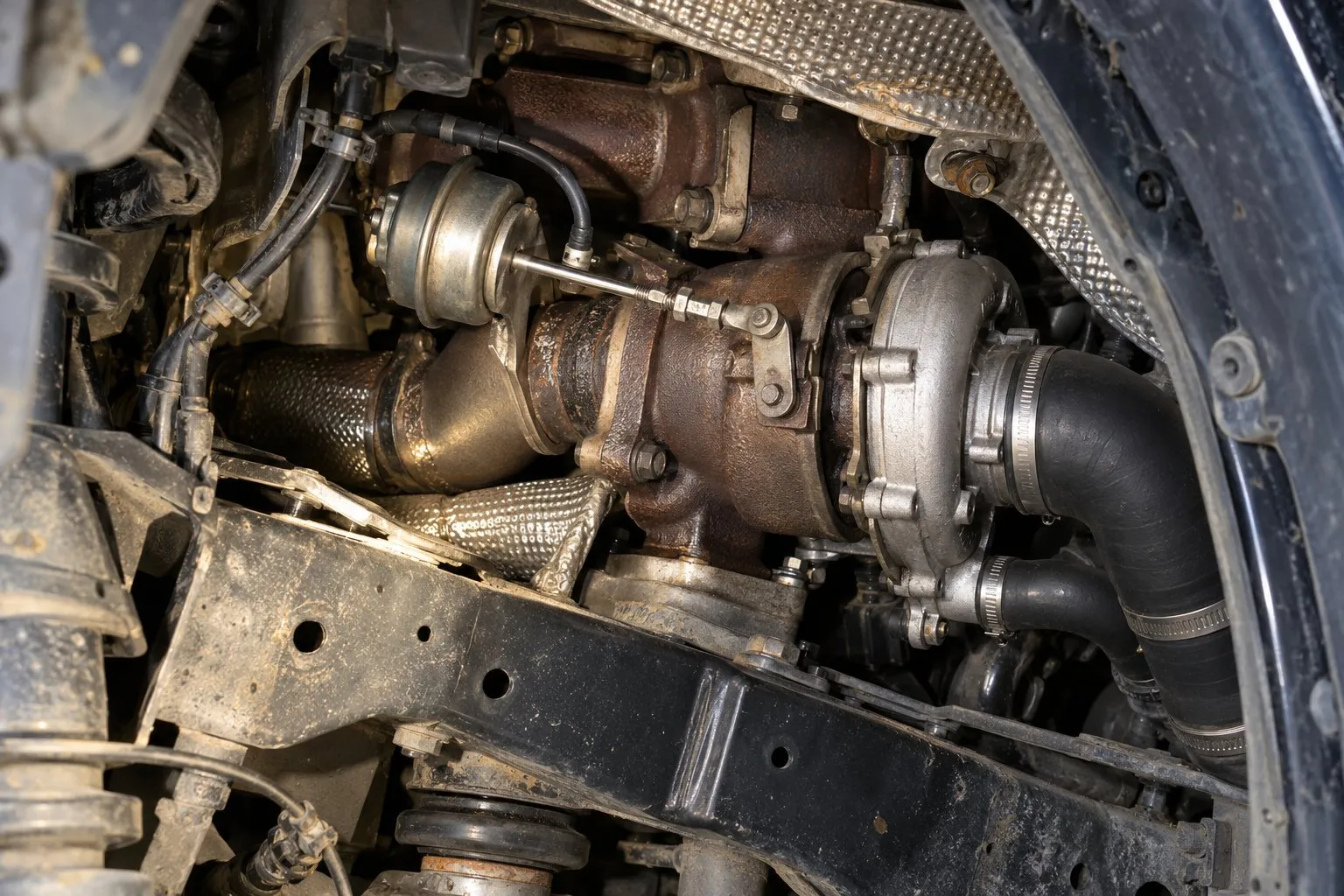
The 3.0L TDV6 replaced the earlier 2.7L in 2009 and uses a sequential twin-turbocharger layout rather than a simple parallel pair. That distinction matters. A parallel system runs both turbos equally at all times. A sequential system stages them.
At low RPM the primary turbocharger does the work, providing strong low-end response and torque. As engine speed and load climb past roughly 2,800 RPM, a bypass valve opens and brings the secondary turbocharger online to sustain boost at higher RPM. This is why the 306DT delivers such a broad, flat torque curve: 443 lb-ft (600 Nm) on the 241 and 254 hp tunes and 516 lb-ft (700 Nm) on the 302 hp SDV6.
The primary turbo is a variable-geometry unit whose vanes are moved by an electronic actuator. The secondary turbo is fixed geometry and is brought in at higher engine speed by vacuum-operated valves on the exhaust and intake sides. If you want the underlying theory, the basics of variable-geometry turbocharger operation explain why vane control precision is so critical to how these engines drive.
Engine and Vehicle Applications
| Vehicle | Model Years | Engine Code | Output (typical) |
|---|---|---|---|
| Discovery 4 / LR4 | 2009–2016 | 306DT | 208–254 hp |
| Range Rover (L405) | 2013 onward | 306DT | 247–296 hp |
| Range Rover Sport (L320 / L494) | 2010 onward | 306DT | 208–302 hp |
Later SDV6 variants pushed output higher, but the core turbocharger architecture and its weak points carried through the platform.
Common TDV6 Turbocharger Failure Symptoms
Because there are two turbos and a staged control system, symptoms on the TDV6 rarely point to a single obvious cause. Here is how we break down what we see, sorted by severity.
| Severity | Symptom | Likely Cause |
|---|---|---|
| Mild | Slight lag, reduced top-end pull | Sticking VGT vanes, failing electronic actuator |
| Moderate | Limp mode above 3,000 RPM, boost fault codes | Secondary turbo bypass or actuator failure |
| Moderate | Whistling or fluttering under load | Cracked charge pipe, failed seal, vane wear |
| Severe | Blue/black smoke, oil consumption | Failed turbo seals, worn center bearing |
| Severe | Metallic grinding, sudden power loss | Shaft failure, compressor wheel contact |
The most common real-world complaint is intermittent limp mode. Owners describe the vehicle driving fine around town, then dropping into reduced power on the highway. That pattern almost always points to the secondary turbo staging or its actuator, not the primary unit.
Why Actuators Fail First on the TDV6
The primary turbo’s electronic actuator and the vacuum actuators of the changeover valves live in an unforgiving environment: high underhood heat and exposure to soot and oil vapor. Diaphragms harden, valves stick with soot, and the electronic actuator fails internally.
When an actuator can no longer hold or move the vanes to the ECU-commanded position, the engine flags an underboost or overboost fault and protects itself with limp mode. Replacing the actuator is often far cheaper than replacing an entire turbocharger, provided the cartridge itself is still healthy.
Land Rover TDV6 3.0L Turbocharger Guide to Actuators and Replacement Parts
Sourcing the correct actuator is where most repairs go sideways. The TDV6 platform and its close relatives use different actuators depending on turbo position and production date. Fitting the wrong unit means incorrect vane travel and a repeat fault.
PT Turbo stocks both new and remanufactured actuators and turbochargers, so you are not forced into a full assembly when a control component is all you need.
Always verify the part number stamped on your existing actuator and cross-reference the turbo position (primary or secondary) before ordering. If you are unsure which variant your VIN calls for, our team can match it, just contact PT Turbo with your engine code and the part number on the turbo’s tag.
Repair Strategy: Actuator, Reman Turbo, or Rebuild?
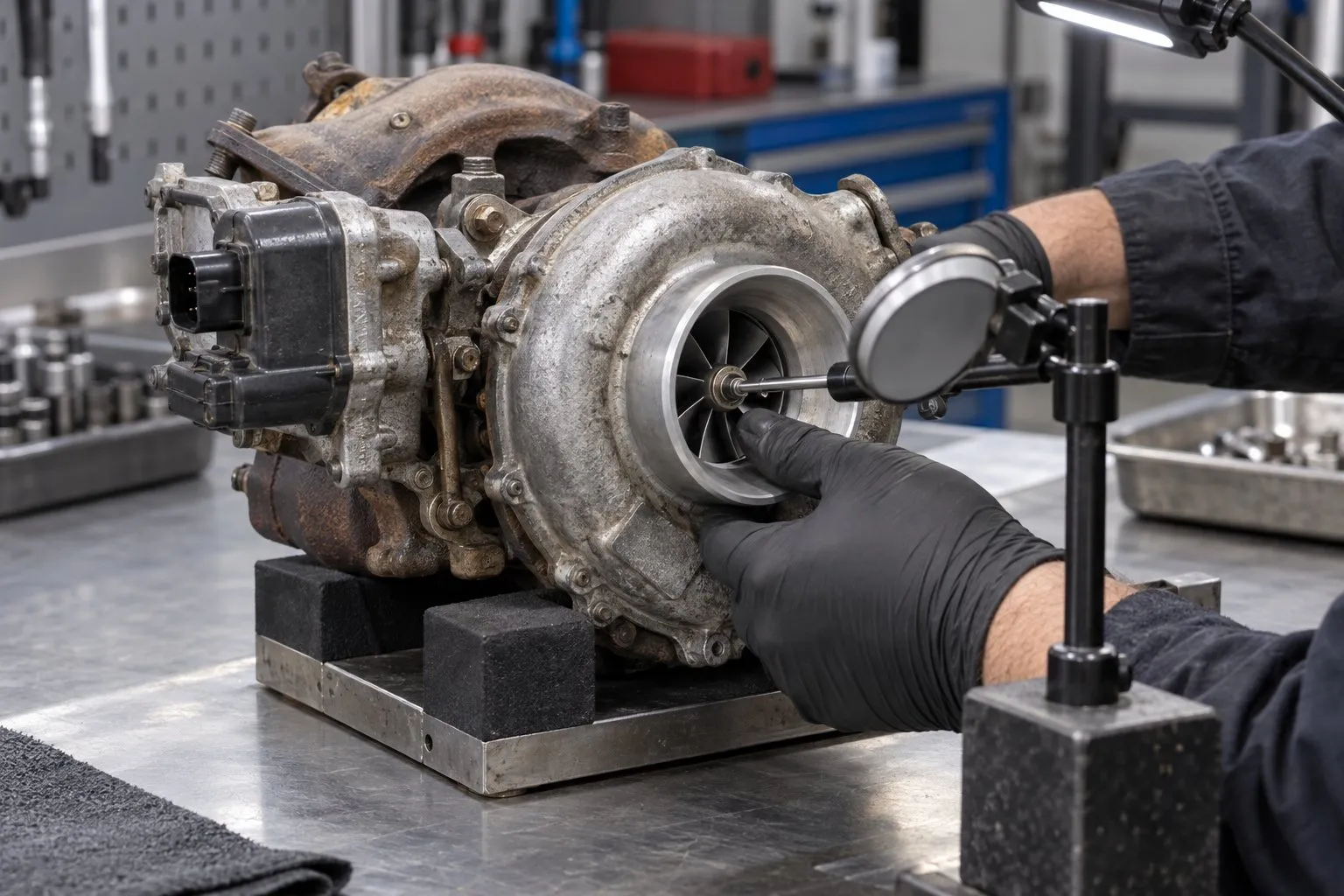
Once you have confirmed which turbo has failed, you have three practical paths. The right one depends on the condition of the cartridge and your budget.
Option 1: Replace the Actuator Only
If the CHRA (center cartridge) spins freely with shaft play within the maker’s limits and the compressor wheel is undamaged, and the fault is purely a boost-control code, a new actuator is the smart fix. This is the lowest-cost repair and resolves the majority of intermittent limp-mode cases.
Option 2: Install a Remanufactured Turbocharger
When there is shaft play, oil in the intake, or physical wheel damage, replace the unit. A quality remanufactured turbocharger is rebuilt to OEM tolerances with new bearings, seals, and a balanced rotating assembly, at a significant discount over a new assembly.
Option 3: Rebuild Your Existing Core
If you want to retain your original casting or need a turbo for an application with limited parts availability, our turbo rebuild service restores your unit with new internals and VSR balancing. This is popular with fleets and shops that maintain multiple TDV6 vehicles.
| Repair Path | Typical Cost Range | Best For |
|---|---|---|
| Actuator only | see actuator prices + labor | Boost-control faults, healthy cartridge |
| Remanufactured turbo | Mid-range, well below new | Worn or damaged rotating assembly |
| New OEM turbo | Highest | Warranty-critical or dealer-only jobs |
| Rebuild existing core | Labor + parts kit | Fleets, hard-to-source castings |
Preventing Repeat TDV6 Turbo Failures
Replacing a turbo without addressing root cause is a fast way to burn out the new unit.
On the TDV6 specifically, check the oil feed and drain lines before fitting anything new. These engines run tight oil galleries, and a partially blocked feed line starves the center bearing while a restricted drain pushes oil past the seals. If the old unit showed oil in the intake, pressure-test and clean both lines, and confirm the breather system is not pushing excess crankcase vapor into the intake tract.
Soot buildup is the other repeat offender. Sticking vanes almost always trace back to carbon packing the VGT mechanism, so verify the EGR system and intake are clean before you command the new vanes through their range. A sticky secondary bypass will drop a fresh turbo straight back into limp mode within a few hundred miles.
Finally, give the engine a proper cooldown habit, especially after highway pulls or towing. Shutting down hot after the secondary turbo has been working hard cokes the oil in the center housing and shortens bearing life. On fleet vehicles that idle-shutdown routinely, this is one of the cheapest things you can enforce to keep a rebuilt or reman unit alive.
For Land Rover’s four-cylinder diesel in the Defender, Discovery Sport and Range Rover Evoque, see our Land Rover TD4 2.0L turbocharger guide.
Frequently Asked Questions
Which Land Rover models use the 3.0L TDV6 engine?
The 3.0L TDV6 (engine code 306DT) is found in the Discovery 4, Range Rover, and Range Rover Sport. It features a sequential twin-turbo diesel setup.
What are the most common TDV6 turbocharger failure points?
Common issues include actuator failure, sticking variable geometry vanes, and problems with the sequential turbo control system. Early diagnosis helps avoid costly secondary damage.
How does the sequential twin-turbo system work on the TDV6?
The system uses a primary and secondary turbo that engage at different RPM ranges for optimal boost. This delivers strong low-end torque while maintaining top-end power.
Need a Turbocharger?
PT Turbo has rebuilt and sold turbochargers since 1978. We stock remanufactured units for Cummins, Duramax, Power Stroke, Detroit Diesel, and more — backed by a 12-month unlimited mileage warranty. Units in stock at our shop in San Bernardino, CA ship the same day when ordered before 2 PM Pacific, Monday through Friday.
📞 (909) 824-1020 · 346 S I St. #3, San Bernardino, CA 92410 · [email protected]
More From PT Turbo
 Garrett T3 Turbocharger: Classic Design, Applications & Modern Replacement Options
- PT Turbo's Turbocharger Rebuild Process: What Happens to Your Turbo
- Turbocharger Boost Pressure: What Numbers Are Normal for Your Diesel
- Garrett GTB1752VK and GTB1752VKL Turbochargers: Chevy Colorado & GMC Canyon 2.8L Duramax Guide