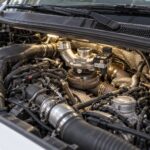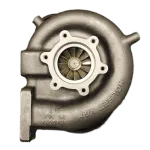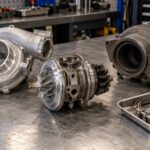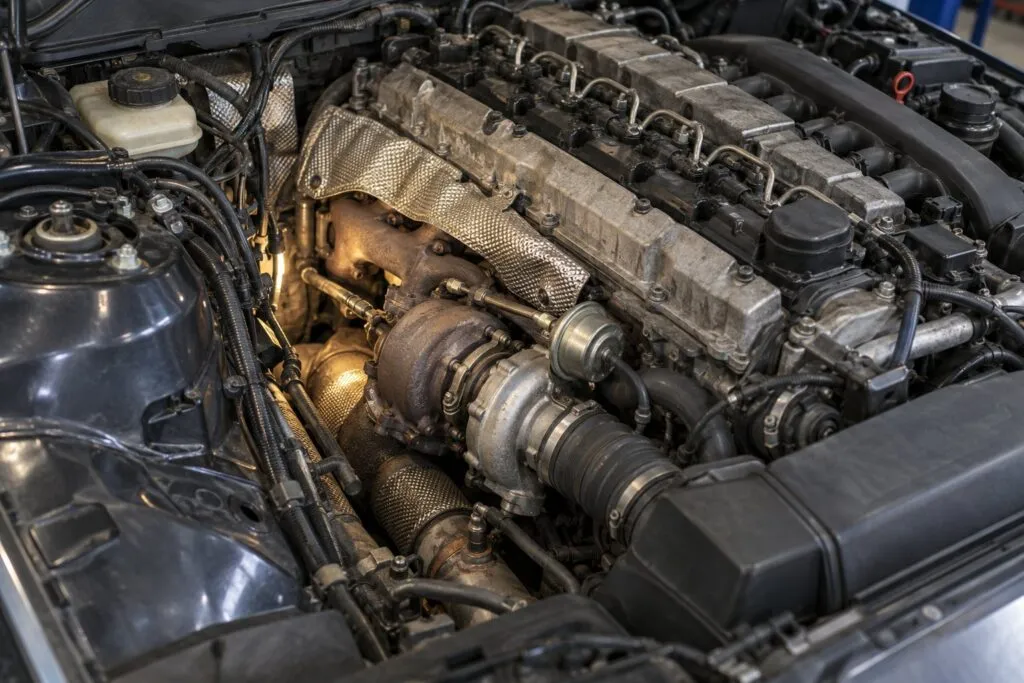
This BMW M57 Turbocharger Guide covers everything a mechanic, fleet owner, or DIY diesel enthusiast needs to know about diagnosing, replacing, and rebuilding the turbochargers fitted to the E46 330d, E39 530d, and E53 X5 3.0d. The M57 is one of the best inline-six diesel engines BMW ever built, and with the right turbo work these motors easily clear 250,000 miles.
At PT Turbo we have been rebuilding and supplying turbochargers since 1978, over 45 years in the business, and the M57 remains one of the most common BMW diesels across our bench. Below is the practical, real-world breakdown we give our own customers.
M57 Engine and Turbo Overview
The M57 (internal code M57D30) is a 3.0-liter straight-six turbodiesel produced from 1998 into the early 2010s. It powered a huge range of chassis, but the three most common in the aftermarket are the E46 330d, E39 530d, and E53 X5 3.0d.
Early M57 (pre-2003) engines used a single variable-geometry turbocharger. The later M57TU and M57TU2 variants introduced revised VGT units, higher injection pressures, and in some high-output applications a two-stage sequential turbo setup. Understanding which version you have is the first step before ordering any parts.
The variable-geometry design is what gives the M57 its strong low-end torque with minimal lag. If you want the engineering background, this overview of variable-geometry turbochargers explains how the moving vanes adjust exhaust flow across the rev range.
Common Turbo Applications by Chassis
| Chassis | Model | Engine Code | Turbo Type | Power (approx) |
|---|---|---|---|---|
| E46 | 330d / 330cd | M57D30 / M57TUD30 | Single VGT (GT2256V on the 184 hp engine, GT2260V on the 204 hp) | 184-204 hp |
| E39 | 530d | M57D30 | Single VGT (GT2556V) | 184-193 hp |
| E53 | X5 3.0d | M57D30 / M57TUD30 | Single VGT | 184-218 hp |
Symptoms of a Failing M57 Turbocharger
M57 turbo problems almost always trace back to one of two areas: the variable-geometry vane mechanism sticking with soot and carbon, or the actuator losing its ability to move those vanes. Both produce similar symptoms but need different fixes.
Catch these early and you often save the whole turbo. Ignore them and you risk a bearing failure that sends the compressor wheel and shaft into the intake.
| Symptom | Likely Cause | Severity |
|---|---|---|
| Loss of power above 2,500 rpm, limp mode | Sticking VGT vanes or actuator fault | Moderate |
| Whistling or whining that changes with boost | Worn shaft bearings or boost leak | Moderate to High |
| Blue or gray smoke on acceleration | Failed oil seals in center housing | High |
| Rattling or metallic grinding | Bearing or wheel contact failure | Critical, stop driving |
| Overboost / underboost fault codes | Actuator not holding position | Moderate |
A very large share of M57 “turbo failures” we see are actually just a seized or leaking actuator, not a dead cartridge. That is good news, because the actuator is a fraction of the cost of a full turbo.
The Actuator: The M57’s Weak Point
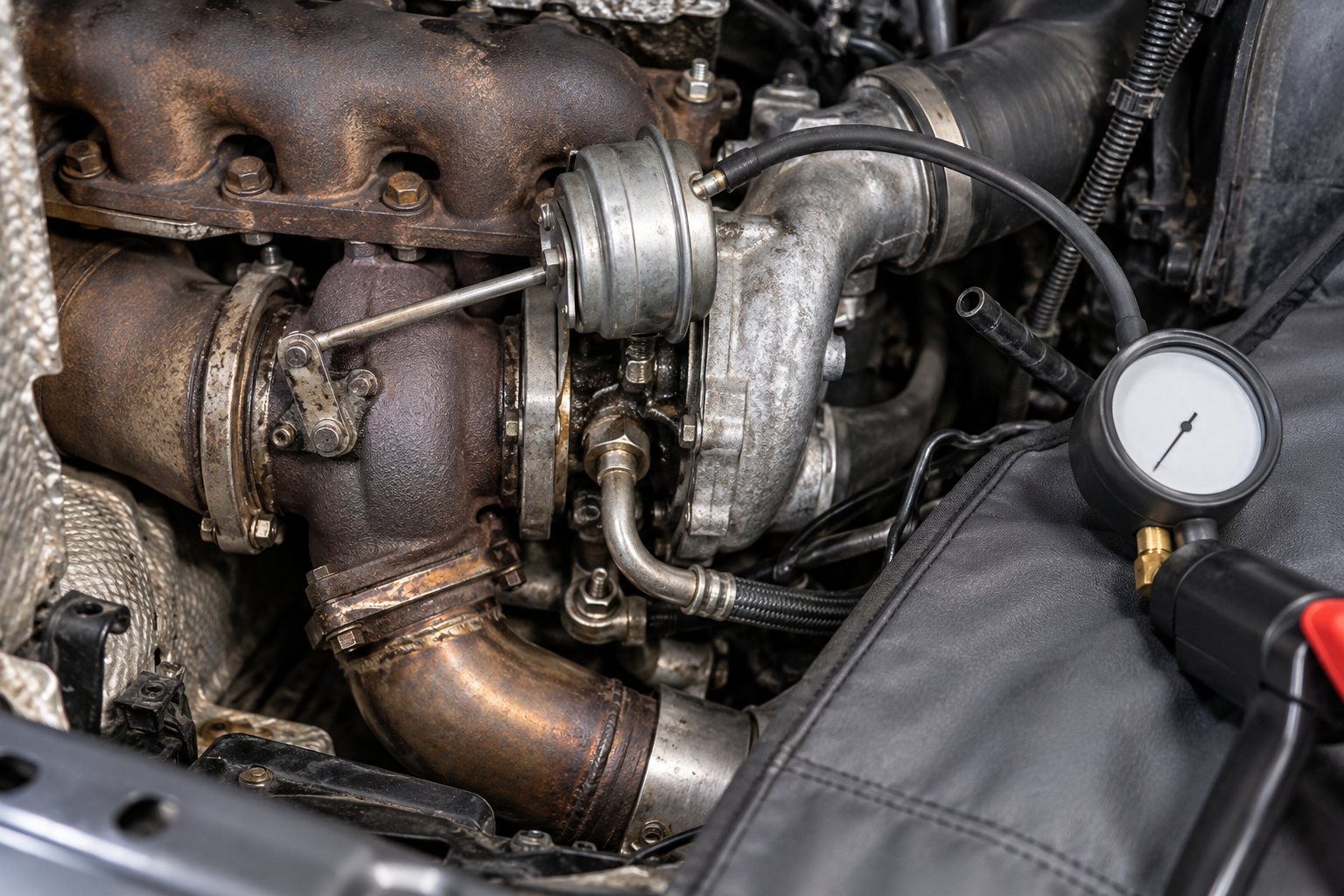
On the early M57 and the M57TU a vacuum actuator moves the VGT vanes (BMW’s training material for the M57TU shows a vacuum unit and a solenoid valve), and over time its diaphragm splits or the linkage seizes. Later turbos with an electric actuator bolted on fail internally instead. Look at your turbo before ordering parts: a vacuum can with a hose, or an actuator with an electrical plug. Either way the vanes no longer sweep correctly. The result is inconsistent boost, limp mode, and error codes even when the turbo itself is mechanically fine.
Replacing the actuator is often the smartest first move before condemning an entire unit.
Always match the actuator to the exact turbo part number stamped on the compressor housing. If you are unsure which one you need, contact PT Turbo with your turbo number and we will confirm the correct fit before you buy.
BMW M57 Turbocharger Guide to Replacement Options
When the cartridge itself is gone, you have three real choices: a new OEM turbo, a quality remanufactured unit, or rebuilding your existing core. Each has a place depending on budget and how long you plan to keep the vehicle.
New vs Remanufactured vs Rebuild
| Option | Typical Cost | Best For | Lead Time |
|---|---|---|---|
| New OEM Garrett | $872 to $1,874 (2 listings) at PT Turbo | Late-model, warranty-critical builds | In stock to special order |
| Remanufactured | Quoted by part number | Best value for most owners | Usually in stock |
| Rebuild your core | See our rebuild price list | Rare part numbers, keeping original casting | 3 to 5 business days after inspection |
Price ranges in this article are general estimates to help with budgeting, not PT Turbo quotes. Our current prices are on each product listing, and our rebuild prices are on the turbo rebuild price list.
For most 330d, 530d, and X5 3.0d owners, a properly remanufactured turbocharger is the sweet spot. Ours are stripped to the housing, fitted with new bearings, seals, and balanced CHRA components, then VGT-calibrated and balanced to OEM spec.
If your turbo carries a rare casting or you simply want to keep the numbers-matching unit, our turbocharger rebuild service restores your existing core to full specification. PT Turbo stocks both new and remanufactured parts, so you are not forced into one path.
Installation and Longevity Tips
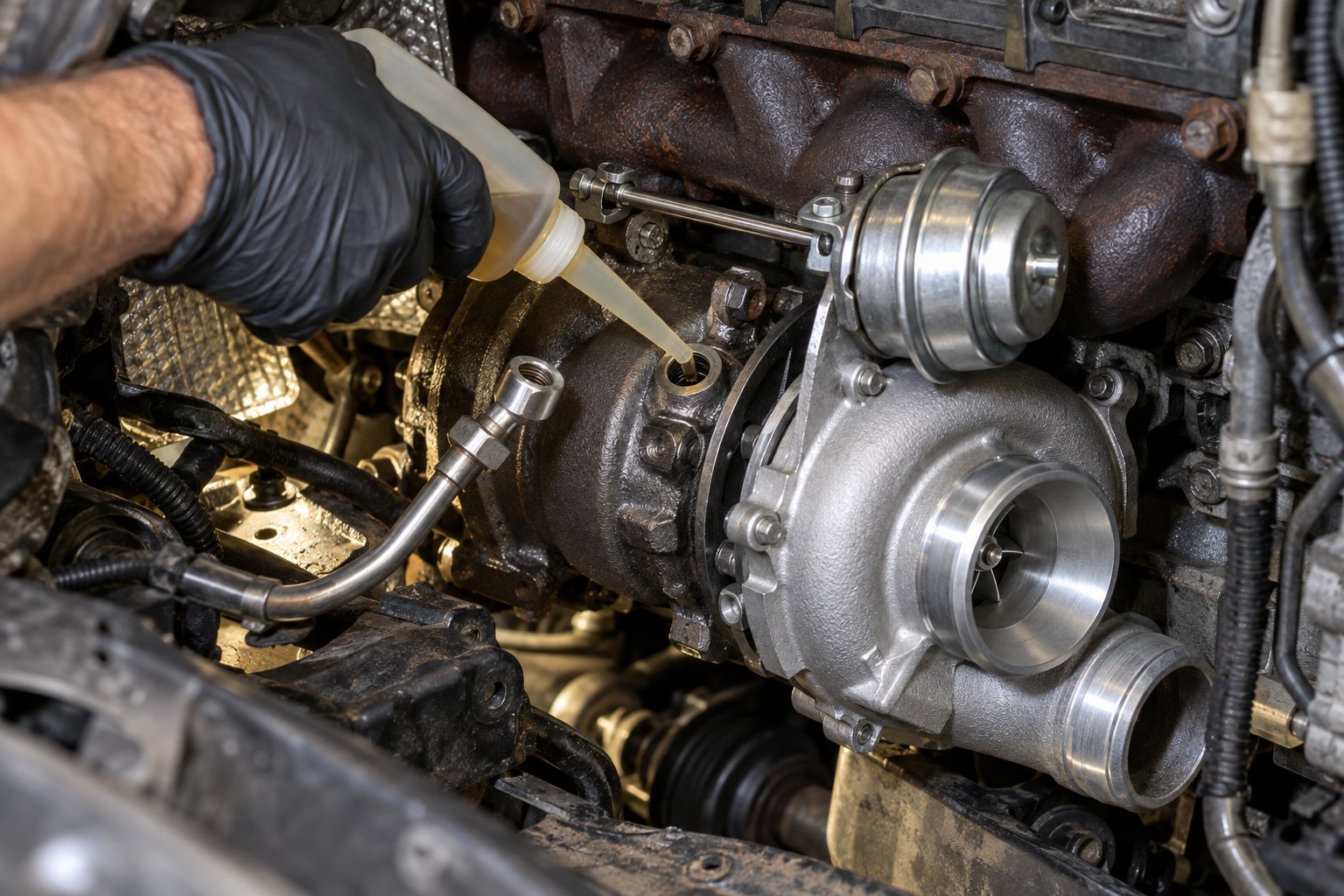
The M57 turbo lives in a hot, soot-heavy environment, and most premature failures come from installation shortcuts rather than the part itself. A few disciplines make the difference between a turbo that lasts 8 years and one that dies in 8 months.
- Always fit a new oil feed line. The banjo restrictor and line clog with carbon, and the new turbo starves within minutes if you reuse a blocked one.
- Prime the center housing with clean oil before startup and crank without firing to build oil pressure first.
- Replace the crankcase breather and check for oil in the intake tract. Excess blow-by overwhelms the seals.
- Clean or replace the EGR system. A carboned EGR circuit accelerates vane sticking on VGT turbos.
- On engines with an electronic actuator, perform an actuator adaptation with a diagnostic tool after fitting, so the ECU learns the new vane travel. The early vacuum-actuated turbos have nothing to adapt.
On DPF-equipped M57TU2 engines, make sure regeneration is working properly. A blocked diesel particulate filter raises back pressure and stresses the turbine wheel over time.
These turbos use genuine Garrett variable-geometry cores, and you can reference the manufacturer directly at Garrett Motion for cross-checking part numbers on later units.
If you are researching the newer BMW inline-six diesels (the N57 replaced the M57, and the B57 followed it), our BMW B57 Turbocharger Guide covers the single-turbo 530d and 730d and the twin-turbo X5 40d in detail.
Frequently Asked Questions
Which BMW models use the M57 turbocharger covered in this guide?
This guide covers the turbochargers fitted to the E46 330d, E39 530d, and E53 X5 3.0d. All three share the M57 inline-six diesel engine platform.
How many miles can a BMW M57 diesel engine last?
The M57 is one of the most durable inline-six diesels BMW built, and with proper turbo maintenance these engines can easily exceed 250,000 miles.
What are common signs of a failing M57 turbocharger?
Typical symptoms include loss of power, excessive smoke, whining or whistling noises, and increased oil consumption. Diagnosing early can prevent costly engine damage.
Need a Turbocharger?
PT Turbo has rebuilt and sold turbochargers since 1978. We stock remanufactured units for Cummins, Duramax, Power Stroke, Detroit Diesel, and more — backed by a 12-month unlimited mileage warranty and same-week shipping from San Bernardino, CA.
📞 (909) 824-1020 · 346 S I St. #3, San Bernardino, CA 92410 · [email protected]
More From PT Turbo
 Mercedes Sprinter Turbocharger Replacement Guide: 2.1L & 3.0L CDI Applications by Year
- Holset HE531VE Turbocharger: PACCAR MX-13 & Detroit Series 60 Application Guide
- Garrett Turbocharger Complete Guide: GT, GTB, GTX & G-Series Reference
- BorgWarner B2 CHRA: What It Fits and When to Replace vs Full Turbo