Toyota 1KD-FTV 3.0L Turbocharger Guide: Hilux, Land Cruiser & Prado Applications
This Toyota 1KD-FTV 3.0L Turbocharger Guide covers everything diesel mechanics, fleet owners, and Hilux and Land Cruiser Prado operators need to know about the variable-geometry turbo that powers one of Toyota’s most widely deployed diesel platforms. The 1KD-FTV is a workhorse, but its VNT turbo and the electric actuator that moves its vanes have well-documented failure patterns that cost owners real money when misdiagnosed.
At PT Turbo, we have been rebuilding and supplying turbochargers since 1978, better than 45 years of hands-on experience across diesel platforms. Below is the practical technical breakdown we give our own customers when they call about a limp-mode Hilux or a smoking Prado.
The 1KD-FTV Engine and Its Turbocharger
The 1KD-FTV is a 3.0-liter inline-four common-rail diesel introduced by Toyota in 2000. It appears in the Hilux, the Land Cruiser Prado (90, 120 and 150 series), the Fortuner and the HiAce across global markets. Depending on model year and region, output ranges from roughly 107 hp to 170 hp (80 to 127 kW) with peak torque of roughly 211 to 302 lb-ft (286 to 410 N·m).
The 1KD-FTV uses a variable-nozzle turbocharger (VNT), the Toyota CT16V. This is the unit that generates the majority of service calls we field.
The VNT uses movable vanes in the turbine housing to change exhaust gas velocity across the RPM range. That gives strong low-end response and reduced turbo lag, but it also introduces the two components that fail most often: the vane mechanism and the actuator that drives it.
Common 1KD-FTV Turbo Failure Modes
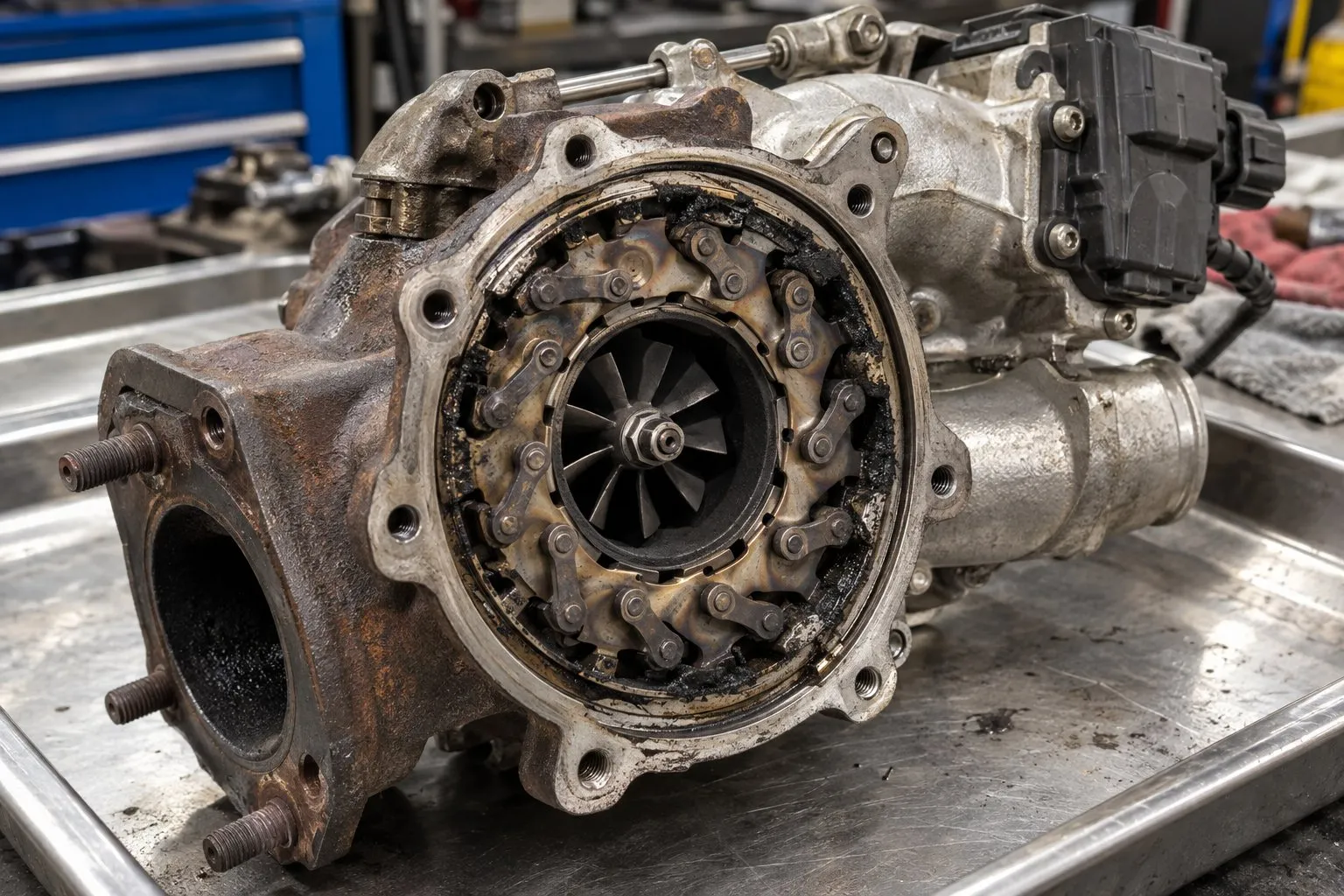
The CT16V is a reliable turbo when it is maintained, but heat, soot, and oil quality shorten its life fast in hard-working trucks. Most failures trace back to the variable vane assembly sticking, actuator failure, or bearing wear from oil starvation or contamination.
Sticking vanes are the classic 1KD complaint. Carbon and soot build up around the vane pivots, especially on vehicles that idle a lot or run short trips. The result is inconsistent boost, hesitation, and repeated limp mode.
Actuator failure is the second big one. The vanes are moved by a DC motor on the turbo through a reduction gear and link, commanded by a separate turbo motor driver, and a nozzle vane position sensor reports where they are. When the motor, the sensor or the driver fails, or the linkage seizes, boost control goes out the window.
| Symptom | Severity | Likely Cause |
|---|---|---|
| Slight power loss, occasional hesitation | Early | Vanes starting to carbon up |
| Intermittent limp mode, boost fault codes | Moderate | Sticking vanes or failing actuator |
| Blue or white smoke, oil in intake | Serious | Worn seals or bearings |
| Loud whine, metal contact, no boost | Critical | Bearing failure or wheel contact |
If you catch a sticking-vane problem early, a clean and actuator service often restores full function. Ignore it, and repeated limp-mode events plus over-fueling can push it toward bearing damage and shaft play.
The Electric Actuator: The Part That Fails Most
On the CT16V, the electric actuator is frequently the difference between a running truck and a limp-mode paperweight. It is also, thankfully, one of the more serviceable components. Replacing the actuator instead of the whole turbo can save an owner-operator hundreds of dollars when the cartridge itself is still healthy.
The critical detail is the stop position. The system finds its zero point by driving the linkage against the fully closed stop, so the stop screw on the turbo must not be moved, and a replacement actuator has to be fitted so the vanes reach their full range. Get that wrong and you will chase boost codes forever.
Matching the correct actuator to your turbo model number is essential, so confirm your unit before ordering.
Toyota 1KD-FTV 3.0L Turbocharger Guide to Diagnosis
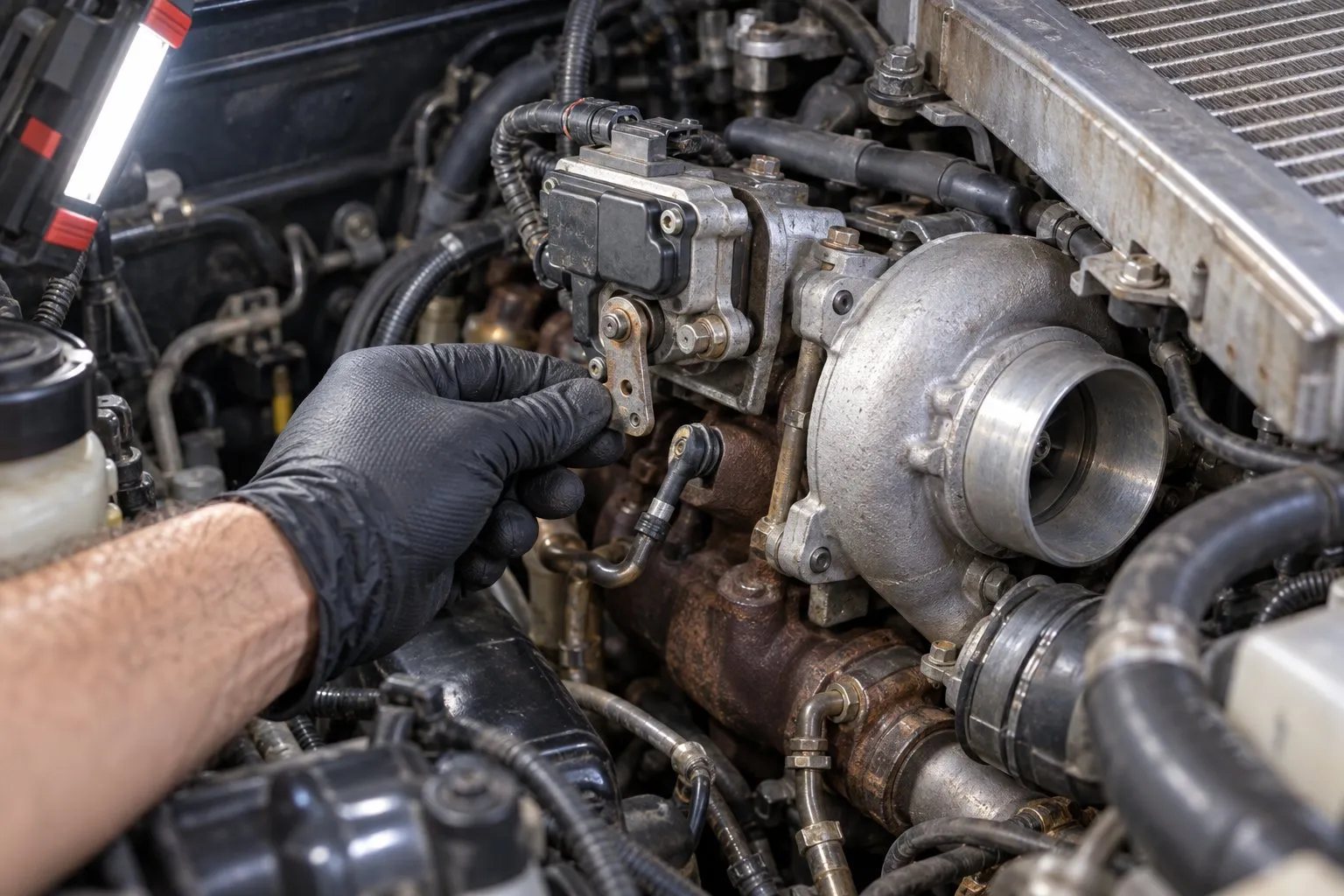
Before you condemn a turbo, rule out the cheaper culprits. Many “bad turbo” 1KD-FTV vehicles come into shops with intact cartridges and a completely different root cause.
- Check the EGR system first. A carboned-up EGR circuit dumps soot straight into the intake and accelerates vane fouling. Clean it before you blame the turbo.
- Inspect the actuator movement. With the turbo cool, disconnect the actuator link and move the vane lever by hand. It should travel smoothly from stop to stop; binding points to carboned vanes, free movement points to the actuator, sensor or driver.
- Read live data. Compare commanded versus actual boost. A consistent gap under load usually means vane or actuator trouble.
- Check for shaft play. Wiggle the compressor wheel. Radial play is normal within limits, but axial play or wheel contact means the cartridge is done.
- Look for oil. Oil in the intercooler piping signals seal failure and internal wear.
On DPF-equipped models, remember that a failing turbo and a clogged diesel particulate filter can produce overlapping symptoms. Confirm exhaust back pressure is in range before spending money on turbo parts.
Rebuild, Remanufactured, or New?
Once you have confirmed the turbo itself is the problem, you have three real paths. The right choice depends on the condition of the core, your budget, and how long you need the truck to stay in service.
| Option | Best For | Relative Cost | Notes |
|---|---|---|---|
| Actuator or vane service only | Early-stage faults, healthy cartridge | Lowest | Restores function if bearings are good |
| Professional rebuild | Worn but rebuildable core | Moderate | New bearings, seals, balancing, calibration |
| Remanufactured unit | Fast turnaround, no core to wait on | Moderate | Tested and ready to install |
| Brand-new OEM turbo | Warranty-critical fleets | Highest | Best longevity, biggest upfront cost |
For most owner-operators and fleets, a properly balanced rebuild or a tested reman unit hits the sweet spot on cost and reliability. Our turbocharger rebuild service covers full teardown, new bearing and seal kits, VNT cleaning, balancing, and actuator calibration on the bench.
If you cannot afford downtime, our remanufactured turbochargers ship ready to bolt on. PT Turbo stocks both new and remanufactured parts, so you are not forced into one option. You can also shop all turbos to compare what is in stock for your application.
Installation and Longevity Tips
A rebuilt or new turbo will fail again fast if you skip the basics. The number one killer of replacement turbos on the 1KD-FTV is dirty oil and blocked feed lines carried over from the original failure.
- Replace the oil and filter, and prime the turbo with clean oil before startup.
- Inspect and clean or replace the oil feed and drain lines. Coked feed lines starve the new bearings.
- Clean the intercooler and piping thoroughly if the old turbo shed oil or debris.
- Service the EGR and check the intake for carbon before install.
- After startup, idle the engine to build oil pressure before revving.
- Let the turbo cool at idle for 30 to 60 seconds before shutdown after hard driving.
These habits extend the service life of a VNT turbo on a hard-working Hilux or Prado. For a deeper technical background on how these units work, this turbocharger overview is a solid reference.
Running the 2.5L engine instead? The smaller engine of the same family has its own Toyota 2KD-FTV turbocharger guide.
Frequently Asked Questions
What causes 1KD-FTV turbocharger failure?
The most common causes are a sticking variable-nozzle (VNT) mechanism from carbon buildup and a failing electric actuator. Poor maintenance, oil starvation, and clogged EGR systems accelerate wear.
Which Toyota models use the 1KD-FTV 3.0L turbo diesel?
The 1KD-FTV powers the Toyota Hilux, Land Cruiser Prado, Fortuner and HiAce. It is one of Toyota’s most widely deployed diesel platforms globally.
Can you clean a 1KD-FTV VNT turbo instead of replacing it?
Yes, if the failure is caused by carbon buildup rather than damaged internals, cleaning the VNT mechanism and actuator can restore function. Severe wear or bearing damage requires replacement.
Need a Turbocharger?
PT Turbo has rebuilt and sold turbochargers since 1978. We stock remanufactured units for Cummins, Duramax, Power Stroke, Detroit Diesel, and more — backed by a 12-month unlimited mileage warranty. Units in stock at our shop in San Bernardino, CA ship the same day when ordered before 2 PM Pacific, Monday through Friday.
📞 (909) 824-1020 · 346 S I St. #3, San Bernardino, CA 92410 · [email protected]
More From PT Turbo
- BorgWarner S300 vs S400 vs S480: Which Turbocharger for Your Application?
 Holset HE400VG Turbocharger: Cummins ISX Variable Geometry Application Guide
- Garrett vs Holset vs BorgWarner: Which Diesel Turbo Brand Lasts Longest?
- Garrett GT2056V Turbocharger: Mercedes OM642 & Dodge Sprinter Application Guide