Deutz BF6M & BF4M Turbocharger Guide: Air-Cooled & Water-Cooled Diesel Applications
In this Deutz BF6M & BF4M turbocharger guide, we cover what the engine name tells you, how the cooling system affects the turbo, why these turbos fail, and how to get the right replacement the first time. Deutz engines run construction machines, ag equipment, generator sets, compressors and pumps, often in dust and heat. The turbo is usually the first part to fail when the oil or air supply is weak.
PT Turbo is a family-owned shop in San Bernardino, California, rebuilding turbochargers since 1978. The rule for every Deutz turbo: the part number on the turbo’s tag decides the replacement, not the engine name.
Reading a Deutz Engine Name
Deutz engine names pack the basics into a short code. In a name such as BF4M1013 or BF6L913:
- B marks a turbocharged engine.
- F marks a four-stroke diesel.
- The digit is the number of cylinders.
- The letter after it is the cooling system: L for air-cooled, M for liquid-cooled.
- The number at the end is the engine series, and a trailing C usually marks charge-air cooling.
The cooling letter explains the title of this article. A BF4M or BF6M is a liquid-cooled engine. The air-cooled engines are the BF4L and BF6L versions of series such as the 913 and 914. They come up together because many fleets run both, and the turbo questions overlap.
Liquid cooling at Deutz also comes in two kinds:
- Series such as the 1012, 1013, 2012 and 2013 use a conventional coolant circuit and radiator.
- The oil-cooled 1011 and 2011 families use engine oil to carry heat out of the block and heads.
Newer Deutz engines carry names such as TCD 2013 that follow a different scheme. Read the engine data plate rather than decoding the name from memory.
Identifying the Turbo on a BF4M or BF6M
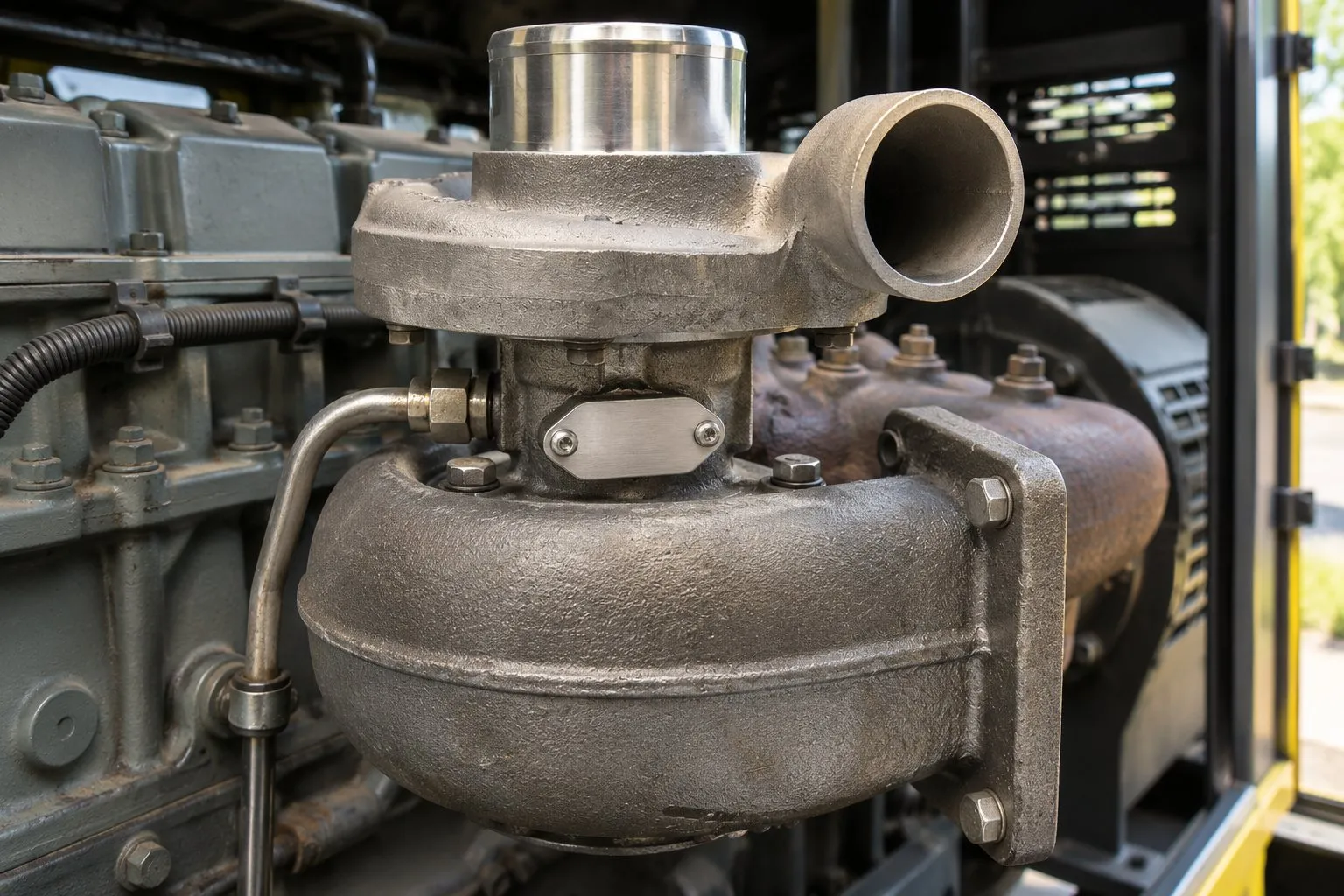
Two engines with the same BF4M or BF6M name can carry different turbos, depending on the rating, the machine and the emissions level. Compressor trim, turbine housing size, flange layout and oil connections can all change between versions that look alike. If you order by engine name alone, you can end up with a turbo that does not bolt up or does not match the rating.
The tag (data plate) carries the number that matters. On BorgWarner units it sits on the compressor housing. It shows the BorgWarner part number, a serial number and, on factory-fitted turbos, the engine maker’s part number. BorgWarner part numbers run six or eleven digits.
If the tag says KKK, 3K or Schwitzer, the turbo comes from a product line that is now part of BorgWarner. Older KKK numbers are written in three groups of four, three and four digits.
Deutz is among the engine makers our catalog lists for BorgWarner S200 turbochargers. S200 names a frame, not a part: trims, housings and options differ from one S200 to the next, so the tag number still has to match. Casting numbers on the housings only narrow the search, because one casting serves many turbos.
If the tag is missing or unreadable, send us:
- The engine serial number from the Deutz data plate
- The full engine name
- The machine the engine runs in
- Clear photos of both housings, the flanges and the oil connections
Call (909) 824-1020 or use our contact page.
Turbos we list for the S200
Listings for the turbo models named in this guide that can be ordered online today. Several part numbers can fit one engine by year and rating, so match the number on your turbo’s tag, or call (909) 824-1020 and we will match it for you.
How Air, Oil and Water Cooling Affect the Turbo
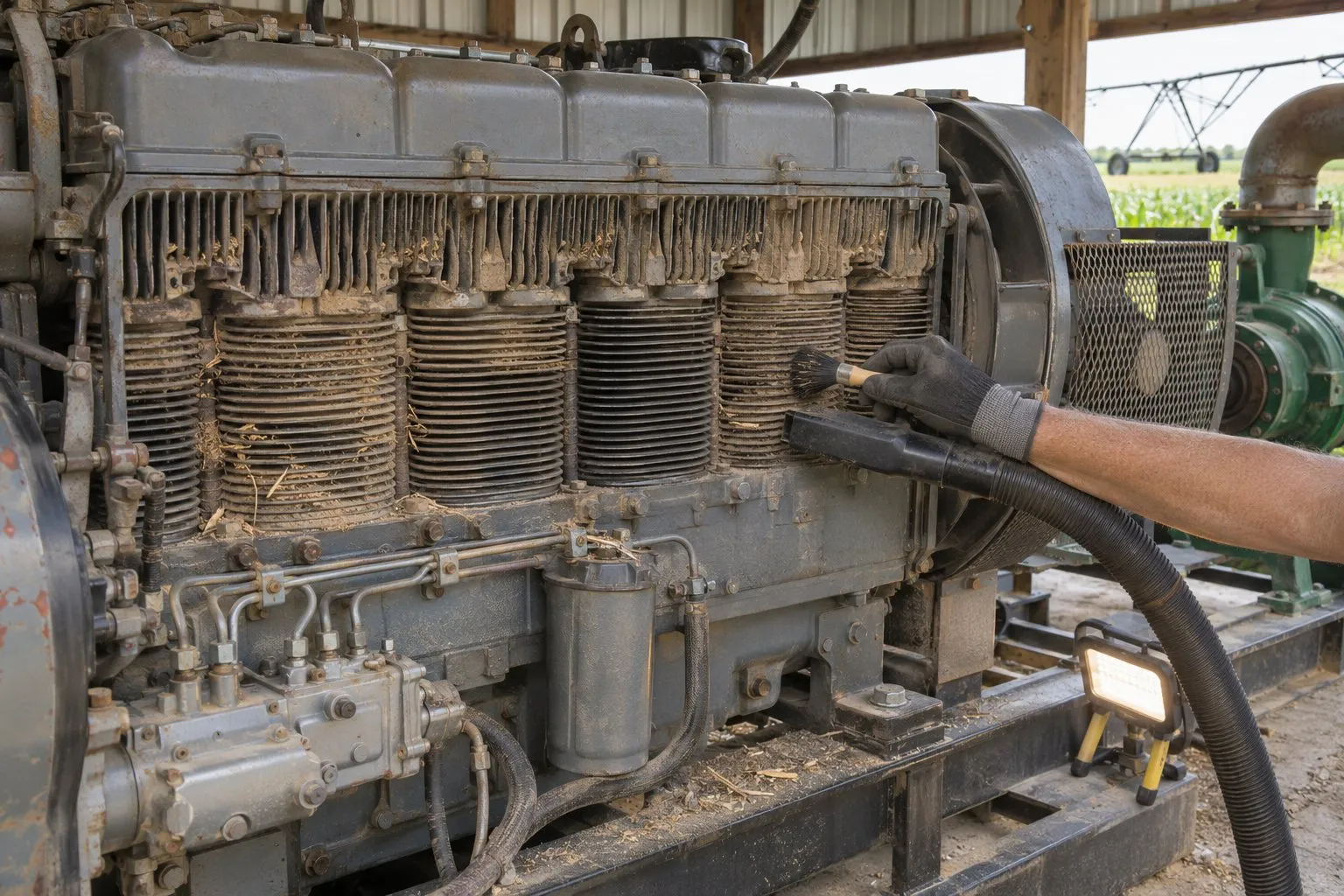
On all three engine types the turbo runs on engine oil. The oil feeds the bearings and carries heat out of the center housing. What changes is how hot that oil runs and what else can reach the turbo.
| Cooling type | Deutz examples | What carries the heat | What to watch for the turbo |
|---|---|---|---|
| Air-cooled | BF4L / BF6L, 913 and 914 series | Air blown across finned cylinders and heads, plus the engine oil | Dirty fins or blower drive faults run the oil hot; oil coking after hot shutdowns |
| Oil-cooled | 1011 and 2011 families | Engine oil through the block and heads | Oil condition directly sets bearing life; low or degraded oil shows up at the turbo early |
| Water-cooled | BF4M / BF6M in the 1012, 1013, 2012 and 2013 series | Coolant circuit and radiator | The usual oil and air basics, plus coolant leaks on versions with an EGR cooler |
Air-cooled engines
An air-cooled Deutz sheds heat through fins on the cylinders and heads, with a blower moving air across them. Many have an oil cooler in the same air stream. Fins packed with dust or chaff, or a blower drive fault, make the engine and its oil run hot. Hotter oil cokes faster in the turbo’s center housing, especially when the engine is shut down hot.
To protect the turbo:
- Clean the fins and oil cooler on Deutz’s schedule.
- Check the blower drive whenever the engine runs hotter than normal.
- After a hard pull, idle the engine for the time given in the Deutz operation manual before shutting it down.
Oil-cooled engines
On the 1011 and 2011 families, the oil is both lubricant and coolant, so its condition directly sets the life of the turbo bearings. Use the oil Deutz specifies. Follow its severe-service schedule when the machine idles a lot, works in dust or runs hot.
Water-cooled engines
The coolant circuit takes load off the oil, but adds one more failure path. On versions with an EGR cooler, a leaking cooler puts coolant into the intake and cylinders, which shows as white smoke and coolant loss. After shutdown, that coolant can also seep into the exhaust manifold and the turbo. If you find deposits in the turbine housing along with coolant loss, check the cooling system before blaming the turbo.
Why Deutz Turbos Fail and What to Check First
Garrett states that more than 90 percent of turbo failures come from oil starvation or oil contamination, and Deutz turbos follow the same pattern.
- Starvation comes from hard acceleration from cold, blocked or leaking oil lines, or a turbo fitted without priming.
- Contamination comes from carbon (the most common contaminant), engine wear debris, dirt let in during service, a filter in bypass, or oil that has broken down.
Dust is the main off-highway risk. Dirt that gets past the air filter leaves pitting on the compressor inlet blades. The pipe between the filter and the turbo is under suction, so a crack or loose hose there pulls in unfiltered air. Replace the filter when the restriction indicator calls for it, and check every inlet joint at the same time.
A restricted oil drain is another common cause. Oil leaves the turbo by gravity, so the drain must run downhill, within about 15 to 20 degrees of straight down, and enter the crankcase above the oil level. A kinked or carbon-choked drain, or high crankcase pressure from a worn engine, backs oil up in the center housing and pushes it past the seals at both ends.
| Symptom | Possible causes | Check first |
|---|---|---|
| Blue-gray smoke, pooled oil in intake or exhaust | Restricted drain, high crankcase pressure, restricted air filter, worn seals | Drain routing, breather, filter restriction, oil level; the turbo last |
| Black smoke, low power, slow spool | Boost leak, exhaust leak before the turbine, wastegate not seating, damaged wheels | Charge pipes and clamps, manifold gaskets, wastegate, wheels |
| Whine or siren under load | Boost or exhaust leak, wheel rubbing the housing | Every joint first, then shaft play and wheel contact |
| Pitted compressor inlet blades | Dust past the filter or a cracked inlet pipe | Filter seal, filter housing, inlet hoses and clamps |
| Wheel touching the housing | Oil starvation or contaminated oil | Oil feed line, oil pressure, oil condition, filter |
| White smoke with coolant loss | Coolant leak (EGR cooler on versions with one, head gasket) | Cooling system, not the turbo |
Smoke color helps narrow it down:
- Blue-gray smoke is oil.
- Black or dark gray smoke means too little air.
- White smoke is coolant or, on a cold engine, unburned fuel.
On engines that route crankcase vapor into the intake, a light oil film in the piping is normal. Pooled oil is the warning sign.
Inspection, Replacement and Rebuilds
With the pipes off, check the shaft by hand. Some side-to-side movement is normal on a journal bearing turbo with no oil pressure. Condemn the turbo for in-and-out play you can feel, a wheel that touches its housing, or play beyond the maker’s limit. Also check the compressor blades for pitting or impact damage and the turbine wheel’s inlet edges for debris hits.
If the turbo has a wastegate, check it too. A flapper that does not seat lets exhaust bypass the turbine, giving low boost and slow spool. A leaking diaphragm on a boost-opened actuator makes the gate open late, which causes overboost. Test a pneumatic actuator with a hand pressure pump against the rod travel the maker gives.
Before a new or rebuilt turbo goes on, fix what killed the old one:
- After a bearing failure or coked oil, fit a new oil feed line. Do not flush and reuse the old one.
- Clear or replace the drain line, and confirm it runs downhill to the crankcase.
- Change the oil and filter, and replace the air filter if it is past its restriction limit.
- If the compressor wheel shed metal and the engine has a charge air cooler, replace the cooler. Metal in the fins cannot be flushed out reliably.
- Use new oil inlet and drain gaskets, with no sealant.
For the first start, follow the maker’s steps:
- Fill the oil inlet with clean engine oil (about 2 oz, or the syringe supplied with the turbo) and turn the wheel by hand.
- Disable fueling using the Deutz procedure for your engine, then crank for 10 to 15 seconds without starting.
- Start the engine and idle 3 to 4 minutes while checking for oil, exhaust and air leaks, as Garrett’s installation guide advises.
There is no break-in period. Once the turbo is leak-free, the machine can go back to work.
PT Turbo has been rebuilding turbochargers for more than 45 years. Our turbo rebuild service is done in-house:
- Every rebuilt turbo is VSR balanced.
- Each one gets a final inspection: a leak test, a visual inspection and a wastegate or actuator function check.
- Inspection notes ship with the turbo.
- Most rebuilds ship in 3 days or less.
- The price is confirmed after inspection, before work starts. The turbo rebuild price list shows rates by turbo.
- The warranty is 12 months with unlimited mileage.
For a replacement, search the PT Turbo store by your tag number. Current pricing is on each product page. Availability of remanufactured turbochargers for Deutz numbers depends on core supply. Cores go back within 30 days at the customer’s shipping cost; call ahead if you need longer. If your number is not listed, call (909) 824-1020 and we will quote a rebuild of your own turbo.
If your fleet also runs other engines, our Cummins QSB turbocharger guide and Caterpillar C9 turbocharger guide apply the same tag-number approach.
Frequently Asked Questions
Do the BF4M and BF6M use the same turbocharger?
Not as a rule. Four- and six-cylinder engines move different amounts of air, and even engines with the same name can carry different turbos depending on rating, machine and emissions level. Match the part number on the turbo’s tag, and send the engine serial number if the tag is gone.
Does oil in the intake pipes mean my Deutz turbo seals are gone?
Not by itself. A light film is normal on engines that route crankcase vapor into the intake. Pooled oil usually traces to a restricted drain, high crankcase pressure, a clogged air filter or a high oil level before it traces to the turbo. A turbo can only put oil into the intake past its compressor-side seal, so check those causes first.
Can PT Turbo rebuild a Deutz turbocharger?
Yes. Rebuilds are done in-house in San Bernardino, and each turbo is VSR balanced and inspected before it ships. Most ship in 3 days or less. Send the tag number or photos, and we will confirm the price after inspection, before any work starts.
Need a Turbocharger?
PT Turbo has rebuilt and sold turbochargers since 1978. We stock remanufactured units for Cummins, Duramax, Power Stroke, Detroit Diesel, and more — backed by a 12-month unlimited mileage warranty. Units in stock at our shop in San Bernardino, CA ship the same day when ordered before 2 PM Pacific, Monday through Friday.
📞 (909) 824-1020 · 346 S I St. #3, San Bernardino, CA 92410 · info@ptturbo.com
More From PT Turbo
 BorgWarner S200 Turbocharger: CAT C7, John Deere & Agricultural Applications
- VW TDI 2.0L Turbocharger Guide: Jetta, Golf, Beetle & Passat Replacement
- Audi 2.0L TDI Turbocharger Guide: A3, A4, A5 & Q3 Common Failures & Replacement
- Kubota RTV & SVL Turbocharger Guide: Diesel Utility & Compact Track Loader