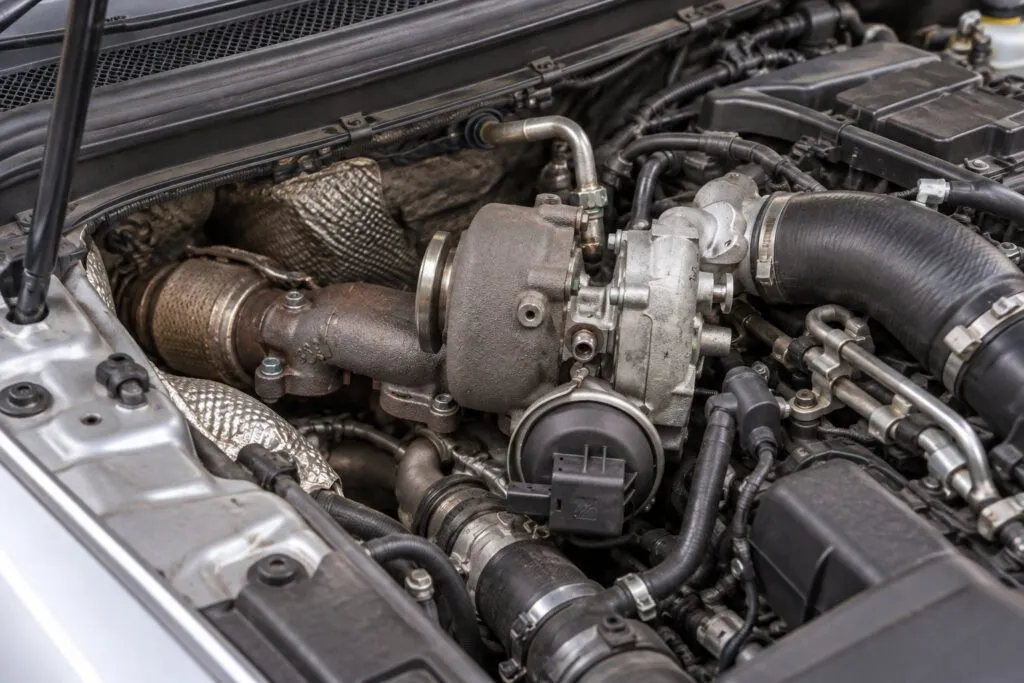
This Audi 2.0L TDI Turbocharger Guide covers the most common failure points, symptoms, and replacement options for the A3, A4, A5, and Q3 diesel platforms that have earned a reputation for solid fuel economy but temperamental turbo hardware. If you’re chasing a limp-mode fault, a whistling boost leak, or a stuck variable geometry mechanism, this is the practical breakdown you need.
The 2.0L TDI (EA189 and later EA288) engines rely on variable geometry turbochargers to make usable torque across a wide RPM band. When those turbos fail, they rarely fail cleanly. Understanding how the system works is the fastest path to a correct diagnosis instead of throwing parts at the problem.
How the 2.0L TDI Turbo System Works
Audi’s 2.0L TDI engines use a variable geometry turbocharger (VGT), most commonly Garrett GT17/GTB1749V and BorgWarner BV43 units depending on year and chassis. The vanes inside the turbine housing adjust angle to control exhaust flow, giving strong low-end response and controlled top-end boost.
On most 2.0L TDI applications the vanes are moved by a vacuum-operated pneumatic actuator. On the common-rail engines, including the later EA288, the vacuum unit also carries a position sensor (Volkswagen’s service bulletin for the 2009 to 2014 engines and its EA288 training material both describe it). The actuator differs by engine version, so look at what is on your turbo before ordering parts.
The actuator is the single most frequent point of failure. It’s exposed to constant heat cycling, and the diaphragm and linkage wear out long before the turbo’s core does. That’s good news, because a healthy CHRA paired with a fresh actuator often restores full function at a fraction of full replacement cost.
Common Audi 2.0L TDI Turbocharger Failures
Across the A3, A4, A5, and Q3, the same handful of issues account for the vast majority of turbo complaints. Most trace back to carbon buildup, actuator wear, or oil-related bearing damage.
1. Stuck or Sticking VGT Vanes
Diesel soot and oil vapor bake onto the variable vanes over time. The mechanism binds, the actuator can no longer sweep the vanes fully, and the ECU throws a boost deviation code (commonly P0299 underboost or P0234 overboost).
Short-trip city driving and a clogged EGR system accelerate this. Extra soot from EGR recirculation ends up right where the vanes need to move freely.
2. Failed Pneumatic Actuator
The vacuum diaphragm cracks, the rod seizes, or the calibration drifts. When this happens the turbo can’t hit commanded boost and the car drops into limp mode under load. This is by far the most cost-effective failure to fix if the core is still sound.
3. Bearing and Shaft Wear
Extended oil change intervals, coking after hot shutdowns, and a restricted oil feed line lead to worn journal bearings. Excessive shaft play produces the classic turbo whine, blue smoke, and oil consumption. Once the wheels contact the housing, replacement or a full rebuild is the only fix.
4. Oil Leaks and Seal Failure
Blocked crankcase ventilation raises pressure and pushes oil past the turbo seals. You’ll see oil in the intercooler piping and smoke on acceleration. Always verify the PCV and drain line before condemning a turbo for seal leaks.
Symptoms Ranked by Severity
Not every symptom means the turbo is finished. Use this table to gauge urgency before you pull anything apart.
| Symptom | Likely Cause | Severity |
|---|---|---|
| Intermittent limp mode under load | Sticking vanes or weak actuator | Moderate |
| P0299 underboost code | Vane binding, actuator, boost leak | Moderate |
| Whistling or siren noise | Bearing wear, shaft play | High |
| Blue/gray smoke, oil consumption | Failed seals, worn bearings | High |
| Rattle or grinding from turbo | Contacting compressor/turbine wheel | Critical, stop driving |
If you hear metal-to-metal rattle, park it. A wheel that shreds itself can send debris downstream into the intercooler and, in the worst case, the engine.
Audi 2.0L TDI Turbocharger Guide to Actuator Replacement
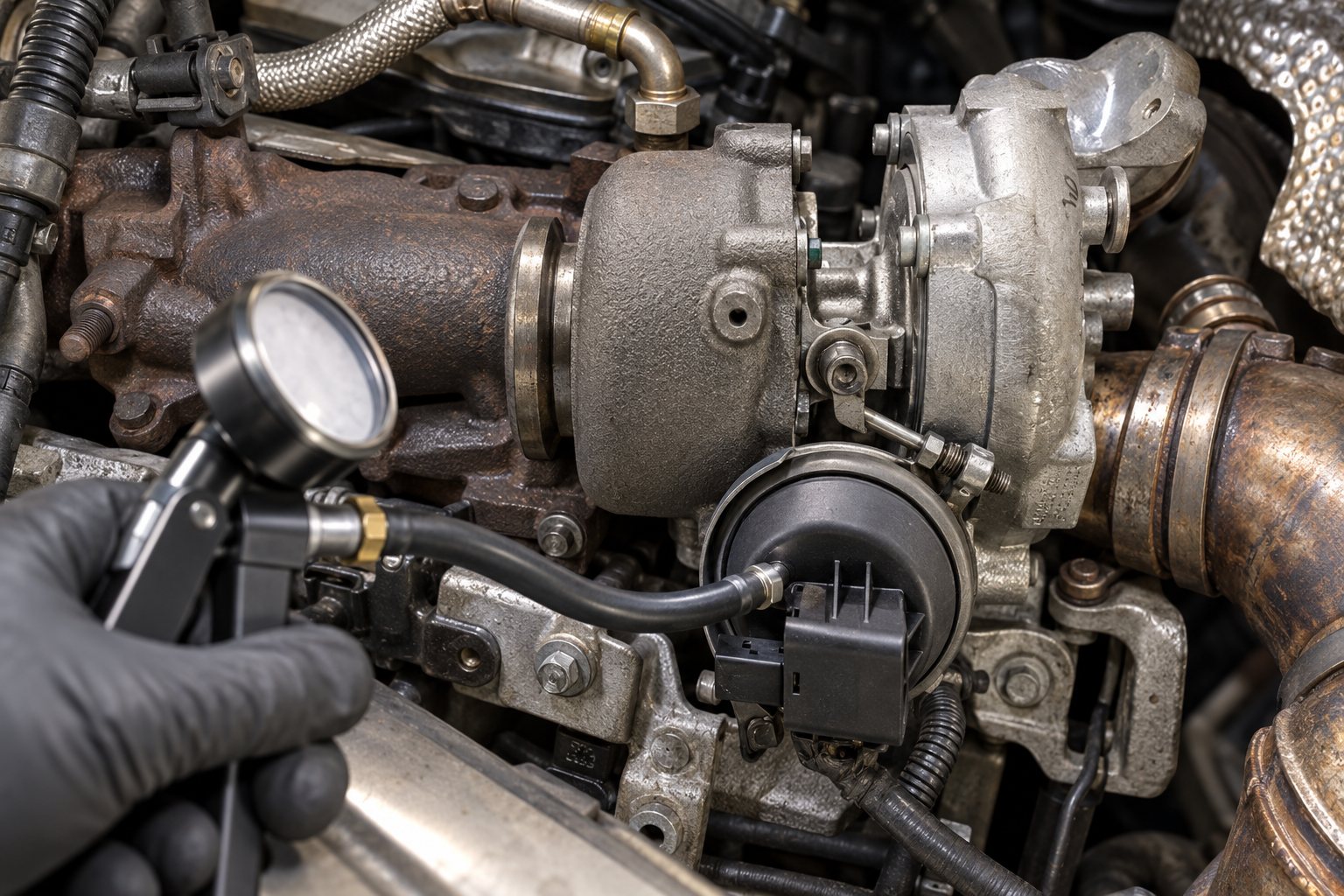
Because the pneumatic actuator fails so often, replacing it is frequently the smartest first move once you’ve confirmed the vanes still sweep freely. A new, correctly calibrated actuator can bring a healthy turbo back to full boost without pulling the entire unit.
PT Turbo lists actuators by turbo part number. Send us the number on your turbo and we will check whether its actuator is available on its own. Matching the correct part number and calibration is critical, since an improperly set actuator will never hit commanded boost.
When installing any replacement actuator, verify the rod length and preload against spec. On VGT units the actuator position directly sets the closed-vane baseline, so a few millimeters of error will throw a boost code on the first hard pull.
New vs Remanufactured: What Makes Sense
When the core itself is worn, you have three paths: a new turbo, a quality remanufactured unit, or a rebuild of your existing housing. Each has a place depending on budget and vehicle value.
| Option | Typical Cost Range | Best For |
|---|---|---|
| New OEM turbo | Quoted by part number | Newer vehicles, warranty priority |
| Remanufactured turbo | Quoted by part number | Best value, proven reliability |
| Rebuild your core | From $575 at PT Turbo (price list) | Keeping matched hardware, cost control |
| Actuator only | see actuator prices | Healthy core with actuator failure |
A properly built remanufactured turbocharger uses new bearings, seals, and a balanced CHRA, and it typically costs a fraction of a dealer part. For shops and owner-operators watching margins, reman is usually the sweet spot.
If your housing is in good shape and you want to keep your matched hardware, PT Turbo’s turbo rebuild service restores the core to spec with a fresh balance job. With 45+ years in business since 1978, PT Turbo stocks both new and remanufactured parts and can point you to the right solution for your exact chassis.
Diagnosis and Replacement Tips
Before condemning the turbo, rule out the cheap stuff. A boost leak or a bad vacuum line mimics turbo failure and costs nothing to fix.
- Scan for codes and read live boost data. Compare commanded vs actual boost under load.
- Inspect all charge piping and clamps for splits and oil residue.
- Check the vacuum supply and N75 solenoid feeding the actuator.
- Manually verify the actuator rod moves smoothly through full travel with the vanes attached.
- Confirm the oil feed line is clear and the crankcase ventilation is not overpressurized.
When installing a replacement turbo or rebuilt core, always prime the oil feed and change the oil and filter. Clean the intercooler and piping thoroughly if the old unit was leaking oil, or the new one will burn off residual oil and smoke on startup.
If you’re diagnosing VGT behavior on other platforms, the same principles apply. Our Cummins ISB 6.7L variable geometry guide and Ford 6.7L Powerstroke GT32 guide cover similar vane and actuator failure patterns on larger diesels.
The common thread across all of these TDI failures is that the turbo is rarely the first thing to go wrong. Carbon from EGR, a tired actuator, or a neglected oil feed does the damage, and the turbo just shows the symptoms. Fix the root cause before you bolt on a new or reman unit, or you’ll be back under the car with the same code in a few thousand miles.
Get the diagnosis right first, match the correct actuator or core to your exact chassis and model year, and you’ll turn a repeat limp-mode headache into a one-and-done repair.
For the V6 in the A6, A7, A8, Q5 and Q7, see our Audi 3.0L TDI turbocharger guide.
Frequently Asked Questions
What are the most common Audi 2.0L TDI turbocharger failure symptoms?
The most common symptoms include limp mode activation, a whistling boost leak, loss of power, and a stuck variable geometry mechanism. These often point to failing turbo hardware on A3, A4, A5, and Q3 diesel platforms.
Which Audi models are affected by 2.0L TDI turbocharger problems?
The A3, A4, A5, and Q3 diesel platforms are the most commonly affected models. They offer strong fuel economy but are known for temperamental turbo hardware.
Can a stuck variable geometry turbo on an Audi 2.0L TDI be repaired?
In some cases the variable geometry mechanism can be cleaned or freed, but persistent sticking or worn components usually require turbocharger replacement. Diagnosing the exact fault first will help determine the best option.
Need a Turbocharger?
PT Turbo has rebuilt and sold turbochargers since 1978. We stock remanufactured units for Cummins, Duramax, Power Stroke, Detroit Diesel, and more — backed by a 12-month unlimited mileage warranty and same-week shipping from San Bernardino, CA.
📞 (909) 824-1020 · 346 S I St. #3, San Bernardino, CA 92410 · [email protected]
More From PT Turbo
 Land Rover TD4 2.0L Turbocharger Guide: Defender, Discovery Sport & Range Rover Evoque
- Garrett Turbocharger Complete Guide: GT, GTB, GTX & G-Series Reference
- BorgWarner Schwitzer Turbocharger Guide: S-Series, K-Series & KKK Reference
- Holset HX40 Turbocharger: Specs, Cummins ISC Applications & Replacement