This Audi 3.0L TDI Turbocharger Guide is built for the mechanics, fleet managers, and owner-operators who actually turn wrenches on these engines, not for people looking for vague advice. The 3.0 TDI V6 has powered the A6, A7, A8, Q5, and Q7 for well over a decade, and when the turbo system starts acting up, you need real specs, real part numbers, and a clear path to a fix. At PT Turbo, we have been rebuilding and supplying turbochargers since 1978, so we have seen every failure mode this platform can throw at you.
Below we break down the turbo variants used across the Audi 3.0 TDI range, the symptoms of failure, the actuator and VGT components that fail most often, and the smart way to decide between new, remanufactured, and rebuilt units.
Understanding the Audi 3.0L TDI Turbo System
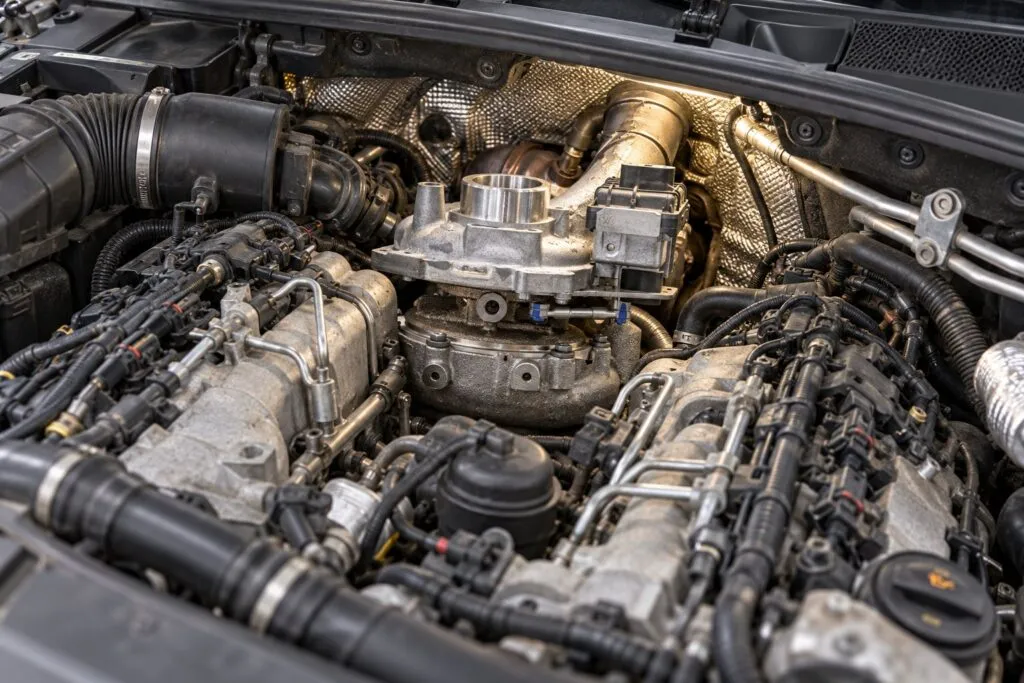
The 3.0 TDI (sold under many engine codes depending on model, year and market, so read the code from the engine or the build sticker) uses a single variable-geometry turbocharger on most configurations. The variable geometry lets the turbo behave like a small, quick-spooling unit at low RPM and a large, high-flow unit up top.
If you are new to how these work, the concept behind a variable-geometry turbocharger is central to how the 3.0 TDI makes torque so early. Instead of a wastegate dumping boost, movable vanes in the turbine housing change the effective aspect ratio of the exhaust flow.
Most of these Audi applications run a single variable geometry turbocharger. The exception is the 3.0 TDI biturbo (engine code CGQB, 230 kW), which has a two-stage system with two turbochargers and is not covered by the single-turbo information here. References name Garrett GTB-series units on the 2010-on engines and BorgWarner on others, so go by the number on the turbo. The vanes are commanded by an electronic actuator, and that actuator is where a huge share of real-world failures originate.
Common turbo hardware across A6, A7, A8, Q5 and Q7
- Turbine and compressor wheel: shared architecture across most single-turbo 3.0 TDI variants, with housing differences by chassis
- VGT vane mechanism: the failure point for sticking, carbon buildup, and inconsistent boost
- Actuator: electronic, bolted to the turbo
- Center housing rotating assembly (CHRA): the oil-fed cartridge that carries the bearings and shaft
Symptoms of a Failing 3.0 TDI Turbocharger
The Audi 3.0 TDI rarely dies all at once. It degrades, and the codes and driving symptoms tell you how far gone it is. Use the table below to triage severity before you pull anything apart.
| Severity | Symptoms | Likely Cause |
|---|---|---|
| Early | Slight lag, occasional limp mode that clears on restart, P0299 underboost stored | Sticking VGT vanes or lazy actuator |
| Moderate | Repeated limp mode, black smoke under load, whistling, boost that fluctuates | Actuator failure, carbon-locked vanes |
| Severe | Blue smoke, oil in the intercooler piping, screeching, metal-on-metal noise, oil consumption | Failed CHRA bearings, damaged seals, shaft play |
The single most common code on this platform is P0299 (turbocharger underboost). Most often it traces back to the vane control system rather than a spun bearing. That matters, because a stuck vane or dead actuator does not require a full turbo replacement.
Excessive oil in the charge piping or blue smoke, on the other hand, points to seal and bearing failure inside the cartridge. That is when you are looking at a full unit or a professional rebuild.
Actuators: The Most Replaced Part on the Platform
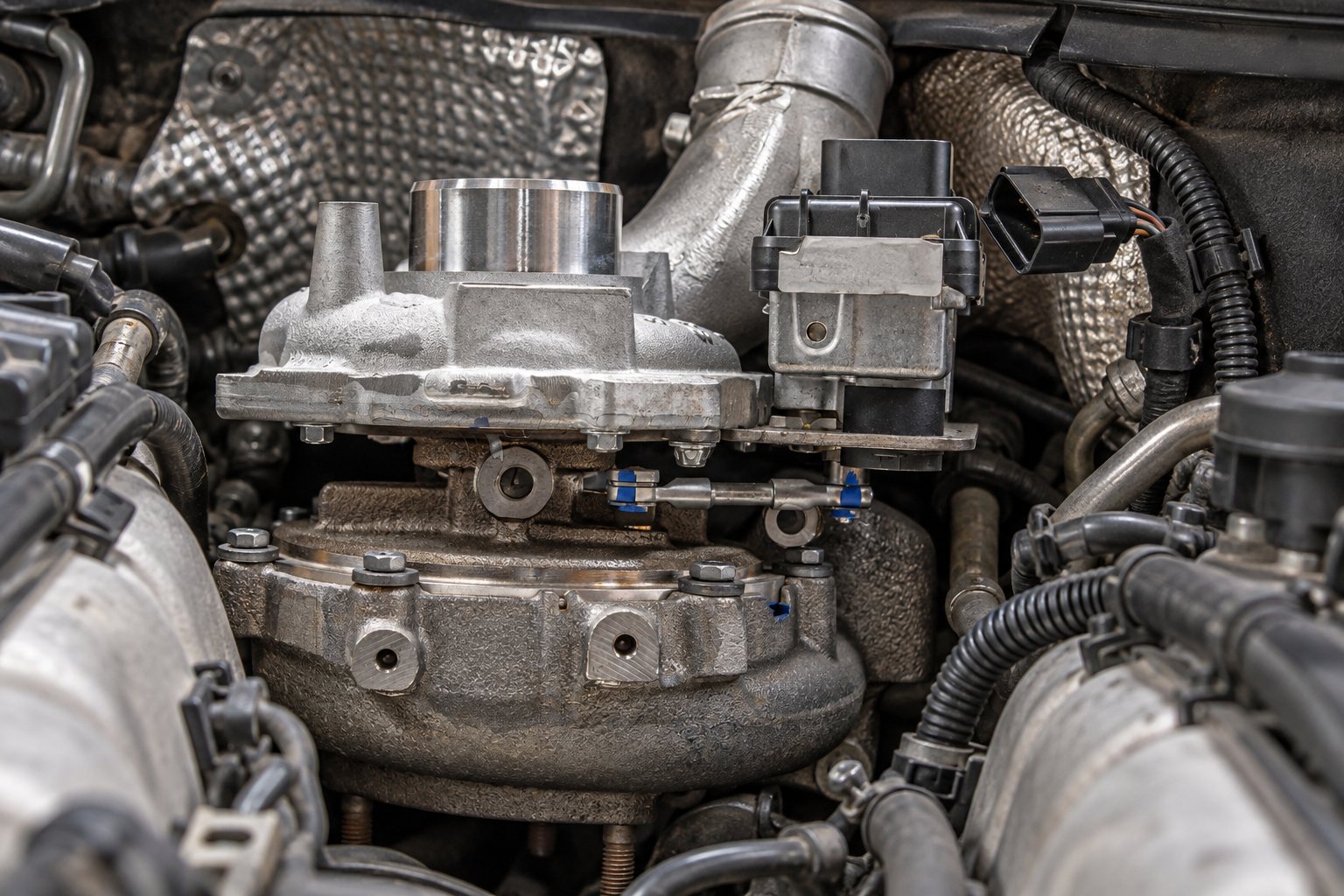
Before you condemn an entire turbocharger, check the actuator. On the Audi 3.0 TDI and its close mechanical relatives, the electronic actuator that drives the VGT mechanism wears out or fails internally long before the turbine or compressor gives up.
A failing actuator cannot hold the vanes in position under load, which throws underboost or overboost codes and drops the engine into limp mode. Replacing the actuator is a fraction of the cost of a complete turbo and often restores full function.
Matching the exact actuator to your turbo part number is critical, so verify before you order.
If you are not sure which actuator matches your turbo, read the numbers on the compressor housing and on the actuator, then contact PT Turbo and we will confirm the right fit rather than guessing.
New vs Remanufactured vs Rebuilt: What Makes Sense
You have three real paths when a 3.0 TDI turbo goes down. The right choice depends on your budget, downtime tolerance, and whether the core is still serviceable.
| Option | Typical Cost | Best For | Notes |
|---|---|---|---|
| New OEM turbo | Quoted by part number | Warranty-critical fleet vehicles | Highest cost, longest part lead times |
| Remanufactured turbo | Quoted by part number | Most owners and fleets | New wear parts, balanced to spec, big savings |
| Rebuild your core | From $575 at PT Turbo (price list) | Original core in good shape | Keeps your exact unit, no core charge headaches |
| Actuator only | see actuator prices | Vane control faults, no bearing damage | Cheapest fix when the CHRA is healthy |
A quality remanufactured turbocharger is the sweet spot for most 3.0 TDI owners. A proper reman uses new bearings, seals, and often new turbine or compressor wheels, then gets computer balanced to the same tolerances as a factory unit. You get near-new reliability at a large discount.
If your original turbo core is undamaged and you want to keep the exact unit that came off your car, our turbocharger rebuild service restores it to spec. This is the route many diesel techs prefer when the housings are clean and only the rotating assembly needs attention.
Diagnosis Before Replacement: Do Not Skip This
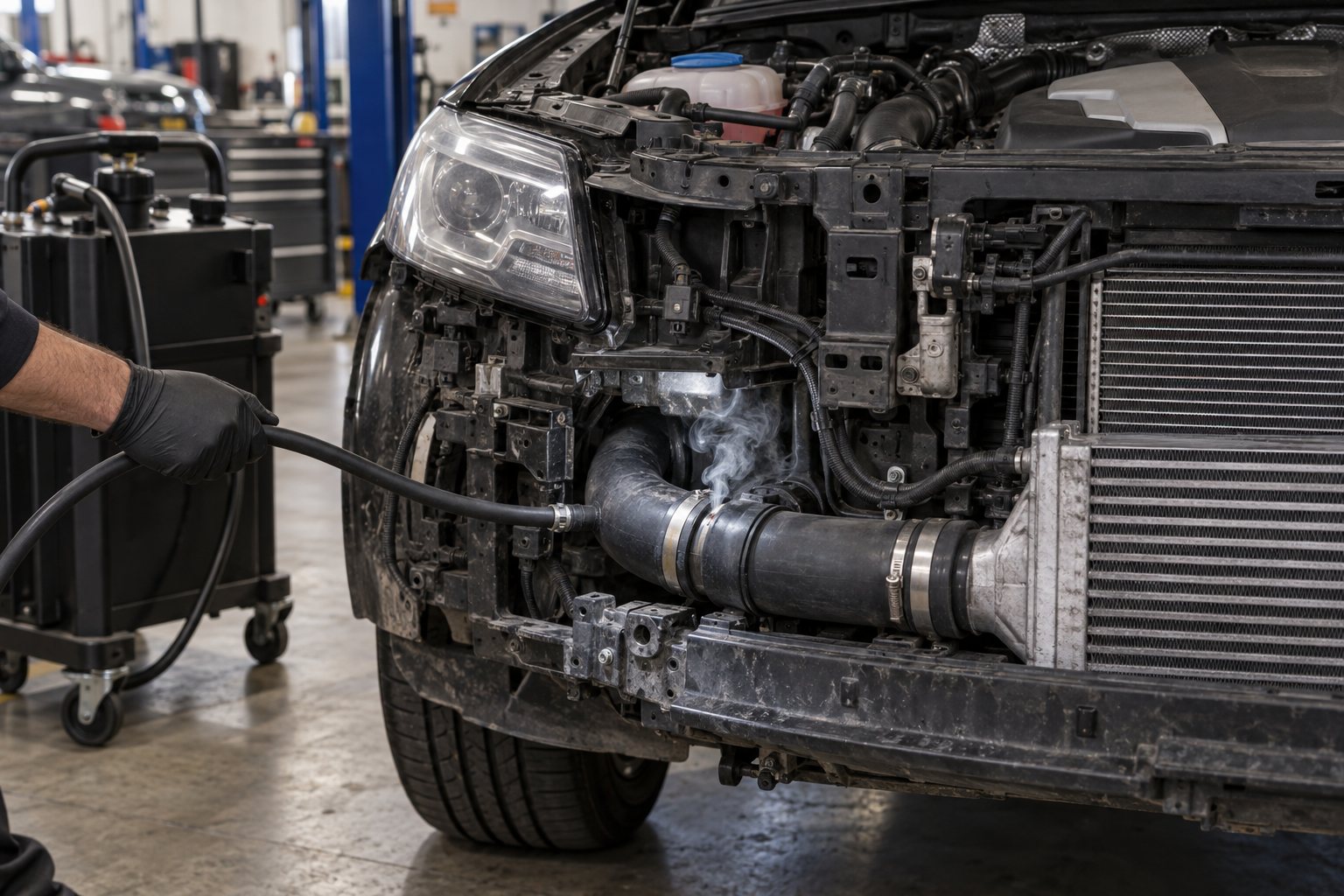
A lot of good turbos get thrown away on this platform because the real culprit was somewhere else in the boost or emissions system. Before condemning the unit, work through these checks.
- Actuator wiring: confirm the connector is clean and dry and the harness is undamaged
- Actuator travel: verify the actuator moves through its full range and holds position
- VGT vane movement: with the exhaust side accessible, check that the vane ring is not carbon-locked
- Intake and charge piping: inspect for splits, loose clamps, and oil pooling
- EGR and DPF condition: a clogged aftertreatment system drives up backpressure and mimics turbo faults
Backpressure from a saturated diesel particulate filter or a stuck EGR system can throw the same underboost and smoke symptoms as a failing turbo. Rule those out so you do not pay twice.
Check for shaft play by hand. A little side-to-side movement is normal, but in-and-out play you can feel, or any contact between the wheel and housing, means the cartridge is done and the unit needs a rebuild or replacement.
Replacement Tips for the Audi 3.0 TDI Turbocharger Guide
This part of the Audi 3.0L TDI Turbocharger Guide covers the practical side of the job. Access varies by chassis, with the Q7 and A8 generally requiring more disassembly than the A6 and A7 to reach the turbo and its oil lines.
Whatever chassis you are in, replace the oil feed and return lines or at least flush them before the new turbo goes on. The most common way a fresh reman gets killed early is debris or sludge left in the old lines starving the new bearings. Prime the turbo with clean oil at the feed port and crank it with the fuel disabled before the first real start, so the cartridge is not running dry on initial spool.
Clear the carbon out of the intake tract and charge piping while you are in there, and confirm the vane mechanism on the new unit moves freely before it ever sees exhaust heat. If you swapped the turbo to chase a boost code, address the actuator and aftertreatment issues at the same time so the new unit does not inherit the same fault.
Finally, let the engine idle after the first start to confirm oil pressure and watch for leaks at the feed and return fittings before you load it. A few minutes of patience here protects the whole repair.
Frequently Asked Questions
What are the symptoms of a failing Audi 3.0L TDI turbocharger?
Common signs include loss of power, excessive smoke, whining or grinding noises, and boost pressure fault codes. Oil leaks around the turbo and reduced fuel economy can also indicate turbo failure.
Which Audi models use the 3.0L TDI turbocharger?
The 3.0 TDI V6 turbocharger has been used in the Audi A6, A7, A8, Q5, and Q7 for well over a decade. Exact part numbers vary by model year and engine variant.
Can I replace the Audi 3.0L TDI turbocharger myself?
Yes, experienced mechanics and owner-operators can replace it with the correct part number, specs, and tools. However, proper installation and oil-feed priming are critical to avoid premature failure.
Need a Turbocharger?
PT Turbo has rebuilt and sold turbochargers since 1978. We stock remanufactured units for Cummins, Duramax, Power Stroke, Detroit Diesel, and more — backed by a 12-month unlimited mileage warranty and same-week shipping from San Bernardino, CA.
📞 (909) 824-1020 · 346 S I St. #3, San Bernardino, CA 92410 · [email protected]