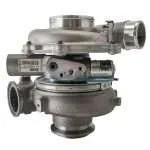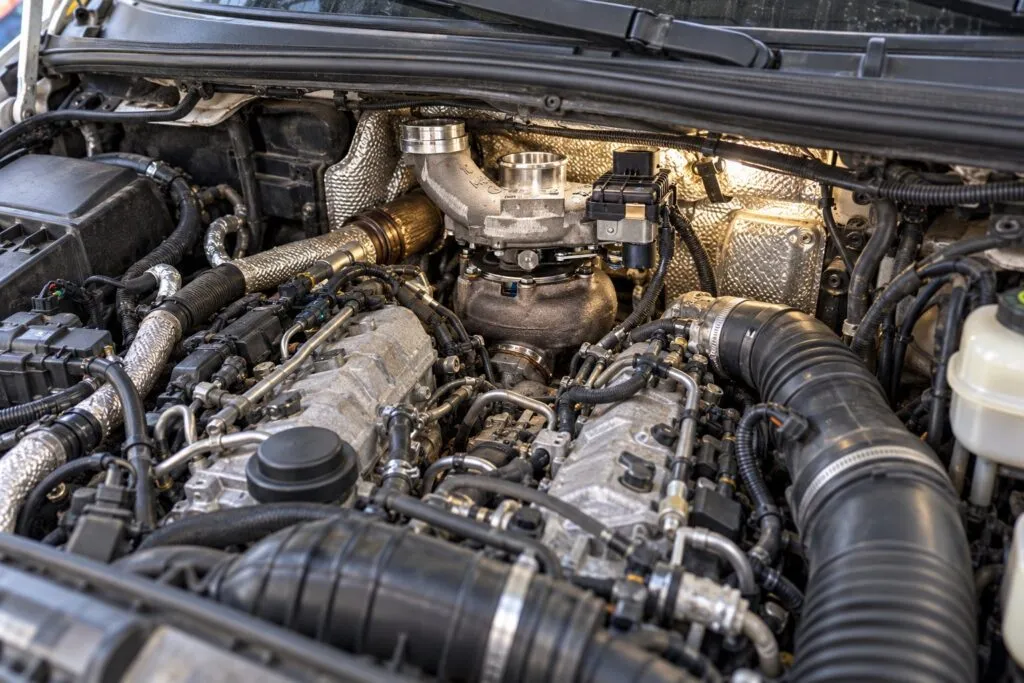
The Garrett GT2056V Turbocharger is one of the most widely used variable-geometry turbos on the Mercedes OM642 3.0L V6 diesel and the 2007-2009 Dodge Sprinter, and if you turn wrenches on these vans and SUVs long enough, you’ll get to know this unit intimately. It’s a compact, VNT-style charger built to deliver strong low-end torque and clean emissions performance, but it has a handful of well-documented failure points that every diesel tech should recognize.
At PT Turbo, we’ve been rebuilding and supplying turbochargers since 1978, over 45 years in the business, and the GT2056V has crossed our bench thousands of times. This guide breaks down the fitment, specs, common failures, and the actuator options that keep these units running right.
What Is the Garrett GT2056V and Where It Fits
The GT2056V is a variable nozzle turbine (VNT) turbocharger from the Garrett GT series. It uses movable vanes inside the turbine housing to change exhaust gas velocity across the turbine wheel, giving you fast spool at low RPM and controlled boost up top. If you want the deeper theory, the basics are covered well in this variable-geometry turbocharger overview.
The OM642 V6 uses a single GT2056V-family turbo mounted in the valley of the engine, in the Sprinter and in the SUV and sedan applications. The vane position is controlled by an electronic actuator bolted to the turbo, commanded directly by the engine management system.
Common OM642 and Sprinter Applications
- 2007-2009 Dodge Sprinter 2500 / 3500 (3.0L OM642)
- 2010+ Mercedes Sprinter 2500 / 3500 (3.0L OM642)
- Mercedes ML320/ML350 BlueTEC (W164)
- Mercedes GL320/GL350 BlueTEC (X164)
- Mercedes E320/E350 BlueTEC (W211/W212)
- Mercedes R320 CDI (W251)
- Jeep Grand Cherokee 3.0 CRD (WK, export/some US)
Because these platforms share the OM642 block, the core turbo architecture stays consistent, but calibration, actuator part numbers, and DPF integration vary by year and market. Always confirm the exact casting and actuator number before ordering.
Garrett GT2056V Turbocharger Specifications
The GT2056V sits in the smaller end of the GT frame family, which is exactly what a 3.0L V6 needs for responsive daily-driver behavior. Here’s how the core specs line up.
| Specification | Detail |
|---|---|
| Turbo family | Garrett GT series (VNT) |
| Engine | Mercedes OM642 3.0L V6 turbodiesel |
| Turbine type | Variable nozzle (movable vanes) |
| Actuator | Electronic |
| Bearing system | Journal bearing |
| Typical output support | About 188 hp in the Sprinter and about 210 hp in US-market cars and SUVs, per engine calibration |
Heat matters on these units. Sprinter owners who shut down hot after highway pulls without a brief idle can cook the bearing system, and coking is a leading cause of premature failure.
Common GT2056V Failure Symptoms
The good news is that GT2056V problems tend to announce themselves clearly. The bad news is that owners often ignore the early signs until the turbo goes into full limp mode. Here’s how the failures typically progress.
| Severity | Symptoms | Likely Cause |
|---|---|---|
| Early | Slight lag, hesitation off idle, minor boost fluctuation | Sticking VNT vanes from soot buildup |
| Moderate | Reduced power, occasional limp mode, overboost/underboost codes | Failing electronic actuator or vane binding |
| Severe | Persistent limp mode, blue/black smoke, whining or grinding, oil in intake | Bearing failure, shaft play, seal failure |
Soot-loaded vanes are the number one issue on carbon-heavy diesels, and it’s tied directly to the emissions hardware. Understanding how exhaust gas recirculation and the diesel particulate filter load the exhaust stream helps explain why these vanes gum up over time.
Codes to Watch For
- P0299 – Turbocharger underboost
- P0234 – Turbocharger overboost
- P2563 – Turbo boost control position sensor circuit range/performance
- Mercedes-specific P2005x boost pressure deviation codes
A P0299 on a Sprinter is very often a sticking vane mechanism or a tired actuator, not a dead turbo core. That distinction can save you a lot of money, which brings us to the single most important serviceable part on this unit.
The Electronic Actuator: The Most Common GT2056V Repair
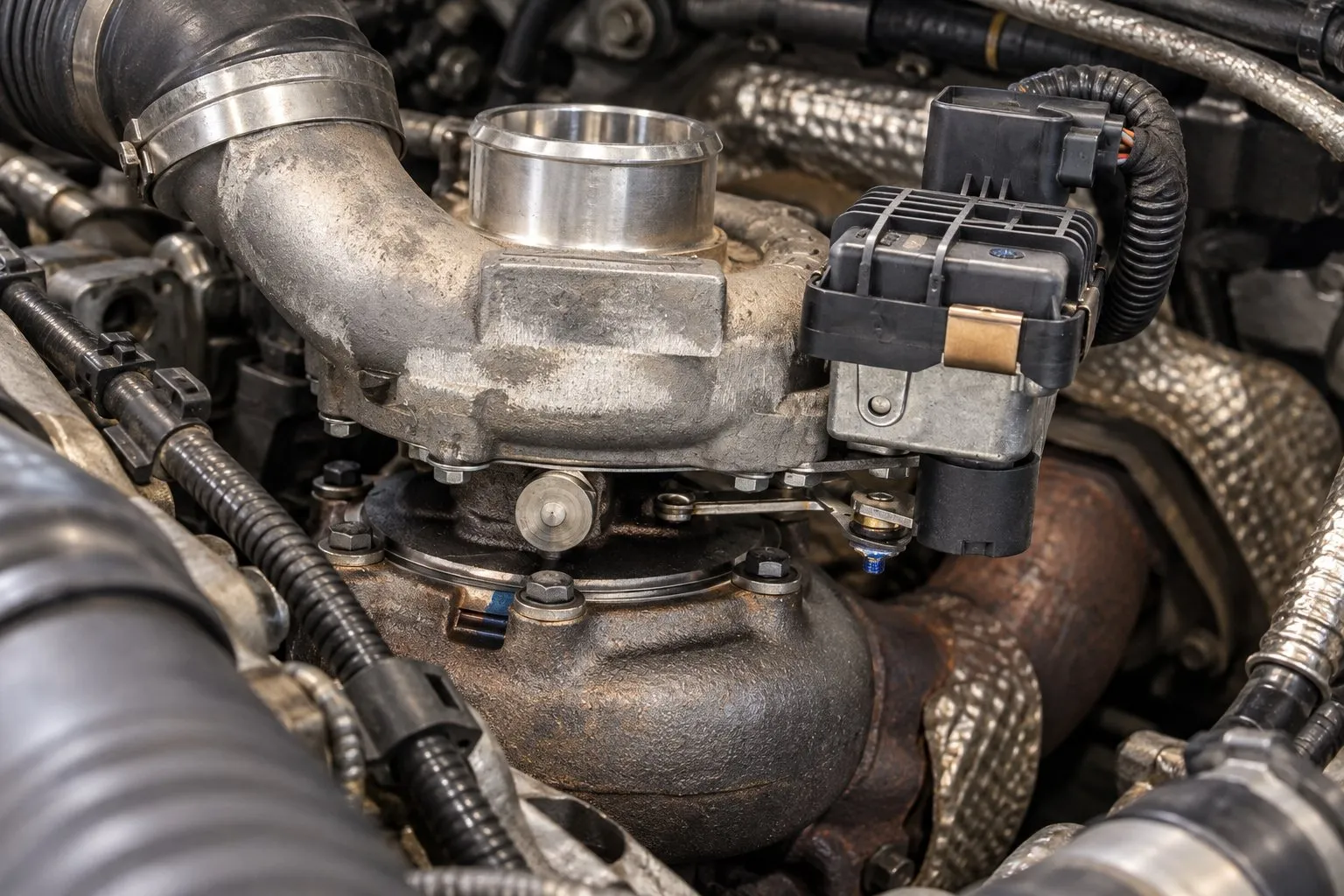
The electronic actuator that drives the VNT vanes is the part that fails most often, and replacing it can restore full function without touching the turbo core. When its motor or electronics fail, or the linkage seizes, boost control goes out the window and the ECU throws underboost or overboost codes.
The correct actuator depends on your exact turbo casting and application, so match the part number carefully. PT Turbo stocks genuine Garrett actuators for the GT2056V family.
One critical note: a new actuator must be calibrated to the specific turbo. The actuator has to learn where the vanes sit at rest and at full sweep, which is done with a service tool. Bolting on an uncalibrated actuator and hoping for the best is how techs create new boost problems. If you’re not set up to bench-calibrate, our turbocharger rebuild service handles actuator fitting and calibration correctly.
New vs Remanufactured GT2056V: Cost and Value
When the core itself is worn, meaning shaft play, damaged vanes, or a failed bearing system, you’re looking at a full turbo replacement. Here’s how the options compare for a typical OM642 Sprinter job.
| Option | Typical Cost Range | Best For |
|---|---|---|
| New OEM Garrett | $1,240 to $1,782 (4 listings) at PT Turbo | Warranty fleets, zero-downtime priority |
| Quality remanufactured | $1,096 (1 listing) at PT Turbo | Best value for most owners and shops |
| Actuator-only repair | see actuator prices | Good core, boost control fault only |
Price ranges in this article are general estimates to help with budgeting, not PT Turbo quotes. Our current prices are on each product listing, and our rebuild prices are on the turbo rebuild price list.
A properly remanufactured unit uses genuine Garrett CHRA components, balanced to spec, with the vanes cleaned and the actuator calibrated. That’s very different from a cheap import rebuild, and it’s why our remanufactured turbochargers carry the reputation they do. We stock both new and reman GT2056V units, so you can match your budget and timeline.
For a broader look at how VNT-style diesel turbos are engineered, Garrett’s own resources at garrettmotion.com are a solid reference.
Installation and Longevity Tips
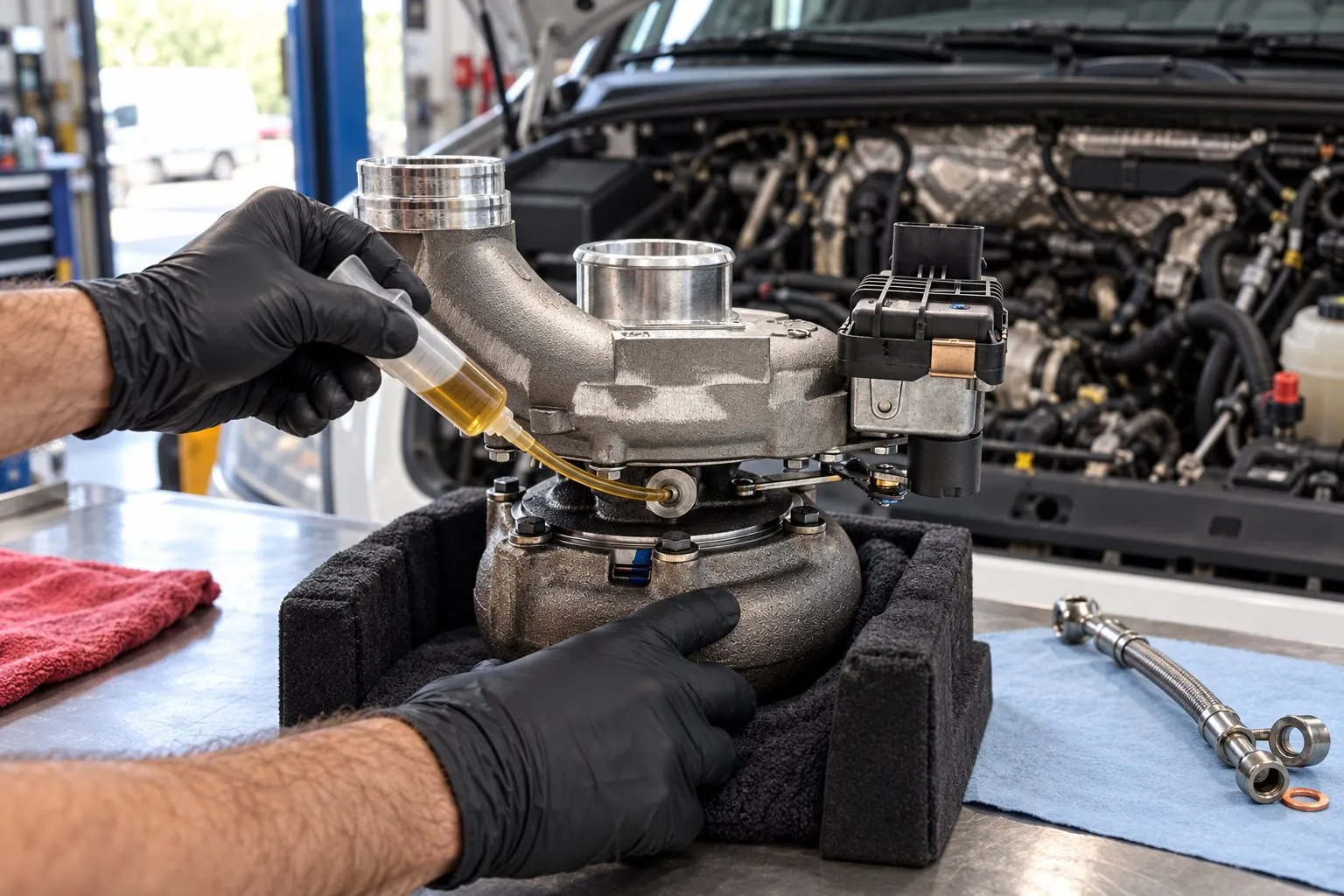
Getting a GT2056V to last means treating the whole system, not just swapping the part. These practices separate a 200,000-mile turbo from one that fails in a year.
- Always replace the oil feed line and inspect the drain. Restricted oil flow kills these bearings fast.
- Prime the turbo with clean oil before startup and crank without fuel to build oil pressure.
- Change engine oil on schedule with the correct spec. OM642 turbos are sensitive to oil quality.
- Let the engine idle 30 to 60 seconds after hard runs to cool the center housing.
- Address DPF and EGR issues so vane soot loading doesn’t return.
- Clear all stored codes and perform actuator adaptation after install.
Skipping any one of these steps is the fastest way to void a warranty and repeat the job. The oil and cooling details matter most on the OM642, where heat soak and coking do the real long-term damage. Treat the clean oil supply and the post-run cooldown as non-negotiable and the core will reward you with high mileage.
When you do replace one of these turbos, fix the root cause at the same time. A sticking vane or a blown actuator is usually a symptom of soot coming off a loaded DPF or a leaking EGR circuit, so clearing that up before you button everything back together is what keeps the new unit from ending up right back on the bench.
Frequently Asked Questions
What engines use the Garrett GT2056V turbocharger?
The Garrett GT2056V is used on the Mercedes OM642 3.0L V6 diesel and the 2007-2009 Dodge Sprinter. It’s a compact VNT-style unit designed for strong low-end torque and clean emissions.
What are common problems with the GT2056V turbocharger?
Common issues include sticking or seized variable-geometry vanes from carbon buildup, actuator failures, and oil leaks. These often cause reduced boost, limp mode, or poor throttle response.
Can the Garrett GT2056V turbocharger be rebuilt?
Yes, the GT2056V can often be rebuilt with a genuine Garrett cartridge or repair kit, though sticking vanes and worn actuators may require full replacement for reliable performance.
Need a Turbocharger?
PT Turbo has rebuilt and sold turbochargers since 1978. We stock remanufactured units for Cummins, Duramax, Power Stroke, Detroit Diesel, and more — backed by a 12-month unlimited mileage warranty and same-week shipping from San Bernardino, CA.
📞 (909) 824-1020 · 346 S I St. #3, San Bernardino, CA 92410 · [email protected]