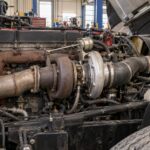
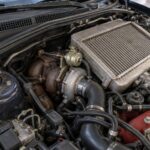
If you’ve turned wrenches on diesel engines for any length of time, you’ve bolted up a BorgWarner turbocharger. From the S200 and S300 series powering medium-duty trucks to the massive S400 frames hanging off Mack E7 and Detroit Series 60 blocks, BorgWarner turbos are everywhere in the heavy-duty world. They earned that reputation the hard way: through millions of road miles, brutal duty cycles, and a build quality that keeps fleet trucks moving. This guide breaks down BorgWarner performance, reliability, and fitment so you can spec the right unit the first time.
Why BorgWarner Dominates Diesel Turbocharging
BorgWarner has been building forced induction hardware for decades, and the company’s diesel division (formed largely from the legacy Schwitzer and 3K product lines) supplies OEM turbos to nearly every major engine builder. When you see an OEM turbo on a Detroit, a John Deere, an International or a Caterpillar engine, there’s a strong chance it carries a BorgWarner casting underneath the part number. You can see the breadth of their commercial vehicle lineup at BorgWarner’s official site.
The engineering advantage comes down to three things: precision-machined compressor and turbine wheels, robust bearing systems rated for high thermal loads, and tight production tolerances that keep shaft play minimal even after high mileage. That’s why a properly maintained S400 will often outlast the truck it came on.
BorgWarner Turbo Series Breakdown
Knowing which frame size you’re dealing with is half the battle when ordering. BorgWarner uses a logical naming structure based on frame size and application. Here’s how the most common diesel series stack up.
| Series | Typical Application | Power Range (approx.) | Common Engines |
|---|---|---|---|
| S200 / B2 | Medium-duty trucks, agriculture | 220–650 HP | Cat 3126 / C7, John Deere 6068, Deutz |
| S300 / S300SX | Performance & medium-heavy duty | 320–1,000 HP | Cummins 5.9L/6.7L, Duramax builds |
| S400 / S400SX | Heavy-duty over-the-road | 400–1,500+ HP | Mack E7, Detroit Series 60, CAT C15 |
| S500 | Large industrial & marine | 800–1,500+ HP | Large displacement industrial diesels |
The “SX” suffix designates the performance-oriented aftermarket versions (the SX-E line adds forged milled compressor wheels and other upgrades), popular for high-horsepower Cummins builds and competition trucks. The standard S-series units are your OEM replacement workhorses.
Reading a BorgWarner Part Number
BorgWarner turbos carry a casting number and a complete assembly number, usually stamped on the compressor housing or center cartridge. A six-digit number like 179180, or an eleven-digit one on newer units, identifies the exact compressor cover, turbine housing A/R, wheel trim, and wastegate or VGT configuration. Never order off frame size alone. Two S400s can have completely different turbine housing A/R ratios and inducer sizes, and the wrong A/R will wreck your boost response and EGTs.
Performance: Matching the Turbo to the Job
A turbo is only as good as its match to the engine. BorgWarner publishes detailed compressor maps for their SX-series, and that data matters when you’re chasing horsepower without melting pistons.
- Daily driver / tow rig: Stick close to OEM spec or a mild S300 upgrade. You want quick spool, low drive pressure, and clean towing manners. An S300SX with a 60mm-class inducer and an appropriate 0.91 A/R turbine housing keeps EGTs in check.
- High-horsepower single: The S400SX series in 64mm to 80mm inducer sizes covers 600–900 HP on a 6.7L or ISX platform. Watch your drive pressure ratio; you want it close to 1:1 or better.
- Compound setups: A small S300 atop a large S400 gives you streetable low-end and serious top-end power. BorgWarner frames are the industry standard for compound builds because of consistent bearing housing dimensions.
For comparison shoppers, Garrett Motion builds competitive units, but BorgWarner’s S400 platform remains the go-to for heavy-duty applications thanks to parts availability and rebuild support.
Reliability: What Actually Fails and Why
BorgWarner turbos are durable, but no turbo survives bad oil, bad air, or bad installation. After rebuilding thousands of these units, the failure patterns are predictable. Here’s what we see and how severe each issue is.
| Symptom | Likely Cause | Severity |
|---|---|---|
| Blue/gray smoke, oil in intake | Worn seals, restricted drain, excessive crankcase pressure | Moderate |
| Whining or grinding noise | Bearing wear, shaft play, wheel contact | High |
| Low boost / sluggish spool | Stuck VGT vanes, boost leak, failed actuator | Moderate to High |
| Shaft seizure / no boost | Oil starvation, coked bearings, foreign object damage | Critical |
| Cracked turbine housing | Thermal cycling, sustained over-temp EGTs | High |
On BorgWarner’s variable geometry units, such as the International DT466 and MaxxForce DT turbos and the high-pressure turbo of the Ford 6.4L, sticking vanes are the number one reliability complaint. Soot buildup binds the vane mechanism, throwing low-boost or overboost codes. Many of these turbos get condemned when a proper cleaning and actuator calibration would have saved them.
Maximizing Turbo Life
- Run quality oil on the OEM change interval. Coked oil kills bearings faster than anything.
- Let the turbo cool down 2–3 minutes before shutdown after hard pulls. EGTs above 1,300°F at shutdown coke the center cartridge.
- Service air filters religiously. A single ingested bolt or compressor housing full of dust ends a turbo’s life instantly.
- Fix oil drain restrictions and excessive blowby before they push oil past the seals.
Fitment: Getting It Right the First Time
Fitment failures cost shop time and money. BorgWarner replacement turbos must match four things: the frame and bearing housing, the turbine housing A/R and flange pattern, the compressor cover outlet and inlet, and the actuator or wastegate configuration. On engines from PACCAR and Caterpillar, the exhaust manifold flange bolt pattern and oil feed line orientation vary by model year, so confirm those before ordering.
For VGT units, the electronic actuator must be calibrated to the turbo. A remanufactured unit from a reputable rebuilder arrives pre-calibrated; a bare core does not. This is where buying from a specialist pays off.
New vs Remanufactured: The Real Tradeoff
| Factor | New BorgWarner | Remanufactured |
|---|---|---|
| Cost | $1,200–$3,500+ | $600–$1,800 (often with core) |
| Warranty | Full manufacturer | 12–24 months typical |
| Lead time | Can be longer for OEM | Usually in stock |
| Quality | Factory spec | Balanced to spec with new wear parts |
| Best for | New builds, no core available | Fleet repairs, cost-conscious jobs |
Price ranges in this article are general estimates to help with budgeting, not PT Turbo quotes. Our current prices are on each product listing, and our rebuild prices are on the turbo rebuild price list.
A quality remanufactured BorgWarner is rebuilt with new bearings, seals, and a balanced CHRA, then VSR balanced to factory tolerance. For most fleet and owner-operator repairs, a properly remanufactured unit performs identically to new at a fraction of the cost. PT Turbo has been doing this since 1978, and we stock both new and remanufactured BorgWarner options for nearly every diesel platform on the road.
Why Buy From PT Turbo
With 45+ years in the turbocharger business, we know these units inside and out. We don’t sell mystery cores or unbalanced rebuilds. Every remanufactured BorgWarner we ship is built to factory spec, balanced, and ready to bolt up. Whether you need an OEM-spec S400 for a Mack or a Detroit Series 60 or an S300SX-E for a performance build, we can match the part number and confirm fitment before it leaves the building.
We also have separate guides to the BorgWarner EFR series and the BorgWarner B2 CHRA.
Frequently Asked Questions
How do I identify my exact BorgWarner turbo?
Look for the assembly number and casting number stamped on the compressor housing or center cartridge. The full assembly number identifies the exact wheel trim, turbine housing A/R, and actuator setup. Frame size alone is not enough to order a correct replacement.
Are remanufactured BorgWarner turbos reliable?
Yes, when properly rebuilt. A quality reman uses new bearings, seals, and a VSR-balanced cartridge built to factory tolerance. For fleet and owner-operator repairs, a properly remanufactured unit performs identically to new and typically costs 40 to 60 percent less.
PT Turbo rebuilds BorgWarner S-series and B-series units in house. See our turbo rebuild service for details.
Need a Turbocharger?
PT Turbo has rebuilt and sold turbochargers since 1978. We stock remanufactured units for Cummins, Duramax, Power Stroke, Detroit Diesel, and more — backed by a 12-month unlimited mileage warranty and same-week shipping from San Bernardino, CA.
📞 (909) 824-1020 · 346 S I St. #3, San Bernardino, CA 92410 · [email protected]
More From PT Turbo
- Garrett Turbocharger Complete Guide: GT, GTB, GTX & G-Series Reference
 Holset HE400WG Turbocharger: Wastegate Application Guide for Cummins ISLe, Volvo/Mack & DAF Engines
- Turbocharger Rebuild vs Replace: Cost Breakdown and How to Decide
- Mitsubishi TD04 Turbocharger: Subaru, Volvo & Light Diesel Applications Guide