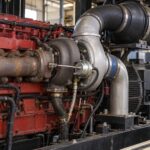
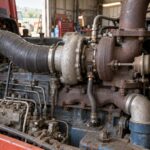
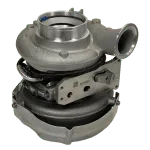
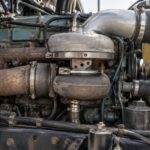
Fendt 1000 Vario Turbocharger Guide: MAN D26 Engine Application
This Fendt 1000 Vario turbocharger guide is for the mechanics, dealer technicians and owner-operators who keep these big tractors pulling. It starts with one rule: order the turbo by the number on its tag, not by the tractor model. The 1000 Vario runs a large MAN diesel from the D26 family, and its turbo works hard every hour the tractor spends on a wide implement or a loaded trailer.
A failing turbo shows up as lost power in the field, smoke, or boost faults on the display. This guide covers how to identify the exact unit, how to tell what kind of boost control it has, how these turbos fail, and how to get the tractor back to work. PT Turbo has been rebuilding turbochargers since 1978, and in more than 45 years as a family-owned shop our in-house rebuild service has often been the practical answer when a replacement is hard to source.
Identify the Turbo on the MAN D26 Before You Order
Large diesel engines are built in several ratings and emissions versions, and the turbo can change with them. Turbine housing, compressor housing, outlet position, actuator and calibration all differ between part numbers. Two turbos that bolt to the same manifold can still be wrong for each other’s engine.
On Holset and BorgWarner turbos the data plate sits on the compressor housing. Garrett puts its nameplate on a housing, in a position that varies by plant and region. Clean the plate gently, photograph it, and record every number on it, then note the engine designation and serial number from the engine data plate as well.
Do not order by the numbers cast into the housings. One casting serves many turbos, so a casting number can narrow a search but cannot confirm a match. The table shows how the main makers format the number you need.
| Turbo maker | Part number format on the tag | What else the tag shows |
|---|---|---|
| Garrett | Six digits, a dash, four digits, then S or W (format example: 765155-5007S) | First digit after the dash: 0 original equipment, 5 new aftermarket, 9 remanufactured. W means a gasket kit is included. |
| BorgWarner | Six digits (older S-series) or eleven digits, never seven | Serial number and, on factory-fitted turbos, the engine maker’s part number |
| KKK (now BorgWarner) | Written in 4-3-4 groups, for example 5331-970-7101 | KKK and 3K are the same company |
| Holset | Seven digits plus a letter suffix | Holset assembly number and the engine maker’s (customer) number in separate fields |
One trap worth naming: PT Turbo’s catalog lists BorgWarner K31 turbochargers for older MAN engines such as the D2866 and D2876. None of those listings names the D26 or a Fendt tractor, so a “MAN turbo” search result is not proof of fitment. If the number on your tag does not match a listing exactly, it is the wrong turbo.
Fixed, Wastegated or Variable Geometry: Read the Hardware
Before you diagnose anything, confirm how the turbo controls boost. The part number settles it, but the hardware tells you a lot at a glance. Each type fails in its own way, and a test meant for one type proves nothing on another.
A fixed geometry turbo has no actuator. A wastegated turbo has an actuator linked to a valve that bypasses exhaust around the turbine wheel. A variable geometry turbocharger changes the flow area into the turbine, using pivoting vanes on Garrett and BorgWarner designs or a sliding nozzle on Holset designs.
| Type | What you see on the turbo | Typical boost-control fault | How to check |
|---|---|---|---|
| Fixed geometry | No actuator, no wastegate lever | None to fail; low boost comes from leaks, wheel damage or bearing wear | Intake, charge-air and exhaust leaks; wheels; shaft play |
| Wastegated, pneumatic actuator | Canister with a rod to a lever on the turbine housing | Flapper not seating: low boost, slow spool. Leaking diaphragm on a boost-opened gate: late opening, overboost | Pressure or vacuum pump on the actuator; rod travel; flapper seat |
| Variable geometry, electronic actuator | Actuator with an electrical connector on the turbo | Vanes or nozzle sticking from carbon or varnish. Stuck closed: overboost and high drive pressure. Stuck open: low boost | Sweep with the maker’s diagnostic tool; never force the arm by hand |
| Variable geometry, pneumatic actuator | Canister linked to the vane or nozzle lever | Same sticking faults, plus diaphragm leaks | Vacuum or pressure pump on the actuator; lever travel |
Only pneumatic actuators are tested with a pump and have a rod to set. Electronic actuators are calibrated to their own turbo, not “to the ECM”. Garrett warns that forcing an electronic actuator’s arm by hand breaks its gears; unbolt the actuator and move the vane lever instead to feel for sticking.
How Turbos Fail in Heavy Field Work
Tractor turbos fail for the same reasons truck turbos do, but field work stacks the odds: dust, long hours at steady load, and hot shutdowns after a hard pull. The causes below are grouped by mechanism, not ranked.
Oil supply and oil quality
Garrett states that more than 90 percent of turbo failures come from oil starvation or oil contamination. Starvation comes from a blocked feed, low oil pressure, or a start before oil reaches a freshly fitted turbo. Contamination is slower: carbon, engine wear debris and dirt let in during servicing grind away at the bearings.
Run the oil and filter the maker specifies, on its schedule, or its severe-service schedule if the tractor idles a lot or works in dust. With oil analysis, copper is the usual wear metal from a journal bearing turbo, since those bearings are bronze; compare results with your baseline and the lab’s limits.
Dust and intake leaks
The pipe between the air filter and the compressor is under suction. A crack or loose clamp there cannot leak boost; it pulls unfiltered dust into the compressor, where it pits the inlet edges of the blades before going on into the engine. Replace the air filter when the restriction indicator says so, and inspect that pipe every time.
Hot shutdowns, idling and debris
Shut down straight after a hard pull and the oil left in the hot center housing cokes, building carbon around the bearings and seals. Idle before shutdown for the time your engine maker gives in the operator’s manual. Long idling causes a different symptom: oil at the turbine end that usually clears once the engine is back under load.
Bent or chipped compressor blades are impact damage from something in the intake. Debris from the engine marks the inlet edges of the turbine wheel. A wheel with blade damage is replaced, never rebalanced and reused.
Diagnosing Low Power and Boost Faults
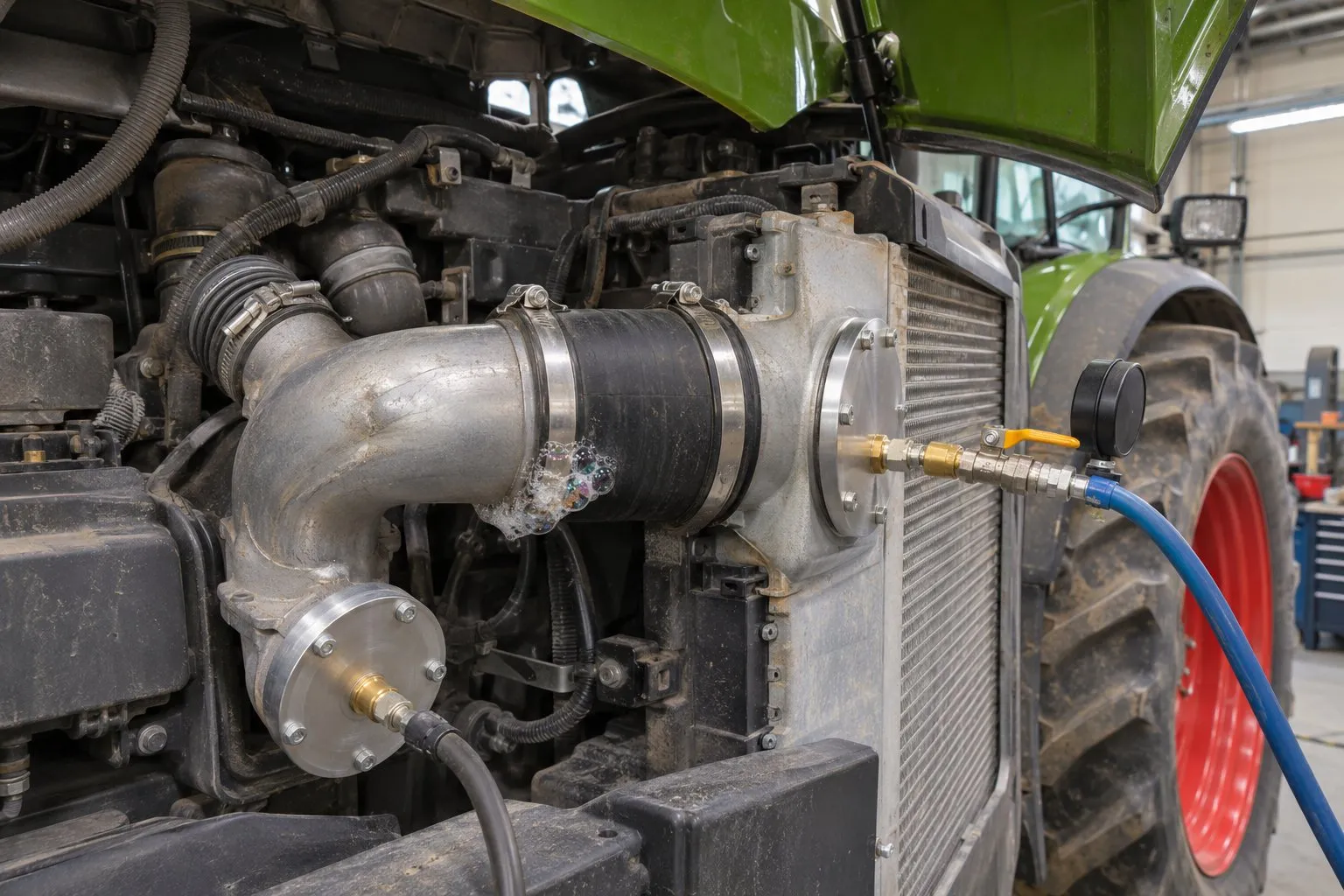
Off-highway engines like this one report faults through the maker’s diagnostic system, often as SPN and FMI numbers, not through the generic OBD-II P-codes used on cars and pickups. Read the codes with the dealer tool and compare desired and actual boost under load where the tool shows them. Then work from the outside in, because a new turbo on top of an unfixed leak fails the same way.
- Air filter and inlet: restriction indicator, suction pipe, every boot and clamp up to the compressor.
- Charge air system: pressure-test pipes and cooler at the engine maker’s test pressure. A boost leak makes the turbo spin faster to reach target and can overspeed it.
- Exhaust before the turbine: a manifold or gasket leak gives low boost, slow spool and higher exhaust temperature.
- Sensors and wiring: the boost pressure sensor, its signal, and the actuator connector if fitted.
- Boost control: the wastegate or variable geometry checks from the table above.
- The turbo itself: wheels, housings and shaft play.
Some side-to-side rock at the wheel is normal on a journal bearing turbo with no oil pressure. In-and-out play you can feel, or a wheel that touches its housing when rocked, condemns it; for exact limits use the maker’s figure for that unit.
Read the smoke. Black or dark gray under load means too little air, which points at low boost. Blue-gray smoke is oil; white smoke is coolant or, on a cold engine, unburned fuel.
A light oil film in the charge pipes is normal with closed crankcase ventilation; pooled oil is not. Check the breather, air filter, oil level and the turbo drain before blaming a seal. The drain must run downhill into the sump above the oil level, and a restricted drain backs oil past both seals.
If the tractor has a particulate filter or DEF dosing, both sit after the turbo. A loaded filter raises exhaust backpressure, DEF cannot foul the turbo, and an active regeneration should be allowed to finish as the maker advises.
Rebuild or Replace: Getting the Tractor Back in the Field
Search the PT Turbo store by the number on the tag, not by tractor name. If a new or remanufactured unit carries that number it will show up there, and remanufactured units are also grouped under remanufactured turbochargers. If nothing matches, or a replacement is hard to get in season, send the turbo to our turbocharger rebuild service.
Rebuilds are done in-house in San Bernardino, California. Every turbo we rebuild is VSR balanced (Vibration Sorting Rig, with the cartridge running in its own bearings on pressurized oil against a limit set for that model) and gets a final inspection with a leak test, a visual inspection and an actuator or wastegate function check. The price is confirmed after inspection and before work starts; see the turbo rebuild price list. Most rebuilds ship in 3 days or less, with a 12-month warranty.
Running several 1000 Varios or a contracting fleet? Priority and rush turnaround, and stocking your fleet’s common cores, are arranged by phone at (909) 824-1020 or through the contact page.
Installation steps that protect the turbo
- Fix the cause first: oil supply, drain, intake and leaks.
- Fit a new oil feed line after a bearing failure or coked oil; do not reuse the old one.
- Use new oil inlet and drain gaskets, with no sealant.
- If the old compressor wheel shed metal, replace the charge air cooler and clean or replace the charge piping.
- Fill the oil inlet with clean engine oil and turn the wheel by hand.
- Crank 10 to 15 seconds without starting, disabling fueling by the procedure in the engine maker’s service manual.
- Start and idle 3 to 4 minutes, checking for oil, exhaust and air leaks before load.
- With an electronic actuator, follow the engine maker’s procedure; some are calibrated to the turbo with a service tool after fitting, others arrive calibrated.
Good oil, clean air and a careful installation give the turbo the best chance of a long service life.
Frequently Asked Questions
Can I order a turbo for a Fendt 1000 Vario by the tractor model?
Order by the part number on the turbo’s tag. Different ratings and emissions versions can carry different turbos, and a listing that says “MAN” is not proof of fitment. If the tag is missing or unreadable, call (909) 824-1020 with the engine designation and serial number from the engine data plate.
How long should the engine idle before shutdown after heavy field work?
Use the time your engine maker gives in the operator’s manual; makers differ, and some ask for no extra idle after light work. The idle lets the center housing cool so oil does not coke around the bearings and seals.
Does a rebuilt or replacement turbo need a break-in period?
No. Follow the maker’s first-start steps: fill the oil inlet with clean engine oil, turn the wheel by hand, crank without starting, then idle a few minutes and check for leaks. After that the tractor goes back to normal work, with no reduced-load hours and no early oil change.
Need a Turbocharger?
PT Turbo has rebuilt and sold turbochargers since 1978. We stock remanufactured units for Cummins, Duramax, Power Stroke, Detroit Diesel, and more — backed by a 12-month unlimited mileage warranty. Units in stock at our shop in San Bernardino, CA ship the same day when ordered before 2 PM Pacific, Monday through Friday.
📞 (909) 824-1020 · 346 S I St. #3, San Bernardino, CA 92410 · info@ptturbo.com