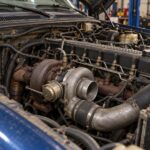
Understanding the Turbocharger Replacement Cost by Engine is the difference between budgeting a repair correctly and getting blindsided at the shop counter. Prices swing wildly depending on whether you run a light-duty pickup or a Class 8 on-highway tractor, and whether you buy new, remanufactured, or rebuild the unit you already have. At PT Turbo, we have been sizing up these jobs for over 45 years, and the numbers below reflect what fleets and owner-operators actually pay.
This guide breaks down real replacement costs across the most common diesel platforms, explains why identical-looking turbos differ by hundreds of dollars, and shows you where you can save without gambling on quality. We stock both new and remanufactured parts, so we have no dog in the “new vs reman” fight. We just want you making the right call for your engine and your wallet.
What Actually Drives Turbocharger Replacement Cost
A turbo is not a turbo. The single biggest cost variable is technology. A simple fixed-geometry wastegate turbo off an older engine is cheap to replace. A variable-geometry turbocharger (VGT) with electronic actuation on a modern emissions engine costs several times more.
The second variable is the actuator. On many failures, the cartridge and wheels are fine and only the variable-geometry actuator has failed. Replacing that single component instead of the whole turbo can save you 80 percent or more.
Other cost drivers include:
- OEM vs aftermarket vs remanufactured sourcing
- Labor, which ranges from 3 hours on an open engine bay to 8-plus hours on a cab-over or tight chassis
- Ancillary parts like gaskets, oil feed and drain lines, V-clamps, and coolant lines
- Calibration or relearning the VGT position after install
Turbocharger Replacement Cost by Engine: Price Table
The table below covers the part-only cost range for the most common diesel platforms we support. Labor is separate and noted afterward. The figures are the prices on PT Turbo’s own listings, not estimates.
| Engine / Platform (turbo model) | Turbo Type | New, our listings | Remanufactured, our listings |
|---|---|---|---|
| Ram 6.7L Cummins (HE351VE / HE300VG) | VGT | $1,713 to $9,680 (47 listings) | $2,449 to $5,931 (22 listings) |
| Cummins ISC 8.3L (HX40) | Fixed / wastegate | $532 to $3,468 (329 listings) | $1,549 to $1,948 (12 listings) |
| Cummins ISM 11L (HX55) | Fixed geometry | $849 to $6,167 (46 listings) | $908 to $1,320 (2 listings) |
| Ford 6.7L Power Stroke | VGT, water-cooled | See current Ford Powerstroke listings | |
| GM 6.6L Duramax | VGT (LLY on) | See current Duramax listings | |
| Detroit / Cat on-highway (Class 8) | Mostly fixed geometry (single or twin in series); variable on Series 60 EGR engines | Detroit Diesel listings · Caterpillar listings | |
Ranges cover every complete turbocharger we list for that model, including variants built for other engines, so open the model page and match your part number for the exact price. Figures are read from our catalog and refresh every few days.
Add labor on top. Light-duty pickups typically run 3 to 6 hours of shop time. Medium-duty and Class 8 jobs run 5 to 10 hours depending on chassis access and whether the cab has to be tilted or components pulled to reach the unit.
New vs Remanufactured: Where the Real Savings Live
A properly remanufactured turbo is not a “used” part. It is torn down to the core, cleaned, inspected, fitted with new bearings, seals, and often new wheels, then balanced on the same VSR equipment used for new units. The compressor and turbine housings are reused because they rarely wear out, and that is where the savings come from.
For most working trucks, a quality reman is the smart buy. You get factory-grade performance at roughly half the price. Browse our remanufactured turbochargers to see current stock by engine.
| Factor | New OEM | Remanufactured |
|---|---|---|
| Cost | Highest | 40-55% less |
| Warranty | 12-24 months | 12 months typical |
| Lead time | Often backordered | Usually in stock |
| Performance | Factory spec | Factory spec when done right |
If your existing housing and center section are salvageable, our turbo rebuild service is often the cheapest route of all. We rebuild your exact unit so there is no core charge and no compatibility guesswork.
Don’t Replace the Whole Turbo When the Actuator Failed
Here is where we save customers the most money. A huge percentage of “turbo failures” are actually actuator failures. The vanes stick, the actuator can no longer move them, and you throw a boost or overboost code. The turbo cartridge is perfectly healthy.
Replacing a pneumatic or electronic actuator instead of the entire turbo can cut a $1,500 repair down to a couple hundred dollars in parts. If your codes point to VGT position error, actuator stuck, or underboost with no shaft play, check the actuator first.
Compare those numbers to a full VGT replacement and the math is obvious. Diagnose before you condemn the whole unit. If you are not sure which actuator matches your turbo, contact PT Turbo with your part number and we will match it.
Platform-Specific Notes That Affect Your Bill
Every engine family has quirks that change the real-world cost. Here are the ones we see most.
Ford 6.7L Power Stroke
The GT32 SST unit is water-cooled and sensitive to oil quality and cooldown habits. Coked bearings are common. Always replace the oil feed line when you replace the turbo. Full details are in our Ford 6.7L Power Stroke turbocharger guide.
Ram 6.7L Cummins
Early trucks use the HE351VE, later trucks the HE300VG. They do not swap directly (the actuators and their wiring differ), and the sliding nozzle loves to stick with soot when a truck idles too much. Our Ram Cummins turbo guide covers which one you have and what it costs.
Cummins ISC and ISM
These medium and heavy-duty engines often run the HX-series. The ISC HX40 is a robust fixed-geometry unit, covered in our Cummins ISC HX40 guide. The ISM stepped up to the HX55 and later the HE531V VGT, detailed in our Cummins ISM turbo guide.
On emissions-era engines, remember that a failing turbo often runs alongside a clogged diesel particulate filter or a sticking EGR system. Fix the root cause or the new turbo will fail early.
GM 6.6L Duramax is its own animal. The LB7 ran a fixed-geometry turbo, and everything from the LLY forward moved to VGT, which is why Duramax turbo prices span so wide. If you have a VGT Duramax, the vane position sensor and the VGT control solenoid are the usual culprits long before the cartridge wears out, so diagnose the electronics before you order a whole unit.
On the Detroit and Cat Class 8 side, the part cost is only half the story. These are the jobs where labor and access eat your budget, especially on a cab-over where the unit is buried. Plan the downtime realistically and have every gasket, clamp, and line on the bench before you start the teardown.
Whatever platform you run, the money is made in the diagnosis. Confirm whether you are chasing a dead cartridge, a stuck actuator, or an emissions fault feeding back into the turbo, then buy accordingly. Get that step right and you rarely overpay for this repair.
Replacement Cost Guides by Engine
Each of these goes deeper on one platform: the turbo models it uses, the part numbers, and current prices for that engine.
- 6.7L Cummins turbocharger replacement cost
- Duramax turbocharger replacement cost (LBZ, LMM, LML)
- Ford 6.0L Powerstroke turbocharger replacement cost
- Caterpillar C15 turbocharger replacement cost
- Semi truck turbocharger replacement cost: Cummins ISX, DD15 and PACCAR MX-13
Two things move the bill on any engine: turbocharger labor cost and whether the turbo can be rebuilt instead of replaced (see the turbocharger rebuild cost breakdown and our turbo rebuild prices).
Price ranges in this article are general estimates to help with budgeting, not PT Turbo quotes. Our current prices are on each product listing, and our rebuild prices are on the turbo rebuild price list.
Frequently Asked Questions
How much does it cost to replace a turbocharger on a diesel truck?
Turbocharger replacement costs range widely, from around $1,500 for light-duty pickups to $5,000 or more for Class 8 on-highway tractors, depending on parts and labor.
Is it cheaper to rebuild or replace a turbocharger?
Rebuilding or buying a remanufactured unit is typically cheaper than a brand-new turbocharger, often saving 30-50% while restoring reliable performance.
What factors affect turbocharger replacement cost by engine?
Cost depends on your engine type and truck class, whether you choose new, reman, or rebuilt units, and the labor rates at your chosen shop.
Need a Turbocharger?
PT Turbo has rebuilt and sold turbochargers since 1978. We stock remanufactured units for Cummins, Duramax, Power Stroke, Detroit Diesel, and more — backed by a 12-month unlimited mileage warranty and same-week shipping from San Bernardino, CA.
📞 (909) 824-1020 · 346 S I St. #3, San Bernardino, CA 92410 · [email protected]