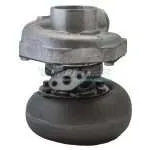
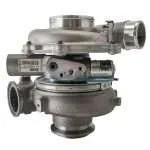
If you run a 6.7L Cummins in a Ram 2500 or 3500, the turbocharger bolted to that engine is either a Holset HE351VE or a Holset HE300VG, and knowing which one you have changes everything about diagnosis, parts ordering, and repair cost. Both are variable geometry turbos (VGT), both use an electric actuator, and both fail in predictable ways once soot, EGR carbon, and high mileage start working against the vane mechanism. This guide breaks down the differences between the HE351VE and HE300VG, the failure symptoms diesel techs see most, and what a real replacement costs.
HE351VE vs HE300VG: Which Turbo Is on Your 6.7L Cummins?
The split is by model year. The 6.7L Cummins launched in the 2007.5 Ram, and Holset has run two distinct variable geometry turbos across the platform. The earlier HE351VE is a slightly larger frame unit with a sliding nozzle ring design. The later HE300VG, introduced for the 2013 model year alongside the engine’s emissions updates, is a more refined VGT optimized to work with the SCR (DEF) aftertreatment system that arrived around the same time.
| Spec | Holset HE351VE | Holset HE300VG |
|---|---|---|
| Model years (Ram 2500/3500) | 2007.5–2012 | 2013–2018 (and newer variants) |
| Type | Variable geometry, sliding nozzle | Variable geometry, sliding nozzle |
| Actuator | Electric (rotary) | Electric (rotary, updated) |
| Compressor wheel | ~60mm class | ~60mm class, revised aero |
| Emissions pairing | EGR + DPF | EGR + DPF + SCR/DEF |
| Common failure point | Sticking vanes, actuator | Sticking vanes, actuator, bearing |
The fastest way to confirm which unit you have is the casting and part number on the compressor housing combined with your VIN year. If you are pulling parts and the number is smudged with soot, our team has cross-referenced thousands of Holset units over PT Turbo’s 45-plus years in business and can match yours from a photo. Reach out through our contact page if you want a positive ID before you buy.
Why Both Use Variable Geometry
The variable geometry nozzle is what gives the 6.7L its broad torque curve and effective exhaust braking. By sliding its nozzle ring to narrow the exhaust passage, the turbo speeds up exhaust gas at low RPM for fast spool, then opens up at high RPM to avoid choking the engine. It also doubles as an integrated exhaust brake by closing the nozzle to build backpressure. That same mechanism is the Achilles’ heel: the vanes ride in a soot-rich exhaust stream, and carbon eventually gums them up.
How the 6.7L Cummins Turbo Fails
VGT failure on the 6.7L is rarely sudden on a healthy truck. It builds over time as the vanes accumulate carbon and the actuator works harder to move a binding nozzle ring. Knowing the progression lets you catch it before it strands a truck or torches the engine on a runaway sticking event.
| Severity | Symptoms | Likely Cause |
|---|---|---|
| Early | Weak exhaust brake, slight lag, occasional P2262 / P003A codes | Vanes beginning to stick, actuator calibrating harder |
| Moderate | Hesitation off-idle, intermittent limp mode, surging boost, hissing | Carbon-bound nozzle ring, actuator strain, early bearing wear |
| Severe | No boost, constant limp mode, oil in intake, whining, shaft play, smoke | Seized vanes, failed actuator, blown center bearing or seals |
The Codes That Point to the Turbo
The most common VGT-related fault codes on these trucks are P003A (turbocharger boost control position exceeded learning limit), P2262 (turbo boost pressure not detected mechanical), P0299 (underboost), and various actuator communication codes. Before you condemn the turbo, rule out a sticking actuator that can sometimes be freed, and verify the boost sensor and charge air piping are not leaking. A split intercooler boot will mimic a dying turbo all day long.
Repair or Replace? Rebuild, Reman, or New
You have three real paths once the turbo is confirmed bad: a new Holset, a quality remanufactured unit, or a professional rebuild of your existing core. For most owner-operators and fleets, the math favors reman or rebuild, especially on higher-mileage trucks where dropping full retail on a new OEM turbo does not pencil out.
| Option | Price, our listings | Best For |
|---|---|---|
| New OEM Holset | $1,713 to $9,680 (47 listings) | Newer trucks, warranty-sensitive fleets |
| Remanufactured | $2,449 to $5,931 (22 listings) | Best value, most owner-operators |
| Rebuild your core | $825 for the HE351VE, $875 for the HE300VG ($975 for 2019 and newer). Turbo rebuild price list | Keeping your exact matched unit |
A properly remanufactured turbo is not a parking-lot rebuild. A real reman replaces the bearings, seals, thrust components, and balances the CHRA to OEM tolerance, then verifies the actuator calibration. PT Turbo stocks both new and remanufactured turbochargers for the 6.7L Cummins, and if you want to keep your original numbers-matching unit, our in-house turbocharger rebuild service brings it back to spec. You can also browse the full lineup on our shop page.
Add labor to whichever part you choose. Independent shops typically charge 4 to 6 hours to swap a 6.7L Cummins turbo, so figure $500 to $900 in labor on top of the part. The job is more involved than the Ford 6.7L Powerstroke, which we cover in our Ford 6.7L Powerstroke turbocharger guide if you run a mixed fleet.
Installation Kits and Gaskets You Will Need
Do not reuse old gaskets, exhaust nuts, or oil line seals on a turbo install. The number one cause of a comeback is an oil drain or feed leak from a tired gasket, and a single reused exhaust manifold gasket can leave you chasing a boost leak for weeks. Order a complete install kit with the turbo so the truck goes back together right the first time.
- For the 2007.5 to 2012 trucks with the HE351VE, the D&W Cummins Installation Kit 172-784-0427 runs $87.53.
- For the HE300VG of the 2013 and later trucks, send us the number on your turbo and we will match the kit. New seals on the oil feed and drain are cheap insurance against an oil leak.
Install Tips From the Bench
Prime the new turbo with clean engine oil through the feed port and spin the shaft by hand before you bolt the feed line on. Crank the engine with the fuel shut off, or let it idle without revving for the first few minutes, so the bearings get oil before the turbo sees load. Always replace the oil feed line if it shows any internal coking; a restricted feed line will kill a fresh turbo’s bearing in short order. And recalibrate or relearn the actuator with the appropriate scan tool after install so the nozzle position matches the ECM’s expectations.
Keeping Your Replacement Turbo Alive
Most 6.7L turbo failures trace back to soot and heat, so the maintenance that protects the turbo is the same maintenance that protects the whole emissions system. Change oil on schedule with the oil the owner’s manual calls for (API CJ-4 or CK-4 on these engines), keep the EGR system clean, and address active regen issues quickly so raw soot is not packing the vanes. Use the exhaust brake regularly; it actually helps keep the nozzle ring cycling and discourages carbon from setting up in one position. Let the turbo cool for 30 to 60 seconds at idle after hard pulls before shutdown to protect the bearing.
None of this is exotic. A 6.7L turbo that gets clean oil, cool shutdowns, and a healthy emissions system in front of it will routinely outlast the warranty and then some. The ones that come back early almost always have a root cause upstream, so fix the leaking boot, the lazy regen, or the coked feed line while the turbo is off the truck.
Match the right part to your year, treat the install like the precision job it is, and keep the soot load down. Do those three things and a reman or rebuilt unit will serve you just as long as the original Holset did.
Doing the job yourself? The steps are in How to Remove a Turbocharger on a 6.7L Cummins.
Price ranges in this article are general estimates to help with budgeting, not PT Turbo quotes. Our current prices are on each product listing, and our rebuild prices are on the turbo rebuild price list.
Frequently Asked Questions
How do I know if my Ram has an HE351VE or HE300VG turbo?
Identification depends on your model year and emissions configuration, since both are variable geometry Holset turbos used on the 6.7L Cummins. Checking your build date or part number on the actuator confirms which one is installed.
Why do 6.7L Cummins turbochargers fail?
These VGT turbos typically fail from soot buildup, EGR carbon, and high mileage that bind the variable geometry nozzle and stress the electric actuator. Regular maintenance and clean EGR operation help extend their life.
How much does it cost to replace a 6.7L Cummins turbocharger?
Replacement cost varies by whether you choose an OEM, remanufactured, or aftermarket unit, plus labor. Knowing whether you have the HE351VE or HE300VG ensures you order the correct part and avoid costly mistakes.
Further reading: Learn more about turbocharger technology.
Shopping by part number?
Every part number we stock for the Holset HE351VE and Holset HE300VG is on one page, with live prices and stock: Holset HE351VE turbos and parts · Holset HE300VG turbos and parts.
Need a Turbocharger?
PT Turbo has rebuilt and sold turbochargers since 1978. We stock remanufactured units for Cummins, Duramax, Power Stroke, Detroit Diesel, and more — backed by a 12-month unlimited mileage warranty and same-week shipping from San Bernardino, CA.
📞 (909) 824-1020 · 346 S I St. #3, San Bernardino, CA 92410 · [email protected]
More From PT Turbo
- Detroit Diesel Series 60 Turbocharger Guide: Garrett & BorgWarner S400 Replacement & Cost
 Ford 6.0L Powerstroke Turbocharger: Failure Symptoms, Replacement & Best Options
- Duramax LLY Turbocharger: Symptoms, Garrett GT3788VA Replacement & Cost (2004-2005)
- Volvo D11 Turbocharger Guide: Mack MP7 Shared Platform Explained