International MaxxForce 13 Turbocharger: Common Failures & Best Replacements
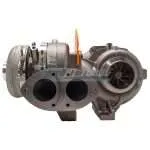
The International MaxxForce 13 turbocharger system is a pair of BorgWarner turbos working in series, not a variable geometry turbo. A large low-pressure turbo feeds a small high-pressure turbo, and boost is controlled by a wastegate on the high-pressure unit. That matters for diagnosis: there are no vanes to stick and no VGT actuator on this engine, and most low-boost complaints trace to the wastegate, its air supply, a leak between the stages or the EGR system.
This guide covers how the two turbos work together, the common failures, how to diagnose before replacing, and the rebuild and replacement options at PT Turbo.
How the MaxxForce 13 Turbo System Works
The MaxxForce 13 is a 12.4L inline-six based on the MAN D26, used in the International ProStar and other Navistar trucks. For 2010 Navistar stayed with heavy EGR and no SCR; the engine did not meet the 2010 NOx limit outright and was sold on emissions credits until SCR was added later, which is why the engine depends so much on its air system. The same two-stage layout is used on the MaxxForce 11.
| Stage | Turbo | Job |
|---|---|---|
| Low-pressure | Large fixed geometry BorgWarner (B3RS) | Takes in outside air and supplies most of the flow at high load |
| High-pressure | Small BorgWarner (B2NG) with a wastegate | Responds quickly at low engine speed and compresses the air a second time |
Exhaust drives the small turbo first and the large one second. When boost reaches its target, the engine computer opens the wastegate on the high-pressure turbo so part of the exhaust goes straight to the low-pressure turbine. The gate is moved by an air actuator fed with truck air through an air control valve. Between the two compressors the air passes through an interstage cooler, and after the second compressor through the charge air cooler.
Common MaxxForce 13 Turbocharger Failures
1. Wastegate and air control valve
A wastegate that is stuck open, or an air control valve that passes air all the time, bleeds exhaust around the high-pressure turbine. The truck is slow to build boost and sets low-boost codes while both turbos are mechanically sound. A gate seized shut does the opposite and overboosts. Check the valve, the air line, the actuator and the gate itself before either turbo comes off.
2. Leaks between the stages
Two turbos mean more joints: the pipe between the compressors, the interstage cooler, the charge air cooler and the exhaust connection between the turbines. A leak at any of them lowers boost and makes the turbos work harder. A pressure test of the charge air side finds most of them.
3. Bearing and shaft wear
Coked oil, overdue changes and hot shutdowns wear the journal bearings. Once the shaft has play, the wheels touch the housings and the seals pass oil. The high-pressure turbo runs hottest and usually shows it first, but the low-pressure turbo has done the same hours on the same oil.
4. Oil leaks and seal failure
Blue smoke and oil in the charge pipes come from worn bearings, a restricted oil drain or high crankcase pressure from a plugged breather. Fix the cause before fitting a fresh turbo.
5. Soot, EGR and exhaust restriction
The engine recirculates a lot of exhaust. A leaking EGR cooler puts coolant into the intake, an EGR valve stuck open raises exhaust temperature, and a loaded particulate filter raises the pressure the turbines work against and shortens their life. See our guide to EGR cooler failure and turbocharger damage.
6. Wheel damage
A failed air filter or loose intake hardware chips the low-pressure compressor wheel. If one turbo breaks up, its debris goes through the other one, so both have to be inspected.
Symptoms by Severity
| Symptom | Likely cause | Severity | Action |
|---|---|---|---|
| Slow to build boost, low boost codes | Wastegate held open, air control valve, charge air leak | Moderate | Test the wastegate circuit, pressure test the intake side |
| Repeated derate | Boost out of range, EGR or aftertreatment fault | Moderate to high | Read codes, check EGR and DPF before the turbos |
| Whine or grinding | Bearing wear, shaft play | High | Stop driving, inspect both turbos |
| Blue smoke, oil in the charge pipes | Worn bearings and seals, restricted drain, crankcase pressure | High | Check the breather and drain, rebuild or replace |
| Metal in the intake | Compressor or turbine wheel damage | Critical | Replace or rebuild both, clean the whole intake tract |
Diagnosing Before You Replace
- Read the codes and live data with International’s diagnostic software and compare actual boost with the target.
- Test the wastegate circuit. Confirm the air control valve switches, the line holds air, the actuator moves and the gate is free.
- Pressure test the charge air system, including the interstage cooler and the pipe between the turbos.
- Check crankcase pressure and the breather. High blow-by pushes oil past turbo seals and looks like a failed turbo.
- Check both shafts for play and both compressor wheels for contact marks.
- Check the EGR cooler, EGR valve and DPF pressure.
Rebuild and Replacement Options
PT Turbo rebuilds the MaxxForce twin turbos as a pair: $1,350 for both (price list). The price is confirmed after inspection and before any work starts, every rebuild is VSR balanced and carries a 12-month unlimited-mileage warranty, and most rebuilds ship in 3 days or less. Doing both at once makes sense because they share oil, heat and hours. Details are on our turbocharger rebuild service page.
If a housing is cracked or a wheel has broken up, that turbo needs replacing. The high-pressure and low-pressure units are different parts, and the high-pressure part number varies by engine, so contact PT Turbo with the numbers from both turbo tags and the engine serial number. For the install, PT Turbo lists two MaxxForce 11 and 13 installation kits: 172-784-0018 and 172-784-0019.
Whichever route you take, fix the root cause first. A plugged breather, a failing air filter, a coked oil feed line or a leaking EGR cooler will damage the next pair the same way. For the truck-level view, see our International ProStar turbocharger guide.
Frequently Asked Questions
Does the MaxxForce 13 have a variable geometry turbo?
No. The MaxxForce 13 uses two BorgWarner turbochargers in series: a large low-pressure turbo and a small high-pressure turbo with a wastegate. Boost is controlled by the wastegate, which is moved by truck air through an air control valve. There are no moving vanes and no VGT actuator.
What are the most common MaxxForce 13 turbocharger failures?
A wastegate stuck open or a leaking air control valve, leaks between the two stages, bearing and seal wear from coked oil, and damage from EGR cooler failures or exhaust restriction.
Why does the MaxxForce 13 turbocharger fail so often?
The engine relies on heavy EGR, which runs the turbos hot and dirty, and the two-stage layout has more joints, coolers and controls to leak or stick than a single turbo.
Can MaxxForce 13 turbos be rebuilt?
Yes, when the housings and wheels are sound. PT Turbo rebuilds the high-pressure and low-pressure turbos as a pair, VSR balances both and confirms the price after inspection.
Further reading: Learn more about twin-turbo and two-stage systems.
Need a Turbocharger?
PT Turbo has rebuilt and sold turbochargers since 1978. We stock remanufactured units for Cummins, Duramax, Power Stroke, Detroit Diesel, and more — backed by a 12-month unlimited mileage warranty. Units in stock at our shop in San Bernardino, CA ship the same day when ordered before 2 PM Pacific, Monday through Friday.
📞 (909) 824-1020 · 346 S I St. #3, San Bernardino, CA 92410 · [email protected]
More From PT Turbo
- PACCAR MX-13 Turbocharger Guide: Kenworth T680 & Peterbilt 579 Applications
- Caterpillar C18 Turbocharger: Heavy Equipment & Generator Applications Guide
 Ford 6.0L Powerstroke Turbocharger: Failure Symptoms, Replacement & Best Options
- Ford F-250/F-350 Super Duty Turbocharger Guide: 6.0L, 6.4L & 6.7L Powerstroke Compared