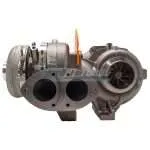
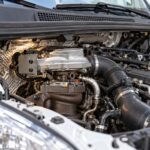
Isuzu 6HK1 Turbocharger Guide: FTR & FVR Medium Duty Truck Applications
The Isuzu 6HK1 turbocharger is the beating heart of countless FTR and FVR medium duty trucks running routes and job sites across North America. If you’re diagnosing a lazy 6HK1 that won’t build boost, chasing a variable-geometry actuator fault, or spec’ing a replacement unit for a box truck that has to be back on the road tomorrow, you already know the 6HK1 is a workhorse that rewards proper turbo maintenance. Get the turbocharger right and this 7.8L inline-six will run past 400,000 miles. Get it wrong and you’ll be back under the truck in six months.
At PT Turbo we’ve been rebuilding and supplying turbochargers since 1978, that’s over 45 years in the business, and the Isuzu 6HK1 comes across our bench regularly. Here’s what you actually need to know.
Isuzu 6HK1 Engine and Turbo Overview
The 6HK1 is a 7.8-liter turbocharged, intercooled inline-six diesel found in Isuzu’s F-Series medium duty trucks, primarily the FTR and FVR of the generation sold in North America up to 2009 (today’s FTR and FVR use other engines). It also shows up in the GMC and Chevrolet T-Series built alongside them, construction equipment, and marine applications. Depending on model year and emissions configuration, the 6HK1 produces roughly 200 to 300 horsepower; go by the rating on the engine data plate.
There are two turbo philosophies you’ll encounter across the 6HK1’s production life:
- Wastegated fixed-geometry turbos on earlier and some industrial 6HK1 variants. Simpler, robust, and easy to service.
- Variable geometry turbochargers (VGT) on later emissions-compliant on-highway trucks. These use movable vanes to optimize boost across the RPM range and reduce turbo lag. They’re controlled by an electronic actuator.
Knowing which one you have matters, because the failure modes and repair paths are completely different. The VGT units in particular live or die by the health of their actuator and vane mechanism.
Common 6HK1 Turbo Failure Symptoms
The 6HK1 turbo doesn’t usually fail without warning. Catching the early signs saves you a hydrolocked engine or a cab full of smoke. Here’s how symptoms progress from nuisance to catastrophe.
| Severity | Symptom | Likely Cause |
|---|---|---|
| Early | Sluggish acceleration, slow boost build | Sticking VGT vanes, actuator drift, minor boost leak |
| Early | Check engine light, boost pressure code (P0299 underboost / P0234 overboost) | Actuator calibration off, vane mechanism binding |
| Moderate | Whistling or siren noise under load | Compressor housing leak, worn seals, cracked piping |
| Moderate | Excess exhaust smoke, poor fuel economy | Carbon-fouled vanes stuck open or closed |
| Severe | Blue smoke, oil consumption, oil in intake | Failed turbo shaft seals, worn bearings |
| Severe | Metallic grinding, sudden power loss | Bearing failure, shaft play, wheel-to-housing contact |
On VGT 6HK1 turbos, the single most common complaint we hear is underboost with a P0299 code. Most often it traces back to carbon buildup on the vane mechanism or an actuator that’s no longer moving through its full range. Soot from EGR gases bakes onto the nozzle ring, the vanes seize, and the actuator either can’t move them or throws a fault trying.
The Actuator: The Heart of VGT Reliability
If your 6HK1 has a variable geometry turbo, the actuator is the component most likely to strand you. It’s the mechanism that physically moves the vanes based on ECM commands. When it drifts out of calibration or fails outright, you get underboost, overboost, or a limp-mode truck.
On these trucks the variable geometry turbo has an electronic actuator bolted to it and driven by the ECM. It is matched to the turbo, so order it by the turbo part number. Wastegated 6HK1 turbos use a simple pneumatic wastegate actuator instead.
A word of caution: swapping an actuator without checking the vane travel is a common mistake. Confirm the vanes move freely from stop to stop before you fit the new actuator, and run the calibration your diagnostic tool gives for it. Skip that step and you’ll be right back to a P0299 within a week. If you’re not sure which actuator your unit takes, contact PT Turbo with your turbo part number and we’ll cross it for you.
New vs Remanufactured 6HK1 Turbochargers
When the core of the turbo is gone, bearings shot, shaft play excessive, wheels damaged, you’re looking at a full replacement rather than an actuator swap. This is where the new versus reman decision comes in, and for fleet operators it usually comes down to downtime and budget.
| Factor | New OEM | Remanufactured |
|---|---|---|
| Typical cost | $1,162 to $3,723 (6 listings) at PT Turbo | Quoted by part number |
| Availability | Can involve dealer wait times | Often in stock, ready to ship |
| Quality | Factory spec | Rebuilt to OEM tolerances, balanced |
| Core charge | None | Yes, refundable on return |
| Warranty | OEM terms | Backed by rebuilder |
Price ranges in this article are general estimates to help with budgeting, not PT Turbo quotes. Our current prices are on each product listing, and our rebuild prices are on the turbo rebuild price list.
A properly remanufactured 6HK1 turbo, balanced on a VSR machine, with new bearings, seals, and a calibrated actuator, performs identically to new at a fraction of the cost. That’s the bread and butter of our shop. Browse our remanufactured turbochargers or shop all turbos to find your application.
If you’ve got a good core and want it brought back to spec rather than buying outright, our turbo rebuild service handles VGT and wastegated units alike, including vane cleaning, actuator recalibration, and full balancing.
6HK1 Turbo Replacement Tips
Whether you’re installing a reman unit or a fresh actuator, these steps separate a lasting repair from a comeback:
- Prime the oil feed. Before startup, pre-lube the turbo by filling the oil inlet with clean engine oil, then crank while the engine is kept from starting (the service manual names the fuse or connector). Dry starts kill bearings in seconds.
- Inspect the oil feed and drain lines. A restricted feed line or a coked drain is often what killed the original turbo. Replace or clean them, don’t reuse a clogged line.
- Change the oil and filter. If the old turbo shed metal or seals, that debris is in the oil. Fresh oil protects the new unit.
- Check the intake and charge-air system. Clean out any oil pooling in the intercooler and piping. Verify the CAC isn’t leaking.
- Inspect the EGR system. On VGT trucks, a heavily fouling EGR is what carboned the vanes in the first place. Address the root cause.
- Verify actuator calibration. Confirm full vane travel and run the actuator calibration with your diagnostic tool before final assembly.
Skipping the oil line inspection is the number one reason a fresh turbo fails early. The bearing system on the 6HK1 depends entirely on clean, unrestricted oil flow.
How the 6HK1 Compares to Other Medium Duty Diesels
The 6HK1 sits in the same competitive segment as Cummins’ medium duty offerings, and if you run a mixed fleet you’re probably servicing both. The Cummins ISC with its HX40 turbo is a direct competitor in the Class 6-7 space, and the diagnostic principles are similar. See our Cummins ISC HX40 turbocharger guide for that platform.
For lighter and heavier applications, the same VGT and actuator lessons carry over.
What stays constant across the whole range is the discipline: diagnose the actuator and vane mechanism before condemning the turbo, protect the bearing system with clean oil flow, and fix the EGR fouling that caused the carbon in the first place. A tech who knows the 6HK1 cold can walk up to a VGT on almost any medium duty platform and work the same checklist.
That’s the real advantage of understanding one platform deeply. The 6HK1 teaches you the habits that keep every variable geometry turbo in your fleet alive, whether it’s bolted to an Isuzu inline-six or a competitor’s block.
For Hino medium-duty trucks, see our Hino J08 turbocharger guide.
Turbos we list for the HX40
Listings for the turbo models named in this guide that can be ordered online today. Several part numbers can fit one engine by year and rating, so match the number on your turbo’s tag, or call (909) 824-1020 and we will match it for you.
Frequently Asked Questions
What trucks use the Isuzu 6HK1 turbocharger?
The 6HK1 turbocharger is found in the Isuzu FTR and FVR medium duty trucks sold in North America up to 2009, and in the GMC and Chevrolet T-Series built alongside them. These workhorse engines power everything from box trucks to job site vehicles.
Why won’t my Isuzu 6HK1 build boost?
Low or no boost on a 6HK1 is often caused by a failing variable-geometry turbocharger, a stuck or faulty VGT actuator, or air leaks in the intake system. Proper diagnosis of the actuator and vanes is key before replacing the unit.
How do I know when to replace a 6HK1 turbocharger?
Replace the turbo when you have confirmed shaft play, oil leaks, damaged vanes, or an unresponsive VGT actuator that can’t be repaired. Spec’ing the correct replacement unit ensures the truck gets back on the road quickly.
Further reading: Learn more about turbocharger technology.
Need a Turbocharger?
PT Turbo has rebuilt and sold turbochargers since 1978. We stock remanufactured units for Cummins, Duramax, Power Stroke, Detroit Diesel, and more — backed by a 12-month unlimited mileage warranty. Units in stock at our shop in San Bernardino, CA ship the same day when ordered before 2 PM Pacific, Monday through Friday.
📞 (909) 824-1020 · 346 S I St. #3, San Bernardino, CA 92410 · [email protected]
More From PT Turbo
 Ford 6.4L Powerstroke High-Pressure vs Low-Pressure Turbo: What Is the Difference?
- Ford Transit 3.2L Diesel Turbocharger Guide: Common Failures & Replacement
- Detroit DD13 Turbocharger: Failure Symptoms, EGR Interaction & Replacement Options
- Detroit Diesel Series 60 Turbocharger Guide: Garrett & BorgWarner S400 Replacement & Cost