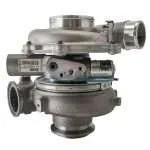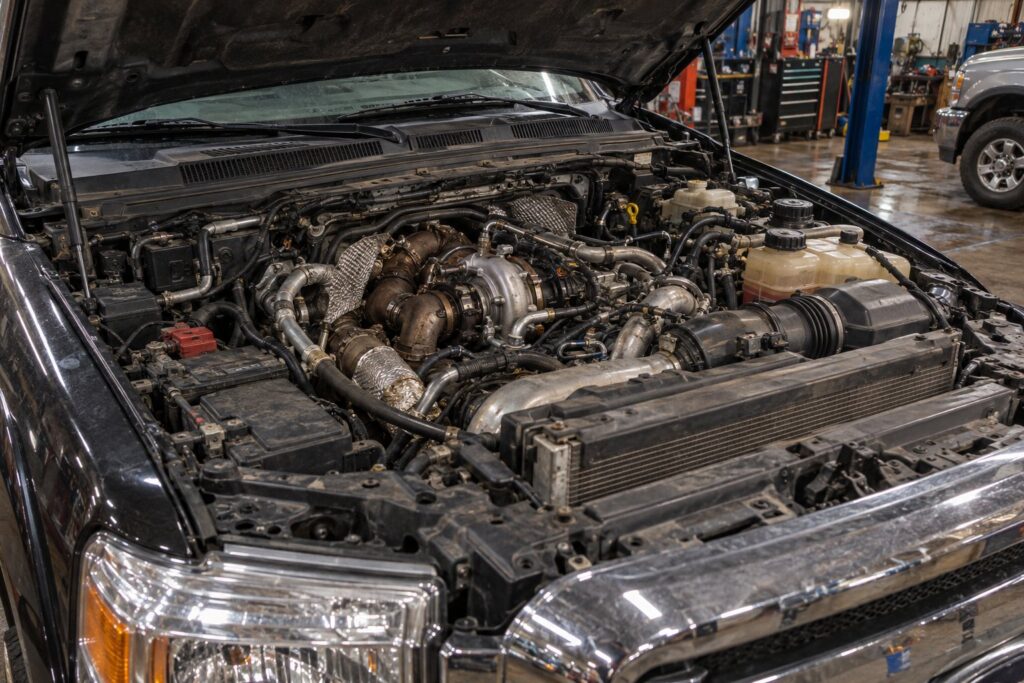
The Ford 6.7L Powerstroke, introduced in 2011 and still in production, uses a single BorgWarner variable geometry turbocharger mounted in a unique inside-the-valley position between the cylinder banks. It replaced the problematic compound (twin-turbo) layout of the 6.4L Powerstroke and is generally regarded as a more reliable design. But it has its own failure modes that owners and fleet managers need to know.
What Makes the 6.7L Powerstroke Turbo Unique
Unlike most diesel turbos that mount externally on the exhaust manifold, the 6.7L Powerstroke turbo sits in the valley of the engine with the hot exhaust side facing down and the compressor side facing up. This positioning places it in an extremely hot environment with limited cooling airflow. Heat management is the dominant engineering consideration for this turbo.
Common Failure Modes
Turbine Wheel Cracking
The most significant failure mode on high-mileage 6.7L Powerstrokes is turbine wheel cracking. The turbine wheel operates under sustained high-temperature conditions, and over time stress fractures develop at the blade roots. A cracked turbine wheel cannot be repaired—the core requires replacement. Symptoms include a sudden loss of power, loud metallic noise, and catastrophic boost loss.
VGT Actuator Failure
The BorgWarner VGT actuator on the 6.7L is an electronic unit that can fail from heat cycling and age. Failed actuators produce P0299 (underboost) or P0234 (overboost) codes. The actuator can be replaced as a separate component on 2011–2014 models; on newer applications the actuator is integral to the turbo assembly.
Oil Seal Leakage
Given the high operating temperatures and the turbo’s valley position, oil seal degradation is more common than on externally-mounted turbos. Blue smoke at startup, oil in the intake piping, and oil residue in the intercooler are the typical indicators.
Up-Pipe Leaks
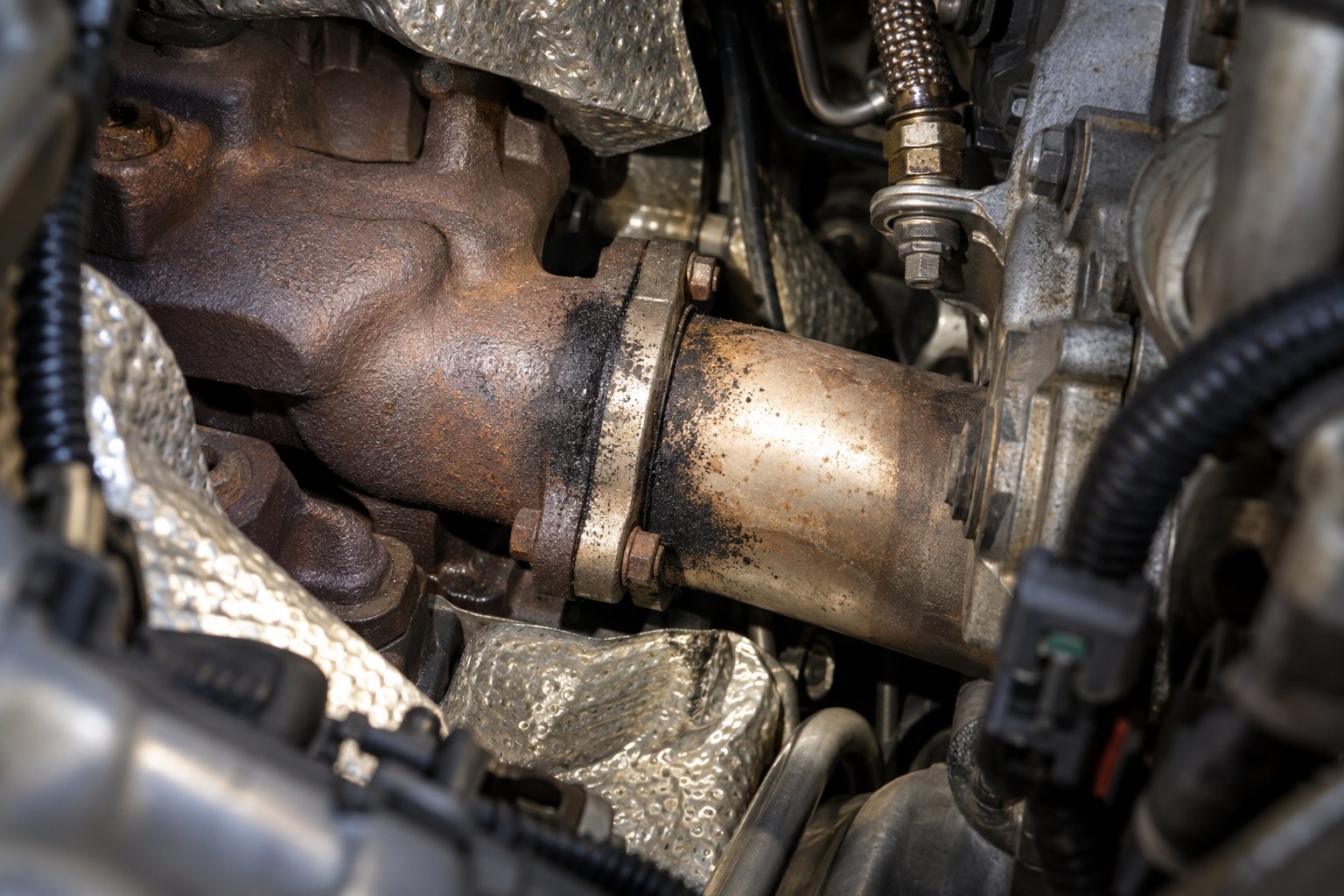
The exhaust up-pipes connecting the cylinder heads to the turbine inlet are a known weak point on early 6.7L Powerstrokes. A leaking up-pipe reduces exhaust energy at the turbine and causes underboost—often triggering a P0299 code that is misdiagnosed as a turbo failure. Always inspect the up-pipes before condemning the turbo.
2011–2014 vs 2015+ Differences
The 2015 model year brought a revised turbocharger with improved turbine wheel metallurgy and an updated actuator design. If you are shopping for a replacement for an early 6.7L, confirm the correct generation for your year and calibration.
Replacement Options
OEM BorgWarner replacements are available through Ford dealers but carry a premium price. Quality remanufactured units from specialists like PT Turbo offer equivalent performance with a faster turnaround and lower cost.
PT Turbo carries remanufactured 6.7L Powerstroke turbochargers for 2011–present applications. Call (909) 824-1020 to confirm the right unit for your year and configuration, or visit our online store. Contact us here for fleet pricing.
Shop PT Turbo: Browse our Ford Powerstroke turbocharger catalog — OEM-spec replacements with a 12-month, unlimited-mile warranty. In-stock units available for same-day shipping.
Further Reading
- Variable Geometry Turbocharger (VGT) Explained
- P0299 Underboost Code: Step-by-Step Diagnosis & Fix
- Turbocharger Oil Lines: Feed, Return & Drain Explained
- 7 Warning Signs Your Turbocharger Is Failing
- Ford 6.0 Powerstroke Turbocharger Guide: Rebuild & Fix
A failing 6.7L Powerstroke turbo is often rebuildable. See PT Turbo’s turbocharger rebuild service.
Need a Turbocharger?
PT Turbo has rebuilt and sold turbochargers since 1978. We stock remanufactured units for Cummins, Duramax, Power Stroke, Detroit Diesel, and more — backed by a 12-month unlimited mileage warranty and same-week shipping from San Bernardino, CA.
📞 (909) 824-1020 · 346 S I St. #3, San Bernardino, CA 92410 · [email protected]
More From PT Turbo
- Detroit DD16 Turbocharger Guide: Mack MP10 Shared Platform & Replacement Parts
- International DT466 Turbocharger Guide: School Bus & Medium Duty Applications
 Duramax LLY Turbocharger: Symptoms, Garrett GT3788VA Replacement & Cost (2004-2005)
- Peterbilt 389 Turbocharger Guide: Cummins ISX & PACCAR MX-13 Applications