7 Warning Signs Your Turbocharger Is Failing (And What To Do About It)
If you drive a turbocharged vehicle — especially a diesel truck — knowing the early warning signs of turbo failure can save you thousands in engine repair costs. At PT Turbo, we’ve rebuilt tens of thousands of turbochargers since 1978, and these are the signs we see most often when a turbo is on its way out.
1. Loss of Power or Acceleration
The most common early symptom is a noticeable drop in engine power, especially under load. If your truck feels sluggish on hills or when towing, your turbo may not be spooling up to full boost pressure. This can be caused by worn bearings, a damaged compressor wheel, or a boost leak in the charge piping.
2. Excessive Exhaust Smoke
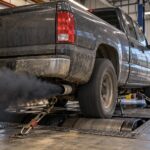
Blue or gray smoke from the exhaust is a classic sign of oil entering the combustion chamber — often because the turbo’s internal seals are worn. A blocked oil return line is a common root cause: when oil cannot drain freely from the center section, it backs up and forces past the seals. Black smoke usually indicates a rich fuel mixture caused by insufficient boost. Either one warrants immediate attention.
3. Loud Whining or Siren Noise
A healthy turbocharger runs quietly with only a slight whoosh under boost. If you hear a high-pitched whine, screeching, or siren-like sound, the bearings are likely damaged or the compressor wheel is rubbing against the housing due to excessive shaft play.
4. Turbo Shaft Play (Excessive Wiggle)
Grab the turbo shaft (when the engine is cold and off) and wiggle it side to side. A small amount of side-to-side play is normal, but if you feel clear in-and-out movement or the wheel contacts the housing, it is time for a rebuild. Axial (in-and-out) play should be barely perceptible. Learn more about what shaft play and bearing wear mean for your turbo.
5. Oil Leaks Around the Turbo
Oil around the turbo inlet, outlet, or center section can indicate seal failure. Check the oil return line for blockages, as restricted oil drainage forces oil past the seals. Also inspect the oil feed line for kinks or restrictions.
6. Check Engine Light with Boost-Related Codes
Modern diesel trucks will throw codes like P0299 (underboost), P0234 (overboost), or VGT actuator faults when the turbocharger is not performing correctly. These codes alone do not confirm a failed turbo — always do a physical inspection — but they are a strong indicator.
7. Sluggish Throttle Response After Cold Start
On variable geometry turbos (VGT) like the Holset HE300VG and Garrett PowerMax, carbon buildup on the vanes can cause sluggish response until the engine warms up. If it improves after 5–10 minutes of driving, VGT cleaning or actuator inspection is the next step.
What To Do If You Suspect Turbo Problems
Do not ignore these symptoms. A failing turbo can ingest oil into the intake, causing catastrophic engine damage. The good news: most turbos are fully rebuildable. Read our guide to turbocharger rebuild vs replace to understand your options, and see OEM vs remanufactured turbos before you buy.
PT Turbo offers expert turbocharger rebuilds with OEM-spec or upgraded components, balancing, and a warranty — often at a fraction of the cost of a new unit. Call us at (909) 824-1020 or send us a message and we will diagnose your turbo issue and give you a straight answer.
Frequently Asked Questions
What does a failing turbo sound like?
A high-pitched whine, screech or siren-like sound. A healthy turbocharger runs quietly with only a slight whoosh under boost, so those noises usually mean damaged bearings or a compressor wheel rubbing against its housing because of excessive shaft play.
Does blue smoke from the exhaust always mean worn turbo seals?
No. Blue or gray smoke means oil is reaching the combustion chamber, and worn turbo seals are one cause. A blocked oil return line is another common root cause: oil that cannot drain from the center section backs up and is forced past the seals.
How much shaft play is acceptable on a turbocharger?
A small amount of side-to-side play, checked with the engine cold and off, is normal. In-and-out movement that is easy to feel, or a wheel that contacts the housing, means it is time for a rebuild.
Further reading: Learn more about turbocharger technology.
Caught early, most of these failures are repairable. PT Turbo’s turbo rebuild service restores a worn or damaged unit to factory spec for a fraction of the cost of a new turbo.
Need a Turbocharger?
PT Turbo has rebuilt and sold turbochargers since 1978. We stock remanufactured units for Cummins, Duramax, Power Stroke, Detroit Diesel, and more — backed by a 12-month unlimited mileage warranty. Units in stock at our shop in San Bernardino, CA ship the same day when ordered before 2 PM Pacific, Monday through Friday.
📞 (909) 824-1020 · 346 S I St. #3, San Bernardino, CA 92410 · [email protected]
More From PT Turbo
 Black Smoke and Turbocharger Failure: How to Tell If the Turbo Is the Cause
- Diesel Engine Low Power: Is It the Turbocharger? Complete Diagnosis Guide
- White Smoke from Diesel Engine: Is It the Turbocharger, Head Gasket or Injector?
- P003A Turbocharger Boost Control Code: Diagnosis Guide for Cummins & Duramax