PT Turbo

Diesel Diagnostics

Diagnosing turbocharger and diesel engine problems: smoke, codes, shaft play, boost leaks.

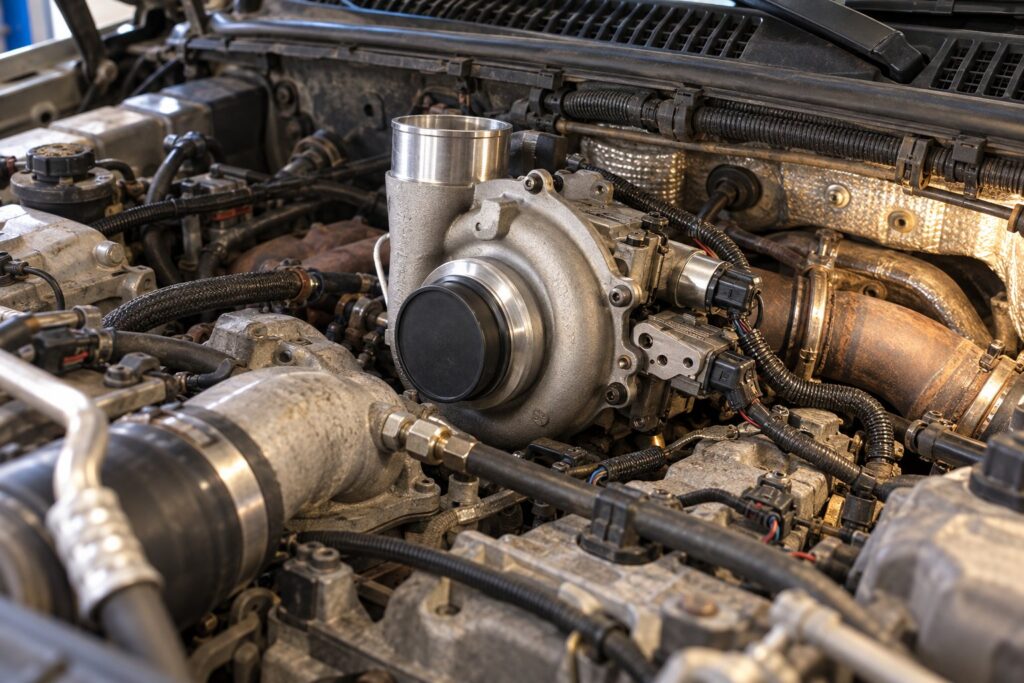
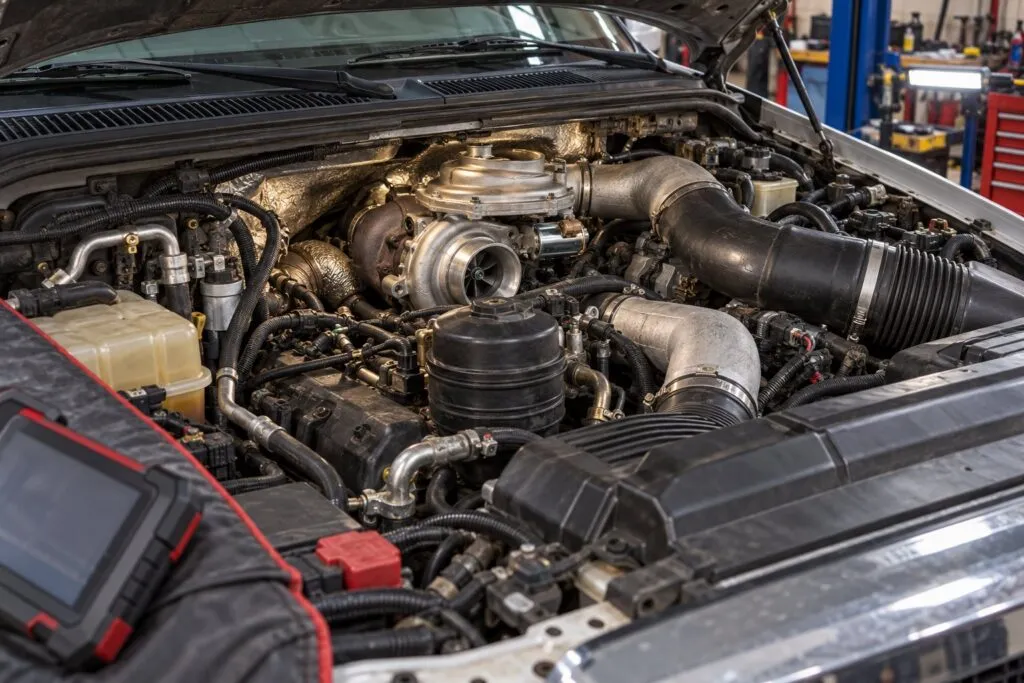
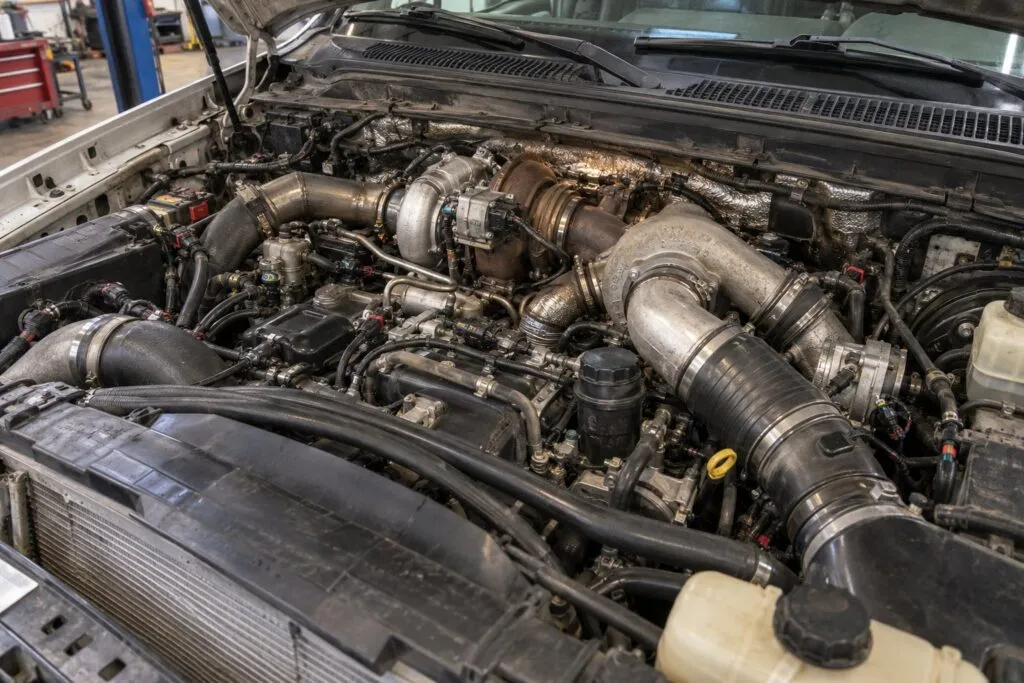
Ford 6.0L Power Stroke engine bay with its installed GT3782VA turbo and diagnostic scan tool

Turbocharger Fault Codes: The Full List of Boost Codes and What They Mean

This page lists the turbocharger fault codes a scan tool can show for the boost system: the generic OBD-II codes for boost pressure, boost control, the wastegate solenoid, the position sensor and the boost pressure sensor. Each line gives the code, its standard definition and what kind of fault it points to. Where we have

Turbocharger Fault Codes: The Full List of Boost Codes and What They Mean Read More »
Factory compound turbos installed on a freshly rebuilt 6.4L Power Stroke in a Super Duty engine bay

Turbocharger Failed on a Fresh Engine Rebuild: The Most Common Reasons Why

When a turbocharger failed on a fresh engine rebuild, it is almost never because the turbo was defective out of the box. After 45+ years rebuilding and supplying turbochargers, we can tell you the failure is usually a symptom of something the rebuild missed, not the cause. The turbo is the first component to show

Turbocharger Failed on a Fresh Engine Rebuild: The Most Common Reasons Why Read More »

Installed GT3788VA turbo at the rear of a Silverado HD LBZ Duramax engine during boost-loss diagnosis

Boost Pressure Drops at Highway Speed: Diagnosing Intermittent Turbo Problems

When boost pressure drops at highway speed, you are dealing with one of the most frustrating diagnostic challenges in diesel repair: an intermittent fault that hides at idle and low load, then shows up exactly when the engine is working hardest. The truck pulls fine off the line, cruises clean around town, then loses power

Boost Pressure Drops at Highway Speed: Diagnosing Intermittent Turbo Problems Read More »

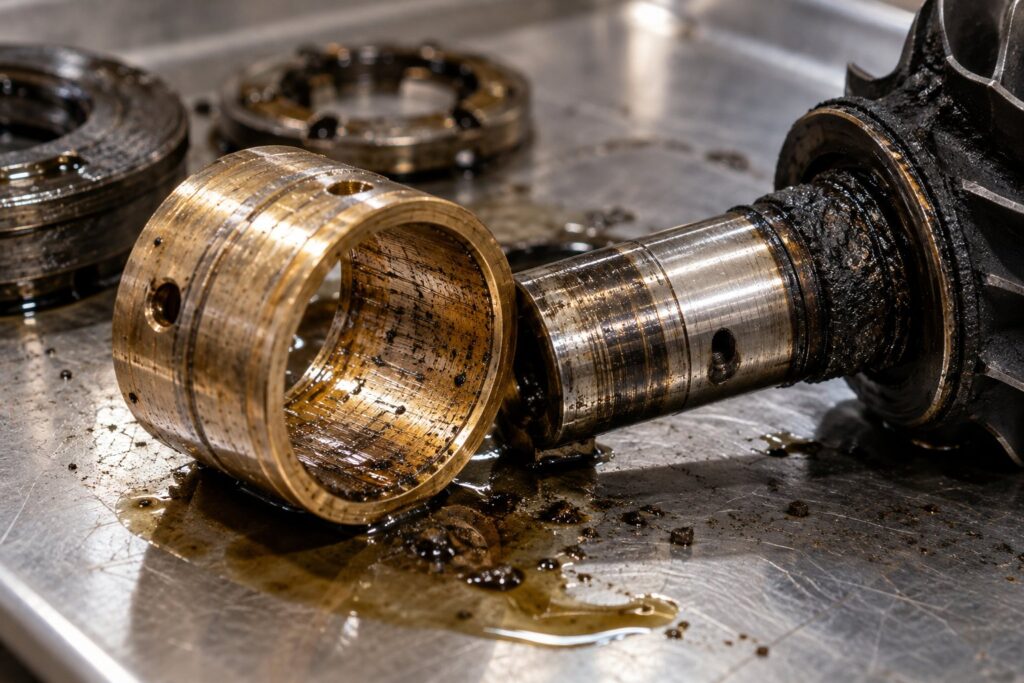
Turbo shaft and journal bearing showing abrasive scoring beside carbon deposits and contaminated oil residue

Contaminated Engine Oil and Turbocharger Failure: Identifying the Pattern

Contaminated Engine Oil and Turbocharger Failure go hand in hand more often than most operators realize, and the damage almost always traces back to something that could have been caught during a routine service. A turbocharger spins at speeds north of 100,000 RPM, and the only thing keeping those bearings alive is a thin, clean

Contaminated Engine Oil and Turbocharger Failure: Identifying the Pattern Read More »

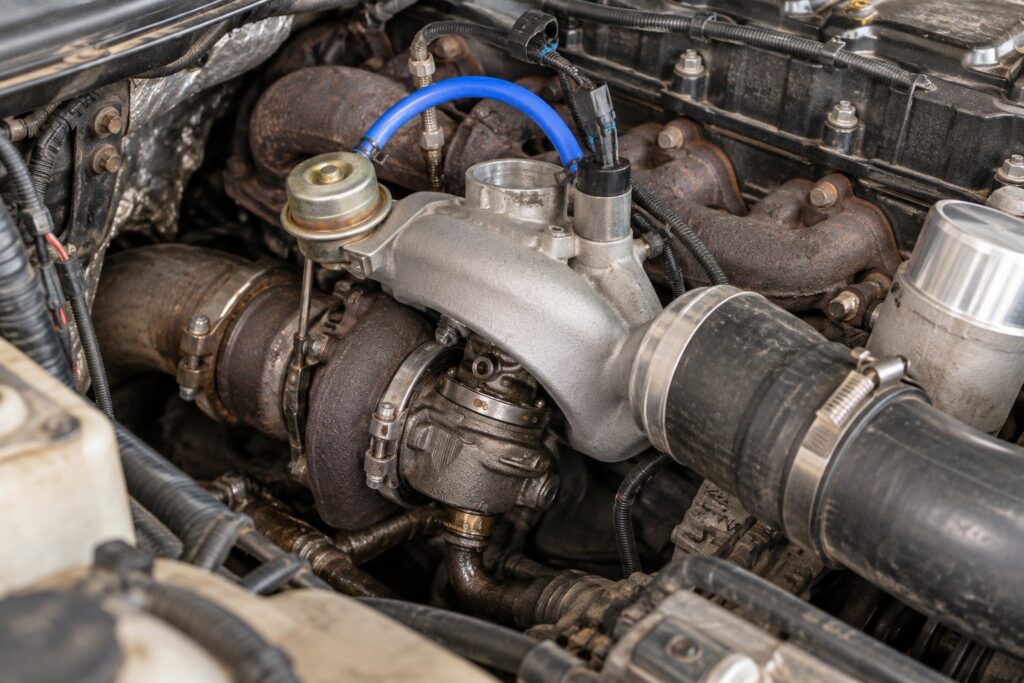
HE351CW turbo and oil feed line installed beside the exhaust manifold on a Dodge Ram 5.9L Cummins

Hot Shutdown Turbocharger Damage: Why It Happens and How to Identify It

Hot shutdown turbocharger damage is one of the most common, and most preventable, causes of premature turbo failure we see come across the bench at PT Turbo. It happens when a diesel engine is shut off immediately after hard work, before the turbocharger has a chance to cool down. The result is oil that literally

Hot Shutdown Turbocharger Damage: Why It Happens and How to Identify It Read More »

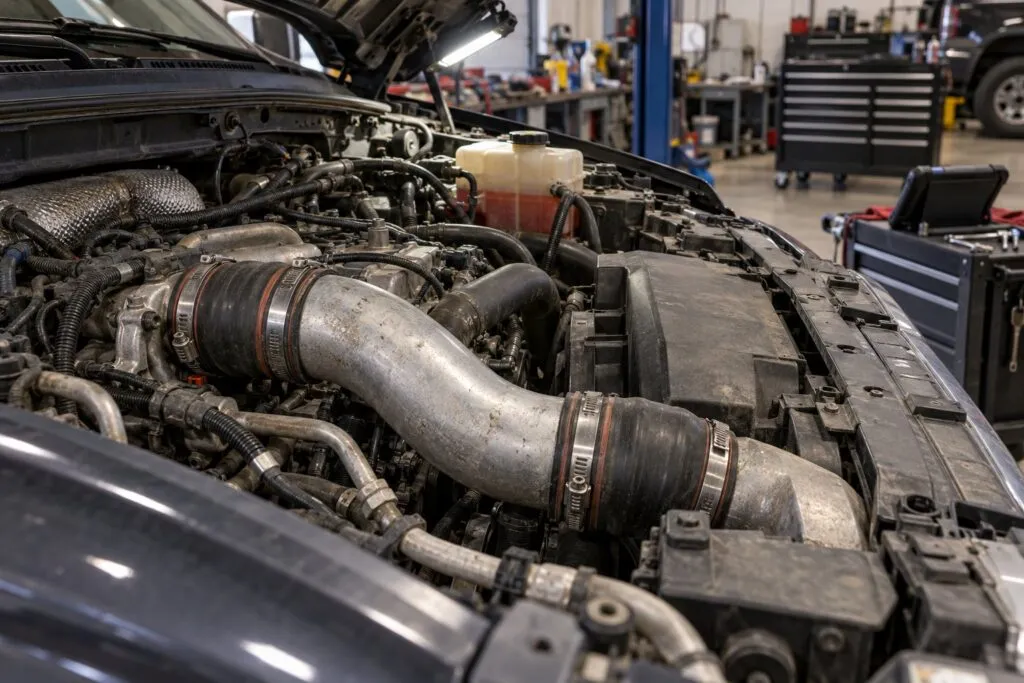
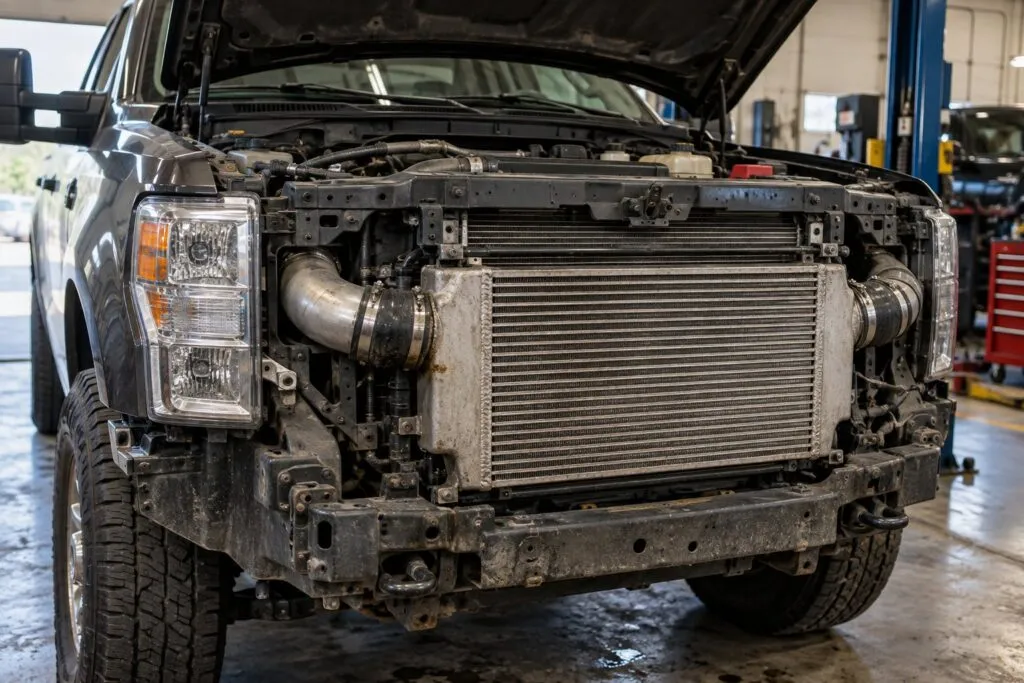
Diesel truck with front-mounted intercooler exposed and oily residue around a charge-air connection

Intercooler Failure Symptoms: How a Bad Intercooler Damages Your Turbocharger

Recognizing Intercooler Failure Symptoms early is one of the cheapest ways to protect an expensive turbocharger, because a compromised intercooler quietly starves your engine of dense, cool air and forces the turbo to work harder than it was ever designed to. On a diesel, that added strain doesn’t stay contained. It cascades into overheating, oil

Intercooler Failure Symptoms: How a Bad Intercooler Damages Your Turbocharger Read More »

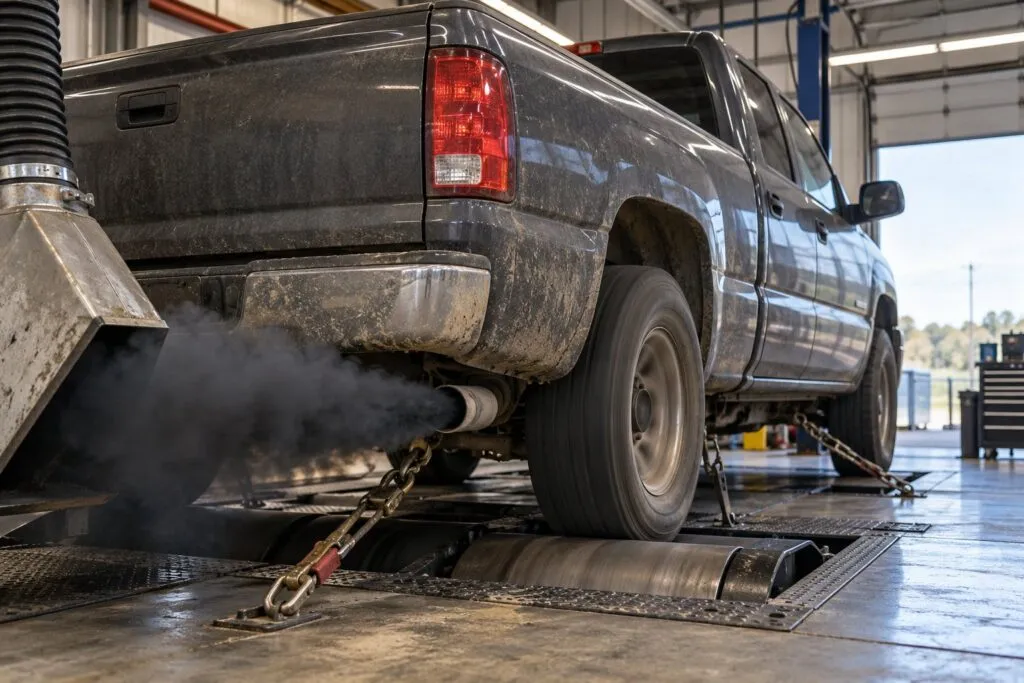
Diesel pickup emitting black exhaust during a controlled diagnostic load test

Black Smoke and Turbocharger Failure: How to Tell If the Turbo Is the Cause

Black Smoke and Turbocharger Failure often get blamed on each other, but the truth is more complicated: a smoking diesel doesn’t automatically mean your turbo is toast, and a bad turbo doesn’t always throw black smoke. Knowing the difference saves you from replacing a $600 turbo when the real culprit is a $40 sensor or

Black Smoke and Turbocharger Failure: How to Tell If the Turbo Is the Cause Read More »

White exhaust from a diesel truck parked outside a repair shop for diagnosis

White Smoke from Diesel Engine: Is It the Turbocharger, Head Gasket or Injector?

White smoke from a diesel engine is one of the most misdiagnosed problems we see at PT Turbo, and after 45+ years of rebuilding turbos and troubleshooting failures, we can tell you the fix is almost never what people first assume. Owner-operators point at the turbo. Fleet mechanics blame the head gasket. The parts counter

White Smoke from Diesel Engine: Is It the Turbocharger, Head Gasket or Injector? Read More »

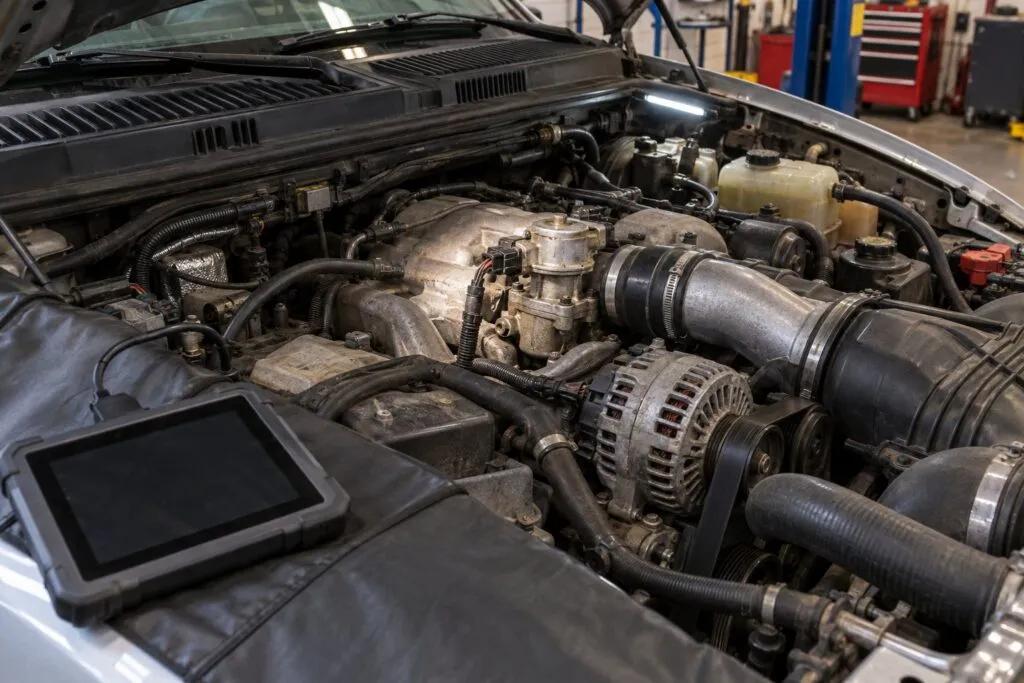
Open 6.0L Power Stroke engine bay with diagnostic equipment connected beside the EGR valve

P0401 EGR Insufficient Flow: How It Leads to Turbocharger Damage if Ignored

A P0401 EGR Insufficient Flow code is one of those trouble codes that too many operators clear and forget, right up until the turbocharger fails and the repair bill triples. On the surface it looks like a simple emissions fault. Underneath, it points to a chain of problems that puts real stress on your turbine

P0401 EGR Insufficient Flow: How It Leads to Turbocharger Damage if Ignored Read More »