Boost Leak on 6.0L Powerstroke: Common Locations and Pressure Test Guide
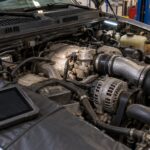
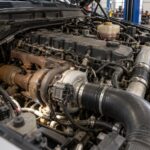
Boost leak on 6.0L Powerstroke trucks shows up as a slug of lost power, a hanging EGT, and sometimes stored codes that send people chasing the turbo when the real problem is a split boot or a cracked charge pipe. On a 2003-2007 Super Duty, a 2003-2005 Excursion, or a 2004-2010 E-Series, the charge air system between the compressor and the intake runs long, flexes with the engine, and bakes next to hot exhaust parts, so it leaks. Before anyone condemns the GT3782VA turbocharger, the cold side deserves a proper pressure test.
This guide walks through how a leak behaves on this engine, where they hide, and how to pressure test the system the way Ford’s own bulletins do it. It also covers how to tell a charge-air leak apart from an exhaust leak ahead of the turbine, which can mimic the same low-boost symptom.
What a Boost Leak Actually Does on the 6.0L
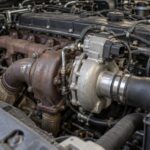
The 6.0L Power Stroke uses a Garrett variable geometry turbo whose vanes are moved by engine oil through a PCM-driven VGT solenoid. There is no electric actuator and no vane position sensor, so codes like P003A and P2563 do not apply to this engine. That matters because a boost complaint here is rarely an “actuator” problem; it is usually plumbing, the vanes themselves, or an exhaust-side leak.
When air escapes after the compressor, the turbo spins faster trying to hit the commanded boost, which can push it toward overspeed over time. On a modern electronic diesel the ECM does not dump in extra fuel to compensate, because the smoke limit caps fueling by measured airflow. So the usual result is soft throttle, slow spool and higher drive pressure rather than heavy black smoke.
It helps to know what P0299 means on this platform. On the 6.0L, Ford sets P0299 from exhaust backpressure, not from a manifold boost reading. The MAP-based boost checks are P2262 and P2263, which the PCM runs above 2800 rpm with the EGR valve nearly closed. A plugged EBP sensor tube will also feed the PCM false pressure, so verify your sensor readings before trusting the codes.
Common Boost Leak Locations on the 6.0L Powerstroke
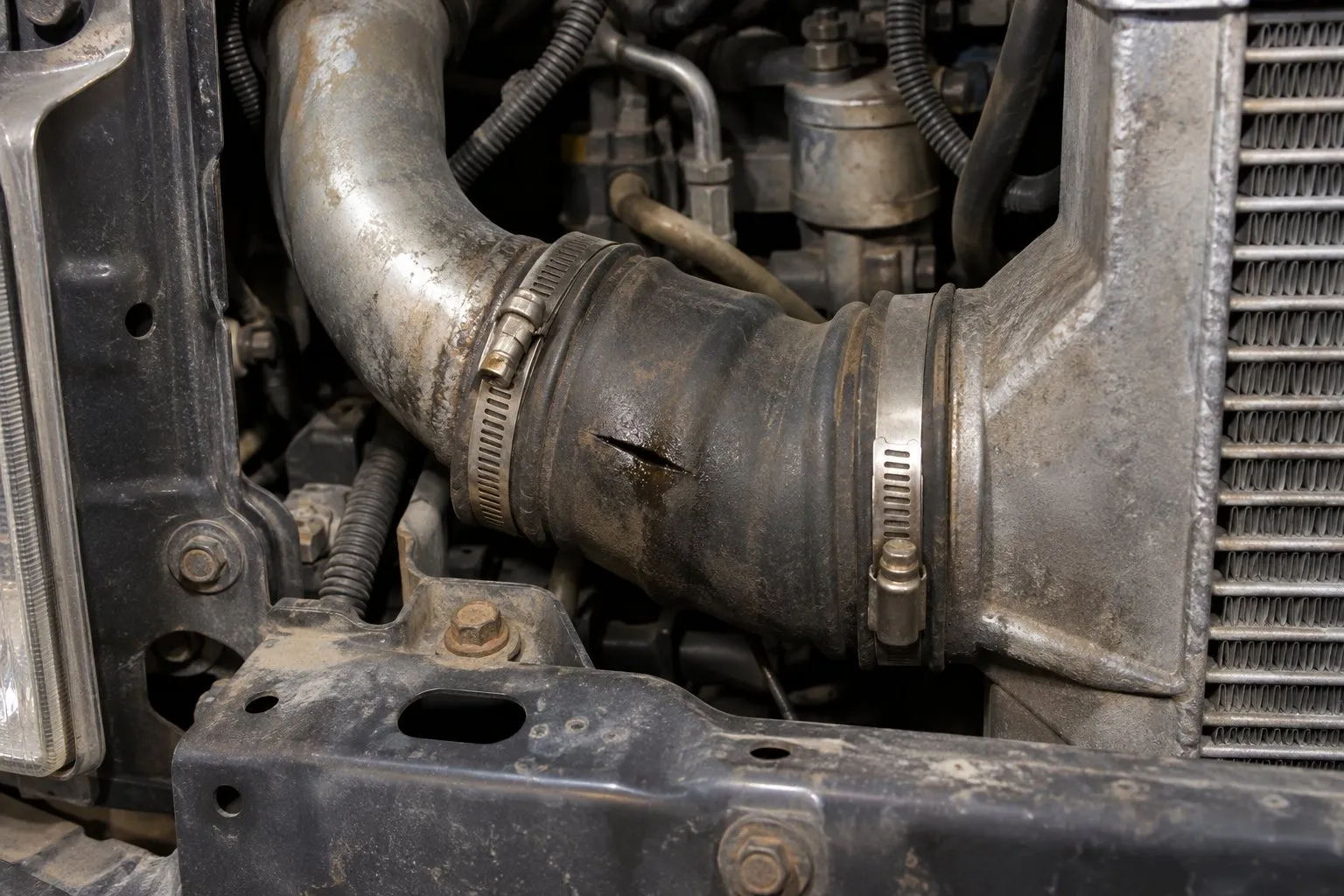
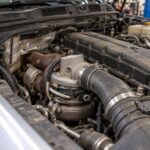
The charge air cooler ducts are the classic offender. Ford’s bulletin on this (TSB 07-5-15) covers oil seepage and boost leaks at the hot-side CAC duct connections, and tells technicians to inspect the ducts for holes, tears, cuts, abrasion, oil saturation, or sponginess, then fit new clamps rather than reuse the old ones. A boot that feels soft or oily is done.
Some oil film inside the charge pipes is normal on any engine with closed crankcase ventilation, so do not blame the turbo seal on a light film alone. Check the breather, air filter, oil level, and oil drain first, and look for pooled oil, not just a sheen.
| Location | What to look for | Notes |
|---|---|---|
| Hot-side CAC duct and clamps | Splits, oil saturation, soft/spongy boot, loose clamp behind the bead | Covered by TSB 07-5-15; replace clamps, never reuse |
| Cold-side charge pipe | Cracks, blown-off boot, chafed sections | Flexes with engine movement |
| Charge air cooler (the core itself) | Fractured end tanks, seam leaks | Test the cooler separately when ducts check out |
| EGR O-ring / gasket | Leaking joint, failed O-ring | TSB 09-15-6 ties this to leaks and related codes |
| Air filter housing and breather tube | Cracked housing, breather tube O-ring | Inlet is under suction; a crack here lets dirt in, not boost out |
Note the air inlet before the turbo is under suction, so a crack there cannot leak boost; it lets dirt into the compressor instead. Boost leaks live downstream of the compressor outlet, from the hot-side duct all the way to the intake. Learn more about how a high-pressure EGR system ties into that intake path, since a leaking EGR joint behaves like any other cold-side leak.
Turbos we list for the GT3782VA
Listings for the turbo models named in this guide that can be ordered online today. Several part numbers can fit one engine by year and rating, so match the number on your turbo’s tag, or call (909) 824-1020 and we will match it for you.
Pressure Testing the Charge Air System
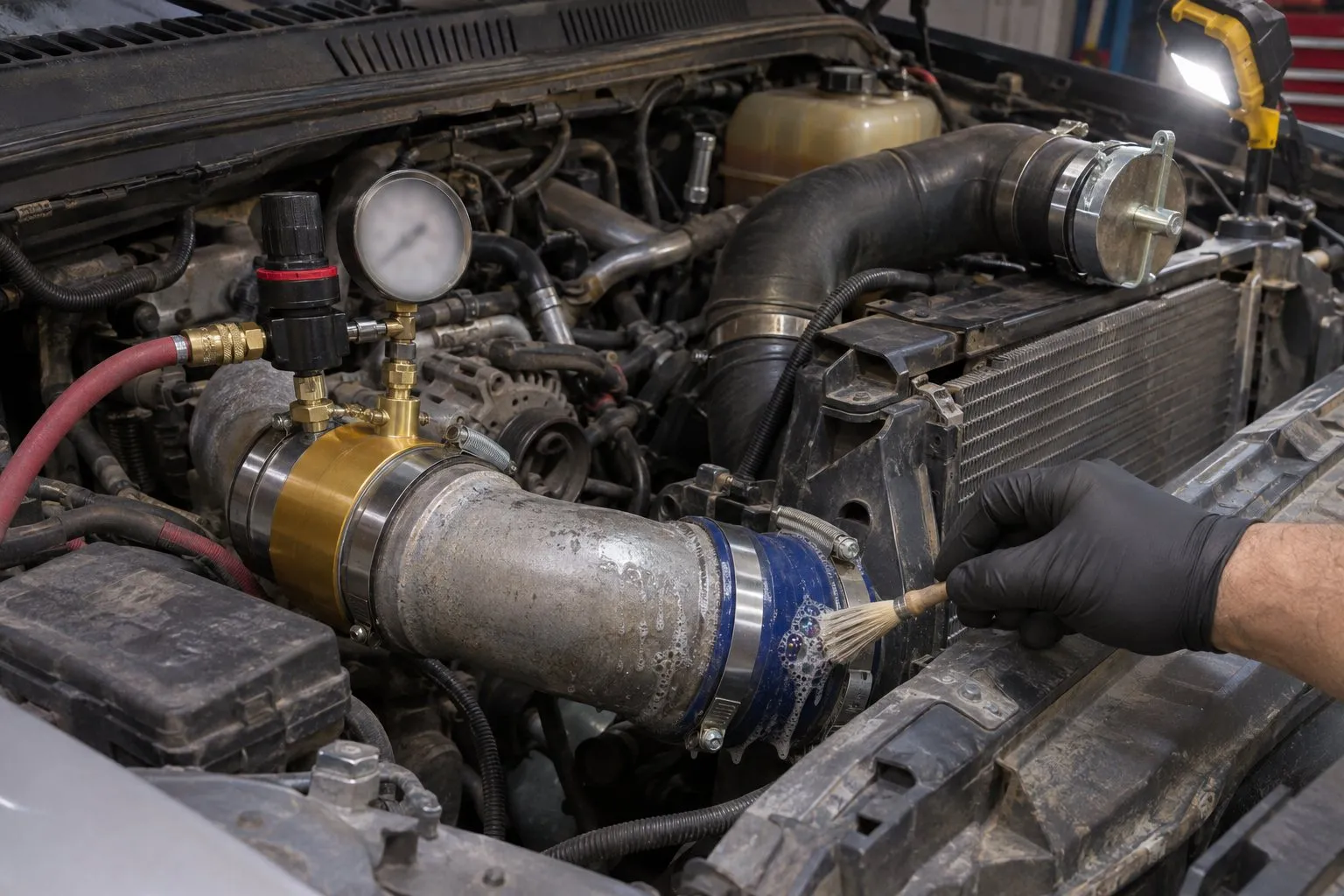
Ford’s charge air cooler test in TSB 09-15-6 applies to 2003-2004 trucks built on or before 9/29/2003. With the engine off and key on, you command the EGR valve open, block the turbo inlet and the tailpipe, put a gauge in the exhaust pressure (EP) sensor port, and feed shop air in through the MAP hose until the gauge reads 25 psi (172 kPa). Then you inspect the cooler, ducts, and exhaust for the leak.
Ford publishes no allowed pressure drop or hold time for this test, so do not borrow a number from another engine. The 30 psi / 5 psi-in-15-seconds figure that gets quoted online is Navistar’s MaxxForce test, not a Ford 6.0L spec. Watch and listen for where the air escapes instead of chasing a decay rate.
On later trucks Ford directs technicians to the IDS “Turbo Boost” test (TSB 09-16-5) and gives no pressure figure for it. The important limitation: that test pressurizes the charge-air side and the exhaust side together, so by itself it will not tell a cold-side leak apart from an exhaust leak ahead of the turbine. That is why many shops use an aftermarket charge-air test kit that caps the cold side only, which isolates boost leaks from exhaust leaks.
After the TSB 09-15-6 repair, Ford has the keep-alive memory cleared (both batteries disconnected for 5 minutes) and the turbo relearn run before declaring the job done.
Ruling Out Exhaust Leaks and the Turbo
A leak in the up-pipes or exhaust manifold lets exhaust escape before the turbine. That gives low boost, slow spool, and higher exhaust temperature, and it reads like a boost leak on a combined pressure test even though no charge-air duct is split. A classic tell is a tick at cold start that fades as the engine warms, with soot at the flanges.
If the plumbing holds pressure and the exhaust side is tight, then look at the turbo. On the 6.0L the vanes are moved by oil, and they can carbon up and stick, giving low or erratic boost. The variable geometry nozzle is cleaned with the maker’s solvent per Ford’s procedure, keeping any cleaner out of the bearing housing. For a deeper walk through turbo-side symptoms, see our guides on 8 warning signs of 6.0L turbo failure and turbo replacement and best options.
Some side-to-side rock at the compressor wheel is normal on this journal-bearing turbo with no oil pressure. Condemn it only for in-and-out play you can feel, wheel contact with the housing, or play beyond Garrett’s limit, not for any movement at all.
Fixing the Leak and When the Turbo Is the Problem
When you replace a boot, fit it clean and dry; lubricant lets a boot blow off under boost. Make sure the clamp sits behind the bead, and use new clamps, as Ford’s TSB 07-5-15 directs. Plain silicone boots soak up oil over time, while fluorosilicone-lined boots resist it, which is worth considering on the hot side.
If the diagnosis lands on the turbo rather than the plumbing, that is where PT Turbo comes in. We have been rebuilding turbochargers since 1978, more than 45 years, and we remanufacture the GT3782VA in-house with VSR balancing on every unit we rebuild. You can send us your core for the turbo rebuild service, check real pricing on our turbo rebuild price list, or browse remanufactured turbochargers.
Match any replacement by the number on the turbo’s tag, not by the casting number on the housing, since one casting serves many turbos. If you are unsure which unit you have, send us the tag number through our contact page or call (909) 824-1020 and we will confirm fitment.
Frequently Asked Questions
Will a boost leak on the 6.0L throw a check engine light?
It can. Ford’s TSB 09-15-6 ties charge air cooler leaks to P0401 and MAF or MAP faults. The boost codes on this engine are P2262 and P2263, the MAP-based checks that run above 2800 rpm with the EGR nearly closed, and P0299, which comes from an exhaust backpressure comparison rather than a manifold boost reading. A plugged EBP sensor tube can also feed false pressure, so verify your sensor data before replacing parts.
How do I tell a boost leak from an exhaust leak before the turbine?
A cracked up-pipe or a leaking manifold gasket drops boost and raises EGT just like a split boot, and a combined pressure test will not separate them. Use a charge-air test kit that caps the cold side only to isolate a true boost leak, and listen for a cold-start tick that fades as the engine warms plus soot at the exhaust flanges, which points to the exhaust side.
Can a boost leak damage my turbo?
Yes, over time. When air escapes after the compressor, the turbo spins faster to reach commanded boost, which pushes it toward overspeed, and the extra heat and load shorten its life. Fixing the leak early protects the turbo, and if the turbo is already worn, send the tag number to PT Turbo so we can quote the correct replacement or rebuild.
Need a Turbocharger?
PT Turbo has rebuilt and sold turbochargers since 1978. We stock remanufactured units for Cummins, Duramax, Power Stroke, Detroit Diesel, and more — backed by a 12-month unlimited mileage warranty. Units in stock at our shop in San Bernardino, CA ship the same day when ordered before 2 PM Pacific, Monday through Friday.
📞 (909) 824-1020 · 346 S I St. #3, San Bernardino, CA 92410 · info@ptturbo.com