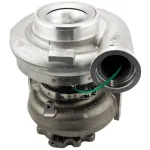
Ford 6.0L Powerstroke Turbo Failure: 8 Warning Signs and What to Do
If you turn wrenches on Ford 6.0L Powerstroke trucks, you already know the 6.0L Powerstroke turbo failure is one of the most common big-ticket repairs that rolls through the bay. The factory Garrett GT3782VA variable geometry turbo (VGT) is a clever piece of engineering, but the variable vane mechanism, the actuator, and the unison ring are notorious for sticking, sticking hard, and eventually leaving an owner-operator stranded with a no-boost limp-home situation. Catch the warning signs early and you save a customer thousands. Miss them and you’re pulling a turbo that grenaded and contaminated the entire intake tract.
At PT Turbo we’ve been diagnosing and remanufacturing diesel turbos for over 45 years, and the 2003 to 2007 Powerstroke unit is one we know cold. Here are the eight warning signs that tell you a 6.0L turbo is on its way out, what’s actually happening inside the housing, and how to fix it right the first time.
How the 6.0L Powerstroke Turbo Actually Works
The 6.0L uses a single Garrett variable geometry turbocharger. Instead of a wastegate, it controls boost with a ring of movable vanes inside the turbine housing. The PCM commands the VGT solenoid, which uses engine oil pressure to drive a hydraulic actuator that pivots the unison ring and changes the angle of those vanes. At low RPM the vanes close down to spool fast and kill turbo lag. At high RPM they open up to flow more exhaust.
That same complexity is the weak point. Soot and carbon build up on the vanes and unison ring. Oil quality and EGT swings accelerate the problem. When the vanes stick, you get erratic boost, dead spots, and eventually a hard fault. Garrett, the original manufacturer, builds excellent VGT units, and you can read more about their variable geometry technology at Garrett Motion, but no VGT survives 200,000 miles of neglected oil changes and high soot loads.
The 8 Warning Signs of 6.0L Powerstroke Turbo Failure
Most failures announce themselves long before the turbo lets go. Train yourself and your customers to recognize these eight symptoms.
1. Sticking Vanes and Surging Boost
The classic early sign. The truck surges under steady throttle, or boost feels like it comes and goes. Hook up a scan tool and watch VGT duty cycle against boost and exhaust back pressure: when the command changes and the pressures are slow to follow, the vanes are not moving as told. That’s carbon binding the unison ring.
2. Sudden Loss of Power and Limp Mode
When the PCM sees boost or exhaust back pressure that does not match what it commanded, it throws a code and pulls the truck into limp mode. No boost, dead acceleration, and a wall around 2,000 RPM. Pull an underboost code such as P0299 and sticking vanes or the VGT control valve are the usual cause, but rule out a plugged EBP sensor tube and leaking intercooler boots first.
3. Excessive Black or Blue Smoke
Black smoke means the engine is dumping fuel it can’t burn because boost is low. Blue smoke means oil is getting past the turbo seals into the intake or exhaust. Blue smoke on a 6.0L is a strong indicator the center cartridge bearings and seals are worn.
4. Whining, Whistling, or Grinding Noise
A healthy turbo spools with a smooth whoosh. A failing one whines at a higher pitch as the bearings wear and shaft play increases. A grinding or rubbing sound means the compressor or turbine wheel is contacting the housing. Once you hear that, the turbo is on borrowed time.
5. Oil in the Intercooler or Charge Pipes
Pull the intercooler boots and check for pooled oil. A small film is normal. Standing oil means the turbo’s seals have failed and it’s pumping crankcase oil into the charge air. That oil can hydro-lock or run away on a 6.0L in the worst cases.
6. Rising Exhaust Gas Temperatures
When the turbo can’t move enough air, combustion runs hotter. If your customer reports climbing EGTs while towing, or you see it on a gauge, the turbo is not flowing what it should. Sustained high EGT then cooks the turbo even faster, a vicious cycle.
7. Check Engine Light With Boost or VGT Codes
Don’t ignore stored codes even if the truck drives okay. P0299, P2262 and P2263 are the turbo telling you it’s struggling, and P0046 points to the VGT control valve or its wiring. Catching these before a hard failure is the difference between a clean and ready turbo swap and a full intake decontamination job.
8. Shaft Play You Can Feel by Hand
With the intake pipe off, grab the compressor wheel. A small amount of side-to-side movement is acceptable on a journal-bearing turbo. In-and-out movement you can feel, play that lets the wheel touch the housing, or any visible contact marks on the wheel tips, condemns the turbo. This is the most definitive hands-on test you can do.
Symptoms by Severity: What Needs Attention Now
| Symptom | Likely Cause | Severity | Action |
|---|---|---|---|
| Mild boost surge | Carbon on vanes | Low | Clean or service VGT, monitor |
| Whistle on spool | Early bearing wear | Moderate | Inspect shaft play, plan replacement |
| Limp mode / VGT codes | Stuck vanes or actuator | High | Replace or rebuild turbo |
| Blue smoke + oil in intake | Failed seals | Critical | Replace turbo, clean intake immediately |
| Grinding / shaft contact | Bearing failure | Critical | Stop driving, replace now |
What to Do: Repair, Replace, or Remanufacture
Once you’ve confirmed the turbo is the problem, you have three real options. Cleaning and servicing the VGT can buy time on an early carbon issue, but if shaft play is present, that’s a band-aid. For most failed 6.0L turbos, you’re replacing the unit.
Here’s how the options stack up:
| Option | Parts Cost at PT Turbo | Lifespan | Best For |
|---|---|---|---|
| New Garrett GT3782VA | $944 to $1,016 (3 listings) | Longest, factory spec | Owners keeping the truck long term |
| Remanufactured GT3782VA | $801 to $1,217 (4 listings) | Comparable to new when done right | Best value for most fleets |
| Rebuild your own turbo | $495 (turbo rebuild price list) | 12-month unlimited mileage warranty | Sound housings with worn bearings or seals |
| VGT service / clean only | $150 to $400 labor (shop estimate) | Short, only if no shaft wear | Early carbon, no bearing damage |
A quality remanufactured turbo is the sweet spot for most fleets and owner-operators. PT Turbo stocks both new and remanufactured units, and a properly remanned 6.0L turbo with a new center cartridge, balanced wheels, and a serviced or upgraded VGT actuator will run as long as the original. The key is who did the rebuild. Like Garrett, suppliers such as BorgWarner hold tight balancing and tolerance standards on their cores, and a reputable rebuilder follows the same discipline.
Don’t Skip the Installation Hardware
The number one cause of a comeback after a turbo replacement is reusing old gaskets, seals, and oil feed hardware. When you pull a 6.0L turbo, replace the exhaust clamps, the drain tube O-rings and the oil feed gasket, and fit a new feed line if the old one is coked. Contaminated or restricted oil supply contributed to the failure of many of these turbos in the first place, and installing a fresh unit on a dirty oil feed just starts the clock on another failure.
Match the kit to the platform you’re working on and you take the guesswork out of sourcing the right seals and fasteners. Installing a remanned or new turbo with fresh hardware is the only way to guarantee the oil feed and exhaust connections seal clean from the first start.
The bottom line on any 6.0L turbo job: diagnose the failure, confirm it with shaft play and scan data, then fix the root cause instead of just the symptom. A quality unit, a clean oil supply, and new installation hardware is what keeps that truck out of your bay and back on the road.
Price ranges in this article are general estimates to help with budgeting, not PT Turbo quotes. Our current prices are on each product listing, and our rebuild prices are on the turbo rebuild price list.
Turbos we list for the GT3782VA
Listings for the turbo models named in this guide that can be ordered online today. Several part numbers can fit one engine by year and rating, so match the number on your turbo’s tag, or call (909) 824-1020 and we will match it for you.
Frequently Asked Questions
What are the most common signs of 6.0L Powerstroke turbo failure?
Common signs include loss of power, excessive smoke, whining or whistling noises, and sluggish acceleration. Sticking VGT vanes often trigger these symptoms first.
Why does the 6.0L Powerstroke turbo fail so often?
The factory Garrett GT3782VA variable geometry turbo has vanes, an actuator, and a unison ring that are prone to sticking from carbon buildup and soot. This leads to inconsistent boost and eventual failure.
Can you fix a sticking 6.0L Powerstroke turbo without replacing it?
In some cases, cleaning the VGT vanes and unison ring can restore proper function if caught early. However, heavily worn or seized components usually require turbo replacement or a rebuild.
Further reading: Learn more about turbocharger technology.
If your 6.0L shows these signs, PT Turbo offers turbo rebuilds that restore the original unit to spec.
Need a Turbocharger?
PT Turbo has rebuilt and sold turbochargers since 1978. We stock remanufactured units for Cummins, Duramax, Power Stroke, Detroit Diesel, and more — backed by a 12-month unlimited mileage warranty. Units in stock at our shop in San Bernardino, CA ship the same day when ordered before 2 PM Pacific, Monday through Friday.
📞 (909) 824-1020 · 346 S I St. #3, San Bernardino, CA 92410 · [email protected]
More From PT Turbo
- International DT466 Turbocharger Guide: School Bus & Medium Duty Applications
 Detroit DD15 Turbocharger: Failure Signs, Common Problems & Best Replacements
- Isuzu 6HK1 Turbocharger Guide: FTR & FVR Medium Duty Truck Applications
- Cummins ISC Turbocharger Guide: HX40 & Replacement Options for Medium Duty Trucks