P0299 on Ford 6.0L Powerstroke: Step-by-Step Diagnosis & Most Common Causes
Seeing P0299 on Ford 6.0L Powerstroke is one of the most common reasons these trucks land on a diagnostic rack, and the code almost always points at the variable geometry turbo system or the plumbing around it. P0299 is the generic OBD-II definition for a Turbocharger/Supercharger “A” Underboost Condition. On the 6.0L, Ford sets it from exhaust backpressure: the PCM commands a backpressure target through the turbo vanes, and the code sets when actual backpressure stays short of it. Manifold boost has its own codes (P2262 and P2263), so the job is figuring out why the turbo is not responding.
PT Turbo has been rebuilding turbochargers since 1978, more than 45 years, and we stock both new and remanufactured parts for the Garrett unit on this engine. This guide walks through how the 6.0L turbo actually makes boost, what commonly sets P0299, and a logical order to test it so you are not throwing parts at the truck.
How the 6.0L Powerstroke Turbo Makes Boost
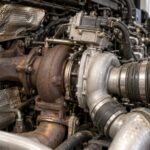
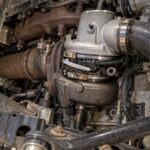
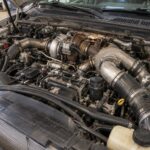
The factory turbo on the 2003-2007 Super Duty, 2003-2005 Excursion, and 2004-2010 E-Series is the Garrett GT3782VA, a variable geometry turbo that sits on a pedestal at the rear of the engine valley. The “82” in the name is the 82 mm compressor wheel. It is a variable geometry turbocharger that changes the angle of its vanes to control exhaust energy across the turbine.
Here is the part that trips people up: the vanes on the 6.0L are moved by engine oil. The PCM drives a VGT control solenoid on the turbo, and that solenoid meters pressurized engine oil to a piston inside the unit that turns the unison ring. There is no electric vane actuator and no vane position sensor on this turbo. That is why “commanded versus actual vane position” codes like P003A and P2563 do not apply to the 6.0L, and why oil quality and the solenoid matter so much to how this turbo behaves.
Because the system has no position feedback, the PCM watches manifold pressure and exhaust backpressure to judge whether the turbo is responding. When the turbo cannot build the backpressure the PCM asks for, you get P0299, and when manifold boost also falls short you may see the boost performance code P2263 with it.
Most Common Causes of P0299 on Ford 6.0L Powerstroke
Underboost on this engine comes down to one of three problems: the vanes are not moving the way they should, boost is leaking out before it reaches the manifold, or exhaust energy is escaping before it hits the turbine. Carbon is the number one cause we see at the turbo itself.
- Stuck or sticking VGT vanes. Soot and oil cook onto the unison ring and vanes over time, and they bind. Stuck toward the open position gives you classic low boost and sluggish spool, which is textbook P0299.
- Failed or clogged VGT control solenoid. The solenoid meters the oil that moves the vanes. If it sticks or the screen clogs, the vanes do not actuate properly.
- Boost leaks. Cracked intercooler, blown or oil-soaked boots, loose clamps, or a split charge pipe let pressurized air escape downstream of the compressor. A leak makes the turbo spin harder to try to hit target, and the ECM still logs underboost.
- Exhaust leaks ahead of the turbine. A leaking up-pipe or manifold lets exhaust escape before the turbine, so the turbo spools slowly and makes low boost with higher EGT. It does not raise backpressure.
- Restricted air inlet. A plugged air filter or collapsed inlet starves the compressor.
- EGR and oil quality problems. A gummed EGR system adds soot to the whole intake tract, and tired or contaminated oil slows the vane actuation on a system that depends entirely on oil to move the vanes.
If the P0299 is paired with heavy black or gray smoke under load, that is the rich, air-starved signature of genuine underboost. White smoke is coolant or unburned fuel, not a boost problem.
P0299 Diagnosis: Step by Step
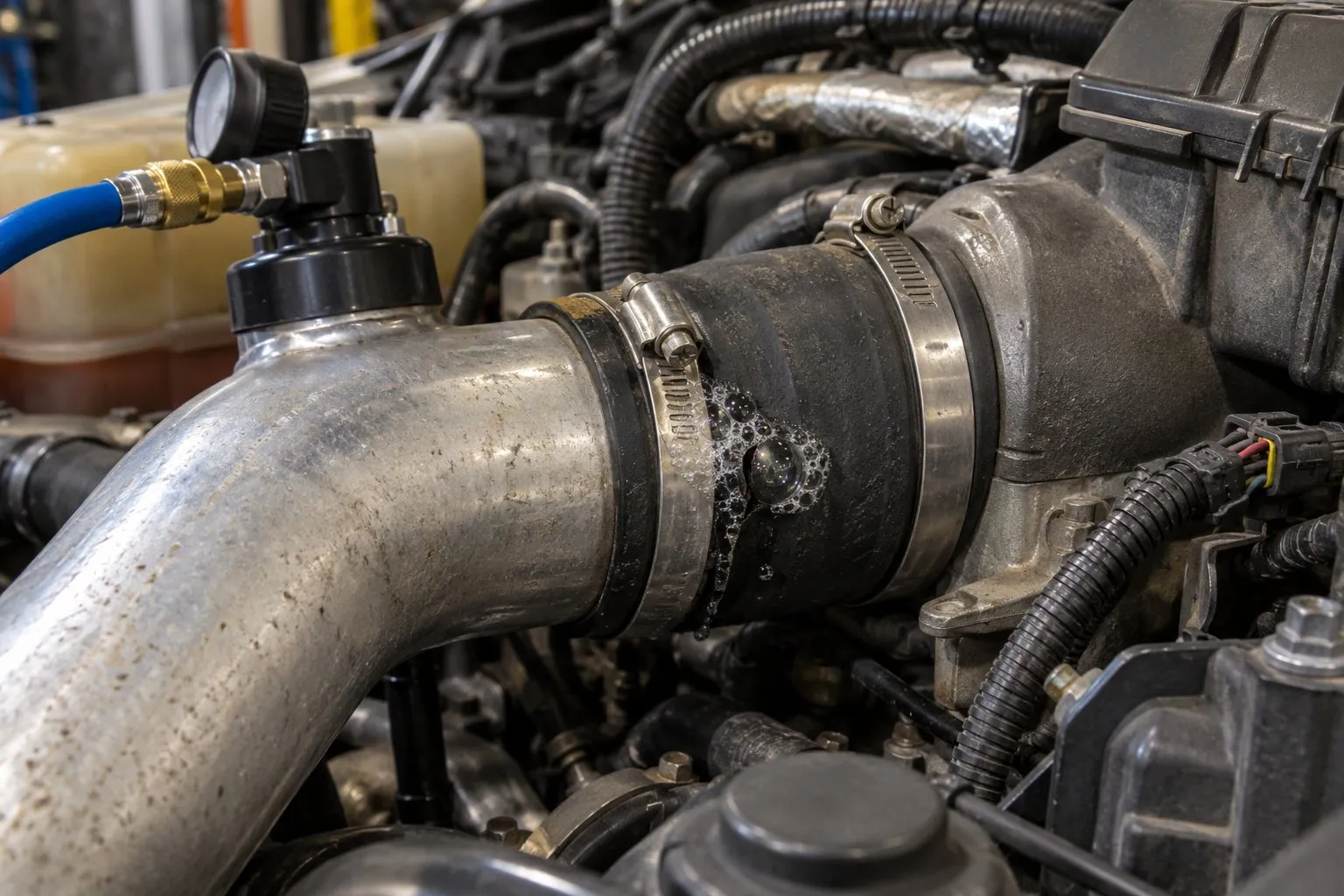
Work from the cheap, fast checks toward the turbo. You want to confirm the air path and the oil-driven vane system before you pull anything.
1. Scan and record live data
Pull all codes, not just P0299. Note any EGR, exhaust backpressure, or boost performance codes alongside it. With a capable scan tool, watch commanded turbo duty cycle against actual MAP during a load test. If the PCM is commanding the vanes closed and boost still never climbs, the problem is mechanical or a leak, not the command.
2. Inspect the air charge system for leaks
Check the intercooler, every charge pipe boot, and the clamps. A pressurized boost-leak test will find a split boot or cracked cooler fast. Remember the inlet pipe before the turbo is under suction, so a crack there lets dirt in but cannot leak boost.
3. Check the air filter and inlet
A heavily restricted filter alone can set underboost on a working turbo. Rule it out before you suspect the turbo.
4. Look for exhaust leaks before the turbine
Inspect the up-pipes and manifold joints. A leak here bleeds the exhaust energy the turbine needs, so you get slow spool and low boost. Soot tracks at the joints are a tell.
5. Test the VGT solenoid and vane movement
The VGT solenoid is the only electrical connector on the turbo. Check its resistance against the Ford specification and inspect its oil screen. With the turbo accessible, confirm the vanes are free and not seized with carbon. Sticking vanes are the single most common P0299 cause on a high-mileage 6.0L.
6. Verify oil condition and level
Because engine oil moves the vanes, overdue or contaminated oil can slow actuation. Confirm the oil is at level and in spec before condemning the turbo.
| Cause | Typical Symptom | What to Check |
|---|---|---|
| Stuck VGT vanes (carbon) | Low boost, slow spool, black smoke under load | Vane freedom, unison ring, soot buildup |
| VGT solenoid fault | Erratic or no vane response | Solenoid resistance, oil screen, connector |
| Boost leak (charge side) | Underboost with normal spool noise | Intercooler, boots, clamps, charge pipes |
| Exhaust leak before turbine | Slow spool, low boost, higher EGT | Up-pipes, manifold joints |
| Restricted air inlet | Gradual loss of power | Air filter, inlet ducting |
Accessing and Servicing the 6.0L Turbo
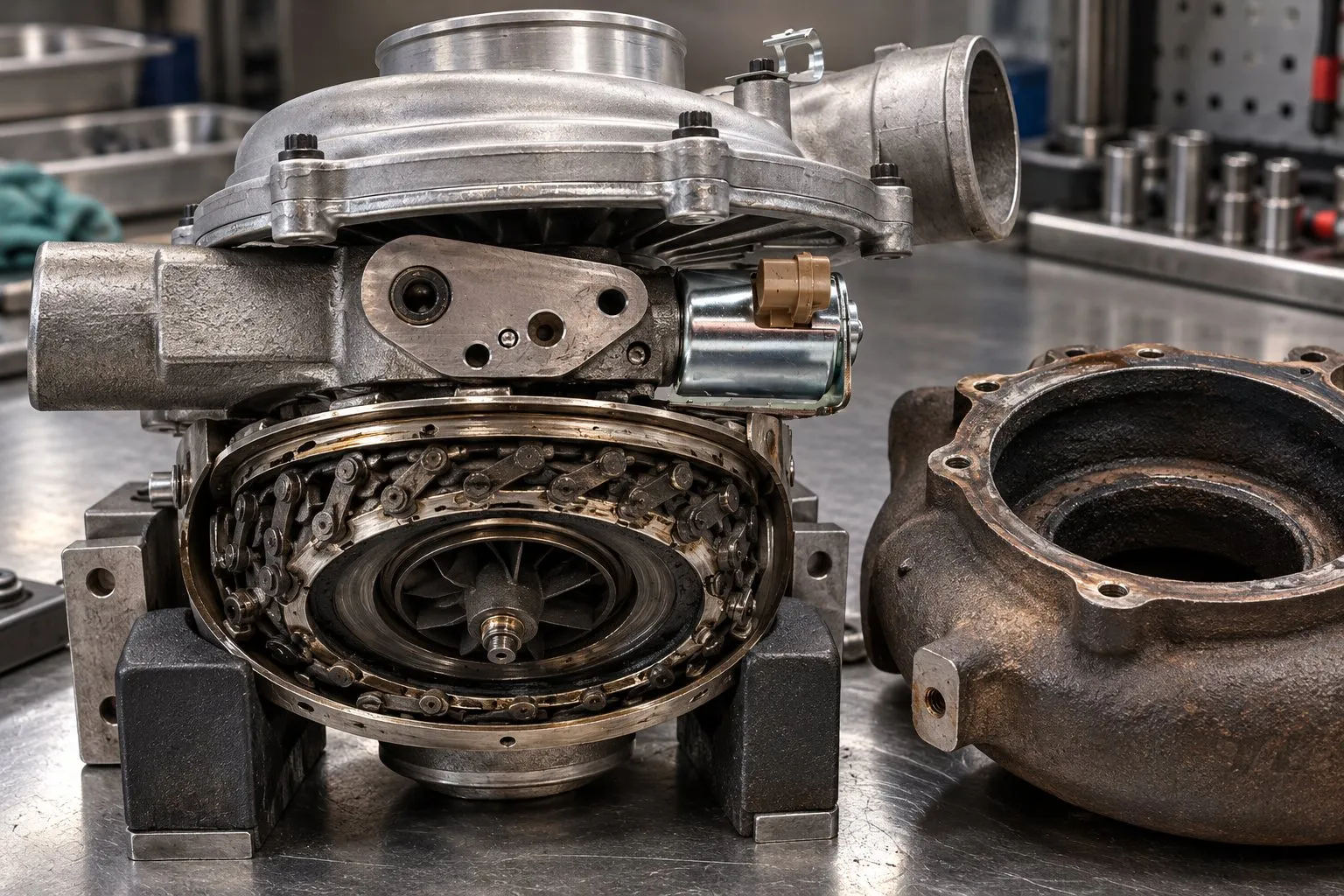
On the 6.0L the turbo removal is a top-side job once the degas bottle is out. Drain the coolant, remove the degas bottle with an 8 mm socket, and the only electrical connector you unplug is the VGT solenoid. The downpipe is unhooked and stays in the truck, and the exhaust joints are clamps without gaskets.
The turbo itself is held by three turbo-to-pedestal bolts, and the pedestal stays on the engine. Those three bolts take a 10 mm socket and torque to 28 ft-lbs. The oil feed is a two-bolt flange, not a banjo, and its bolts go to 18 ft-lbs. The oil drain tube seals with O-rings into the high-pressure oil pump cover, and the V-band clamps run roughly 89 to 106 in-lbs depending on the source. Replace the drain tube O-rings, the oil feed gasket, and the exhaust clamps when you reassemble.
If you find seized vanes or scored bearings, you are looking at a rebuild or a replacement. A high mileage GT3782VA that is sooted up and sluggish often cleans up and comes back to spec with a proper rebuild, and PT Turbo handles that work in-house. When rebuild cost comes up, our real numbers by turbo model are on the turbo rebuild price list; the final price is confirmed after inspection and before any work starts.
Repair, Rebuild, or Replace
Once the leaks and solenoid are ruled out and the turbo is the problem, you have three paths. The right one depends on your mileage, budget, and how the truck is used.
- Rebuild your core. Our turbo rebuild service cleans the carbon off the vanes and unison ring, replaces bearings and seals, and balances the cartridge. Most rebuilds ship in 3 days or less.
- Buy a remanufactured unit. A remanufactured turbocharger gets you back on the road without waiting on your core. Core return is within 30 days.
- Upgrade. Garrett offers a PowerMax GT3788VA as a bolt-in upgrade for the 6.0L (772441-5002S and 777469-5002S), while the factory replacement is still the GT3782VA.
Every turbo PT Turbo sells or rebuilds carries a 12 month, unlimited mileage warranty. Whichever path you choose, match the part number on the turbo’s data plate rather than ordering by the casting number, since one casting serves many turbos. You can read more about what fails on these units in our guide to 6.0L Powerstroke turbo failure warning signs, or reach the shop through the contact page or at (909) 824-1020.
Preventing a Repeat P0299
Most turbo trouble on this engine traces back to the oil supply and to carbon, so keeping clean oil in the engine on a sensible interval protects the vane system directly. Keep the EGR system working and the intake clean to cut the soot that bakes onto the vanes. A healthy exhaust gas recirculation system means less soot migrating through the intake tract over time.
Follow the maker’s first-start steps after any turbo work: fill the oil inlet with clean engine oil, turn the wheel by hand, then crank or idle a few minutes before putting it under load. Give the turbo a few minutes of idle to cool after towing or a hard pull. Those habits are what keep a fresh unit from setting P0299 again.
Turbos we list for the GT3782VA
Listings for the turbo models named in this guide that can be ordered online today. Several part numbers can fit one engine by year and rating, so match the number on your turbo’s tag, or call (909) 824-1020 and we will match it for you.
Frequently Asked Questions
Does P0299 always mean the turbo is bad on a 6.0L?
No. P0299 only tells you boost fell short of target. On the 6.0L the cause is often a boost leak in the intercooler or boots, an exhaust leak ahead of the turbine, a restricted air filter, or a sticking VGT solenoid, any of which can mimic a failing turbo. Confirm the air path and the oil-driven vane system before condemning the turbo itself.
Can I clean sticking VGT vanes instead of replacing the turbo?
Often yes. If the bearings and shaft are healthy and only carbon is binding the vanes and unison ring, a proper rebuild cleans and frees the vane mechanism and restores boost response. If the cartridge is worn or the shaft shows play beyond the maker’s limits or wheel contact, the unit needs a rebuild or replacement.
Why does the 6.0L turbo have no vane position sensor?
The GT3782VA on the 6.0L moves its vanes with engine oil through a PCM-driven VGT solenoid, with no electric actuator and no position sensor. The PCM judges turbo response from manifold and exhaust backpressure instead, which is why position codes like P003A and P2563 do not apply to this engine and P0299 is the code you see for underboost.
Need a Turbocharger?
PT Turbo has rebuilt and sold turbochargers since 1978. We stock remanufactured units for Cummins, Duramax, Power Stroke, Detroit Diesel, and more — backed by a 12-month unlimited mileage warranty. Units in stock at our shop in San Bernardino, CA ship the same day when ordered before 2 PM Pacific, Monday through Friday.
📞 (909) 824-1020 · 346 S I St. #3, San Bernardino, CA 92410 · [email protected]
More From PT Turbo
 P0046 Turbocharger Boost Control Circuit Range/Performance: What It Means & How to Fix It
- Crankcase Pressure and Turbocharger Failure: The Connection Diesel Owners Miss
- 7 Warning Signs Your Turbocharger Is Failing (And What To Do About It)
- Turbocharger Failed on a Fresh Engine Rebuild: The Most Common Reasons Why