A P0299 on 6.7L Cummins is an underboost code, meaning the ECM commanded a certain amount of boost and the sensors reported the engine never reached it. Before you condemn the turbocharger, it pays to know which Holset you are working with, how its variable geometry actually moves, and where boost leaks away on these trucks. The 6.7L Cummins used two different variable-geometry Holsets over its run, and the diagnosis path, parts, and calibration procedure differ between them.
PT Turbo has been rebuilding and supplying diesel turbochargers since 1978, more than 45 years, and we stock both new and remanufactured units for the 6.7L Cummins. This guide walks through the code, the hardware, and the test sequence so you replace the right part the first time.
What P0299 Means on the 6.7L Cummins
P0299 is the generic OBD-II definition for a turbocharger/supercharger “A” underboost condition. The engine’s boost pressure sensor and barometric data tell the ECM how much air the turbo should be delivering for a given fuel command, and when actual boost falls short of target the code sets.
On a diesel, underboost usually shows up as sluggish spool, soft throttle response, and black or gray smoke under load from a rich mixture, not white smoke. White smoke points to coolant or unburned fuel, not boost. The 2019 6.7L makes up to about 33 psig of boost at peak, so these engines lean hard on the turbo working correctly.
P0299 is a symptom code. It does not tell you the turbo is bad. A charge-air leak, an exhaust leak ahead of the turbine, a sticking nozzle, a tired actuator, or a plugged sensor can all set it.
HE351VE vs HE300VG: Which Turbo You Have
The 2007.5-2012 trucks carry the Holset HE351VE turbochargers. The 2013-and-later trucks, including the 2019-2024 generation with its own new turbo and actuator part numbers, carry the HE300VG turbochargers. Both are variable geometry with an electronic actuator in every model year, and neither swaps directly for the other because the actuator and wiring differ. Adapter harnesses exist, but go by the part number on the turbo’s data plate.
Holset variable turbos use a sliding nozzle, not pivoting vanes on a unison ring. When the nozzle slides to restrict exhaust flow across the turbine at low rpm, the turbo spools faster; it opens up as the engine comes up to speed. That is the mechanism to keep in mind during diagnosis. You can read more on the principle in this overview of variable-geometry turbochargers.
| Feature | HE351VE | HE300VG |
|---|---|---|
| Trucks | 2007.5-2012 Ram 2500/3500 | 2013 on (new part numbers from 2019) |
| Geometry | Sliding nozzle VGT | Sliding nozzle VGT |
| Actuator | Electronic, calibrated to turbo | Electronic, calibrated to turbo |
| Coolant lines | Yes (cools the actuator) | Yes (cools the actuator) |
| Direct interchange | No | No |
| Approx. weight with actuator | About 50 lb | About 50 lb |
For a broader look at the two turbos side by side, see our HE351VE vs HE300VG comparison and the full Ram 6.7L Cummins turbocharger guide.
Diagnosing P0299 on the 6.7L Cummins Step by Step
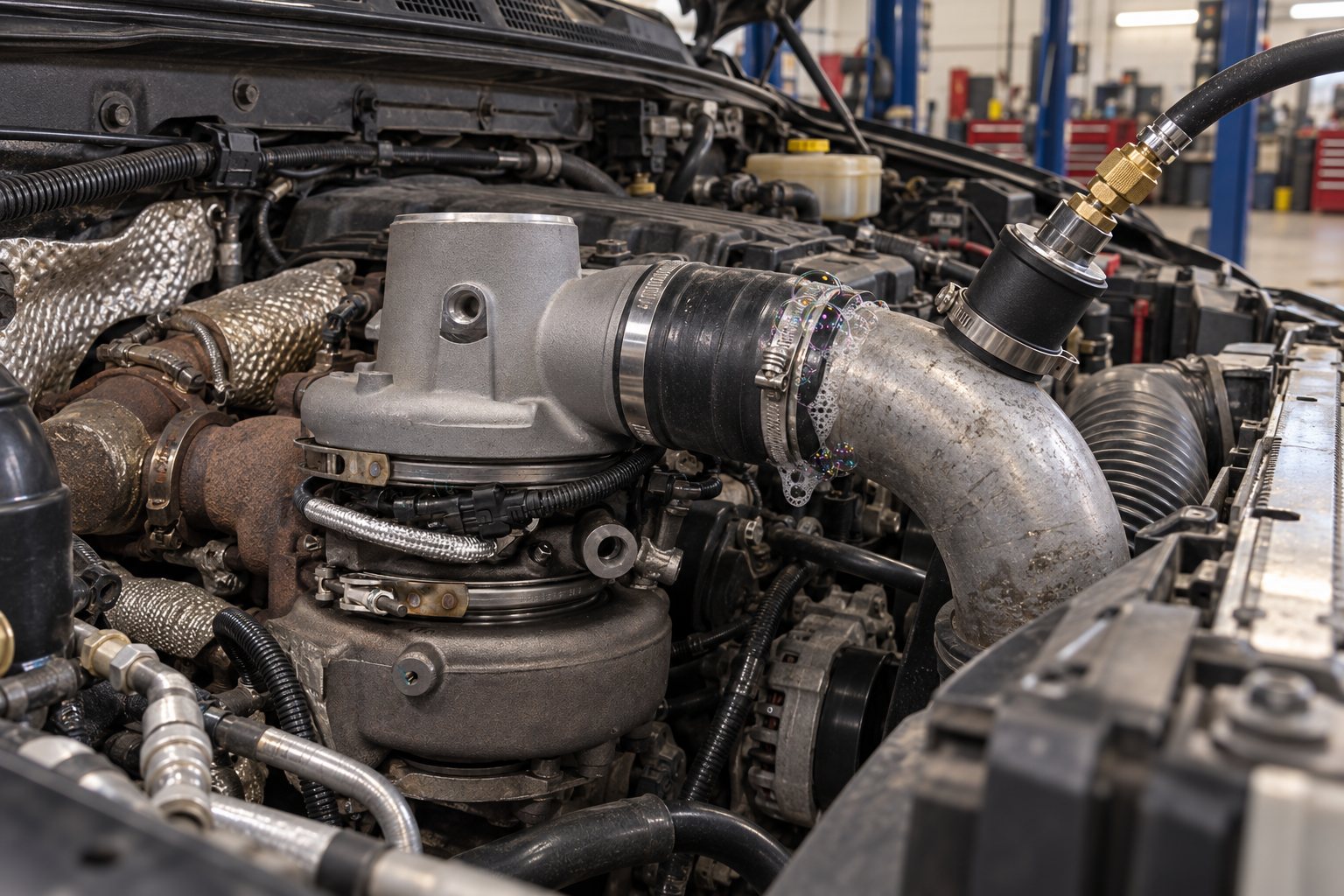
Work from the cheap and simple toward the expensive. Most underboost faults are not the turbo cartridge itself.
- Check for charge-air leaks first. Inspect the boots, clamps, and intercooler end tanks for cracks or blown-off connections. A split charge pipe or loose clamp dumps boost the sensor expects to see.
- Inspect for exhaust leaks ahead of the turbine. A leaking exhaust manifold or gasket lets drive energy escape before it reaches the turbine, which slows spool and lowers boost. The 6.7L turbo bolts to the manifold near its middle, so check those joints.
- Read the actuator data with a scan tool. Compare commanded nozzle position to the feedback the actuator reports. A nozzle that will not move to the commanded position is the heart of most VGT underboost complaints.
- Check the boost and barometric sensors. A fouled MAP sensor or a sensor reading low can trigger P0299 with a perfectly good turbo.
- Look at the EGR system. An EGR valve stuck open feeds exhaust into the intake and crowds out fresh air, which shows up as low power and soot. On high-pressure EGR the gas returns after the compressor, so it does not foul the compressor wheel, but it does affect the air charge. Background on the system is here: exhaust gas recirculation.
If the charge-air and exhaust sides are tight and the sensors read correctly, the fault is in the turbo’s nozzle or actuator.
When the Sliding Nozzle Is the Problem
Soot and carbon build up around the sliding nozzle over miles. A nozzle stuck toward the open position gives low boost and sets P0299; a nozzle stuck closed gives overboost and high drive pressure instead. If the actuator commands the nozzle and it will not travel, the mechanism is binding.
These turbos are not helped by poor maintenance or short cooldowns. Idling 30 to 60 seconds after normal driving, and 1 to 3 minutes after towing, lets the nozzle and bearing housing shed heat and reduces coking. Our Cummins ISB 6.7L turbocharger guide goes deeper on VGT operation and the failure modes we see on these engines.
The Electronic Actuator and Why Calibration Matters
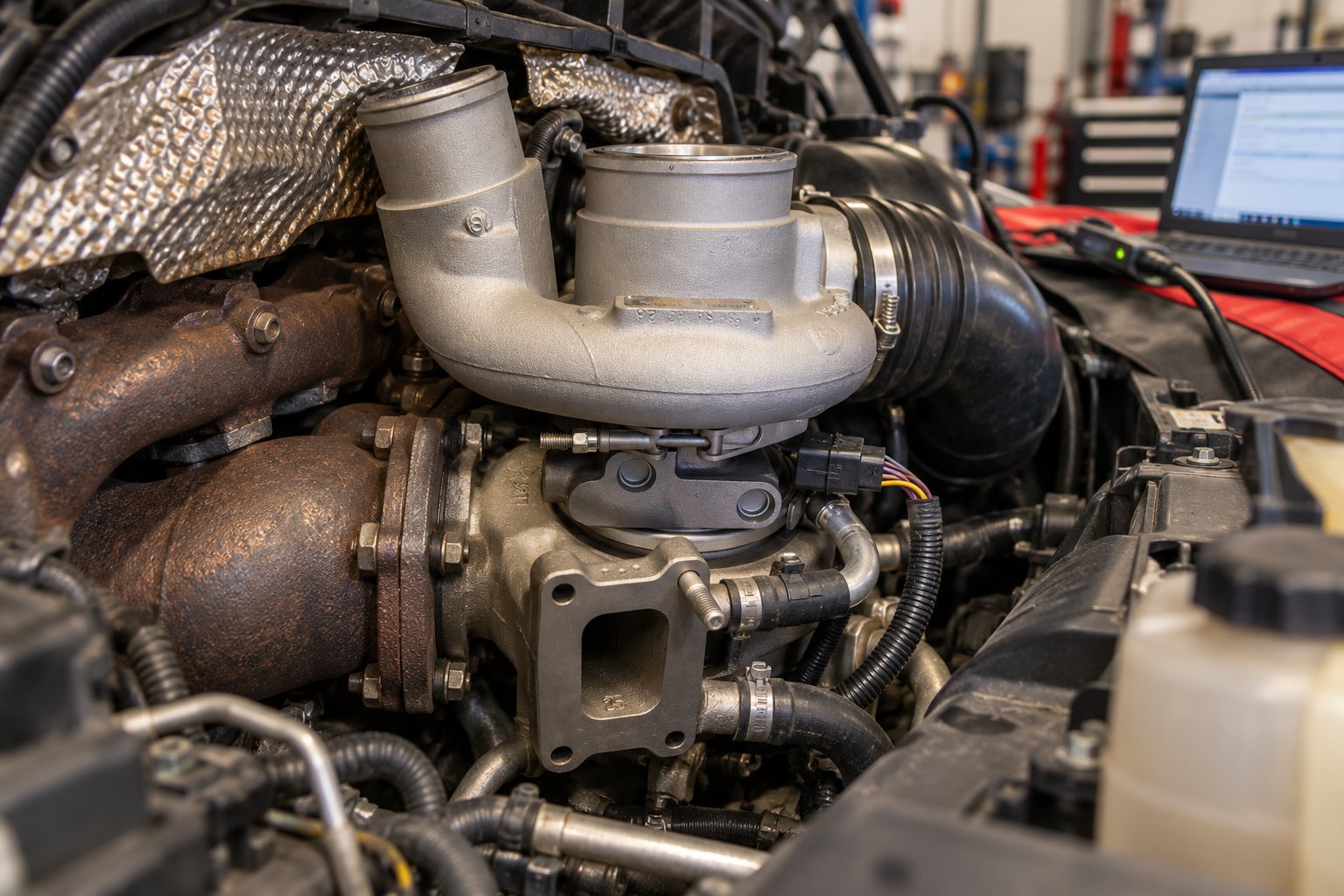
Both the HE351VE and the HE300VG use an electronic actuator, not a pneumatic or vacuum unit. That is why these turbos carry coolant lines: the lines cool the actuator electronics. Never force the actuator arm by hand. The internal gears are not made to be back-driven and will break.
Common related codes you may see alongside P0299 include P003A, which is a boost control position “exceeded learning limit” code, not an underboost or sensor code. It tells you the actuator could not learn its travel against the nozzle’s stops, often because the nozzle is binding or the actuator is failing.
If you are replacing the actuator only, the Cummins procedure matters. Run the INSITE install routine with the new actuator plugged in but not yet bolted to the turbo, then mount it and calibrate without cycling the key. Skipping that sequence leaves the actuator out of reference and the truck right back in a fault.
Repair Options: Rebuild, Remanufactured, or New
Once you have confirmed the turbo is the fault, you have three paths. All three are valid; the right one depends on the condition of your core and how long the truck can be down.
| Option | What you get | Best when |
|---|---|---|
| Rebuild your unit | Your turbo disassembled, inspected, new bearings and seals, rebalanced cartridge | Your housings and shaft are good and you can be down a few days |
| Remanufactured exchange | An already-rebuilt unit, ready to bolt on | You want minimal downtime and have a core to return |
| New | A new Holset assembly | You want factory hardware and warranty on everything |
PT Turbo remanufactures in-house and stocks new and remanufactured turbochargers. Rebuild turnaround is 3 to 5 business days after inspection, and the price is confirmed after we inspect your unit and before any work starts. For current rebuild pricing by turbo model, see our turbo rebuild price list, and for the process itself, our turbo rebuild service page.
One note on the actuator during any replacement: the electronic actuator is calibrated to the specific turbo, so a reman or new unit needs that calibration done at install. Factor that into your labor. If you are unsure which part number your truck takes, send us the number off the data plate and we will match it. Call PT Turbo at (909) 824-1020.
Frequently Asked Questions
Is a P0299 on 6.7L Cummins always a bad turbo?
No. P0299 is an underboost code, and the most common causes are charge-air leaks, exhaust leaks ahead of the turbine, a sticking sliding nozzle, a failing actuator, or a faulty boost sensor. Check the plumbing and sensor data before condemning the turbocharger.
Can I swap an HE300VG onto a truck that came with an HE351VE?
Not directly. The two are both sliding-nozzle variable-geometry Holsets, but their actuators and wiring differ and they do not interchange out of the box. Adapter harnesses exist, so verify the part number on your turbo’s data plate and match the correct unit for your truck.
Do I have to calibrate the actuator after replacing the turbo?
Yes. Both the HE351VE and HE300VG use an electronic actuator that must be calibrated to the specific turbo with the Cummins service tool. For an actuator-only job, run the INSITE install routine with the new actuator plugged in but not yet bolted on, then mount it and calibrate without cycling the key.
Shopping by part number?
Every part number we stock for the Holset HE300VG and Holset HE351VE is on one page, with live prices and stock: Holset HE300VG turbos and parts · Holset HE351VE turbos and parts.
Need a Turbocharger?
PT Turbo has rebuilt and sold turbochargers since 1978. We stock remanufactured units for Cummins, Duramax, Power Stroke, Detroit Diesel, and more — backed by a 12-month unlimited mileage warranty and same-week shipping from San Bernardino, CA.
📞 (909) 824-1020 · 346 S I St. #3, San Bernardino, CA 92410 · [email protected]