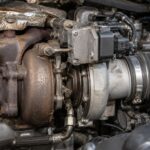
Diagnosing VGT Vanes Stuck Open or Closed is one of the most common jobs we handle at PT Turbo, and it trips up even experienced diesel techs because the symptoms overlap with fuel, sensor, and boost-control problems. A variable geometry turbo relies on a ring of movable vanes inside the turbine housing to change exhaust flow across the wheel. When those vanes seize from soot, carbon, or rust, the turbo can no longer control boost, and the entire drivability profile of the engine changes.
This guide walks through how to identify stuck vanes, how to clean them, when cleaning is a waste of time, and what actuator or turbo you need to make it right. We have been rebuilding turbochargers since 1978, so this is the same process our bench techs use every day.
How VGT Vanes Actually Work
A variable geometry turbocharger (also called a VGT, VNT, or VTG depending on the manufacturer) uses adjustable vanes to vary the effective size of the turbine housing. At low RPM the vanes close down to speed up exhaust gas and build boost fast. At high RPM they open to reduce backpressure and prevent overspeed.
That movement is driven by an actuator, electronic or pneumatic, or by engine oil pressure through a solenoid (Ford 6.0L, 2004.5 to 2016 Duramax). On Garrett and BorgWarner turbos it turns a unison ring that swings the vanes; on Holset turbos it slides a nozzle ring. You can read the engineering background on variable-geometry turbochargers here. When the vanes or the ring bind up, the actuator either cannot move them at all or moves them erratically, and the ECM logs the discrepancy.
The failure almost always starts with carbon buildup. Exhaust soot bakes onto the vane posts and the unison ring, and over tens of thousands of miles the moving parts gum solid. EGR-equipped engines are especially prone to this because recirculated exhaust adds even more soot to the turbine side.
Symptoms of VGT Vanes Stuck Open or Closed
The direction the vanes stick determines what you feel behind the wheel. Stuck closed and stuck open produce nearly opposite complaints, which is why understanding both is critical to a fast diagnosis.
| Condition | Common Symptoms | Typical Codes |
|---|---|---|
| Vanes Stuck Closed | Overboost, excessive backpressure, high EGT, black smoke, sluggish top-end, possible limp mode | P0234, P2563 |
| Vanes Stuck Open | Low boost, no low-end power, turbo lag, hard starts, poor throttle response, failed regen | P0299, P2563 |
| Vanes Sticking Intermittently | Surging boost, inconsistent power, actuator hunting, fault codes that come and go | P2563, P003A, P2262 |
Overboost from stuck-closed vanes is the more dangerous failure. Excessive drive pressure can crack pistons and blow head gaskets if the truck keeps running under load. If you see a P0234 with high EGTs, stop driving and diagnose before you turn an inexpensive repair into an engine rebuild.
Stuck-open vanes are less destructive but just as frustrating. The engine feels gutless off idle, regens fail because the turbo cannot build the exhaust temperature the DPF needs, and fuel economy tanks. If your diesel particulate filter keeps loading up, a lazy VGT is a prime suspect.
Confirming the Diagnosis Before You Condemn the Turbo
Do not replace a turbo on a guess. A stuck actuator, a vacuum leak, or a bad position sensor can mimic seized vanes, and those are far cheaper to fix. Work through the checks in order.
- Scan and record data: Watch commanded versus actual VGT position. A gap that will not close under a bi-directional test points to a mechanical bind or actuator fault.
- Actuate the vanes manually: With the engine off, use a scan tool or, on pneumatic units, a hand vacuum or pressure pump to stroke the actuator. The arm should move smoothly through full travel with no notchy spots.
- Check the actuator rod: On turbos with a rod-type actuator, the rod is set to a factory length. If it has been bumped or bent, the vanes may bottom out early and read as stuck. Electronic Holset actuators have no rod to adjust; they are calibrated with the diagnostic tool.
- Inspect for exhaust leaks and vacuum leaks: A cracked line to a pneumatic actuator will produce the exact same lazy behavior as bound vanes.
If the actuator strokes freely off the turbo but binds when bolted on, the vanes are the problem. If the actuator itself will not move or holds no vacuum, you have found a cheaper fix.
Cleaning Stuck VGT Vanes
Cleaning works best when the vanes are gummed with soot but not yet corroded or worn. Once rust has pitted the vane posts or the unison ring has eaten into the housing, cleaning is only a temporary patch. Here is the process our techs follow.
Step by Step
- Remove the turbo and separate the actuator. Never soak an electronic actuator in solvent.
- Split the turbine housing from the center section. Mark the clocking first so you reassemble it in the same position.
- Soak the vane cartridge in a quality carbon dissolver or diesel-safe solvent for several hours. Heavy deposits may need overnight.
- Work each vane back and forth with the unison ring. They should all move freely and in unison, not one at a time.
- Use a brass brush and pick to clear the vane slots. Avoid steel tools that scratch the sealing faces.
- Blow everything dry, check for free rotation across full travel, then reassemble with new gaskets and clamps.
Cleaning buys you time, but understand the reality. If soot built up once, it will build up again, usually faster the second time because worn clearances trap more debris. On a high-mileage turbo, cleaning is a stopgap. A professional turbocharger rebuild that replaces the vane cartridge, bearings, and seals is the permanent fix.
When Replacement Beats Cleaning
Some failures cannot be cleaned away. Replace the actuator, the vane pack, or the whole turbo when you find any of the following:
- Rust or pitting on the vane posts or unison ring
- Shaft play greater than spec, indicating worn bearings
- A cracked or leaking pneumatic actuator diaphragm
- An electronic actuator that fails self-calibration
- Repeat stuck-vane failures after a prior cleaning
Often the vanes move fine but the actuator has failed, which is the good news because a new actuator is a fraction of the cost of a turbo.
When you install a new pneumatic actuator, you must reset the calibration rod length to factory spec. An actuator bolted on without proper setup will read as stuck vanes even though every part is brand new. If you are not sure of the setting for your turbo, contact PT Turbo and we will pull the spec for your part number.
New vs Remanufactured Turbo Cost Comparison
When the vane pack or bearings are gone, you are replacing the turbo. A quality remanufactured unit costs far less than new and carries the same warranty confidence when it is rebuilt to OEM tolerances. Here is how the options stack up.
| Option | Relative Cost | Best For |
|---|---|---|
| New OEM Turbo | Highest | Warranty-critical fleet units, latest hardware revisions |
| Remanufactured Turbo | 40 to 60 percent less than new | Most owner-operators and fleets wanting OEM performance for less |
| Actuator Only | Lowest | Free-moving vanes with a failed or leaking actuator |
| Clean and Reuse | Labor only | Light soot, no wear, short-term fix |
Our remanufactured turbochargers are stripped, inspected, and rebuilt with new bearings, seals, and vane components, then balanced and tested before they ship. If you would rather keep your original unit, our rebuild service restores it to spec. You can also browse our full turbo catalog to match your part number.
Reputable turbo builders follow the same core standards used by the original manufacturers.
That means balancing every rotating assembly to the same tolerances, using matched OEM-grade components, and flow-testing the finished unit before it leaves the bench. A turbo rebuilt to those standards drops in and performs like the original, because the clearances and the vane geometry are back where the engineering intended them.
The takeaway is simple. Match the fix to the actual failure. Light soot gets cleaned, a dead actuator gets replaced, and worn vanes or bearings call for a reman or rebuild. Guessing wrong costs you twice, either in a comeback or in an engine you did not need to risk.
Frequently Asked Questions
What are the symptoms of VGT vanes stuck open or closed?
Stuck-open vanes often cause low boost, sluggish acceleration, and poor low-end power, while stuck-closed vanes can trigger overboost, excessive exhaust pressure, and limp mode.
Can I clean stuck VGT vanes instead of replacing the turbo?
Yes, in many cases soot-seized vanes can be cleaned and freed if caught early, but heavily corroded or damaged vanes usually require turbo replacement.
What causes VGT vanes to seize?
Vanes typically seize from soot buildup, carbon deposits, and rust, often worsened by short trips, excessive idling, or infrequent oil and filter changes.
Need a Turbocharger?
PT Turbo has rebuilt and sold turbochargers since 1978. We stock remanufactured units for Cummins, Duramax, Power Stroke, Detroit Diesel, and more — backed by a 12-month unlimited mileage warranty and same-week shipping from San Bernardino, CA.
📞 (909) 824-1020 · 346 S I St. #3, San Bernardino, CA 92410 · [email protected]