A P0401 EGR Insufficient Flow code is one of those trouble codes that too many operators clear and forget, right up until the turbocharger fails and the repair bill triples. On the surface it looks like a simple emissions fault. Underneath, it points to a chain of problems that puts real stress on your turbine housing, VGT vanes, and actuator. Ignore it long enough and you turn a $150 diagnostic job into a full turbo replacement.
At PT Turbo we have spent more than 45 years diagnosing and rebuilding forced-induction systems, and we see the aftermath of neglected EGR faults constantly. This guide breaks down what the code actually means, why it kills turbos, and how to fix it before it costs you a core.
What P0401 Actually Means
The P0401 code is set when the engine control module detects that exhaust gas recirculation flow is lower than the commanded value. The ECM either monitors an EGR position sensor, a differential pressure sensor across the EGR orifice, or an intake manifold temperature change when the valve opens. When the measured flow does not match the target, the code trips.
The EGR system exists to lower combustion temperatures and reduce NOx emissions by routing a metered amount of inert exhaust gas back into the intake. When that flow drops, combustion runs hotter and cylinder pressures climb. On a variable geometry engine the turbo is part of the EGR system, because the vanes set the exhaust pressure that pushes gas through the EGR path, so an EGR fault and a turbo fault are rarely far apart.
Common Root Causes of Insufficient EGR Flow
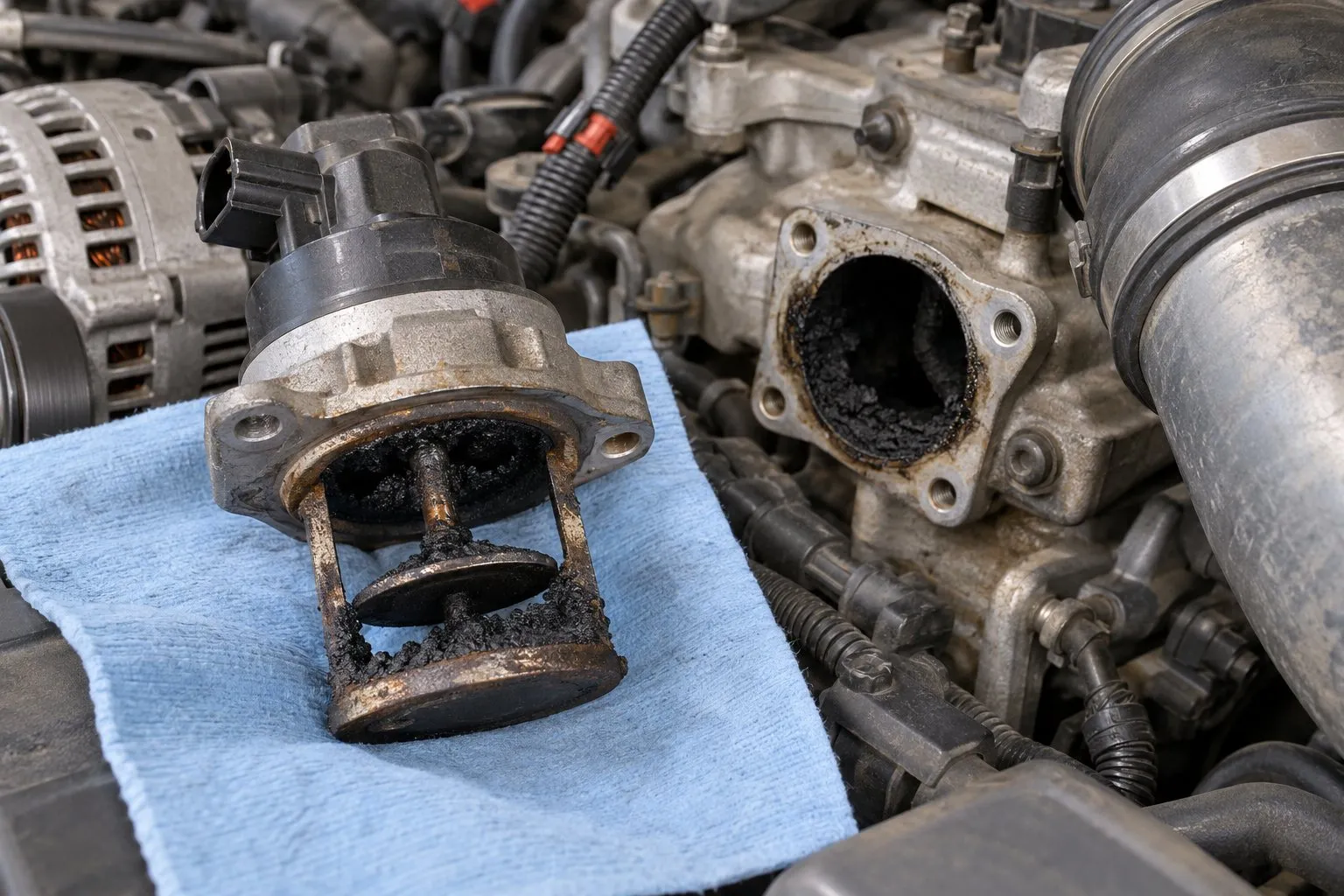
- Carbon and soot buildup clogging the EGR valve or passages
- A stuck or seized EGR valve that will not open fully
- A failed EGR cooler with restricted internal tubes
- A faulty differential pressure (DPFE) sensor reading incorrectly
- Vacuum or electrical faults on the EGR actuator
- Plugged or cracked EGR feed and return tubes
On diesel platforms, soot accumulation is by far the leading cause. The EGR valve lives in the dirtiest part of the engine, and every regen cycle and idle hour adds more carbon to the mix.
How P0401 EGR Insufficient Flow Leads to Turbocharger Damage
Here is the part most people miss. A restricted EGR system does not just throw a light. It changes the pressure environment your turbo operates in, and the turbo is not built to absorb that abuse indefinitely.
When the EGR system fails, the turbo pays for it. With P0401 the EGR path is restricted, and on a variable geometry engine the ECM can close the turbo’s vanes harder to force flow, which raises drive pressure and works the vane mechanism and its actuator harder. (The opposite fault, a valve stuck open, displaces fresh air so the engine burns rich and sooty; that sets P0402 or other codes, not P0401.) Higher drive pressure and carbon are the enemies of the vane mechanism, the actuator and the seals.
The Damage Chain, Step by Step
- Higher drive pressure loads the turbine and its seals.
- Thrust load rises with it, which wears the thrust bearing and pushes on the turbine-end seal.
- On VGT turbos, the carbon that plugged the EGR path is usually on the variable vanes and unison ring as well, so they gum up and stick, throwing boost control faults.
- Actuator strain increases as the ECM commands harder to compensate for sticking vanes, wearing out the pneumatic or electronic actuator prematurely.
That last point matters. Many drivers replace a turbo after a P0401 event without realizing the actuator took the hit. If your unit uses a pneumatic actuator, the extra work and the carbon wear out the diaphragm and spring calibration.
Reading the Warning Signs by Severity
Not every P0401 is an emergency, but the longer you run it, the deeper the damage goes. Use the table below to gauge where you stand before it costs you a turbo.
| Severity Stage | Symptoms | Turbo Risk | Typical Fix |
|---|---|---|---|
| Early | Check engine light only, no drivability change | Low | Clean EGR valve, verify sensor |
| Moderate | Minor power loss, check engine light | Vane mechanism working harder | EGR valve or cooler replacement |
| Advanced | Sluggish boost, surging | VGT vanes sticking, seals degrading | EGR repair plus turbo inspection or rebuild |
| Critical | Boost creep or loss, whining, oil in intake | Turbine or bearing failure imminent | Turbo replacement or full rebuild |
If you are already seeing surging boost or oil consumption alongside the code, do not keep driving. Those are the fingerprints of a turbo that is failing from high drive pressure and vane contamination.
Diagnosing the Fault Correctly
Chasing a P0401 with parts-cannon guesswork is expensive. Work the system in order and you will find the real cause fast.
- Pull freeze-frame data and note EGT, boost, and RPM when the code set.
- Remove and inspect the EGR valve for carbon buildup and free movement.
- Test the differential pressure sensor against a known-good reference and check for clogged sense lines.
- Inspect the EGR cooler and tubes for internal restriction or cracking.
- Verify actuator function, whether vacuum or electronic, under command.
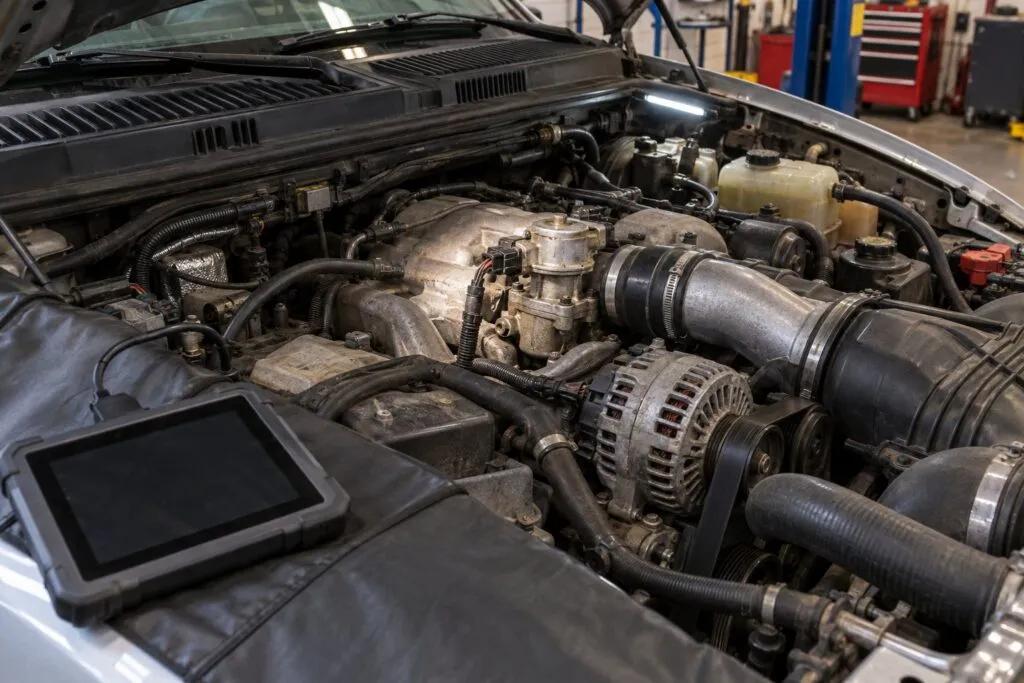
- Inspect the turbo. Check for VGT vane movement, shaft play, and oil in the compressor housing.
That last step is critical and skipped far too often. Once you confirm the EGR fault, you must check whether the turbo already took damage. Check that the vanes sweep freely and look at the turbine housing for carbon. If you spot compressor-side issues, our guide on compressor wheel damage shows exactly what to look for. If you find debris on the hot side, review turbine wheel damage diagnosis.
Heat driven oil breakdown is another silent killer here. If the thrust bearing has been loaded by high drive pressure for a long time, you may already have the early stages of turbo oil starvation even with a healthy oil supply.
Replace or Rebuild the Turbo After EGR Damage
If your inspection shows the turbo survived, fix the EGR system and move on. If the vanes stick, the shaft has excessive play, or the seals are gone, you have a decision to make. The good news is you have real options that do not require paying full OEM list price.
Sometimes the turbo core is fine and only the actuator failed.
When the core itself is damaged, compare your options honestly.
| Option | Typical Cost | Warranty | Best For |
|---|---|---|---|
| New OEM turbo | Highest | Manufacturer | Warranty-required fleet units |
| Remanufactured turbo | 30 to 50% less than new | Yes, from reputable rebuilders | Most owner-operators and fleets |
| Rebuild your existing core | Lowest when core is salvageable | Yes on labor and parts | Hard to source or specialty units |
| Actuator only | see actuator prices | Yes | Healthy core, failed actuator |
PT Turbo stocks both new and remanufactured units. Browse our remanufactured turbochargers for a tested, warrantied replacement, or send us your core through our turbocharger rebuild service when you want your original unit restored to spec.
Running a high-flow diesel setup? If your platform uses a big frame unit, our BorgWarner S400 fitment reference covers the common applications and part numbers you will need.
Preventing the Next P0401
EGR faults are largely preventable with basic maintenance discipline. The engines that avoid repeat P0401 codes are the ones getting regular attention.
- Clean the EGR valve and passages on a regular interval instead of waiting for the code to come back.
- Watch boost and exhaust back pressure under load, where your truck reports them. A creeping baseline is an early warning that the EGR path is restricting before the light ever sets.
- Run quality fuel and change oil on schedule to slow the soot loading that chokes the valve and gums the vanes.
- Address regen and idle habits on trucks that spend hours parked, since excessive idle time packs carbon into the system fast.
The operators who treat a P0401 as a turbo problem too, not just an emissions nuisance, are the ones who get full service life out of their turbos. Clear the code without fixing the flow and you are only resetting the clock on the damage. Fix the EGR system the first time, confirm the turbo came through clean, and you keep a cheap repair from turning into a core.
Looking for a different code? Our list of turbocharger fault codes gives the standard definition of every boost-related code and the kind of fault it points to.
Frequently Asked Questions
What causes a P0401 EGR Insufficient Flow code?
It’s typically caused by clogged EGR passages, a stuck or faulty EGR valve, carbon buildup, or a failing differential pressure sensor. These issues restrict exhaust gas recirculation flow below the required threshold.
Can a P0401 code really damage my turbocharger?
Yes. With the EGR path restricted, a variable geometry engine closes the turbo’s vanes harder to force flow, which raises drive pressure and works the vanes and actuator harder, and the carbon that plugged the EGR path is usually on the vanes as well. Left unaddressed, this can lead to expensive turbocharger failure.
Is it safe to keep driving with a P0401 code?
You can usually drive short-term, but ignoring it risks progressive damage to your turbocharger and emissions system. It’s best to diagnose and repair the fault promptly to avoid a much larger repair bill.
Need a Turbocharger?
PT Turbo has rebuilt and sold turbochargers since 1978. We stock remanufactured units for Cummins, Duramax, Power Stroke, Detroit Diesel, and more — backed by a 12-month unlimited mileage warranty and same-week shipping from San Bernardino, CA.
📞 (909) 824-1020 · 346 S I St. #3, San Bernardino, CA 92410 · [email protected]