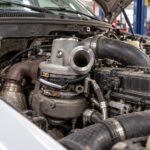
Compressor Wheel Damage is one of the most common reasons a turbocharger lands on our bench, and it is almost always a symptom of a bigger problem somewhere else in the engine. The wheel itself rarely fails on its own. Something got past the filter, the oil supply dried up, or the shaft started wobbling, and the compressor wheel paid the price.
At PT Turbo we have been rebuilding and diagnosing turbos for over 45 years, and we can usually read a damaged compressor wheel like a mechanic reads a spark plug. The pattern of the damage tells you the root cause. This guide walks you through what that damage looks like, what causes it, and what to do about it before you spend money on a replacement that will just get destroyed the same way.
What the Compressor Wheel Actually Does
The compressor wheel sits on the cold side of the turbo, opposite the exhaust turbine. It draws in ambient air, accelerates it, and forces it into the intake at pressure. On a modern diesel it can spin north of 150,000 RPM.
Most compressor wheels are cast aluminum, though high-output applications use billet aluminum or, less commonly, titanium. At those speeds, the blades have almost zero tolerance for foreign objects, imbalance, or a shaft that is not perfectly centered. If you want the full mechanical background, the turbocharger overview on Wikipedia covers the basics well.
Because the wheel is spinning so fast, even minor damage throws off the balance of the entire rotating assembly. That imbalance destroys the bearings, and once the bearings go, the whole unit is done.
What Compressor Wheel Damage Looks Like
Pull the intake pipe off the compressor housing and shine a light on the wheel. The type of damage you see points directly at the cause. Here is what we look for on every teardown.
Foreign Object Damage (FOD)
This is the most common form of compressor wheel damage. You will see bent, chipped, or completely missing blade tips, often with clean impact marks on the leading edge. A single blade or several will be torn up.
FOD comes from something getting sucked into the compressor inlet. A collapsed air filter, a piece of a cracked intake hose, a dropped bolt, or debris left in the intake tract after a service job are the usual suspects.
Rub Marks and Wheel Contact
If the blade tips are worn down evenly or you see shiny scoring on the outer edges where they meet the housing, that is a rub. This means the shaft has been moving where it should not, usually because of worn bearings or excessive shaft play.
Contact damage almost never happens in isolation. If you find it, the bearings are compromised too. Read our breakdown of turbocharger bearing failure to understand how one problem feeds the other.
Erosion and Fatigue Cracks
Fine pitting or a sandblasted look on the blade surfaces points to abrasive material passing through, often dust from a poorly sealed air filter housing. Over time this thins the blades and weakens them.
Fatigue cracks show up at the base of the blades, near the hub. These come from constant pressure cycling, over-speeding, or repeated surge events. A cracked blade will eventually let go and turn into FOD for the rest of the wheel.
Oil Contamination and Buildup
A greasy, carbon-coated compressor wheel is not damaged in the classic sense, but it signals a failing seal or a restricted oil drain. Oil on the cold side kills efficiency and often precedes a full bearing failure.
Severity Chart: What You Are Looking At
Use this quick reference to grade what you find and decide your next move.
| Severity | What You See | Likely Cause | Recommended Action |
|---|---|---|---|
| Minor | Light dust erosion, slight tip polishing | Air filter leak, early bearing wear | Inspect intake seal, monitor shaft play |
| Moderate | One or two bent blades, light rub marks | Small FOD, worn bearings | Rebuild or replace, fix source |
| Severe | Multiple missing blades, deep scoring | Major FOD, oil starvation, over-speed | Replace turbo, full intake inspection |
| Catastrophic | Wheel shattered, housing damage | Blade let go, complete bearing failure | Replace unit, check intake and intercooler for debris |
The Real Causes Behind Compressor Wheel Damage
Replacing the wheel without fixing the cause is throwing money away. Here are the root causes we see day in and day out, and what to check for each.
Unfiltered or Restricted Air Intake
A dirty, torn, or missing air filter is the number one killer of compressor wheels. So is a collapsed intake hose that lets the filter housing pull in debris around a bad seal. Always check that the filter is seated correctly and the housing has no cracks.
Overspeeding and Overboost
When the turbo spins faster than it was designed to, blade stress skyrockets and fatigue cracks form fast. Overspeed usually comes from a failed wastegate, a stuck variable geometry mechanism, or a boost control fault.
A faulty actuator that cannot regulate boost is a frequent trigger. If you are chasing an overboost condition, our guide to the P0234 overboost code walks through diagnosis step by step.
Compressor Surge
Surge happens when boosted air backs up and reverses through the wheel, usually on a sudden throttle lift. The repeated reversal hammers the blades and the thrust bearing. If you hear a fluttering or chattering sound off throttle, you have surge. Learn how to diagnose and cure it in our article on turbo surge vs compressor surge.
Bearing Failure and Oil Problems
Oil starvation, contaminated oil, or extended drain intervals wreck the bearings, which then let the shaft move and the wheel rub. Coking after a hot shutdown is a common contributor on hard-worked diesels.
Failed Actuators and Boost Control
The actuator controls the wastegate or the vane position, and when it fails the turbo can overboost or oscillate, both of which stress the compressor wheel. A sticking or leaking actuator is cheap compared to a destroyed turbo, and worth replacing at the first sign of trouble.
What to Do When You Find Compressor Wheel Damage
Once you have confirmed the damage, work the problem in order. Skipping steps is how people end up buying two turbos.
- Find the source first. Inspect the entire intake tract from the filter to the compressor inlet for debris, cracks, and loose clamps.
- Check shaft play. Grab the shaft and feel for radial and axial movement. Excessive play means the bearings are gone.
- Inspect the intercooler and downstream piping. Broken blade fragments travel. Clean out any debris before you fire up a new turbo.
- Verify boost control. Test the actuator and wastegate operation so the replacement is not immediately overboosted.
- Decide: rebuild or replace. If the housings are good and only the rotating assembly is damaged, a rebuild is often the smart call.
Our turbocharger rebuild service restores the unit to factory balance and clearance specs. If a rebuild does not make sense, we carry remanufactured turbochargers and can help you find the right fit from our full turbo catalog.
New vs Remanufactured: Choosing Your Replacement
Not every job needs a brand new turbo. Here is how the two options stack up for most diesel and heavy-duty applications.
| Factor | New Turbocharger | Remanufactured Turbocharger |
|---|---|---|
| Cost | Highest | Typically 30 to 50 percent less |
| Components | All new parts | New wheels, bearings, seals; inspected core |
| Balance spec | OEM factory | Balanced to OEM spec |
| Availability | Can be back-ordered | Often in stock |
For the vast majority of fleet and owner-operator jobs, a quality reman unit is the right call. You get new wheels, bearings, and seals in a core that has been inspected and balanced to the same spec as the factory assembly, at a fraction of the cost. The only time we push customers toward new is when the application is so new or so specialized that a reman core is not available yet.
Whichever way you go, the replacement is only as good as the diagnosis behind it. Fix the source, clean the intake tract, and confirm your boost control is working before the new wheel ever sees 150,000 RPM. Do that, and the turbo you bolt on will outlast the one that just came off.
Frequently Asked Questions
What causes compressor wheel damage?
It’s usually caused by foreign objects getting past the air filter, oil supply problems, or a wobbling shaft. The wheel rarely fails on its own and is typically a symptom of a bigger engine issue.
What does compressor wheel damage look like?
You’ll often see bent, chipped, or eroded blades, along with impact marks or rubbing against the housing. Damage patterns help pinpoint whether the cause was debris, oil starvation, or shaft play.
Can a turbocharger be rebuilt after compressor wheel damage?
Yes, in most cases a turbo with compressor wheel damage can be rebuilt once the underlying cause is identified and corrected. Fixing the root problem is essential to prevent the same failure from happening again.
Need a Turbocharger?
PT Turbo has rebuilt and sold turbochargers since 1978. We stock remanufactured units for Cummins, Duramax, Power Stroke, Detroit Diesel, and more — backed by a 12-month unlimited mileage warranty and same-week shipping from San Bernardino, CA.
📞 (909) 824-1020 · 346 S I St. #3, San Bernardino, CA 92410 · [email protected]
More From PT Turbo
 P2263 Turbo Boost System Performance Code: Full Diagnosis for Diesel Engines
- How a Failed EGR Kills Your Turbocharger: Symptoms & What to Replace First
- Black Smoke and Turbocharger Failure: How to Tell If the Turbo Is the Cause
- P003A Turbocharger Boost Control Code: Diagnosis Guide for Cummins & Duramax