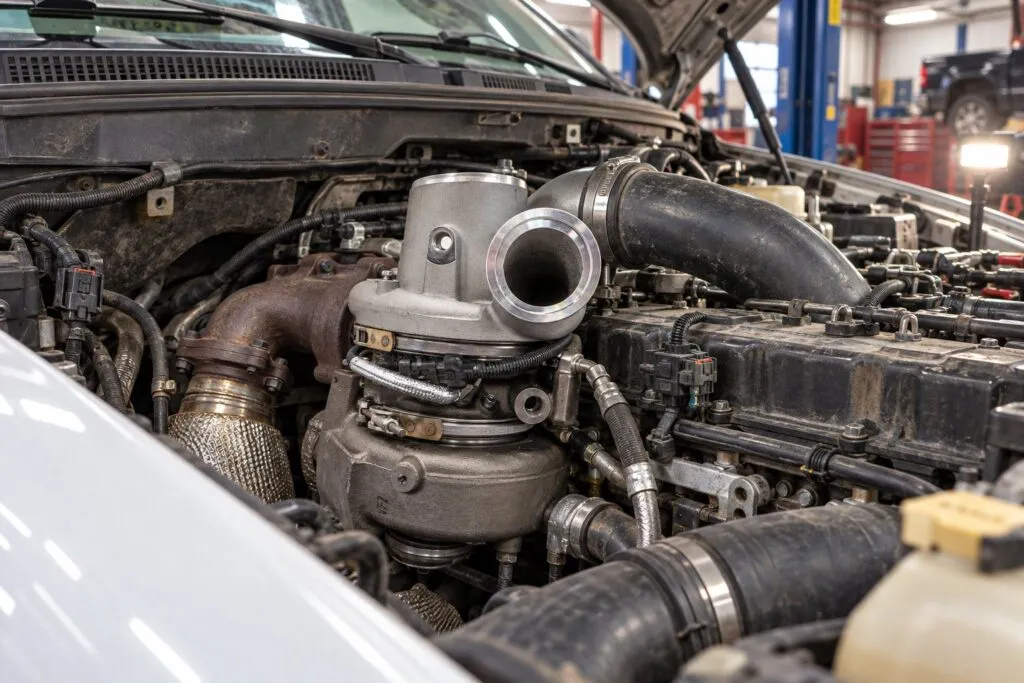
The P2263 Turbo Boost System Performance Code is one of the more frustrating diagnostic trouble codes a diesel tech can face because it points to a performance problem, not a hard failure. The ECM isn’t telling you a sensor is disconnected or a wire is grounded. It’s telling you the boost the turbo is actually producing doesn’t match what the computer commanded. That gap between commanded and actual boost is where the real diagnostic work begins.
At PT Turbo, we’ve been rebuilding and supplying turbochargers since 1978, more than 45 years of chasing boost problems across every major diesel platform on the road. This guide walks you through exactly what P2263 means, what causes it, and how to diagnose it properly the first time.
What the P2263 Turbo Boost System Performance Code Actually Means
P2263 is a generic OBD-II powertrain code defined as “Turbocharger/Supercharger Boost System Performance.” It sets when the engine control module detects that the boost pressure delivered by the turbo falls outside the acceptable range for the current commanded position of the actuator or wastegate.
Unlike a plain electrical fault, P2263 is a rationality code. The ECM compares the manifold absolute pressure (MAP) sensor reading against expected boost tables based on RPM, fuel demand, and actuator command. When the numbers don’t line up over several cycles, the code trips and you often lose power through a derate.
This code shows up on Ford Power Stroke, GM Duramax, Dodge Cummins, and countless European and heavy-duty applications. The definition is standardized, but the root cause and repair vary by platform.
P2263 vs P0299: Know the Difference
Technicians frequently confuse these two. P0299 is a straight underboost code, the turbo is not making enough boost, period. P2263 is broader, flagging a performance mismatch that can be underboost, overboost, or erratic boost that doesn’t track the command.
If you’re dealing with a pure low-boost complaint, our P0299 Turbocharger Underboost Code diagnosis guide covers that specific path in detail. The two codes often appear together, and the overlapping causes are worth understanding.
Common Causes of P2263 on Diesel Engines
The boost control system has a lot of moving parts, and any one of them can throw the performance out of spec. Here are the causes we see most often at our shop, ranked roughly by frequency.
- Failed or sticking turbo actuator – pneumatic and electronic actuators wear out, lose calibration, or seize. This is the number one cause on VGT-equipped engines.
- Sticking VGT vanes – carbon and soot build up on the variable geometry mechanism, preventing the vanes from moving freely. Learn more about how these work at this variable-geometry turbocharger reference.
- Boost leaks – split intercooler hoses, cracked charge pipes, loose clamps, or a leaking intercooler bleed off pressure before it reaches the manifold.
- Vacuum or pressure supply problems – on pneumatic actuator systems, a weak vacuum pump, cracked lines, or a faulty solenoid starves the actuator of the signal it needs.
- Clogged or restricted exhaust – a plugged diesel particulate filter raises backpressure and skews boost behavior.
- MAP or boost sensor drift – a sensor reading slightly off will make the ECM see a mismatch even when the turbo is healthy.
- EGR system faults – a stuck-open EGR valve dilutes intake charge and disturbs boost, tying into the EGR system operation.
Step-by-Step P2263 Diagnosis
Don’t throw parts at this code. A disciplined diagnostic process saves you money and downtime. Here’s the sequence we use.
Step 1: Pull All Codes and Freeze Frame Data
Read every stored and pending code, not just P2263. Companion codes for the actuator, MAP sensor, or EGR narrow the field fast. Capture the freeze frame RPM, load, and boost values so you know the operating condition when the fault set.
Step 2: Inspect for Boost Leaks First
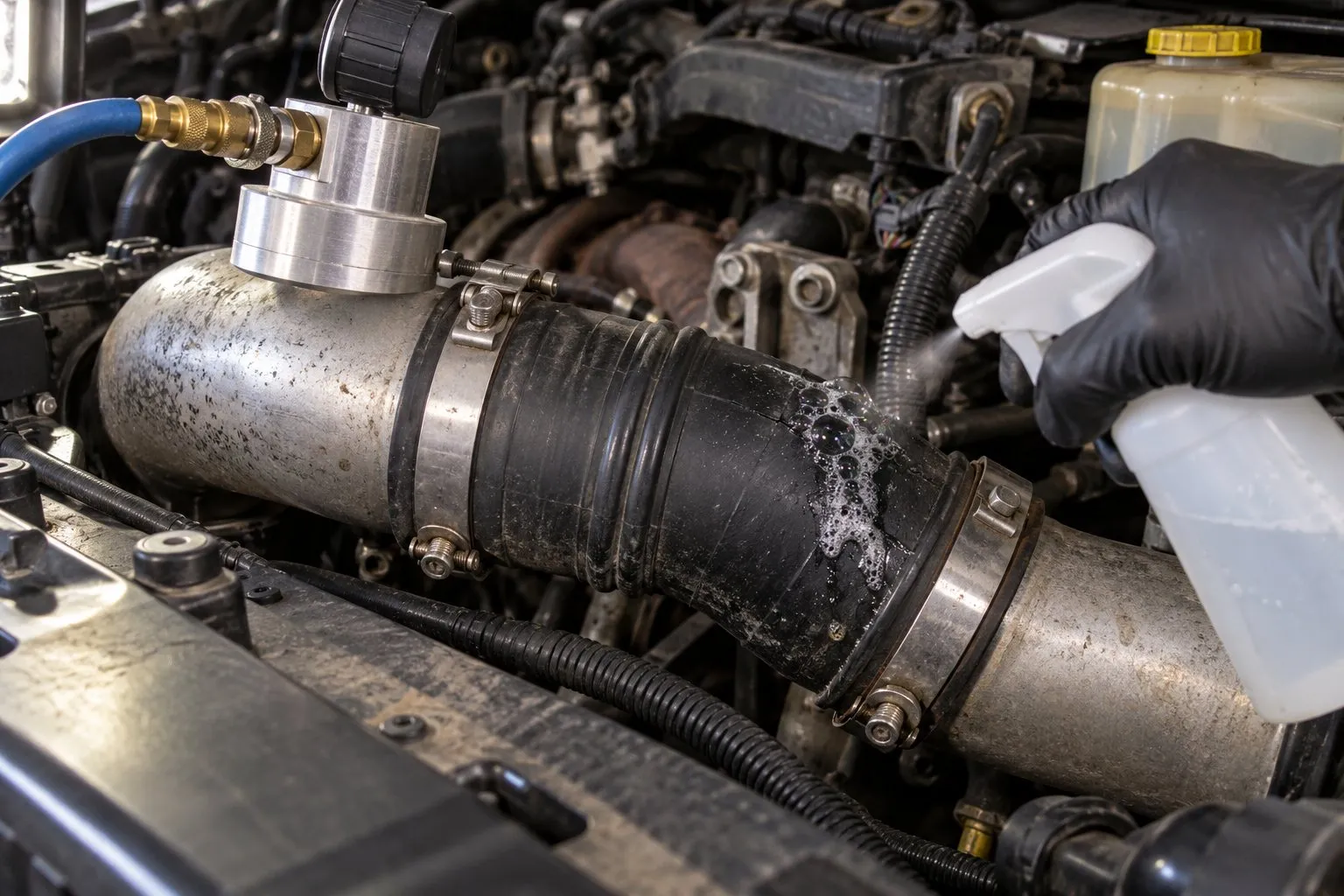
Before touching the turbo, pressure-test the charge air system. A shop-air boost leak tester at 25 to 30 psi will reveal split hoses, failed clamps, and intercooler cracks in minutes. This one check resolves a huge percentage of P2263 complaints and costs almost nothing.
Step 3: Command the Actuator with a Scan Tool
Use a bidirectional scan tool to command the VGT or wastegate actuator through its full range while watching the position feedback. A healthy actuator tracks the command smoothly. Lag, sticking, or a position that won’t reach the commanded value points straight at the actuator or the vane mechanism.
Step 4: Verify Vacuum and Electrical Supply
On pneumatic systems, check vacuum at the actuator with a gauge and confirm the solenoid is switching. On electronic actuators, verify supply voltage, ground, and the data connection. A weak or intermittent signal produces exactly the performance mismatch P2263 describes.
Step 5: Inspect the Turbo and VGT Mechanism
If the actuator commands correctly but boost still lags, the vanes may be carboned up or the shaft may have excessive play. Remove the actuator and manually work the vane linkage. Any binding, grinding, or resistance means the turbo needs cleaning or a rebuild.
The Actuator Is Often the Culprit
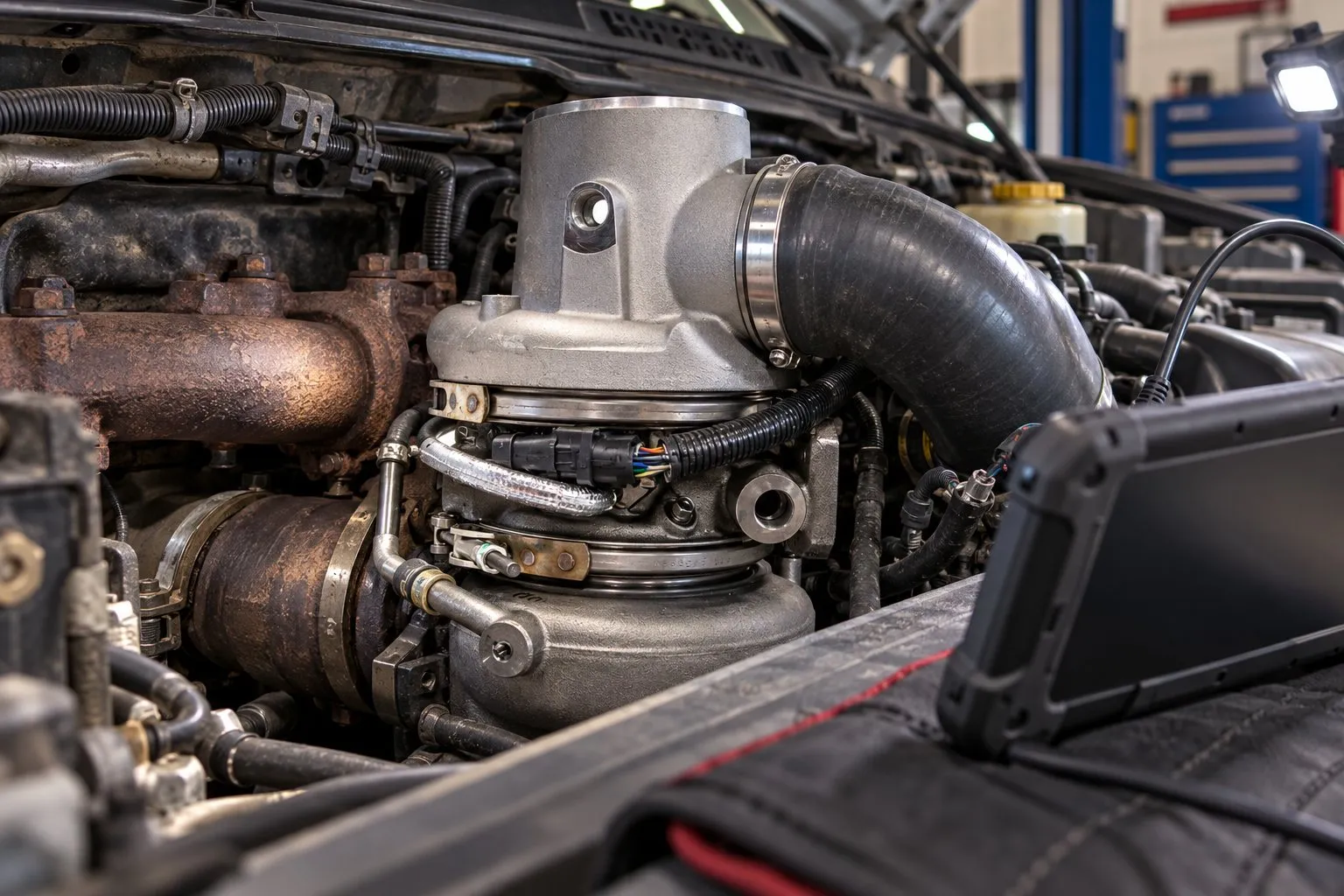
In our experience, a large share of P2263 codes trace back to a worn or failed actuator. These components take constant heat cycling and mechanical stress, and they eventually lose the precision the ECM depends on. Replacing the actuator is far cheaper than a full turbo, and it frequently clears the code outright.
PT Turbo stocks both new and remanufactured actuators for the major diesel platforms. Getting the correct part number matters, so match your OEM number carefully before ordering.
You can verify original specs directly at Garrett Motion before you buy.
When to Replace vs Rebuild the Turbo
If diagnosis points past the actuator to the turbo itself, worn bearings, damaged vanes, or shaft play, you have three paths. The right one depends on your budget, downtime tolerance, and how long you plan to keep the truck.
| Option | Relative Cost | Downtime | Best For |
|---|---|---|---|
| New OEM turbo | Highest | Low | Warranty-critical fleets |
| Remanufactured turbo | Moderate | Low | Best value, proven reliability |
| Rebuild your existing unit | Lowest | Higher | Keeping the original core |
Our remanufactured turbochargers are built to OEM tolerances and tested before they ship, giving you near-new performance at a real savings. If you’d rather keep your original core, our turbo rebuild service restores it to spec with new bearings, seals, and a balanced CHRA.
Different platforms have their own quirks.
Power Stroke engines tend to carbon up the VGT vanes fastest, so clean the mechanism before condemning the turbo. Duramax trucks more often throw P2263 from vane position sensor drift and sticking vanes, while Cummins units commonly point back to the sliding nozzle sticking in the housing. Know what your platform does before you start pulling parts.
Whatever you’re working on, the diagnostic order stays the same. Rule out boost leaks, confirm the actuator tracks its command, then, on a variable geometry turbo, verify the vanes move freely. Nail those three and you’ll have the P2263 cornered on any diesel that rolls into your bay.
Looking for a different code? Our list of turbocharger fault codes gives the standard definition of every boost-related code and the kind of fault it points to.
Frequently Asked Questions
What does the P2263 code mean on a diesel engine?
The P2263 code indicates the actual boost pressure produced by the turbo doesn’t match what the ECM commanded. It’s a performance issue rather than a hard sensor or wiring failure.
What are the common causes of a P2263 code?
Common causes include a sticking or failing variable geometry turbo (VGT), boost leaks, restricted air intake, a faulty boost pressure sensor, or carbon buildup in the turbo vanes.
Can I keep driving with a P2263 code?
You can often drive short distances, but continued operation may cause reduced power, poor fuel economy, or further turbo damage. It’s best to diagnose and repair it promptly.
Need a Turbocharger?
PT Turbo has rebuilt and sold turbochargers since 1978. We stock remanufactured units for Cummins, Duramax, Power Stroke, Detroit Diesel, and more — backed by a 12-month unlimited mileage warranty and same-week shipping from San Bernardino, CA.
📞 (909) 824-1020 · 346 S I St. #3, San Bernardino, CA 92410 · [email protected]
More From PT Turbo
 Turbocharger Failed on a Fresh Engine Rebuild: The Most Common Reasons Why
- P0046 Turbocharger Boost Control Circuit Range/Performance: What It Means & How to Fix It
- Turbo Whine vs Normal Turbo Noise: How to Tell if Your Turbocharger Is Failing
- 5 Most Common Causes of Turbocharger Failure in Diesel Trucks