P132B on 6.4L Powerstroke: High-Pressure Turbo Actuator Failure Guide
If you are chasing P132B on 6.4L Powerstroke trucks, the code points you straight at the high-pressure turbocharger and its electronic vane actuator, and this guide walks through how that turbo works, why the actuator fails, and what your real repair options are. The 6.4L is a compound (series) setup, so a fault on one turbo behaves nothing like a single-turbo truck, and getting the diagnosis right the first time saves a lot of parts money. PT Turbo has been rebuilding turbochargers since 1978, and we stock both new and remanufactured units for these trucks.
Below we break down what P132B is actually telling you, how to confirm the actuator before you condemn it, and how the repair differs from a 6.0L. If you want the full parts and problems rundown, start with our Ford 6.4L Powerstroke twin turbo guide.
How the 6.4L compound turbo system is built
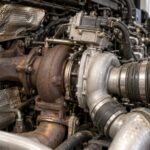
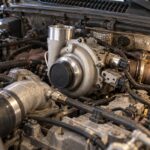
The 6.4L Powerstroke (2008-2010) was built by Navistar for Ford and runs a BorgWarner compound pair, which BorgWarner calls an R2S system. There are two turbos working in series, not a single variable-geometry unit like the 6.0L.
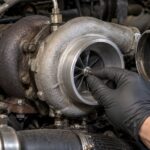
The small high-pressure turbo is the variable geometry one. It carries the movable vanes and the electronic actuator, and it is the one P132B is concerned with. The large low-pressure turbo is fixed geometry with no actuator at all.
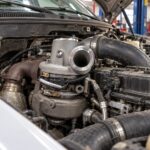
Exhaust leaves the engine and hits the small high-pressure turbine first, then flows on through the large low-pressure turbine. On the intake side, air goes through the large low-pressure compressor first, then the small high-pressure compressor. If you want the airflow direction laid out plainly, see our breakdown of the 6.4L high-pressure vs low-pressure turbo difference.
The high-pressure turbo’s vanes change the effective turbine geometry to control drive pressure and spool, the same basic idea covered in this overview of the variable-geometry turbocharger. On the 6.4L those vanes are moved by an electronic actuator, which is the part the code watches.
What P132B on 6.4L Powerstroke is really telling you
P132B is a Ford manufacturer-specific code, not a generic SAE definition you can look up in a universal chart, so read it against Ford’s own description in your scan tool. On the 6.4L it ties to the high-pressure turbocharger’s vane control and the electronic actuator that drives those vanes.
In plain terms, the 6.4L actuator is a smart unit: it runs its own checks and reports a failure to the PCM over the data network, and the PCM logs P132B. A failed check can come from a sticking vane mechanism, a worn or failed actuator, wiring and connector trouble, or a genuine turbo problem downstream.
Because a dragging vane mechanism can set the code too, do not assume the actuator is scrap the moment it sets. The vanes themselves can be the culprit. Soot and carbon build up in the nozzle ring, the vanes drag, and the actuator can no longer hit its commanded position even though the actuator itself is fine.
Symptoms that usually come with the code
- Low power or a noticeable limp-mode derate
- Sluggish spool and poor throttle response
- Black or dark gray smoke under load from an airflow shortfall
- Surging or hunting boost as the vanes stick and free up
- Related boost or underboost codes stored alongside P132B
Why the high-pressure turbo actuator and vanes fail
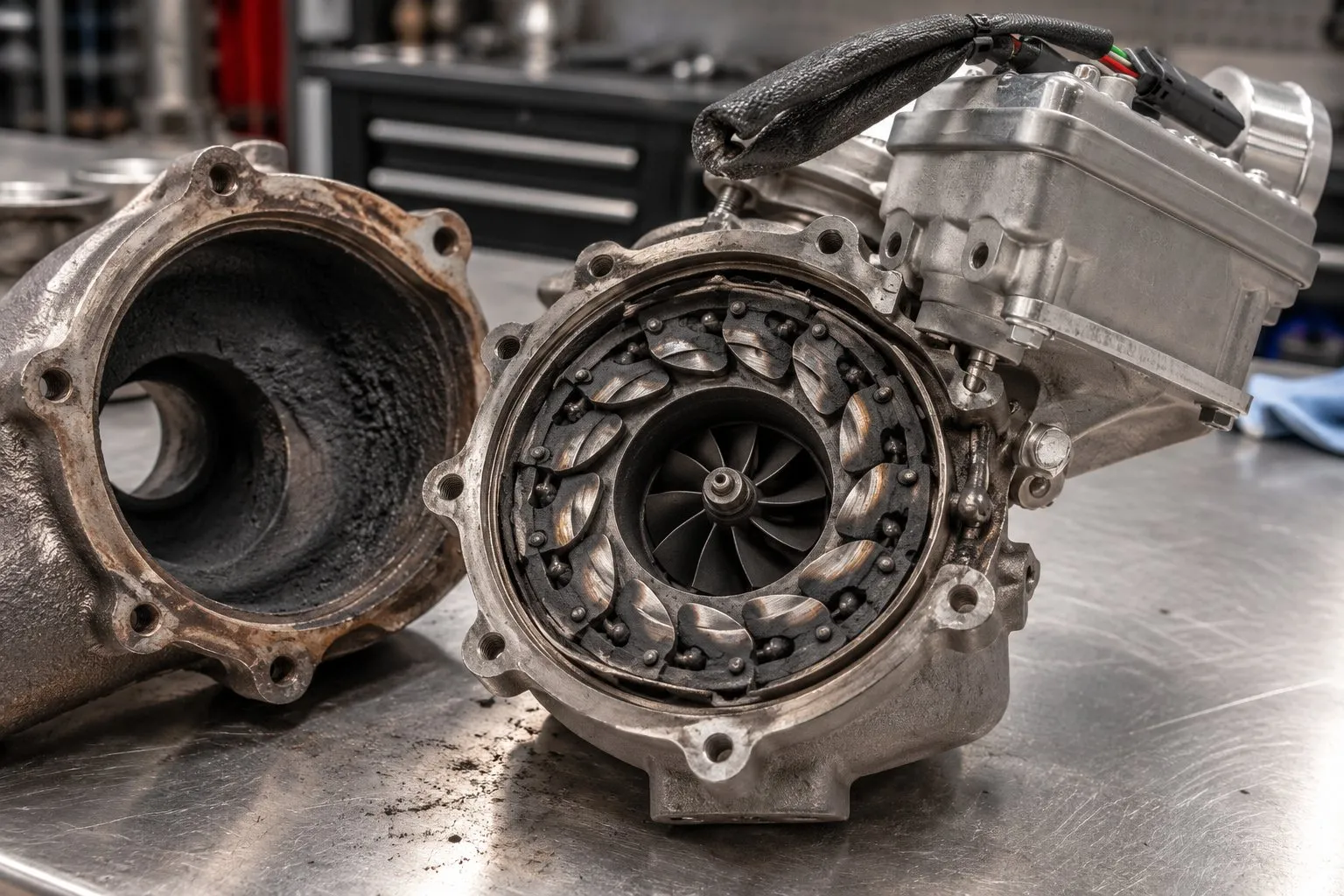
The 6.4L lives in a high-EGR, high-soot world, and that is hard on a variable geometry turbine. Soot works into the unison ring and vane pockets of the high-pressure turbo, the vanes stiffen, and the actuator is forced to work harder every cycle until the feedback no longer matches the command.
Heat is the other factor. Because exhaust hits the small turbine first, the high-pressure unit runs hot and takes thermal cycling that eventually loosens the vane mechanism and tires the actuator electronics and gear train.
Most turbo failures still trace back to the oil supply, so when you have the turbo apart, treat the feed line as a consumable. After any bearing distress or coked oil, fit a new oil feed line rather than flushing and reusing the old one.
One note that catches people out: oil in the low-pressure turbo inlet is not automatically a seal failure. Crankcase ventilation vents into that inlet on the 6.4L, so check the breather, air filter, oil level, and drain before you blame a seal.
Diagnosing P132B before you buy parts
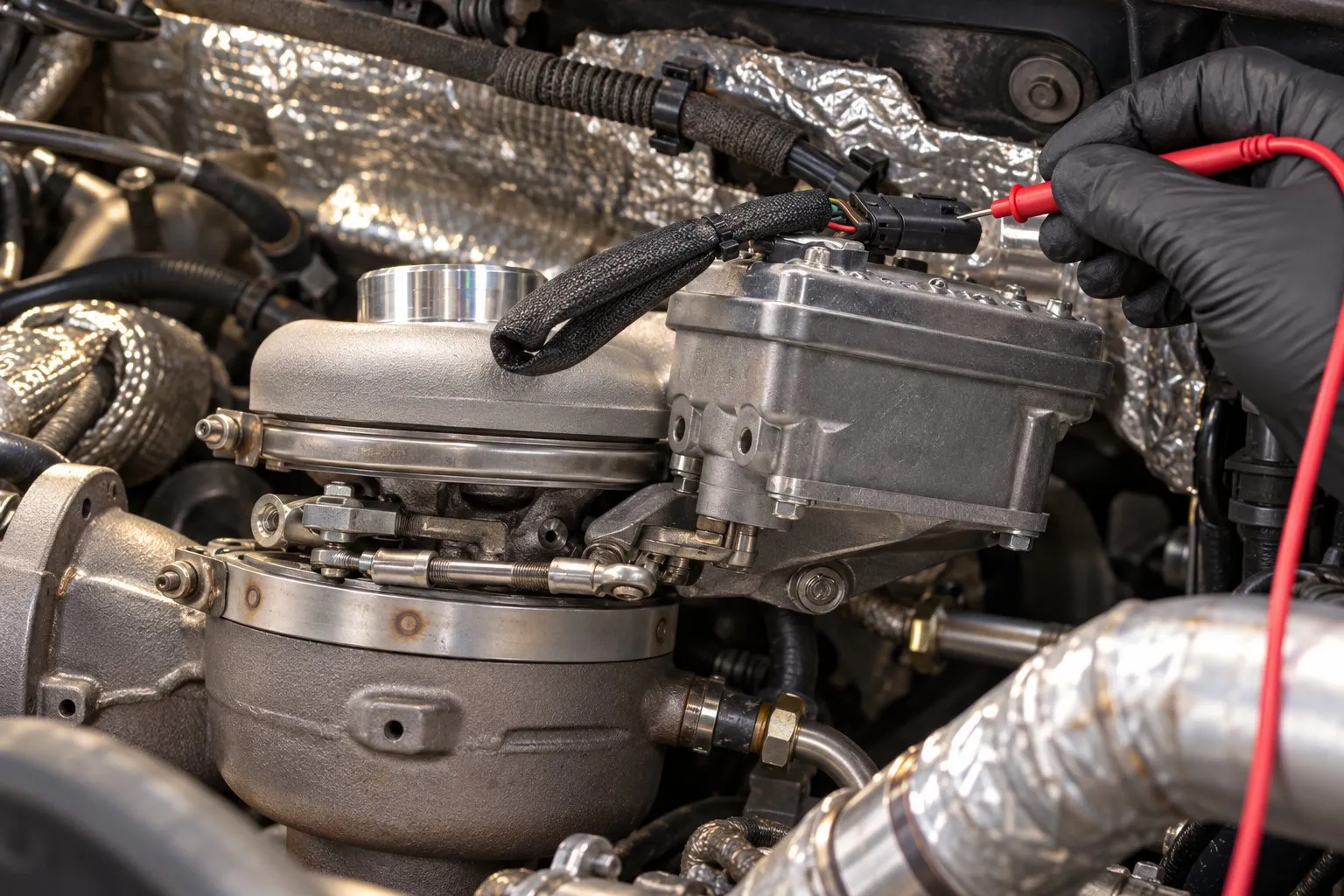
Work the cheap, common causes first. The electronic actuator and its circuit are the heart of this code, but wiring and carbon fouling set it far more often than a dead actuator.
- Read all stored codes and the freeze-frame data, not just P132B. Boost and underboost codes alongside it tell you a lot.
- Inspect the actuator connector and harness for corrosion, chafing, and a loose pin. Heat near the turbo is rough on connectors.
- Watch commanded versus actual vane position in live data while you command the vanes. A position that lags or will not reach target points at sticking vanes or a failing actuator.
- With the turbo accessible, check for a vane mechanism that is carboned up and dragging.
Two rules keep you out of trouble on these electronic units. An electronic actuator is set up electronically (some replacement units calibrate themselves when first powered, others need a scan-tool procedure: follow the actuator maker instructions), not tested with a vacuum pump like an old pneumatic VNT. And never force the actuator’s arm by hand to “free it up,” because the self-locking gears inside break when you do. If you need to move the vane lever, unbolt the actuator and move the lever on the turbo.
Repair and replacement options
How far you go depends on what the inspection shows. A clean actuator problem can sometimes be addressed at the actuator, while a soot-locked turbine or bearing damage means the cartridge or the whole turbo comes off. Because this is a matched compound set, the part numbers matter, so order by the number on the turbo’s data plate rather than by the engine year alone.
The 6.4L high-pressure and low-pressure turbos carry distinct BorgWarner numbers, and the pair is also sold as a complete assembly. Whether you replace the high-pressure unit, the low-pressure unit, or the set, confirm the number on the tag and match it. You can see what we carry across both turbos on the PT Turbo store, and read more about BorgWarner’s R2S hardware at BorgWarner.
When cost comes up, we do not quote a flat figure because the catalog is the source of truth. For a turbo rebuild, our real pricing by model is on the turbo rebuild price list, and our in-stock remanufactured turbochargers list current pricing on each product page. For the 6.4L set, call us at (909) 824-1020 and have the tag numbers ready.
New vs remanufactured for the 6.4L high-pressure turbo
| Consideration | New unit | Remanufactured unit |
|---|---|---|
| Core charge | None | Core return within 30 days; customer pays return shipping |
| Actuator | New electronic actuator, calibrated to the turbo | Tested and calibrated to the turbo |
| Vane mechanism | New nozzle ring and vanes | Cleaned, inspected, replaced as needed |
| Balancing | Factory balanced | Cartridge balanced on a VSR before it ships |
| Warranty | 12 months, unlimited mileage | 12 months, unlimited mileage |
| Pricing | On the product page or call (909) 824-1020 | On the product page or call (909) 824-1020 |
Most rebuilds ship in 3 days or less, and the rebuild price is confirmed after inspection and before any work starts. Fleet operators running a 6.4L fleet can call ahead to arrange priority turnaround and have common cores stocked.
First-start steps after you install the turbo
Follow the maker’s first-start procedure so you do not wipe a dry bearing on startup. Fill the oil inlet with clean engine oil, turn the compressor wheel by hand, then crank the engine without letting it start for a few seconds to build oil pressure before you idle it.
On an electronic actuator turbo, set up the actuator the way its maker says after installation: some replacement actuators calibrate themselves when first powered, others need a scan-tool procedure. There is no break-in mileage schedule, no first-miles boost limit, and no early oil change required beyond the maker’s first-start steps. If you want a parallel reference, our 6.0L Powerstroke turbocharger guide covers the single-turbo case for comparison.
Frequently Asked Questions
Is P132B always the actuator itself on a 6.4L?
No. The code means the high-pressure turbo actuator reported a failed check to the PCM, and that can come from carbon-fouled vanes, a wiring or connector fault, or a failing actuator. Check the connector and watch live vane position before you condemn the actuator, and never force the actuator arm by hand because the internal gears break.
Which turbo does the code concern on the compound setup?
The small high-pressure turbo. It is the variable geometry unit that carries the vanes and the electronic actuator, while the large low-pressure turbo is fixed geometry with no actuator. Exhaust reaches the high-pressure turbine first, then the low-pressure one, so order parts by the tag number on the correct unit.
Should I replace both turbos or just the high-pressure unit?
It depends on what the inspection shows. A fault isolated to the high-pressure turbo does not automatically condemn the low-pressure turbo, but because this is a matched set it pays to inspect both and confirm the tag numbers. Call PT Turbo at (909) 824-1020 with the numbers and we will help you match the right parts.
Need a Turbocharger?
PT Turbo has rebuilt and sold turbochargers since 1978. We stock remanufactured units for Cummins, Duramax, Power Stroke, Detroit Diesel, and more — backed by a 12-month unlimited mileage warranty. Units in stock at our shop in San Bernardino, CA ship the same day when ordered before 2 PM Pacific, Monday through Friday.
📞 (909) 824-1020 · 346 S I St. #3, San Bernardino, CA 92410 · [email protected]
More From PT Turbo
 Turbocharger Shaft Play: How Much Is Too Much? Measurement & Replacement Guide
- P0046 Turbocharger Boost Control Circuit Range/Performance: What It Means & How to Fix It
- Boost Pressure Drops at Highway Speed: Diagnosing Intermittent Turbo Problems
- P2263 Turbo Boost System Performance Code: Full Diagnosis for Diesel Engines