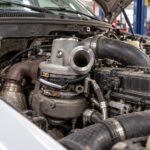
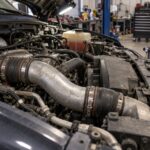
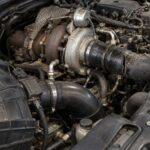
The P003A Turbocharger VGT Actuator Code is one of the most common diagnostic trouble codes we see roll through the shop on late-model Cummins and Duramax diesels, and it almost always points to the same underlying problem: the variable geometry turbocharger vanes are no longer moving through their full commanded range. Left unaddressed, it kills fuel economy, triggers limp mode, and can leave a fleet truck parked. This guide breaks down exactly what P003A means, how to diagnose it correctly on both the Cummins ISB/6.7L and the GM Duramax, and what parts you actually need to fix it right the first time.
PT Turbo has been rebuilding and supplying turbochargers since 1978. Over 45 years in the business, we have diagnosed thousands of VGT actuator complaints, and the pattern is remarkably consistent. Let us walk through it.
What the P003A Code Actually Means
P003A is a generic OBD-II powertrain code defined as “Turbocharger/Supercharger Boost Control A Position Exceeded Learning Limit.” In plain terms, the engine control module (ECM) learns where the two ends of the vanes’ travel are. The code sets when the position it sees falls outside what it has learned: the vanes did not reach a commanded position, or a part was replaced and vane position was never relearned. P003B is the same fault on a second boost control channel, on engines that have one, and it is diagnosed the same way.
The key words are learning limit. This is not a hard electrical fault like an open circuit or a shorted sensor. It is a mechanical or calibration deviation. The actuator is trying, but something is stopping the vanes from sweeping freely.
Variable geometry turbochargers rely on moving vanes inside the turbine housing to change exhaust flow across the wheel. At low RPM the vanes close to build boost quickly, and at high RPM they open to prevent overspeed. If you want the full mechanical background, the variable-geometry turbocharger overview covers the operating principle well.
Root Causes of the P003A Turbocharger VGT Actuator Code
When we tear into a unit throwing this code, the cause almost always falls into one of a handful of buckets. Understanding which one you have saves you from throwing parts at the truck.
- Carbon and soot binding the vanes. This is the number one cause on high-mileage diesels. Exhaust carbon builds up in the unison ring and vane pivots, creating friction the actuator cannot overcome.
- Failed or weak actuator. Electric actuators lose calibration or strip internal gears. Pneumatic actuators develop diaphragm leaks or lose vacuum/boost signal. On the 2004.5-2016 Duramax, where the vanes are moved by engine oil, the equivalent parts are the vane position sensor and the VGT solenoid.
- Stuck or seized vane mechanism. Rust and thermal cycling can lock the unison ring solid.
- Wiring, connector, or vacuum line faults. Chafed harnesses and cracked vacuum lines mimic actuator failure.
- Worn actuator linkage. Slop in the linkage causes position error even when everything else is healthy.
On EGR-equipped engines, heavy soot loading accelerates carbon buildup on the vanes. The EGR system recirculates exhaust that leaves deposits on everything downstream, including the turbine housing.
Symptoms by Severity
P003A rarely shows up alone. How the truck behaves tells you how far the problem has progressed and how urgently it needs attention.
| Severity | Symptoms | What It Usually Means |
|---|---|---|
| Early | Check engine light, mild power loss, slightly sluggish throttle | Vanes beginning to bind from carbon; still moving partially |
| Moderate | Reduced boost, poor fuel economy, hesitation under load, occasional limp mode | Actuator struggling against significant friction or losing calibration |
| Severe | Persistent limp mode, no boost, black smoke, failed regen cycles | Vanes seized or actuator failed; turbo needs service now |
Failed diesel particulate filter regeneration is a common downstream effect. When the turbo cannot control exhaust flow properly, the truck cannot reach the temperatures needed for a passive or active DPF regen, so you start stacking soot codes on top of the P003A.
Step-by-Step Diagnosis
Do not condemn the turbo or actuator until you have worked through these steps in order. We diagnose in this exact sequence every day.
1. Scan and Record Freeze Frame Data
Pull all codes, not just P003A. Note any companion codes like P2563 (turbo boost control position sensor) or P0046. Record RPM, load, and coolant temp from freeze frame so you know the conditions that set the code.
2. Inspect Wiring and Connectors
Check the actuator connector for corrosion, backed-out pins, and chafed wiring near the exhaust manifold heat. On pneumatic systems, inspect vacuum or boost reference lines for cracks and oil contamination. This five-minute step catches a surprising number of false actuator complaints.
3. Command the Actuator With a Scan Tool
Use a bidirectional scan tool to command the VGT through its full sweep. Watch the position feedback. If commanded and actual position diverge, or the sweep is slow and hesitant, the vanes are binding or the actuator is weak.
4. Test the Actuator Mechanically
On electric actuators, listen for gear noise or stalling. On pneumatic actuators, apply a hand vacuum pump (or shop air, depending on design) and confirm smooth, full-travel movement of the arm. A diaphragm that will not hold vacuum is a failed actuator. On the 2004.5-2016 Duramax, check the resistance of the VGT solenoid coil against the service manual and pull the vane position sensor to see that its plunger moves freely; it is often just dirty.
5. Check for Vane Binding
With the actuator disconnected, move the linkage by hand if accessible. It should sweep smoothly through its range. Gritty, notchy, or stuck movement means carbon buildup or a seized unison ring inside the turbine housing.
Cummins vs Duramax: Key Differences
The diagnostic logic is the same, but the hardware differs, and that changes your repair path.
The 6.7L Cummins in Ram 2500/3500 trucks uses the Holset HE351VE and later the HE300VG, both with an electronic VGT actuator. Carbon binding of the vanes is extremely common on these, and the actuator itself frequently gets blamed when the real problem is a sticky slide mechanism. If you are working on one of these trucks, our 6.7L Cummins turbocharger guide and the detailed HE351VE vs HE300VG comparison break down the differences. For deeper failure analysis, see our Cummins ISB 6.7L variable geometry guide.
Owners of the older 5.9L Cummins should note that the wastegated HX35, HY35 and HE351CW units on these trucks will not throw P003A; that code belongs to the variable geometry turbo of the 6.7L. Our 5.9L Cummins turbocharger guide covers which turbo you actually have.
The Duramax is different hardware. The LB7 used a fixed-geometry IHI turbo and never sets P003A. The LLY, LBZ, LMM and LML run the Garrett GT3788VA, whose vanes are moved by engine oil through a VGT solenoid, with a separate vane position sensor: there is no electric or vacuum actuator to test. On these trucks, check the vane position sensor, the solenoid and its wiring, and then the unison ring. The 2017 and later L5P has a BorgWarner turbo with an electric actuator. Garrett’s platform information is available at Garrett Motion.
Replacement Actuators and Repair Options
Once you have confirmed the actuator is the culprit, or you have cleaned the vanes and want a fresh actuator to complete the job, you need the right part. PT Turbo stocks both new and remanufactured components for these applications.
Always match the part number to your turbo, since actuator calibration and travel differ between models.
If the vanes themselves are seized, an actuator alone will not fix the P003A. In that case you are looking at a full turbo service. PT Turbo offers professional turbocharger rebuild service, and we carry a full line of remanufactured turbochargers if you need a ready-to-install unit.
Whichever route you take, finish the job by confirming the repair instead of just clearing the code. Most electronic VGT actuators need a calibration or relearn procedure after replacement so the ECM knows the true closed and open stops, and the Duramax needs its vane position relearned after a sensor, solenoid or turbo change. Skip that step and you can set P003A again on the first drive even with a perfect actuator bolted on.
After the calibration, command the full sweep one more time and watch commanded versus actual position track together through the entire range. A clean, smooth sweep with no divergence tells you the vanes are free and the feedback is accurate. That is how you know the P003A is actually fixed and not just reset.
Looking for a different code? Our list of turbocharger fault codes gives the standard definition of every boost-related code and the kind of fault it points to.
Frequently Asked Questions
What does the P003A code mean?
The P003A code indicates the variable geometry turbocharger (VGT) vanes are not moving through their full commanded range, often due to a sticking actuator or carbon buildup.
Can I still drive with a P003A code?
You can drive short distances, but the code usually triggers limp mode, reduces power, and hurts fuel economy, so you should address it promptly to avoid further turbo damage.
What commonly causes the P003A code on Cummins and Duramax diesels?
It is most often caused by carbon or soot buildup binding the VGT vanes, a failing turbo actuator, or wiring and connector issues affecting the actuator signal.
Need a Turbocharger?
PT Turbo has rebuilt and sold turbochargers since 1978. We stock remanufactured units for Cummins, Duramax, Power Stroke, Detroit Diesel, and more — backed by a 12-month unlimited mileage warranty and same-week shipping from San Bernardino, CA.
📞 (909) 824-1020 · 346 S I St. #3, San Bernardino, CA 92410 · [email protected]
More From PT Turbo
 P2263 Turbo Boost System Performance Code: Full Diagnosis for Diesel Engines
- Excessive Turbo Lag on a Diesel: Causes, Diagnosis & Whether to Repair or Replace
- P0101 Mass Air Flow Sensor Code and Turbocharger: Understanding the Connection
- Diesel Engine Low Power: Is It the Turbocharger? Complete Diagnosis Guide