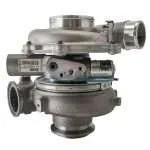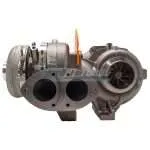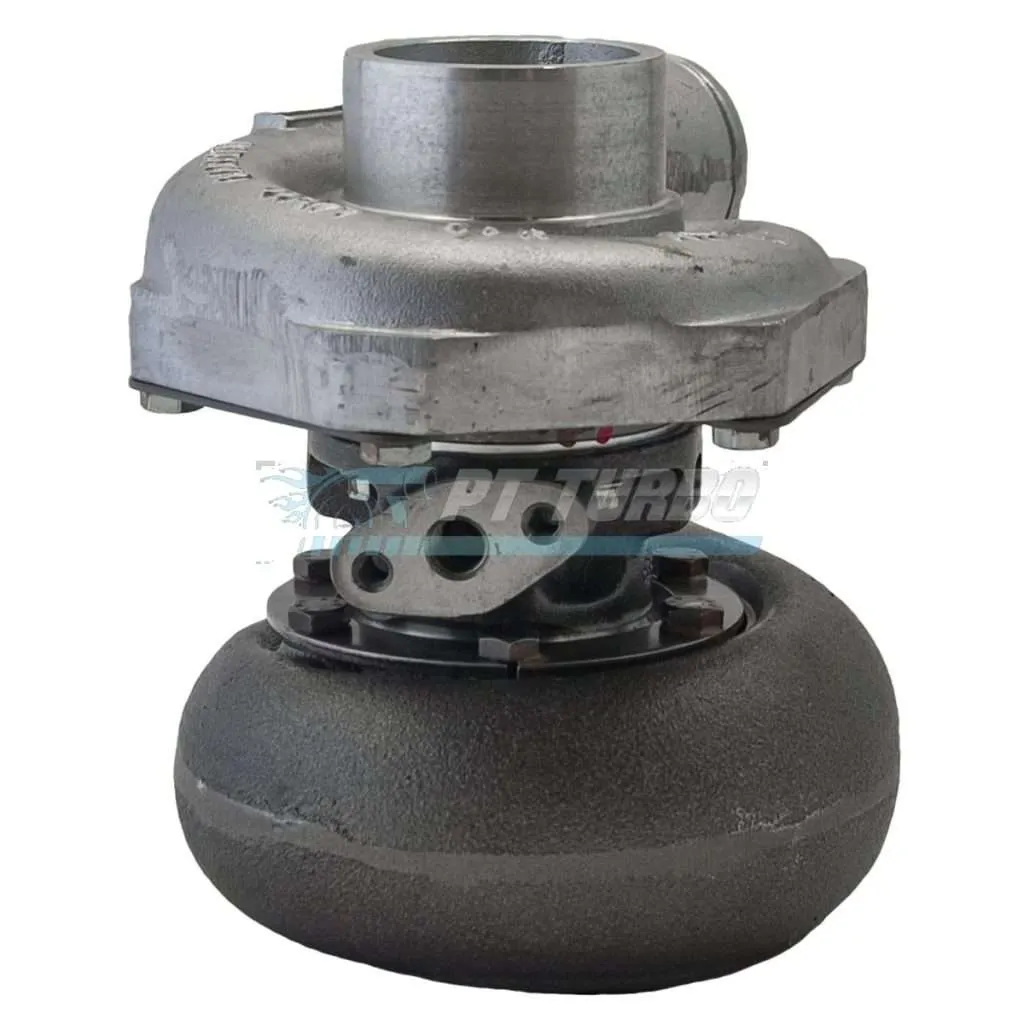
If you run a Ford 6.0L Powerstroke, the turbocharger is the single component most likely to leave you stranded on the side of the highway. The factory Garrett GT3782VA variable geometry turbo (VGT) is a clever piece of engineering, but soot loading, sticky unison rings, and oil contamination make it one of the most common warranty and repair items on the 2003 to 2007 platform. If you’re chasing low boost, an illuminated check engine light, or a turbo that sounds like a coffee grinder, this guide walks you through the symptoms, the diagnostics, and the replacement options worth your money.
How the 6.0L Powerstroke Turbocharger Actually Works
The 6.0L uses a single Garrett GT3782VA VGT, a design that adjusts the angle of the vanes inside the turbine housing to control exhaust gas velocity. At low RPM, the vanes close down to spool the turbo quickly and kill turbo lag. At high RPM, they open up to flow maximum exhaust and prevent overboost. That variable geometry is controlled by the PCM through a VGT control solenoid and a hydraulic piston driven by engine oil.
This is the same variable-vane principle Garrett Motion pioneered across the diesel industry, and when it works, it’s excellent. The problem is that the 6.0L’s exhaust gas recirculation system dumps soot directly into the system. Over thousands of cycles, that soot bakes onto the unison ring and vanes, and the whole assembly stops moving freely. That’s the root cause behind most 6.0L turbo complaints.
6.0L Powerstroke Turbo Failure Symptoms
Turbo failure on the 6.0L rarely happens all at once. It creeps in. Catching it early saves you from a melted-down center cartridge and metal making its way into the intake. Here’s how the symptoms typically progress.
| Severity | Symptom | Likely Cause |
|---|---|---|
| Early | Hesitation, lazy spool, occasional low boost | Soot building on VGT vanes |
| Moderate | P0299 (underboost) or P0234 (overboost) codes, surging | Sticking unison ring, actuator fault |
| Moderate | Whistling or whining that changes with RPM | Compressor wheel damage, bearing wear |
| Severe | Blue/gray smoke, oil in the intercooler piping | Failed center cartridge seals |
| Severe | Grinding, rattling, excessive shaft play | Bearing failure, wheel-to-housing contact |
The classic early test is to feel for hesitation under load. If the truck pulls fine cold but goes lazy once it’s hot, the vanes are sticking as soot expands. Watching VGT duty cycle against boost and exhaust back pressure on a scan tool will show vanes that are slow to respond.
Don’t Misdiagnose a Healthy Turbo
Plenty of 6.0L turbos get condemned when the real culprit is elsewhere. Before you pull the unit, rule out:
- Clogged or sticking EGR valve and cooler restricting exhaust flow
- A failing ICP sensor or IPR valve throwing the engine into a low-power state
- Boot leaks or split intercooler piping bleeding off boost pressure
- Low engine oil pressure starving the VGT hydraulic actuator
A boost leak test and a full scan-tool data log will tell you whether you’re replacing a turbo or chasing a $30 sensor.
New vs. Remanufactured: What to Buy
Once you’ve confirmed the turbo is done, the real decision is new versus remanufactured. Both have their place, and at PT Turbo we stock both because the right choice depends on your budget, your mileage, and how long you plan to keep the truck.
| Option | Price | Best For | Notes |
|---|---|---|---|
| New Garrett GT3782VA | $944 to $1,016 (3 listings) at PT Turbo | High-mileage trucks, long-term keepers | Full warranty, latest revision vanes |
| Quality Remanufactured | $801 to $1,217 (4 listings) at PT Turbo | Budget-conscious repairs, fleet units | New CHRA components, balanced to spec |
| Economy/No-Name Reman | $400 – $600 elsewhere (estimate) | Avoid for daily drivers | Inconsistent balancing, short life |
A properly remanufactured 6.0L turbo with a new center cartridge, cleaned and refaced VGT components, and a verified balance will perform indistinguishably from new for most owners. The trap is the bargain-bin reman that gets a quick wash and a coat of paint. Those are the units that come back through the door in six months. The Garrett numbers to cross-reference are in the 725390 and 743250 families. Aftermarket alternatives from BorgWarner are also available for certain build specs.
Replacing the 6.0L Powerstroke Turbo: What the Job Takes
This is a 4 to 6 hour job for an experienced tech, longer if hardware is rusted. The turbo sits in the valley between the heads, so you’re going in from the top. Key steps:
- Disconnect the battery, remove the turbo intake duct and unhook the downpipe from the turbo
- Unplug the VGT solenoid connector
- Disconnect the oil supply line and the drain tube (replace the feed gasket and the drain tube O-rings, never reuse)
- Remove the clamps and the three turbo-to-pedestal bolts, then lift the turbo off its pedestal
- Inspect the up-pipes and oil drain tube for restriction before reassembly
Always replace the oil feed gasket, the drain tube O-rings and the exhaust clamps during the job. Reusing old hardware is the fastest way to a comeback. A complete installation kit takes the guesswork out of sourcing every seal and gasket. While the 6.0L uses platform-specific hardware, PT Turbo stocks Ajusa installation kits across virtually every diesel application, so whatever you’re working on next, the gaskets are covered.
Buying the right kit upfront beats scavenging for a single gasket halfway through the job.
Preventing the Next Turbo Failure
A new turbo bolted onto a neglected 6.0L will fail the same way the last one did. If you want the replacement to last, address the conditions that killed the original:
- Run quality oil and change it on schedule. The VGT actuator is hydraulically driven by engine oil. Dirty or thin oil means sluggish, sticking vanes.
- Keep the EGR system clean or deleted where legal. Soot is the enemy of variable geometry, period.
- Let the turbo cool down. A 60 to 90 second idle after hard pulls protects the bearing and prevents oil coking in the center section.
- Watch your oil pressure. The 6.0L lives and dies by oil pressure, and the turbo is no exception.
Fleet operators running mixed diesel platforms know this discipline pays off.
The same maintenance habits that protect the 6.0L protect everything else in the yard. Clean oil, honest cool-down time, and a watchful eye on exhaust soot add up across a whole roster of trucks, not just the Powerstrokes.
Treat a turbo replacement as a chance to correct the root cause, not just swap the symptom. The owners who do that get full service life out of the second unit. The ones who don’t end up back under the hood before the warranty paperwork is even filed.
Doing the job yourself? The steps are in How to Remove a Turbocharger on a Ford 6.0L Powerstroke.
Price ranges in this article are general estimates to help with budgeting, not PT Turbo quotes. Our current prices are on each product listing, and our rebuild prices are on the turbo rebuild price list.
Frequently Asked Questions
What are the common symptoms of a failing 6.0L Powerstroke turbocharger?
Watch for loss of power, excessive smoke, whining noises, and surging boost. These often point to soot loading, sticky unison rings, or oil contamination in the VGT.
Why does the factory Garrett GT3782VA turbo fail so often?
The variable geometry design is prone to soot buildup, sticking unison rings, and oil contamination, making it one of the most common repair items on 2003-2007 trucks.
Can I replace the 6.0L Powerstroke turbocharger myself?
Yes, mechanically inclined owners can replace it with the right tools and time, though many opt for a professional due to the labor-intensive removal and reinstallation.
A sticking or failed 6.0L Powerstroke turbo is a strong rebuild candidate. See PT Turbo’s turbo rebuild service.
Need a Turbocharger?
PT Turbo has rebuilt and sold turbochargers since 1978. We stock remanufactured units for Cummins, Duramax, Power Stroke, Detroit Diesel, and more — backed by a 12-month unlimited mileage warranty and same-week shipping from San Bernardino, CA.
📞 (909) 824-1020 · 346 S I St. #3, San Bernardino, CA 92410 · [email protected]
More From PT Turbo
- Caterpillar C9 Turbocharger Guide: BorgWarner S310 for Machine & Truck Applications
 Duramax LBZ Turbocharger Guide: GT3788VA Problems & Replacement (2006-2007)
- Detroit Diesel Series 60 Turbocharger Guide: Garrett & BorgWarner S400 Replacement & Cost
- Ford 6.4L Powerstroke High-Pressure vs Low-Pressure Turbo: What Is the Difference?