6.0L Powerstroke Low Power: Is It the Turbocharger, EGR or Oil Cooler?
Diagnosing 6.0L Powerstroke low power means sorting three suspects that produce almost identical symptoms: a turbocharger whose vanes no longer move freely, an EGR system that is clogged or leaking, and an oil cooler that is quietly starving the EGR cooler of coolant. All three show up as sluggish throttle response, poor towing power, and sometimes a check engine light, so guessing wrong wastes a lot of labor on the busiest engine in the Super Duty line.
PT Turbo has been rebuilding turbochargers since 1978, and the 6.0L Garrett unit is one we know down to the clamp torque. This guide walks through how the system actually works and how to tell which part is dragging your power down before you pull anything.
How the 6.0L Builds Boost
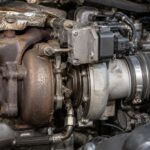
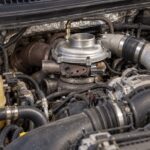
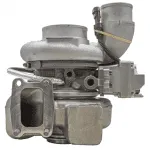
The 6.0L Power Stroke (2003-2007 Super Duty, 2003-2005 Excursion, 2004-2010 E-Series) uses a Garrett variable geometry turbo, the GT3782VA, sitting on a pedestal at the rear of the engine valley. Early trucks carry the 725390 number, later ones the 743250 family. The engine makes 325 hp with 560 lb-ft (570 lb-ft from 2005).
What trips people up is the actuation. The vanes are moved by engine oil through a PCM-driven VGT control solenoid. There is no electric actuator to calibrate and no vane position sensor on this turbo. That single fact changes every step that follows, because the PCM cannot read actual vane angle; it commands the solenoid and watches boost and exhaust backpressure to decide if the turbo is doing its job.
When the vanes are commanded closed, exhaust is funneled hard at the turbine for quick spool and high boost. When soot and varnished oil glue those vanes partway open, the turbo cannot build boost on demand. If they stick closed, you get overboost and high drive pressure instead. A variable geometry turbo lives or dies on free vane movement.
Start With Codes and Live Data
Before anyone touches a wrench, scan the truck and log data. On the 6.0L, Ford sets P0299 when actual exhaust backpressure stays too far from what the PCM commanded; it is not a manifold boost check on this engine. The boost (MAP) codes are P2262 and P2263, set when boost fails to rise as expected at higher rpm with EGR nearly closed.
Note what you will not see: because there is no vane position sensor, codes like P003A, P2563, P2564, and P2565 do not apply to the 6.0L, and P132B is not in Ford’s 6.0L code list either (one Ford bulletin names it only on some recalibrated 2003-2004 trucks). If a shop quotes those for your truck, they are reading from the wrong engine family.
The most useful test is a free one. With a scan tool, command the VGT solenoid and watch MAP and EBP respond. A healthy turbo shows boost and backpressure tracking the command cleanly. Vanes that are gummed up give lazy or flat response. For a deeper look at how a sick 6.0L turbo behaves, our guide on 8 warning signs of 6.0L turbo failure walks through the symptoms in order.
Is It the Turbocharger?
Sticking vanes are a common cause of low power on this engine, and they are a direct result of how the turbo works. Oil drives the vanes, so coked oil and soot build up in the unison ring and nozzle and stiffen everything. The result is a turbo that spools late, falls flat under load, and may throw P2262 or P2263.
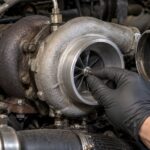
Cleaning the vanes sometimes buys time, but once bearings or the unison ring are worn, the fix is a rebuild or replacement. When you pull the turbo, the oil feed is a two-bolt flange, not a banjo, and after a bearing failure that feed line is best replaced rather than reused. Removal uses a 10 mm socket for the three turbo-to-pedestal bolts (28 ft-lbs) and the oil supply line, with the pedestal staying on the engine. The drain tube seals with O-rings and the exhaust joints are clamps without gaskets.
If the turbo is the culprit, you have good options. A clean factory-type unit is still the GT3782VA; Garrett also sells a PowerMax GT3788VA as an upgrade for the 6.0L (772441-5002S, 777469-5002S). We cover the full rundown in our article on 6.0L turbo failure symptoms, replacement, and best options. For what a rebuild on your exact unit runs, see our turbo rebuild price list, or browse remanufactured turbochargers.
Is It the EGR?
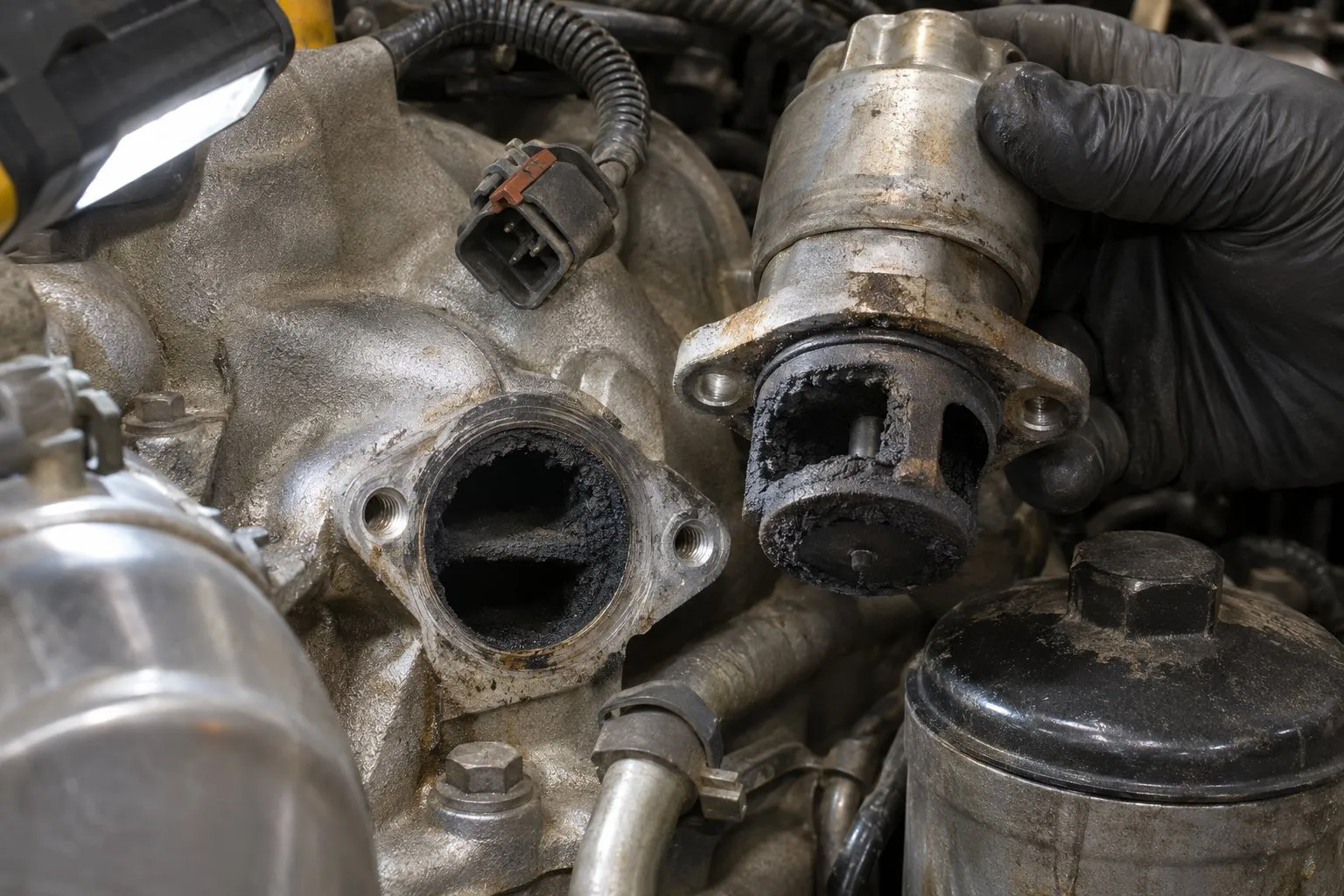
The EGR system causes low power two different ways, and it helps to be precise. The 6.0L uses high-pressure EGR, which returns exhaust to the intake after the compressor. EGR gas never passes through the turbo or enters on the turbine side, so EGR fouling does not land directly on the turbine wheel.
A clogged EGR valve or cooler restricts flow and can trigger EGR flow faults and a derate, hurting power. A leaking EGR cooler is different: it puts coolant into the intake and cylinders, which shows as white smoke, coolant loss, and in the worst case hydrolock risk. Either way, the symptom at the pedal can feel like a tired turbo. Read up on how EGR is plumbed if you want the full picture.
Is It the Oil Cooler?
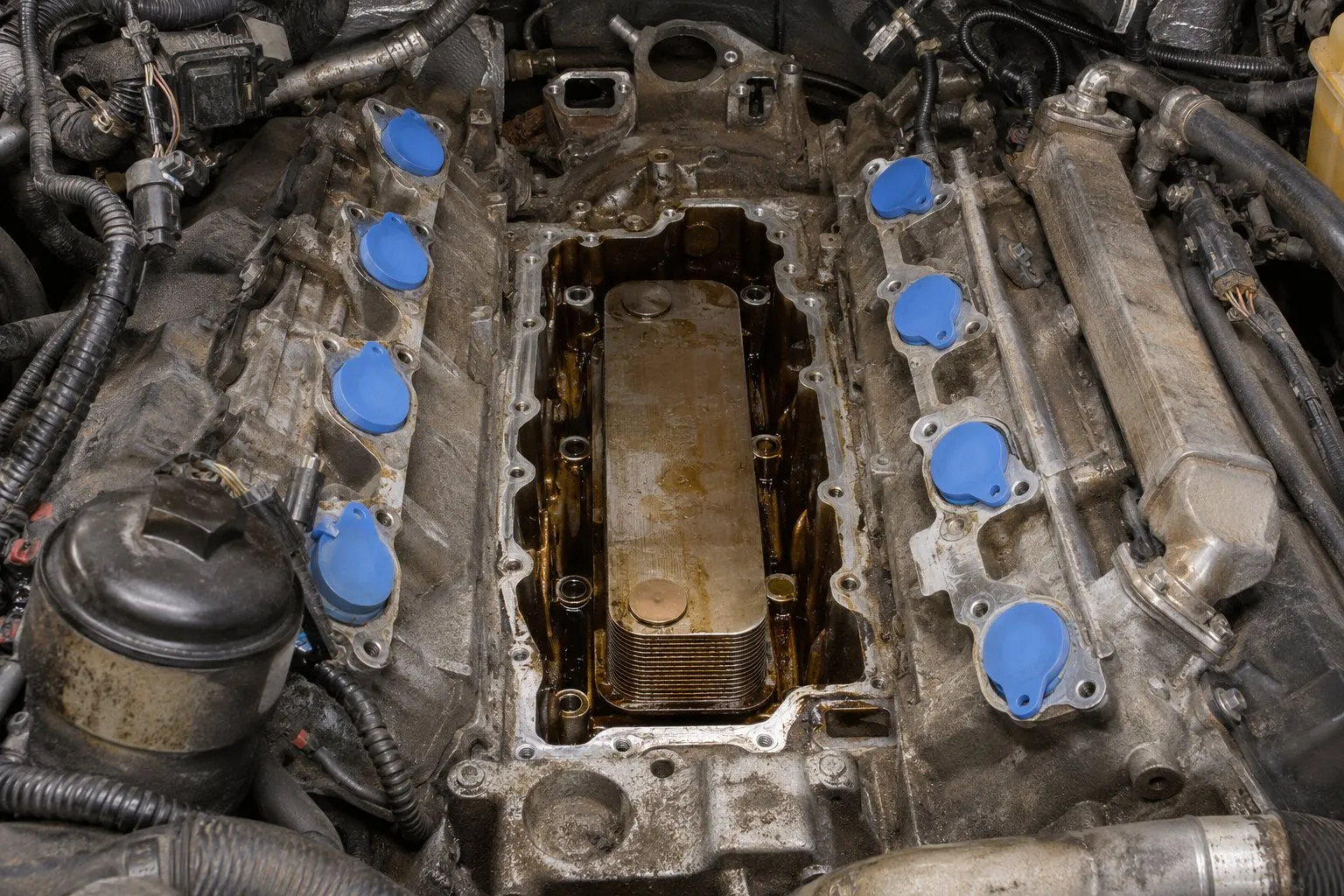
The oil cooler is the quiet one, and on the 6.0L it is often the root cause that takes out the EGR cooler. Coolant flows from the water pump through the engine oil cooler and then to the EGR cooler. When the oil cooler plugs on its coolant side, it starves the EGR cooler downstream, which is the usual cause of 6.0L EGR cooler failure.
Ford’s test is straightforward: on a road test with the engine at full operating temperature, log engine oil temperature (EOT) and engine coolant temperature (ECT). If EOT exceeds ECT by 15 degrees F (8.4 degrees C) or more at any point once the engine is warmed up, the oil cooler is restricted and needs service.
Be clear on what the oil cooler does and does not do. A plugged oil cooler does not starve the turbo of oil and does not by itself cut boost. It hurts power indirectly, through the EGR cooler failure and coolant problems that follow. Chase the oil cooler when temperatures diverge, not as a first guess for a lazy turbo.
Three Suspects, Side by Side
| Suspect | How it kills power | Tell-tale signs | Key test |
|---|---|---|---|
| Turbocharger (GT3782VA) | Sticking vanes spool late or sit partway open | Flat under load, P2262 / P2263, possible P0299 | Command VGT solenoid, watch MAP and EBP respond |
| EGR (valve / cooler) | Clogged restricts flow; cracked cooler leaks coolant | EGR flow faults, derate, white smoke, coolant loss | Inspect valve, pressure test cooler, check for coolant loss |
| Oil cooler | Plugs coolant side, starves EGR cooler downstream | EOT runs hotter than ECT, repeat EGR cooler failures | Road-test log: EOT over ECT by 15°F or more |
Fixing It Right the First Time
Order matters on the 6.0L. Scan and log data before pulling parts, because the oil cooler test and the VGT command test together will usually point you straight at the real cause. If EOT climbs well above ECT, service the oil cooler and inspect the EGR cooler while you are in there, since one commonly takes the other down.
If the turbo checks out as the problem, decide between a clean rebuild of your core and a reman unit on the shelf. When you replace or rebuild, use new drain tube O-rings, a fresh oil feed gasket and O-ring, and new Marman clamps, and prime the turbo with clean engine oil before the first start. PT Turbo stocks both new and remanufactured parts, and most rebuilds ship in 3 days or less with the price confirmed after inspection and before any work begins.
If you are not sure which way to go, send us the number off the turbo’s tag and we will match the exact unit. Our turbo rebuild service carries a 12-month unlimited-mileage warranty, and you can always contact PT Turbo or call (909) 824-1020 to talk it through. With more than 45 years behind the bench, we would rather point you at the right fix than sell you a turbo you did not need.
Turbos we list for the GT3782VA
Listings for the turbo models named in this guide that can be ordered online today. Several part numbers can fit one engine by year and rating, so match the number on your turbo’s tag, or call (909) 824-1020 and we will match it for you.
Frequently Asked Questions
Can I clean the 6.0L turbo vanes instead of replacing the turbo?
Cleaning the vanes and unison ring with the maker’s approved solvent can restore movement if soot is the only problem and the bearings are still good. Keep solvent out of the bearing housing and do not soak the cartridge. Once bearings or the nozzle ring are worn, cleaning will not hold and the turbo needs a rebuild or replacement.
Does a plugged oil cooler cause 6.0L low power directly?
Not directly. A plugged oil cooler does not starve the turbo of oil and does not cut boost on its own. It causes trouble by starving the downstream EGR cooler of coolant, which leads to EGR cooler failure and the coolant and derate problems that follow. Log EOT against ECT to catch it.
Which fault codes point to the turbo on a 6.0L?
P2262 and P2263 are the MAP-based boost codes, and P0299 is set from exhaust backpressure on this engine. Because the 6.0L turbo has no vane position sensor, position codes like P003A and P2563 do not apply, and P132B is not in Ford’s 6.0L code list. For what each code means, see our turbo fault code list and scan your truck before replacing parts.
Need a Turbocharger?
PT Turbo has rebuilt and sold turbochargers since 1978. We stock remanufactured units for Cummins, Duramax, Power Stroke, Detroit Diesel, and more — backed by a 12-month unlimited mileage warranty. Units in stock at our shop in San Bernardino, CA ship the same day when ordered before 2 PM Pacific, Monday through Friday.
📞 (909) 824-1020 · 346 S I St. #3, San Bernardino, CA 92410 · [email protected]