How to Remove a Turbocharger on a Ford 6.0L Powerstroke: Step-by-Step
Knowing How to Remove a Turbocharger on a Ford 6.0L Powerstroke is one of the most valuable skills a diesel tech or owner-operator can have, because this engine’s Garrett GT3782VA is notorious for sticking vanes, oil leaks, and mount-up headaches that put trucks in the shop for days. At PT Turbo, we’ve been rebuilding turbochargers since 1978, and the 6.0L is one unit we see on our bench regularly. This guide walks you through the full removal process with real torque specs, real part callouts, and the shortcuts that save hours.
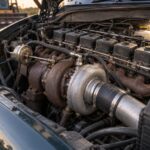
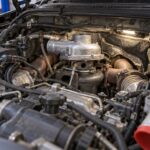
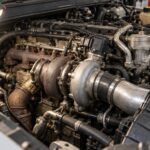
The 6.0L Powerstroke ran from 2003 to 2007 in the F-Series Super Duty (to 2005 in the Excursion), and its turbo sits in the valley between the cylinder heads. That location makes it accessible from above, which is good news, but it also means it collects debris, oil, and coolant residue that fights you on removal. Take your time and you’ll pull it clean.
Before You Start: Tools, Parts, and Prep
The GT3782VA is a variable-geometry turbocharger, so you’re not just yanking a simple fixed-geometry unit. Understanding how the variable-geometry design works helps you diagnose whether you even need a full replacement or just a rebuild.
Gather your tools before you touch a bolt. Nothing kills a job faster than crawling out from under the truck for a socket you forgot.
- 3/8″ and 1/2″ drive ratchets with metric sockets (8mm through 15mm)
- 10mm socket for the three turbo-to-pedestal bolts and the oil supply line, 11mm for the exhaust clamps
- Long extensions and a swivel/wobble adapter
- 8mm socket for the coolant (degas) bottle bolts
- Pick set and shop rags for the oil drain tube O-rings
- New up-pipe gaskets, turbo mounting O-ring, and pedestal seals
Order your gaskets and seals ahead of time. If your turbo is due for service, PT Turbo stocks both new and remanufactured units, and our turbocharger rebuild service can restore your original core with fresh bearings, seals, and a balanced CHRA.
Step-by-Step: How to Remove a Turbocharger on a Ford 6.0L Powerstroke
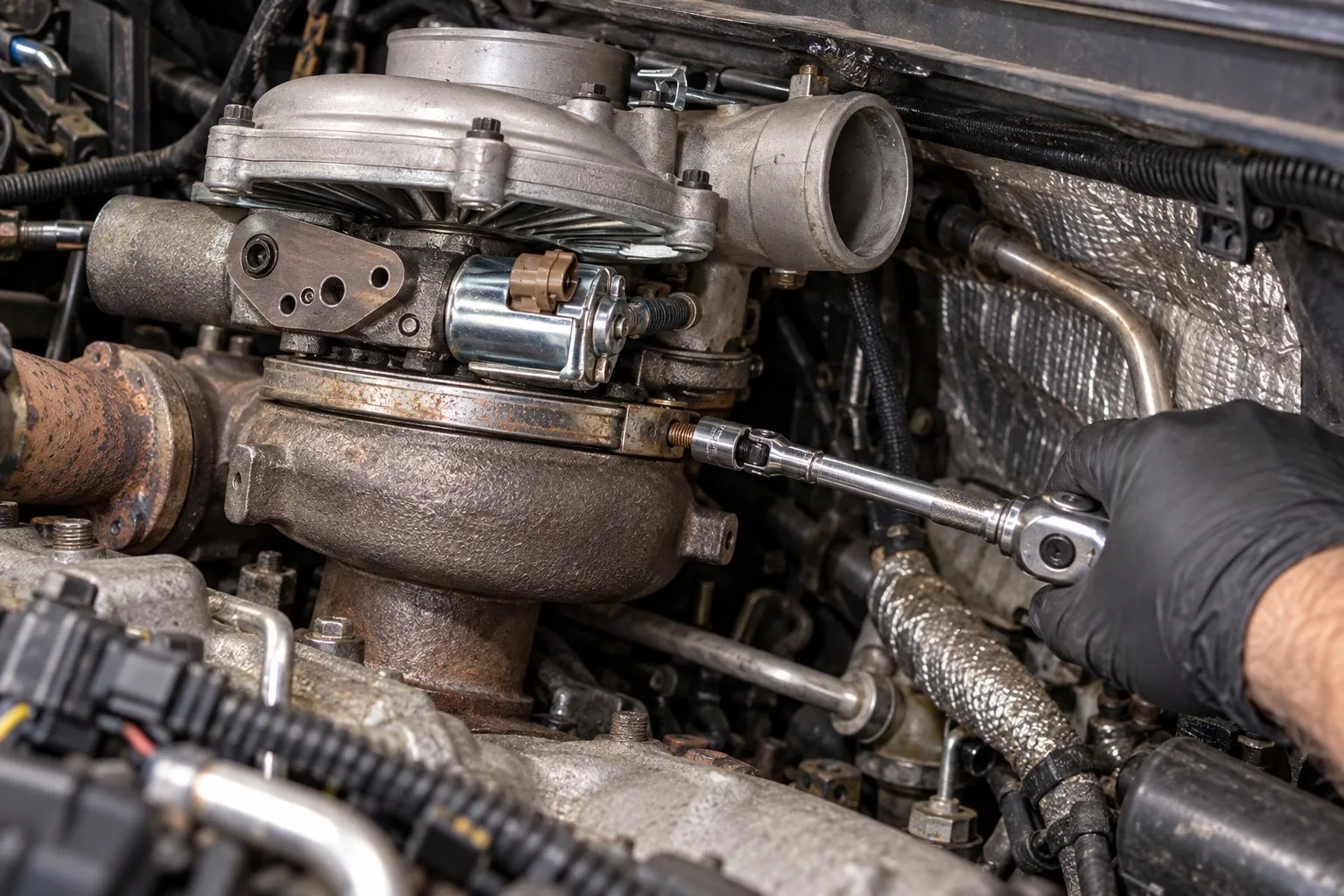
Work on a cold engine. The turbo housing holds heat for hours after shutdown, and burns are the most common injury on this job. Disconnect both batteries before you begin to avoid shorting the VGT solenoid or its wiring.
1. Clear the Top of the Engine
Remove the engine cover, the air intake tube, and the intake resonator. The degas bottle (coolant reservoir) has to come out: drain 1.5 to 2 gallons of coolant, disconnect its three hoses and remove its two 8mm bolts.
Next, remove the turbo inlet pipe and the intake elbow. This exposes the compressor housing and gives you room to reach the mounting hardware.
2. Disconnect the Electrical Connector
Unplug the VGT (variable geometry turbocharger) solenoid connector and free its harness clamp on the compressor housing. Label anything you’re unsure of. On the 6.0L the VGT solenoid can fail, but vanes stuck with soot are the more common problem; this turbo has no separate actuator.
3. Release the Turbine Outlet Clamp and Unhook the Downpipe
The 6.0L turbo mounts to a pedestal in the valley. Loosen the V-band clamp connecting the turbine outlet to the downpipe. Access is tight, so a long extension with a swivel earns its keep here.
Then remove the clamp at the turbine outlet and unhook the downpipe from the outlet flange; the downpipe itself stays in the truck. Expect some carbon and rust flakes to fall, so keep a rag over the pedestal opening.
4. Disconnect the Oil Feed Line
The oil feed tube bolts to the top of the center housing with a two-bolt flange and a gasket. Remove the two bolts, then remove the collar hold-down bolt at the oil cooler fitting in the valley (early 2003 trucks use a quick-connect that needs a release tool) and pull the tube up. The oil drain tube runs from the bottom of the turbo into the high-pressure oil pump cover and seals with O-rings that should be replaced; it comes free as the turbo is lifted and rocked.
Have a drain pan ready. Residual oil will run out of the feed line now and out of the drain tube when the turbo is lifted.
5. Free the Up-Pipe Clamp and Pedestal Bolts
The up-pipes join into a collector that meets the turbine inlet at the back of the turbo, where a V-band clamp holds it. Loosen that clamp. The gaskets that commonly leak are at the other end of the up-pipes, where they bolt to the exhaust manifolds; inspect them while you are in there.
Remove the three turbo mounting bolts that hold the turbo to its pedestal. They carry the full weight of the turbo, so support the unit as you back the last one out.
6. Lift the Turbocharger Out
With everything disconnected, lift the turbo straight up and out of the valley. It’s heavier than it looks, roughly 30 pounds. Rotate it slightly to clear the firewall and cowl.
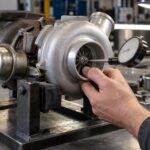
Cap the oil feed and drain ports immediately to keep debris out. Inspect the compressor and turbine wheels for shaft play, contact marks, and oil coating while the unit is on the bench.
Torque Specs and Reassembly Reference
Reassembly is the reverse of removal, but the fasteners on this engine have specific torque values. Under-torquing leads to exhaust leaks and boost loss; over-torquing strips the aluminum pedestal.
| Fastener | Torque Spec | Notes |
|---|---|---|
| Turbo mounting bolts (turbo to pedestal) | 28 ft-lbs | Use a new O-ring seal on the pedestal |
| Oil feed tube bolts | 18 ft-lbs | Two-bolt flange with a new gasket |
| Downpipe and up-pipe V-band clamps | 89 to 106 in-lbs (published figures differ) | Seat the band evenly before torquing |
Confirm every value against Ford’s service information for your model year before final assembly.
Always prime the new or rebuilt turbo with clean engine oil through the feed port before startup. Spin the shaft by hand to coat the bearings. Skipping this step is the fastest way to smoke a fresh unit in the first 30 seconds of running.
New vs. Remanufactured: What Makes Sense for the 6.0L
Once the turbo is out, you have three paths: install a new unit, install a remanufactured one, or rebuild your existing core. Each has a place depending on budget and truck use.
| Option | Typical Cost Range | Best For |
|---|---|---|
| New OEM Garrett | $944 to $1,016 (3 listings) at PT Turbo | Fleet trucks needing max longevity |
| Remanufactured | $801 to $1,217 (4 listings) at PT Turbo | Best value for daily drivers and work trucks |
| Rebuild your core | $495 at PT Turbo (price list) | Cores in good condition with no wheel damage |
Price ranges in this article are general estimates to help with budgeting, not PT Turbo quotes. Our current prices are on each product listing, and our rebuild prices are on the turbo rebuild price list.
Our remanufactured turbochargers are built to OEM spec with new bearings, seals, and balanced rotating assemblies, and they cost far less than new. If you want to keep your matched core, send it in for our rebuild service.
For a deeper look at when replacement beats repair, read our full guide on 6.0L Powerstroke turbocharger failure symptoms and best options. If you’re still diagnosing, our breakdown of the 8 warning signs of 6.0L turbo failure will confirm whether the turbo is actually your problem.
Common Mistakes
The number one mistake on 6.0L turbo jobs is ignoring the up-pipe gaskets at the exhaust manifolds. Inspect them while the turbo is out and replace any that show soot tracks: a leaking up-pipe mimics a failing turbo.
The second mistake is refitting the old VGT solenoid without testing it. On the 6.0L the solenoid meters engine oil to the vane piston, and a weak one gives the same underboost and overboost codes as sticking vanes.
One more thing worth checking before you button it all up: the condition of the VGT vanes on the unit you’re reinstalling. Sticking vanes are the 6.0L’s signature failure, and if you pull a turbo, clean the carbon off, and drop the same sticky unit back in, you’ll be doing this job again in a few thousand miles. Confirm the vanes move freely before it goes back in the valley.
Turbos we list for the GT3782VA
Listings for the turbo models named in this guide that can be ordered online today. Several part numbers can fit one engine by year and rating, so match the number on your turbo’s tag, or call (909) 824-1020 and we will match it for you.
Frequently Asked Questions
How long does it take to remove a turbocharger on a 6.0L Powerstroke?
For an experienced tech, turbo removal on a 6.0L Powerstroke typically takes 2 to 4 hours, though sticking vanes or corroded bolts can extend the job.
What tools do I need to remove a 6.0L Powerstroke turbocharger?
You’ll need a standard socket set, torque wrench, various extensions, penetrating oil, and a drain pan. Access to the exhaust and oil supply/return lines is essential.
Why do 6.0L Powerstroke turbochargers fail so often?
The Garrett GT3782VA is prone to sticking variable geometry vanes caused by soot and carbon buildup, along with oil leaks and mounting issues that lead to premature failure.
Need a Turbocharger?
PT Turbo has rebuilt and sold turbochargers since 1978. We stock remanufactured units for Cummins, Duramax, Power Stroke, Detroit Diesel, and more — backed by a 12-month unlimited mileage warranty. Units in stock at our shop in San Bernardino, CA ship the same day when ordered before 2 PM Pacific, Monday through Friday.
📞 (909) 824-1020 · 346 S I St. #3, San Bernardino, CA 92410 · [email protected]