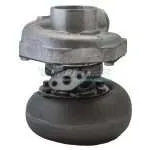
If you turn wrenches on Ford Super Duty trucks, you already know the turbocharger is where the 6.0L, 6.4L, and 6.7L Powerstroke engines earn their reputation, good and bad. The Ford F-250/F-350 Super Duty turbocharger setup changed dramatically across these three engine generations, from a single variable geometry Garrett on the 6.0L, to a compound twin-turbo system on the 6.4L, to a purpose-built single VGT on the 6.7L. Knowing the differences saves you from buying the wrong part, misdiagnosing a boost complaint, or throwing a new turbo at an actuator problem. Here is the straight comparison, engine by engine.
The Three Powerstroke Turbo Systems at a Glance
Ford has run three distinct diesel platforms in the Super Duty since 2003, and each carried a completely different turbo architecture. You cannot swap parts between them, and the failure patterns are just as different as the hardware.
| Engine | Model Years | Turbo System | Turbo Type | Factory Power |
|---|---|---|---|---|
| 6.0L Powerstroke | 2003–2007 | Single turbo | Garrett GT3782VA VGT | 325 hp / 560 lb-ft (570 from 2005) |
| 6.4L Powerstroke | 2008–2010 | Compound twin turbo | BorgWarner variable high-pressure + fixed low-pressure | 350 hp / 650 lb-ft |
| 6.7L Powerstroke | 2011–present | Single turbo | Pickups: Garrett GT32 SST (2011–2014), GT37 (2015–2019), new electronic VGT from 2020 | 390–500 hp depending on year |
6.0L Powerstroke: The VGT That Sticks
The 6.0L uses a single Garrett GT3782VA variable geometry turbo with a unison ring that adjusts vane angle to control boost across the RPM band. It is a good design on paper, but soot and carbon build up in the vane mechanism, and the unison ring sticks. That is the number one turbo complaint on this platform. When the vanes seize, you get one of two symptoms: no boost and a dead-dog truck, or overboost and a hard code.
The other classic weak point is the VGT control solenoid, which meters the engine oil that moves the vanes. When it sticks or fails electrically, the turbo cannot modulate correctly. Before you condemn a whole turbo, test the solenoid and check that the unison ring moves freely. Replacing the solenoid or cleaning the vane mechanism is a fraction of the cost and labor of a full turbo replacement, and on a truck with an otherwise healthy cartridge it is often all you need.
Watch for these 6.0L turbo failure signs:
- Sluggish acceleration and lost top-end power
- Excessive black or blue smoke under load
- Whistling, whining, or grinding from the turbo
- P0299 (underboost) or overboost codes
- Oil in the intake or downpipe from failed seals
We break these down in depth in our guide on Ford 6.0L Powerstroke turbo failure warning signs, and we cover replacement strategy and the best options in our 6.0L Powerstroke turbocharger replacement guide. If your cartridge is worn, a properly balanced remanufactured turbocharger restores factory performance without the new-unit price tag.
Maintenance tip for 6.0L owners
Keep your EGR system clean and run good oil on a tight interval. Soot loading is what kills these turbos. Trucks that see regular highway miles and clean EGR service will go far longer before the vanes stick.
6.4L Powerstroke: Compound Twins and Their Quirks
The 6.4L is the outlier. Instead of one turbo, Ford ran a compound system: a small variable-geometry high-pressure turbo paired with a larger fixed-geometry low-pressure turbo, both built by BorgWarner. The small turbo spools fast for low-end response, then the big turbo takes over up top. When it works, it is a strong, responsive setup. When it fails, diagnosis gets more complicated because you have two turbos and the plumbing between them.
If you are not clear on which unit does what, read our breakdown of the 6.4L high-pressure vs low-pressure turbo differences. It matters, because ordering the wrong turbo for the wrong position is an expensive mistake.
Common 6.4L turbo problems:
- High-pressure VGT vanes sticking, same soot issue as the 6.0L
- Bearing failure in either unit, often from oil coking after hard shutdowns
- Cracked up-pipes and boost leaks between the turbos
- Actuator failure on the variable high-pressure turbo
- Shaft play and compressor wheel contact from wear
Always match the actuator to your exact turbo casting and calibration before ordering. Our full 6.4L Powerstroke twin turbo guide covers common problems and replacement parts in detail.
6.7L Powerstroke: Ford’s In-House Design
The 6.7L is the first Powerstroke Ford designed and built in-house, and the turbo reflects that. Early 2011–2014 pickups (chassis cabs have a different, single-compressor Garrett) used a Garrett GT32 SST with a unique dual-sided compressor wheel, essentially pulling air through both sides of a single wheel so that the two faces work as two compressors in parallel on one shaft. From 2015 Ford moved to a more conventional Garrett GT37 with a single-sided wheel and a larger frame, and from 2020 to a new electronically actuated VGT, as power ratings climbed from 390 hp up to 475 and 500 hp on the latest trucks.
The 6.7L turbo is generally more durable than the 6.0L or 6.4L, but it is not bulletproof. The most common failures we see:
- Bearing failure on high-mileage trucks, especially those that tow heavy
- VGT control faults: the oil solenoid on 2011 to 2019 trucks, the electronic actuator from 2020
- Turbine wheel damage from failed EGT sensors or over-fueling tunes
- Coking from short-trip use without proper cooldown
As with every VGT platform, verify part numbers against your specific casting before you buy.
New vs Remanufactured: What Makes Sense
The biggest cost decision on any Super Duty turbo job is new versus remanufactured. A quality reman unit from a shop that actually balances and blueprints the cartridge performs identically to new for most owners, at a real savings. Here is how the numbers typically shake out.
| Option | Typical Cost Range | Best For | Warranty Consideration |
|---|---|---|---|
| New OEM turbo | $944 to $2,817 (7 listings) at PT Turbo | Warranty-sensitive fleet trucks, latest 6.7L | Full factory-level coverage |
| Quality remanufactured | $801 to $1,681 (6 listings) at PT Turbo | Most owner-operators and out-of-warranty trucks | Backed by the rebuilder, often 1 year+ |
| Actuator/component repair | Quoted by part number | Trucks with a healthy cartridge and a bad actuator | Fastest, cheapest fix when applicable |
Price ranges in this article are general estimates to help with budgeting, not PT Turbo quotes. Our current prices are on each product listing, and our rebuild prices are on the turbo rebuild price list.
PT Turbo has been building and supplying turbochargers since 1978, more than 45 years in the business, and we stock both new and remanufactured units for all three Powerstroke platforms. If your core is worth saving, our turbocharger rebuild service restores it to spec with balanced rotating assemblies and new bearings and seals. If you want a ready-to-install unit, browse our remanufactured turbochargers or the full turbo catalog.
Diagnosing Before You Replace
The most expensive mistake on these trucks is replacing a turbo that was never bad. Before you condemn the unit, run through this checklist:
- Check for boost leaks at every clamp, boot, and up-pipe. A split intercooler boot mimics a failed turbo perfectly.
- On the 6.4L, and on the 6.7L from 2020, test the actuator function and calibration; on the 6.0L and the 2011 to 2019 6.7L, whose vanes are moved by oil through a solenoid, test the solenoid. Sticking vanes and a drifting actuator throw the same underboost codes.
- Inspect the compressor and turbine wheels for shaft play, blade contact, and oil residue. A little side-to-side play is normal; in-and-out play or blade contact means the bearings are gone.
- Pull your codes and read the data, not just the light. Underboost, overboost, and actuator faults each point you in a different direction.
- Check oil supply and drain lines for restriction or coking before you blame the cartridge. Starved or dirty oil kills a replacement just as fast as the original.
Work that list in order and you will catch most of the complaints that get mistaken for a dead turbo. More often than not the real culprit is a boost leak or a failing actuator, both of which cost a fraction of a full replacement.
When the cartridge truly is worn, you at least know you are spending money on the right part. That is the whole point of diagnosing first: no guessing, no parts-cannon, and no new turbo on a truck that needed a small repair.
Frequently Asked Questions
What turbocharger does the 6.0L Powerstroke use?
The 6.0L Powerstroke uses a single variable geometry Garrett turbocharger. This design provides responsive boost across the RPM range but is known for common maintenance issues.
How is the 6.4L Powerstroke turbo system different?
The 6.4L Powerstroke uses a compound twin-turbo system with two turbochargers working in sequence. This setup delivers strong power and reduced turbo lag compared to a single unit.
Which Powerstroke turbocharger is the most reliable?
The 6.7L Powerstroke features a purpose-built turbocharger designed for improved durability and performance. It is generally considered the most refined and reliable of the three generations.
Further reading: Learn more about turbocharger technology.
Need a Turbocharger?
PT Turbo has rebuilt and sold turbochargers since 1978. We stock remanufactured units for Cummins, Duramax, Power Stroke, Detroit Diesel, and more — backed by a 12-month unlimited mileage warranty and same-week shipping from San Bernardino, CA.
📞 (909) 824-1020 · 346 S I St. #3, San Bernardino, CA 92410 · [email protected]
More From PT Turbo
- Caterpillar 3126 Turbocharger Guide: School Bus & Medium Duty Replacement
- Detroit DD16 Turbocharger Guide: Turbo-Compound System, Failure Symptoms & How It Differs from the Mack MP10
 Ford 6.0L Powerstroke Turbocharger: Failure Symptoms, Replacement & Best Options
- Cummins QSB Turbocharger Guide: Marine, Industrial & Construction Applications