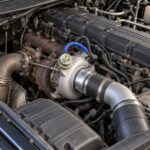
International T444E Turbocharger Guide: Ford 7.3L Powerstroke Connection Explained
If you have wrenched on a mid-90s International medium-duty truck or an OBS Ford F-Series or an early Super Duty, you already know the International T444E turbocharger and the Ford 7.3L Powerstroke turbo are two branches of the same tree. The T444E and the 7.3L Powerstroke are the same 444 cubic inch V8 diesel built by International (Navistar), just wearing different badges and calibrated for different jobs. That shared DNA means the turbo systems overlap heavily, and knowing what carries over and what does not will save you hours of guesswork and a pile of wrong parts.
PT Turbo has been rebuilding and supplying turbochargers since 1978, more than 45 years of hands-on turbocharger experience, including the Garrett TP38 and GTP38 on both platforms. Here is the straight technical breakdown.
The T444E and 7.3L Powerstroke Are the Same Engine
International introduced the T444E in 1994 as an electronically controlled successor to the mechanical 7.3L IDI. Ford bought the same engine block and called it the 7.3L Powerstroke in its Super Duty and OBS trucks from 1994.5 through 2003. “T444E” stands for Turbocharged, 444 cubic inch, Electronic. It is the medium-duty version you find in International 4700, 4900, and 3800 chassis, school buses, box trucks, and utility rigs.
The core hardware is nearly identical: the same HEUI (Hydraulically actuated Electronically controlled Unit Injector) fuel system, the same 444 CID displacement, the same basic internals. Where they diverge is in tuning, wastegate strategy, and some accessory packaging. The turbocharger is the biggest area of overlap, and that is exactly where cross-referencing helps you.
Which Turbocharger Is On Your Engine
Both the T444E and 7.3L Powerstroke ran Garrett turbochargers, but the specific model depends on year and application. Getting this right is the difference between a bolt-on install and a return shipment.
| Turbo Model | Application | Years | Wastegate |
|---|---|---|---|
| Garrett TP38 | Ford 7.3L Powerstroke, early T444E | 1994.5–1997 | Non-wastegated |
| Garrett GTP38 | Ford 7.3L Powerstroke (auto/manual variants) | 1999–2003 | Wastegated (most) |
| Garrett TP38 / GTP38 medium-duty | International T444E | 1994–2003 | Application specific |
The critical detail on the T444E is that medium-duty and bus calibrations often use different compressor and turbine A/R combinations than the pickup. A T444E in a box truck spends its life at heavier gross weights and steadier RPM, so the turbo is spec’d for durability and low-end response rather than the quick spool a light Ford truck wants. Always verify the part number stamped on the compressor housing or CHRA before ordering.
Reading the Part Number
The Garrett part number is on the nameplate on the compressor housing, with the model and serial number. Cross that against your VIN or engine serial. If the tag is unreadable, PT Turbo can identify your unit from the housing casting numbers and wheel measurements. Send us photos through our contact page and we will confirm the exact match.
The Wastegate and Pneumatic Actuator
The wastegated GTP38 uses a pneumatic actuator to control boost by bleeding exhaust around the turbine wheel. When the actuator fails or the diaphragm ruptures, you get overboost, erratic boost, or a truck that falls flat under load. This is one of the most common and most misdiagnosed problems on these engines. Mechanics chase injectors, ICP sensors, and fuel pressure when the real culprit is a leaking actuator diaphragm or a seized wastegate arm.
When you install a new actuator, always check the rod length and preload against spec. An improperly adjusted actuator rod changes when the wastegate cracks open, which throws off your boost curve and can spike EGTs. Set it, measure it, and confirm boost onset before you call the job done.
Common Failure Symptoms on the T444E and 7.3L
These turbos are tough, but nothing runs forever behind a HEUI diesel pushing hot exhaust and soot. Here is how failures typically present, sorted by how bad it has gotten.
| Severity | Symptom | Likely Cause |
|---|---|---|
| Early | Slight whistle, minor boost lag | Boot leak, loose clamp, early shaft wear |
| Moderate | Erratic or low boost, hesitation under load | Failing pneumatic actuator, sticking wastegate |
| Serious | Blue/black smoke, oil in intake | Worn seals, excessive shaft play |
| Critical | Grinding noise, no boost, metal in charge pipe | Bearing failure, wheel contact, CHRA destruction |
Check shaft play by hand: grab the compressor nut and wiggle. Axial play should be minimal and radial play should not let the wheel touch the housing. Any contact marks on the compressor or turbine wheel mean the bearings are gone and the unit needs a rebuild or replacement. If you are seeing these same patterns on newer trucks, our writeup on 8 warning signs of Ford 6.0L Powerstroke turbo failure walks through the diagnostic logic that applies across most Powerstroke platforms.
New vs Remanufactured: What Makes Sense
For a 20-plus year old engine, you rarely need a brand new turbo. A properly remanufactured unit with new bearings, seals, a balanced CHRA, and a fresh actuator performs identically for a fraction of the cost. The key word is “properly.” A reman is only as good as the shop that built it.
| Option | Typical Cost | Best For |
|---|---|---|
| New OEM Garrett | $1,016 to $1,156 (4 listings) at PT Turbo | Warranty-sensitive fleets, new builds |
| Quality Remanufactured | $933 to $1,423 (2 listings) at PT Turbo | Most owner-operators and fleets |
| Rebuild your core | From $575 at PT Turbo (price list) | Original matched unit, cost control |
Price ranges in this article are general estimates to help with budgeting, not PT Turbo quotes. Our current prices are on each product listing, and our rebuild prices are on the turbo rebuild price list.
PT Turbo stocks both new and remanufactured turbochargers for the T444E and 7.3L platforms. Every reman we build gets balanced to spec, not just cleaned and reassembled. If you want to keep your original numbered housing, our turbocharger rebuild service restores your core with new internals and a warranty. You can also shop all turbos to compare options for your specific unit.
Installation and First-Start Tips
A turbo is only as reliable as the install. Follow these steps whether you buy new, reman, or rebuild your own core:
- Prime the bearings. Before startup, pre-fill the oil inlet with clean engine oil and spin the shaft by hand. A dry start kills a fresh turbo in seconds.
- Inspect the oil drain. A restricted or coked drain line causes seal failure. Replace it if there is any sludge.
- Clean the intake tract. Debris left in the air inlet will be ingested and wreck the new compressor wheel, and debris or oil left in the charge pipes and intercooler goes straight into the engine.
- Set the actuator rod. On wastegated versions, confirm wastegate preload and boost onset with the new actuator installed. The 1994.5 to 1997 TP38 has no wastegate.
- Idle before load. Let the engine idle 3 to 5 minutes at startup and after hard pulls so oil circulates and the bearings cool before shutdown.
Torque the exhaust and intake fasteners to spec and use new gaskets. On the T444E, the up-pipe connections are a frequent exhaust leak point, so inspect those while you have access.
If you also run newer Powerstrokes in your fleet, the technology gets more complex fast. The variable geometry design on the 6.0L and the twin-turbo setup on the 6.4L work very differently from the simple fixed-geometry Garrett on your 7.3L. Our guides on the 6.0L Powerstroke turbocharger and the 6.4L Powerstroke twin turbo system cover those platforms in detail, including the difference between the high-pressure and low-pressure turbos on the compound setup.
For the T444E and 7.3L itself, the win is in the cross-reference. Once you confirm the exact turbo your application ran, whether it is a pickup spool or a medium-duty box truck spec, the parts and procedure are straightforward. Match the housing, set the actuator, prime the turbo before the first start, and these Garrett units will run another couple hundred thousand miles.
When in doubt, measure and photograph before you buy. The overlap between the two platforms is a gift when you use it right and an expensive mistake when you assume a Ford part drops straight onto a bus engine. Verify the stamped number against your specific chassis and you will order right the first time.
Frequently Asked Questions
Is the International T444E the same engine as the Ford 7.3L Powerstroke?
Yes, both are the same 444 cubic inch V8 diesel built by International (Navistar). They wear different badges and use different calibrations for their respective applications.
Are International T444E and Ford 7.3L Powerstroke turbochargers interchangeable?
Many turbo components share compatibility since the engines are mechanically similar, but calibration, mounting, and boost tuning differences mean you should verify fitment before swapping.
What years used the International T444E turbocharger?
The T444E was built from 1994 to 2003 for International medium-duty trucks and bus chassis, the same years the Ford trucks ran the 7.3L Powerstroke.
Further reading: Learn more about turbocharger technology.
Need a Turbocharger?
PT Turbo has rebuilt and sold turbochargers since 1978. We stock remanufactured units for Cummins, Duramax, Power Stroke, Detroit Diesel, and more — backed by a 12-month unlimited mileage warranty. Units in stock at our shop in San Bernardino, CA ship the same day when ordered before 2 PM Pacific, Monday through Friday.
📞 (909) 824-1020 · 346 S I St. #3, San Bernardino, CA 92410 · [email protected]