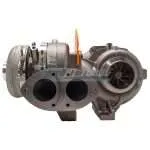
The 2017 Duramax L5P didn’t just bump horsepower numbers, it rewrote the turbocharger playbook that GM had been running since the LB7 days. For the first time in Duramax history, the engine arrived with a BorgWarner variable geometry turbo controlled by a fully electronic actuator and tighter emissions calibration than anything before it. If you’ve been wrenching on LLY, LBZ, LMM, or LML trucks, the L5P turbo will feel familiar in shape and foreign in behavior. This guide breaks down exactly what changed, what fails, and how to spec the right replacement.
What’s New in the L5P Turbocharger
The L5P debuted in 2017 making 445 horsepower and 910 lb-ft of torque, a massive jump from the LML’s 397 hp. That output didn’t come from a bigger turbo alone. GM redesigned the entire air management system around a BorgWarner variable geometry turbocharger (VGT) with an electronically controlled vane mechanism and a relocated, larger compressor housing.
The single biggest mechanical change versus the LML’s GT3788VA is the actuator. The L5P uses a smart electronic actuator that talks directly to the ECM over a data circuit instead of relying on the older-style command logic. This gives the engine far more precise vane positioning across the RPM band, which is how GM squeezed both stronger low-end response and cleaner exhaust out of a variable geometry design.
Other notable updates from the previous generation:
- Larger compressor wheel and housing to feed the higher-flowing engine
- Revised charge-air cooling with a more efficient intercooler to handle the added boost
- Updated oil feed and drain geometry to match the new block and turbo positioning
- Tighter emissions integration, meaning the turbo, DPF, and SCR system are calibrated as one closed loop
If you’ve worked through our LML turbocharger guide, you’ll recognize the family DNA. The L5P turbo is built by BorgWarner, not Garrett, but it works on the same variable vane principle.
Duramax Turbo Evolution: LLY Through L5P
Understanding where the L5P sits in the Duramax lineage helps you diagnose it. Each generation refined the variable geometry concept, and the failure patterns shifted along the way.
| Generation | Years | Turbo | Power | Actuator Type |
|---|---|---|---|---|
| LLY | 2004.5-2005 (and early 2006, VIN digit 2) | Garrett GT3788VA | 310 hp | Oil pressure, solenoid controlled |
| LBZ | 2006-2007 | Garrett GT3788VA | 360 hp | Oil pressure, solenoid controlled |
| LMM | 2007.5-2010 | Garrett GT3788VA | 365 hp | Oil pressure, solenoid controlled |
| LML | 2011-2016 | Garrett GT3788VA | 397 hp | Oil pressure, solenoid controlled |
| L5P | 2017+ | BorgWarner VGT | 445 hp | Smart electronic actuator |
For the earlier platforms, see our dedicated breakdowns on the LLY GT3788VA, the LBZ replacement procedure, and the LMM turbo failures. The same lesson runs through all of them: on a VGT Duramax, the vane mechanism and its control are usually what kill the turbo, not the bearings.
Common L5P Turbocharger Problems
The L5P is a stout turbo, but it isn’t immune to the issues that plague every variable geometry setup. The vanes live in the hot exhaust stream, and soot plus heat cycling is hard on moving parts.
Sticking or Carboned Vanes
Soot buildup on the vane mechanism is the number one complaint. When the vanes stick, you lose the ability to modulate boost. Symptoms include sluggish throttle response, a noticeable lack of low-end torque, and in many cases a check engine light with boost-related codes. Trucks that idle a lot or see short-trip duty cycles are the worst offenders because the exhaust never gets hot enough to keep the vanes clean.
Electronic Actuator Failure
The smart actuator gives finer control than the oil-operated vanes of the LML, but it’s also more complex. Internal gear wear, motor failure, and position-sensor faults all show up as VGT performance codes. You can’t just bolt on a generic actuator and walk away. The L5P actuator must be calibrated to the turbo and the ECM, which is why a properly set up replacement matters.
Shaft Play and Oil Issues
Bearing wear shows up as excessive shaft play, a whistling or grinding noise, and oil in the intake tract. If you’re seeing blue smoke and oil pooling in the charge pipes, the seals are gone. At that point the cartridge needs to come out.
Symptom Severity Guide
| Symptom | Likely Cause | Severity |
|---|---|---|
| Slow throttle response, low torque | Carboned vanes | Moderate |
| VGT position fault codes | Actuator failure | High |
| Whistle or grinding noise | Bearing / shaft wear | High |
| Blue smoke, oil in intake | Failed seals | Critical |
| Overboost / underboost codes | Vane or actuator calibration | Moderate to High |
New vs Remanufactured: How to Spec Your Replacement
When an L5P turbo needs to come off, you have three realistic paths: a new OEM unit, a quality remanufactured turbo, or a rebuild of your existing core. The right choice depends on mileage, budget, and whether your core is salvageable.
| Option | Typical Cost Range | Best For |
|---|---|---|
| New OEM | Quoted by part number | Warranty trucks, fleets wanting zero downtime risk |
| Remanufactured | Quoted by part number | Best value for most owner-operators |
| Rebuild your core | From $575 at PT Turbo (price list) | Salvageable core, no rush on turnaround |
A properly built remanufactured turbocharger uses new bearings, seals, and a balanced CHRA, then gets VSR balanced and tested before it ships. For most L5P owners outside warranty, this is the sweet spot on cost versus reliability. PT Turbo has been doing this work for over 45 years and stocks both new and remanufactured units, so you’re not gambling on an unknown rebuilder.
If your core is in good shape, our turbo rebuild service is often the most economical route. We tear it down, inspect the housings and shaft, replace all wear components, balance the assembly, and verify the actuator calibration before it goes back on your truck.
Installation Hardware and Gasket Kits
Whatever turbo you install, do not reuse old gaskets, fasteners, or oil line seals. A proper installation kit prevents the boost leaks and oil leaks that send a freshly installed turbo back to the bench. PT Turbo stocks Ajusa installation kits across a wide range of platforms, and the same parts-quality standard applies whether you run a Duramax, a Mercedes, or a European diesel.
Match the kit to the application and don’t substitute a generic gasket set to save a few dollars. The seals and fasteners in a proper kit are spec’d to the clamping loads and heat the turbo sees, and that’s exactly what keeps a fresh unit sealed through its first heat cycles.
On the L5P specifically, pay close attention to the oil feed and drain connections when you button everything up. A restricted drain or a weeping feed line is one of the fastest ways to cook a new cartridge, so replace those seals, torque the fittings to spec, and prime the oil galley before you fire it up.
Frequently Asked Questions
What turbocharger does the 2017+ Duramax L5P use?
The L5P uses a BorgWarner variable geometry turbocharger controlled by a fully electronic actuator. The earlier variable geometry Duramax engines, LLY through LML, used the Garrett GT3788VA with oil-pressure vane control.
How is the L5P turbo different from the LLY, LBZ, and LMM?
The L5P introduced a fully electronic VGT actuator and tighter emissions calibration compared to the oil-operated vane control of the earlier engines. This delivers improved spool response and more precise boost control.
Can you upgrade the Duramax L5P turbocharger?
Yes, aftermarket upgrades are available, but the electronic actuator and emissions calibration require careful tuning. Proper setup ensures reliability and avoids triggering fault codes.
Further reading: Learn more about turbocharger technology.
Need a Turbocharger?
PT Turbo has rebuilt and sold turbochargers since 1978. We stock remanufactured units for Cummins, Duramax, Power Stroke, Detroit Diesel, and more — backed by a 12-month unlimited mileage warranty and same-week shipping from San Bernardino, CA.
📞 (909) 824-1020 · 346 S I St. #3, San Bernardino, CA 92410 · [email protected]
More From PT Turbo
 International T444E Turbocharger Guide: Ford 7.3L Powerstroke Connection Explained
- Caterpillar C7 Turbocharger: Common Failures, Part Numbers & Replacement Guide
- Ford 6.7L Powerstroke Turbocharger: Problems, Symptoms and Replacement Guide
- Caterpillar 3126 Turbocharger Guide: School Bus & Medium Duty Replacement