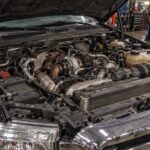
If you’re running a 2006-2007 Chevy Silverado or GMC Sierra 2500/3500 with the 6.6L LBZ Duramax, the Garrett GT3788VA variable-geometry turbocharger is the beating heart of your truck. When it starts to fail, you’ll feel it in the seat: laggy throttle response, a dead pedal at altitude, and exhaust temps creeping where they shouldn’t. The LBZ is widely regarded as the strongest factory Duramax ever built, but the variable-vane turbo bolted to it has a known set of weak points. This guide breaks down exactly how the GT3788VA fails, how to diagnose it, and what it costs to fix right.
The GT3788VA on the LBZ: What You’re Working With
The LBZ Duramax ran for the 2006 model year and part of 2007 and shares the same basic Garrett GT3788VA variable-geometry turbocharger family as the earlier LLY engine. If you came over from an LLY build, a lot of this will look familiar, and our Duramax LLY Turbocharger guide covers the closely related platform in detail.
What makes the GT3788VA different from a fixed-geometry turbo is the ECM-controlled vane mechanism. A ring of movable vanes inside the turbine housing changes the angle and velocity of exhaust gas hitting the turbine wheel. At low RPM the vanes close down to spool fast and kill lag; at high RPM they open up to flow more air without overspeeding. The ECM controls this through a VGT solenoid that meters engine oil to a piston on the turbo, and a vane position sensor reports the result.
| Spec | GT3788VA (LBZ) |
|---|---|
| Engine | 6.6L LBZ Duramax |
| Model years | 2006-2007 |
| Type | Variable-geometry (VGT/VNT) |
| Actuation | Oil-pressure vane control with a position sensor |
| Compressor inducer | ~60mm |
| Factory boost | ~20-22 psi peak |
| Stock power | 360 HP / 650 lb-ft |
Common GT3788VA Problems on the LBZ
The variable-vane design is what gives this turbo its excellent drivability, and it’s also what gives it trouble. Diesel soot and carbon are the enemy of any moving mechanism living in the exhaust stream. Here are the failures we see most at the bench.
1. Sticking or Seized Variable Vanes
This is the number one killer. Carbon and soot build up in the vane mechanism over tens of thousands of miles, and the vanes start to bind. A partially stuck vane pack throws off boost control, gives you inconsistent power, and often sets a P003A or boost-related code. Trucks that idle a lot, do short trips, or never see hard pulls to burn off carbon are the worst offenders.
2. Vane Position Sensor and Solenoid Faults
The vane position sensor wears or sticks, and the VGT solenoid that meters oil to the vanes can fail. When the ECM commands a vane position and the feedback doesn’t match, you’ll get reduced-power “limp” behavior and stored codes. Sometimes it’s the sensor or the solenoid, sometimes it’s the mechanism they control that’s seized.
3. Bearing and Shaft Wear
Like any turbo, the center cartridge runs on a journal bearing system fed by engine oil. Extended oil change intervals, coolant intrusion, or a clogged feed line lead to shaft play, oil seal failure, and eventually a wheel that contacts the housing. Excessive in-out or radial play means the cartridge is done.
4. Oil Leaks Past the Seals
Blue smoke on startup or oil pooling in the intake and downpipe points to failed turbo seals, often a symptom of worn bearings or a restricted drain. Always rule out a restricted oil drain line before condemning the turbo, because back-pressure in the center housing pushes oil past good seals.
How to Diagnose a Failing LBZ Turbo
Don’t throw parts at it. Work the symptoms in order of severity and you’ll save yourself a needless teardown.
| Severity | Symptom | Likely Cause |
|---|---|---|
| Mild | Slight lag, occasional flat spot | Early vane carbon buildup |
| Moderate | Reduced power, boost codes (P003A, P0299) | Sticking vanes, sensor or solenoid fault |
| Moderate | Whistle or siren noise under load | Compressor seal / wheel issue |
| Severe | Blue smoke, oil in intake | Failed seals / bearing wear |
| Severe | Grinding, metallic noise, no boost | Bearing failure / wheel contact |
Practical checks before you pull anything:
- Scan for codes. P003A (turbo boost control position exceeded learning limit), P0299 (underboost), and vane-related codes point straight at the VGT.
- Watch live data. Compare commanded vane position vs actual. A persistent mismatch confirms a mechanical or control problem.
- Inspect the wheels. Pull the intake boot and downpipe. Wobble the shaft. Any contact marks on the compressor or turbine wheel means cartridge replacement.
- Check the oil drain. Rule out a coked or kinked drain line before blaming seals.
- Exercise the vanes. With the turbo off the truck, moving the vane lever by hand will reveal a sticky vane pack instantly; on the truck, a scan tool vane test with the engine running does the same.
Replacement Options: New, Reman, or Rebuild
Once you’ve confirmed the turbo is the problem, you’ve got three real paths. PT Turbo has been doing this since 1978, so here’s the honest breakdown of how each option stacks up.
| Option | Typical Cost | Best For |
|---|---|---|
| New Garrett GT3788VA | $1,863 to $1,966 (2 listings) at PT Turbo | Warranty work, fleets needing zero downtime risk |
| Remanufactured GT3788VA | $1,339 (1 listing) at PT Turbo | Best value for most owner-operators |
| Rebuild your existing unit | $595 at PT Turbo for the LBZ (price list) | Keeping your matched core, controlling cost |
A quality remanufactured turbocharger is the sweet spot for most LBZ owners. A proper reman gets a new center cartridge, a cleaned and re-machined vane mechanism, new seals and bearings, and is balanced to spec. That’s a different animal than a cheap rebuilt unit with a wire brush job on the vanes. With 45+ years on the bench, PT Turbo stocks both new and remanufactured GT3788VA units and can rebuild your original core if you want to keep the unit that’s already calibrated to your truck. If you’re not sure which way to go, reach out to PT Turbo and talk to someone who actually rebuilds these.
Installation Tips and the Parts You’ll Need
Pulling the GT3788VA on an LBZ is most of a day’s work even for an experienced tech. The turbo sits in the valley at the rear of the engine, so you’re draining coolant and removing the inner fenders, intake plumbing, heat shields, both up-pipes, the oil feed, drain and coolant lines, and the downpipe connection. A few things that separate a clean install from a comeback:
- Always replace the gaskets and seals. Reusing crush gaskets on the up-pipes and oil lines is asking for an exhaust or oil leak. A complete installation kit pays for itself.
- Prime the turbo with oil before first start. Spin the wheel by hand with clean oil in the feed port to avoid a dry start.
- Inspect the oil feed and drain lines. If they’re coked, replace them. The new turbo will fail the same way the old one did if it’s starved or back-pressured.
- Relearn vane position with a scan tool after fitting a turbo, a vane position sensor or a solenoid.
Browse the full catalog over at the PT Turbo shop if you need matching hardware for a different platform.
Preventing the Next Failure
The GT3788VA failures we see are almost always carbon and oil related, and both are preventable:
- Stay on top of oil changes. Clean oil is the cheapest turbo insurance there is. Use the correct spec and don’t stretch intervals on a truck that works hard.
- Get the truck hot and work it. Regular highway pulls under load bring the exhaust temps up enough to burn soot off the vane mechanism. A truck that only sees idling and short trips is the one that comes back with stuck vanes.
- Address the vanes early. If you catch a slight flat spot or an occasional boost code before it turns into a full seize, a clean-up and re-calibration costs a fraction of a cartridge. Don’t drive a sticky vane pack until it strands you.
- Fix the drain, not just the turbo. A coked or restricted oil drain is what kills seals on a fresh unit. Clear it out whenever the turbo is off the truck.
Do these things and a healthy GT3788VA will outlast most of the trucks it’s bolted to. The LBZ earned its reputation as the toughest factory Duramax, and the turbo holds up right alongside it when you keep the oil clean and the carbon burned off.
Price ranges in this article are general estimates to help with budgeting, not PT Turbo quotes. Our current prices are on each product listing, and our rebuild prices are on the turbo rebuild price list.
Frequently Asked Questions
What are the symptoms of a failing GT3788VA turbo on the LBZ Duramax?
Common signs include laggy throttle response, a dead pedal at altitude, and elevated exhaust gas temperatures. You may also notice reduced power and increased turbo lag under load.
What years did the LBZ Duramax use the GT3788VA turbocharger?
The Garrett GT3788VA variable-geometry turbocharger was used on the 6.6L LBZ Duramax found in 2006-2007 Chevy Silverado and GMC Sierra 2500/3500 trucks.
Why does the GT3788VA variable-geometry turbo fail?
Failure is often caused by sticking variable-geometry vanes due to soot and carbon buildup, worn bearings, or vane position sensor and solenoid faults. Regular maintenance and proper warm-up/cool-down habits help extend its life.
Further reading: Learn more about turbocharger technology.
Shopping by part number?
Every part number we stock for the Garrett GT3788VA is on one page, with live prices and stock: Garrett GT3788VA turbos and parts.
Need a Turbocharger?
PT Turbo has rebuilt and sold turbochargers since 1978. We stock remanufactured units for Cummins, Duramax, Power Stroke, Detroit Diesel, and more — backed by a 12-month unlimited mileage warranty and same-week shipping from San Bernardino, CA.
📞 (909) 824-1020 · 346 S I St. #3, San Bernardino, CA 92410 · [email protected]
More From PT Turbo
- Duramax LMM Turbocharger Guide: Variable Geometry Failure & Replacement
 Ford 6.7L Powerstroke Turbocharger: Problems, Symptoms and Replacement Guide
- Volvo D11 Turbocharger Guide: Mack MP7 Shared Platform Explained
- Detroit Diesel Series 60 Turbocharger Guide: Garrett & BorgWarner S400 Replacement & Cost