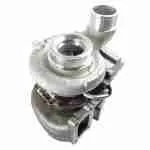
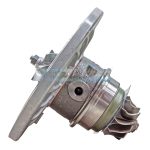
If you run a 2004.5-2005 GMC Sierra or Chevy Silverado with the LLY Duramax, you already know the Duramax LLY turbocharger is the engine’s most temperamental component. The Garrett GT3788VA variable-vane unit was a leap forward over the fixed-geometry IHI on the earlier LB7, but it brought its own headaches: sticking vanes, overheating, and the infamous high-EGT limp mode that plagues these trucks when towing. If you’re chasing a sluggish throttle, black smoke, or a check engine light with vane-position codes, this guide walks you through the symptoms, the replacement process, and what it actually costs to get back on the road.
Why the LLY Turbo Fails: The GT3788VA Explained
The LLY Duramax uses the Garrett GT3788VA, a variable geometry turbocharger (VGT) with a ring of pivoting vanes inside the turbine housing. The vanes are moved by engine oil pressure, metered by a solenoid on the turbo that the ECM controls, and a vane position sensor reports where they are. At low RPM the vanes close to spool quickly and kill turbo lag; at high RPM they open to flow more exhaust and prevent overboost. It’s a clever design, but the vane mechanism lives in a brutal environment of soot, heat, and exhaust pressure.
Over 150,000-plus miles, carbon builds up in the unison ring and on the vane pivots. The vanes start sticking, oil pressure can no longer move them freely, and the turbo can no longer modulate boost correctly. Combine that with the LLY’s well-documented cooling and EGT problems, and you get the classic failure pattern: the truck overheats while towing, drops into limp mode, and throws a wrench in your day.
The other weak point is the control side: the vane position sensor and the VGT solenoid. When the sensor wears or the solenoid sticks, the ECM loses track of vane position and sets a fault, even when the cartridge itself is mechanically sound. Knowing the difference between a stuck vane and a bad sensor or solenoid saves you from replacing a part you didn’t need to.
Symptoms of a Failing Duramax LLY Turbocharger
The GT3788VA rarely dies all at once. It degrades, and the warning signs stack up. Here’s how the symptoms typically progress by severity.
| Severity | Symptom | Likely Cause |
|---|---|---|
| Early | Slight turbo lag, hesitation off idle | Vanes beginning to carbon up |
| Early | Whistling or chirping under acceleration | Boost leak or worn vane mechanism |
| Moderate | Black smoke under load, poor fuel economy | Vanes stuck open, underboost condition |
| Moderate | High EGTs and reduced power while towing | Inadequate spool, restricted exhaust flow |
| Severe | Limp mode, P003A / P2563 vane codes | Solenoid or sensor failure, or fully seized vanes |
| Severe | Oil in intake, smoking at startup, bearing play | Failed center cartridge seals or bearings |
If you’re seeing P003A (boost control position exceeded learning limit) or P2563 (turbo boost control position sensor circuit range), check the vane position sensor and the solenoid, and watch commanded against actual vane position, before you condemn the whole unit. A dirty sensor that frees up with cleaning is a very different repair than a turbo with shaft play you can feel by hand.
Quick Field Test
- Shaft play check: With the inlet boot off, wiggle the compressor wheel. Side-to-side movement that lets the wheel touch the housing means the bearings are gone.
- Vane sweep: With a scan tool, command the vanes through their range with the engine running and watch actual position follow. Sticky or jerky movement points to carbon binding the vanes.
- EGT under load: If exhaust temps spike past 1,250°F on a moderate grade that used to be no problem, the turbo isn’t flowing right.
Replacing the GT3788VA: What the Job Involves
Pulling the turbo on an LLY is a bigger job than it looks. The turbo sits in the valley at the back of the engine, and the usual procedure has you drain the coolant and remove the inner fenders, heat shields, downpipe and both up-pipes before the three pedestal bolts come out. Budget most of a day if you’re doing it in a driveway, less if you’ve done a handful of these. The critical thing most people overlook is that a turbo is only as reliable as the gaskets, seals, and oil lines that go back with it. Reusing a crusty exhaust gasket or a clogged feed line will take out your new unit fast.
That’s why a proper installation kit matters. The D&W Garrett Installation Kit 172-784-0131, listed for the LLY, LBZ and LMM Duramax, is available for $34.00.
Install Best Practices
- Always replace the oil feed line and flush the drain. A restricted feed line starves the bearings and voids most warranties.
- Pre-lube the center cartridge with clean engine oil before first start.
- Crank with the fuel disabled to build oil pressure, then idle for several minutes before any throttle.
- Run the vane position learn with a scan tool so the ECM knows the new end stops.
Cost: New vs. Remanufactured GT3788VA
Turbo pricing for the LLY swings widely depending on whether you buy new, reman, or take the rebuild route. Here’s a realistic breakdown.
| Option | Typical Price Range | Best For |
|---|---|---|
| New Garrett GT3788VA | $1,863 to $1,966 (2 listings) at PT Turbo | Owners wanting factory-spec with longest warranty |
| Remanufactured GT3788VA | $1,339 (1 listing) at PT Turbo | Best balance of cost and reliability |
| Rebuild your existing core | $595 at PT Turbo for the LLY (price list) | Cores with good housings and minimal damage |
| Cheap import unit | $350 – $550 (estimate) | Not recommended for towing or daily drivers |
For most LLY owners, a quality remanufactured turbocharger is the smart play. A proper reman unit gets a new CHRA, balanced wheels, a cleaned and checked vane mechanism, and is tested before it ships. That’s a world apart from a bargain import that uses unbalanced wheels and questionable bearings. If your housings are clean and undamaged, our turbo rebuild service can restore your original unit for less than a replacement, often with a faster turnaround than you’d expect.
PT Turbo has been in the turbo business for over 45 years, and we stock both new and remanufactured GT3788VA units along with the install hardware to finish the job. If you’re not sure whether to rebuild or replace, reach out to our team and we’ll help you sort it out based on your core condition and how you use the truck.
Should You Upgrade or Stick with Stock?
If your LLY is a daily driver or a light tow rig, a stock-replacement GT3788VA is exactly what you want. It keeps the factory boost control, emissions compliance, and predictable behavior. Where guys go wrong is throwing a much larger turbo at an otherwise stock LLY and ending up with worse spool and higher EGTs in normal driving.
For heavy towing or built engines, there are larger VGT and fixed-geometry options that flow more air, but those are a deliberate choice paired with tuning and fueling changes, not a fix for a worn-out stocker. If you run a different platform too, our 6.7L Power Stroke turbo guide and our 6.7L Cummins HE351VE vs HE300VG guide cover the same failure-and-fix logic for those engines. You can also browse all our turbos to compare your options.
Price ranges in this article are general estimates to help with budgeting, not PT Turbo quotes. Our current prices are on each product listing, and our rebuild prices are on the turbo rebuild price list.
Frequently Asked Questions
What are the symptoms of a failing Duramax LLY turbocharger?
Common signs include sticking variable vanes, overheating, loss of power, and the high-EGT limp mode. You may also notice excessive smoke or sluggish acceleration.
What turbocharger does the 2004.5-2005 LLY Duramax use?
The LLY Duramax uses the Garrett GT3788VA variable-vane turbocharger, an upgrade over the fixed-geometry IHI unit found on the earlier LB7 engine.
How much does it cost to replace an LLY Duramax turbocharger?
Replacement costs vary based on parts and labor, with the Garrett GT3788VA unit and professional installation typically being a significant expense. Cleaning sticking vanes may be a cheaper alternative in some cases.
Further reading: Learn more about Garrett Motion.
Shopping by part number?
Every part number we stock for the Garrett GT3788VA is on one page, with live prices and stock: Garrett GT3788VA turbos and parts.
Need a Turbocharger?
PT Turbo has rebuilt and sold turbochargers since 1978. We stock remanufactured units for Cummins, Duramax, Power Stroke, Detroit Diesel, and more — backed by a 12-month unlimited mileage warranty and same-week shipping from San Bernardino, CA.
📞 (909) 824-1020 · 346 S I St. #3, San Bernardino, CA 92410 · [email protected]
More From PT Turbo
- Freightliner Cascadia Turbocharger Guide: DD13, DD15 & DD16 Applications by Year
 Ram 2500/3500 6.7L Cummins Turbocharger Guide: HE351VE vs HE300VG & Replacement Cost
- VW & Audi 1.9 TDI Turbocharger Guide (105 HP BXE, BLS): Symptoms, Replacement & Parts
- International MaxxForce DT Turbocharger: VGT Actuator Problems & Replacement