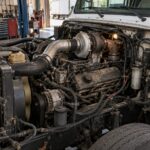
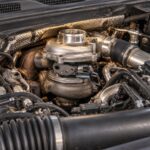
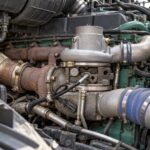
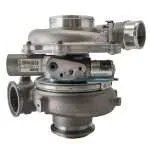
Caterpillar 730 Articulated Truck Turbocharger Guide: C11 & C13 Engine Applications
This Caterpillar 730 Articulated Truck Turbocharger Guide is built for the mechanics, fleet managers and equipment owners who need to put the right turbo on a 730 without guessing. The 730 has worn more than one engine over its production life, and the turbocharger on your machine depends on which engine is under the hood and what emissions tier it was built to. Caterpillar does not make its own turbos; Garrett and BorgWarner supply the units, so the part number on the turbo tag is the only thing that tells you exactly what you have.
Which Engine Is in Your 730
Before you touch the turbo, confirm the engine. The 730 family did not use one engine, and the wrong turbo is worse than no turbo at all.
| 730 version | Engine | Notes |
|---|---|---|
| 730 (2001-2005) | Cat 3196, about 12 L | Rated near 305 hp |
| 730 / 730 Ejector (following years) | Cat C11 ACERT | 325 hp gross, 317 hp net |
| 730C, 730C2, 730C2 EJ, current 730 | Cat C13 ACERT, later Tier 4 Final | 375 hp gross |
The early 3196 is a different engine from the ACERT units that followed, and its turbo is not interchangeable with the C11 or C13 parts. Go by the engine serial number and then confirm against the number on the turbo’s data plate.
C11 and C13 ACERT: Fixed Geometry, Not Variable
The C11 and C13 ACERT are fixed geometry turbo engines. Among Caterpillar’s on-highway and machine engines, only the 2007-and-later C7 and C9 ran variable-vane turbos. The C13 and C15 never did, so there are no vanes, no unison ring and no VGT actuator to blame on a 730.
That matters when you diagnose a boost complaint. On a fixed geometry turbo you are looking at the wheels, the bearings, the oil supply, any wastegate the unit carries, and leaks in the charge air and exhaust plumbing, not a stuck nozzle. If you want the background on how these differ, Wikipedia has a solid primer on the turbocharger and on the variable-geometry turbocharger the C11 and C13 do not use.
Caterpillar sizes turbine housings and arranges the charge system by engine rating, and machine C13 ACERT ratings differ from the on-highway truck C13. Rather than quote a configuration that may not match your serial number, confirm it on the machine: read the turbo tag and match it to the parts catalog for your engine serial.
Reading the Turbo Tag Instead of Guessing
No single turbo part number covers every 730. Because Garrett and BorgWarner both supply Cat turbos, the data plate is where the truth is. Casting numbers on the housings will narrow a search, but one casting serves many turbos, so a casting number alone never confirms the part.
- Garrett part numbers read as six digits, a dash, four digits and a letter (for example 000000-0000S). The first digit after the dash tells you the sales channel: 0 for original equipment, 5 for new aftermarket, 9 for remanufactured.
- BorgWarner part numbers run 6 or 11 digits, with the BorgWarner number, a serial number and, on factory-fitted turbos, the Caterpillar part number on the same nameplate.
Send us those numbers and we match the exact unit. If the tag is unreadable, pull the engine serial from the Cat plate and we work from the parts catalog. You can start a search of our turbo catalog by number, or use the contact form and send a photo of the tag.
How These Turbos Fail
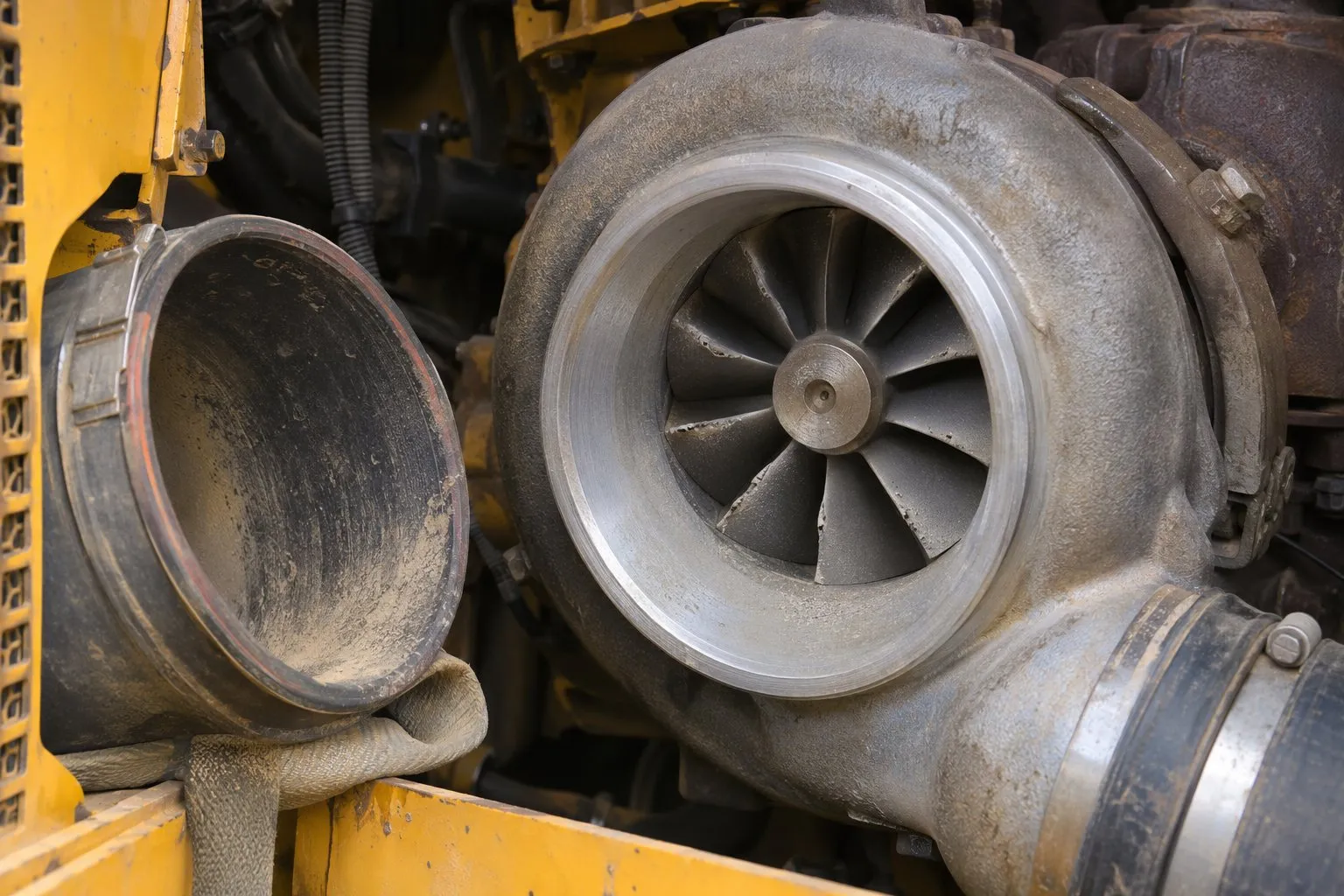
A fixed geometry Cat turbo almost always fails for the same reasons any turbo does, and most of them trace back to the oil supply. Garrett states that more than 90 percent of turbo failures come from oil starvation or oil contamination, and names foreign objects as the third main cause. That holds true on a 730 working in dust and heat all day.
| Symptom | Common cause | Check first |
|---|---|---|
| Low boost, slow spool, high exhaust temp | Exhaust leak in the up-pipes or manifold before the turbine, or a charge-air leak after the compressor | Exhaust joints, charge pipe boots and clamps |
| Blue-gray smoke, oil in the charge pipes | Oil past a worn seal, or crankcase pressure | Breather, air filter, oil level, oil drain |
| Grinding or siren whine | Bearing wear, or an exhaust/boost leak | Shaft play within limits, no wheel contact; every joint |
| Metal in the compressor housing | Debris through the intake, or a prior failure | Air filter, intake tract, intercooler |
Contaminated or starved oil wipes the bronze journal bearings; copper in an oil report points straight at bearing wear. Dirt that gets past a tired air filter pits the compressor inlet blades. On a journal bearing turbo some side-to-side rock is normal, so never condemn a unit for that alone. Condemn it for in-and-out play you can feel, for wheel contact with the housing, or for play past the maker’s limit.
If a compressor wheel let go and shed metal, the charge air cooler has to be replaced, not flushed. Metal lodged in the cooler fins cannot be cleaned out reliably, and it will go straight into the engine the next time the new turbo makes boost. Inspect and clean or replace the charge piping at the same time.
Replacing the Turbo: Do It Right the First Time
Hard-working articulated trucks reward a clean install. The oil feed line is best replaced after a bearing failure or coked oil rather than flushed and reused. Fit new gaskets and clamps, use no sealant on the oil inlet or drain gaskets, and make sure the oil drain runs downhill into the pan above the oil level.
For the maker’s first-start steps, fill the oil inlet with clean engine oil, turn the wheel by hand, then crank or idle a few minutes and check for oil, exhaust and air leaks before you put it under load. There is no break-in mileage schedule and no first-miles boost limit; prime it, confirm it is tight, then work it.
On a machine that spends its day at high power, give the engine the cool-down idle Caterpillar specifies for your engine before shutdown so the center housing is not coked by heat soak after a hard pull. Follow the figure in your operator’s manual for that engine rather than a generic number.
New, Remanufactured, or In-House Rebuild
PT Turbo has been rebuilding turbochargers since 1978, more than 45 years of family-owned work, and the 730 is exactly the kind of machine our in-house shop is set up for. Because no single turbo covers every 730, we quote your replacement by the number on the tag.
You have three practical paths, and the right one depends on downtime, core availability and budget.
- New unit: the correct Garrett or BorgWarner replacement for your exact part number, quoted once we confirm the tag.
- Remanufactured unit: availability depends on core supply for your specific number; see our remanufactured turbochargers and ask us to check your part.
- In-house rebuild of your own turbo: our turbo rebuild service restores your core with new bearings, seals and thrust parts and VSR balances it before it ships.
Most rebuilds ship in 3 days or less, and the rebuild price is confirmed after inspection and before any work starts. You can see real numbers on our turbo rebuild price list. Remanufactured units carry a 30-day core return window, and if you need longer, call ahead and we can usually work with you. Everything is backed by a 12-month, unlimited-mileage warranty, and fleet customers can arrange priority turnaround and core stocking by phone at (909) 824-1020.
If you also run Cat on-highway iron, our Caterpillar C15 turbocharger guide covers the larger C-series family and the same failure logic that applies to your 730.
Frequently Asked Questions
Does the Cat 730 use a variable geometry turbo?
No. The C11 and C13 ACERT engines in the 730 are fixed geometry. Among Cat engines only the 2007-and-later C7 and C9 used variable-vane turbos, so there are no vanes, no unison ring and no VGT actuator on a 730. Diagnose boost faults by checking the wheels, bearings, oil supply, any wastegate the unit carries, and the charge and exhaust plumbing.
How do I find the exact turbo for my 730?
Read the data plate on the turbo. Garrett numbers run six digits, a dash, four digits and a letter; BorgWarner numbers are 6 or 11 digits with the Cat part number on the same plate. The 730 wore a Cat 3196, then a C11 ACERT, then a C13 ACERT, and the turbos do not interchange across them, so match the tag number or the engine serial rather than the machine model alone.
Is it worth rebuilding a 730 turbo instead of buying new?
Often, yes, if the housings and shaft are sound. A rebuild replaces the bearings, seals and thrust parts and the cartridge is VSR balanced before it ships. Whether rebuild or replacement makes more sense depends on your core, your downtime and current availability for your part number, so send us the tag and we will lay out the options.
Need a Turbocharger?
PT Turbo has rebuilt and sold turbochargers since 1978. We stock remanufactured units for Cummins, Duramax, Power Stroke, Detroit Diesel, and more — backed by a 12-month unlimited mileage warranty. Units in stock at our shop in San Bernardino, CA ship the same day when ordered before 2 PM Pacific, Monday through Friday.
📞 (909) 824-1020 · 346 S I St. #3, San Bernardino, CA 92410 · info@ptturbo.com
More From PT Turbo
 International T444E Turbocharger Guide: Ford 7.3L Powerstroke Connection Explained
- Duramax LML Turbocharger Guide: GT3788VA Problems & Replacement (2011-2016)
- Volvo D13 Turbocharger Guide: Holset HE451VE, Symptoms & Replacement Options
- Duramax LLY Turbocharger: Symptoms, Garrett GT3788VA Replacement & Cost (2004-2005)