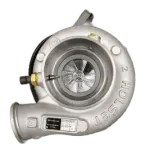
Volvo D11 Turbocharger Guide: Mack MP7 Shared Platform Explained
If you’re wrenching on a Volvo D11 or a Mack MP7, you’re working on the same engine wearing two different badges. The Volvo D11 turbocharger and the Mack MP7 turbo share a platform because Volvo Group builds both engines on a common architecture out of the Hagerstown, Maryland plant. That shared DNA is good news when you’re sourcing parts, diagnosing a failure, or deciding between new and remanufactured. This guide breaks down what’s actually on the engine, how the D11 and MP7 differ, the turbo variants you’ll encounter, and how to fix the most common failures without throwing money at the wrong parts.
Why the D11 and MP7 Share a Turbocharger Platform
When Volvo acquired Mack, the two brands consolidated engine development. The Volvo D11 (10.8L) and the Mack MP7 are effectively the same displacement inline-six diesel, tuned differently for badge-specific applications but built around identical block architecture, cylinder head design, and emissions strategy. That means fuel systems, aftertreatment logic, and turbocharging hardware overlap heavily between the two.
For a fleet manager running mixed Volvo and Mack tractors, this is a real advantage. A turbo pulled from an MP7 will frequently interchange with a D11 of the same emissions year, and the diagnostic approach is identical. It also means the same wear items, actuators, bearings, and VGT components apply across both engine families. Volvo Group runs the same parts-sharing playbook on its 16-liter, where the Mack MP10 is the Volvo D16. The Detroit DD16 is a different maker’s engine: see our Detroit DD16 turbocharger guide.
D11/MP7 Turbocharger Variants by Emissions Era
The turbo you need depends heavily on the model year and emissions configuration. The D11 and MP7 evolved through several emissions phases, and each brought changes to boost control and EGR strategy.
- DPF era (2007–2009): Introduction of variable geometry turbochargers (VGT) to manage exhaust flow and drive regeneration.
- SCR/DEF era (2010–2016): Refined VGT units paired with selective catalytic reduction. Tighter tolerances, more sophisticated actuator control.
- GHG17 and later: Updated VGT hardware with revised control electronics and improved efficiency mapping.
The critical takeaway: match the turbo to the exact engine serial and emissions calibration. A D11 VGT from a 2012 SCR truck will not correctly control boost on a 2008 DPF-only engine, even though they physically look similar. Always cross-reference the OE part number stamped on the housing before ordering.
Common D11 and MP7 Turbo Failures
These engines are workhorses, but the VGT-equipped versions have predictable failure points. Knowing the symptom-to-cause path saves you from replacing a full turbo when a smaller repair would have fixed it.
Sticking Variable Geometry Vanes
Carbon and soot buildup in the VGT nozzle ring is the number one killer on these platforms. Vanes seize partially open or closed, and you’ll see low boost, excessive smoke, poor throttle response, and derate events. On high-idle, low-load fleet applications the problem accelerates because the exhaust never gets hot enough to burn off deposits.
Actuator Failure
The variable geometry turbo on the D11 and MP7, the Holset HE431VE, uses an electronic actuator. The actuator sets nozzle position, and when it fails or drifts out of calibration you get erratic boost and fault codes pointing at the turbo actuator or VGT position sensor. Many trucks flagged for a “bad turbo” only need an actuator. Replacing the actuator instead of the entire turbo is one of the fastest, cheapest wins on these engines when the cartridge itself is still healthy.
Bearing and Shaft Wear
Oil contamination, extended drain intervals, and coked oil feed lines cause journal bearing wear. You’ll hear it as a whine or feel excessive shaft play. Once the shaft has radial or axial play beyond spec, the compressor or turbine wheel can contact the housing, and at that point you’re rebuilding or replacing the center section.
Oil Leaks and Coking
Restricted oil return lines and hot-shutdown habits coke the bearing housing. Blue smoke, oil in the intake tract, and rising oil consumption all point here. Always inspect and clean the oil feed and drain lines during any turbo service on these engines.
| Symptom | Severity | Likely Cause | First Action |
|---|---|---|---|
| Low boost, mild smoke | Low | Sticking VGT vanes / actuator drift | Test actuator, clean nozzle ring |
| Erratic boost, VGT position codes | Medium | Failed actuator | Replace actuator, recalibrate |
| Whine, whistle, shaft play | High | Bearing wear | Rebuild or replace cartridge |
| Blue smoke, oil consumption | High | Coked bearing housing / seal failure | Inspect oil lines, rebuild turbo |
| Repeated derate, no boost | Critical | Seized vanes / wheel contact | Replace turbo |
New vs Remanufactured: What Makes Sense for the D11/MP7
The VGT turbochargers on these engines carry a steep price tag new from the dealer, often running well into four figures. That’s why a properly remanufactured unit is the smart play for most owner-operators and fleets. A quality reman turbo is disassembled to the core, cleaned, inspected, fitted with new bearings, seals, and wear components, then balanced and flow-tested to OE spec.
PT Turbo has been remanufacturing diesel turbochargers since 1978, over 45 years of doing this work, and we stock both new and remanufactured turbochargers for Volvo and Mack applications. If your core is still good, our turbocharger rebuild service restores your existing unit to spec, which is often the most cost-effective route on a healthy center housing.
| Option | Typical Cost Range | Turnaround | Best For |
|---|---|---|---|
| New OEM VGT turbo | $4,033 to $5,558 (2 listings) at PT Turbo | Immediate (if in stock) | Warranty-critical, new-truck repairs |
| Remanufactured turbo | None listed today at PT Turbo | Off the shelf | Best value for most fleets |
| Rebuild your core | From $575 at PT Turbo (price list) | 3 days or less for most rebuilds | Healthy core, tight budget |
| Actuator only | Quoted by part number | Same day | Actuator fault, good cartridge |
Price ranges in this article are general estimates to help with budgeting, not PT Turbo quotes. Our current prices are on each product listing, and our rebuild prices are on the turbo rebuild price list.
How to Verify You’re Ordering the Right Turbo
Because the D11 and MP7 shared so many variants, mismatched parts are the most common ordering mistake. Follow this before you buy:
- Pull the OE part number off the turbo housing tag or nameplate. This is the single most reliable identifier.
- Record the engine serial number and emissions family. Model year alone is not enough.
- Confirm the actuator part number. Actuators are matched to the turbo and are not interchangeable.
- Check for VGT versus fixed-geometry. Some export and off-highway versions of the engine use a wastegated turbo.
- Match the compressor and turbine wheel trim if the truck has been tuned or upgraded.
If you’re unsure, send us the tag numbers and engine serial. Our team cross-references OE and aftermarket data daily and will confirm the correct unit before anything ships. Contact PT Turbo with your numbers and we’ll get you sorted.
Related Turbocharger Guides Worth Reading
If you’re running a mixed shop, these platform breakdowns cover the other engines you’ll see rolling through the bay:
- Cummins ISX Turbocharger Guide: HE400VG, HE451VE & HE561VE Differences
- Ram 5.9L Cummins Turbocharger Guide: HX35, HY35 & HE351CW
- Ford 7.3L Powerstroke Turbocharger Guide: TP38, E99 & GTP38
You can also browse our full inventory on the shop page to find your application.
Turbos we list for the HE400VG, HE451VE and HE561VE
Listings for the turbo models named in this guide that can be ordered online today. Several part numbers can fit one engine by year and rating, so match the number on your turbo’s tag, or call (909) 824-1020 and we will match it for you.
All HE400VG listings · All HE451VE listings · All HE561VE listings
Frequently Asked Questions
Do the Volvo D11 and Mack MP7 use the same turbocharger?
Yes, the Volvo D11 and Mack MP7 share a common engine architecture built by Volvo Group, so their turbochargers are based on the same platform. This means many parts are compatible or interchangeable.
Where are the Volvo D11 and Mack MP7 engines built?
Both engines are manufactured at Volvo Group’s Hagerstown, Maryland plant. They are built on a common architecture despite carrying different badges.
Can I use Mack MP7 turbo parts on a Volvo D11?
In many cases, yes, because the two engines share a platform and common DNA. Always verify the specific part number and engine specifications before ordering to ensure compatibility.
Further reading: Learn more about turbocharger technology.
Need a Turbocharger?
PT Turbo has rebuilt and sold turbochargers since 1978. We stock remanufactured units for Cummins, Duramax, Power Stroke, Detroit Diesel, and more — backed by a 12-month unlimited mileage warranty. Units in stock at our shop in San Bernardino, CA ship the same day when ordered before 2 PM Pacific, Monday through Friday.
📞 (909) 824-1020 · 346 S I St. #3, San Bernardino, CA 92410 · [email protected]
More From PT Turbo
- Caterpillar C18 Turbocharger: Heavy Equipment & Generator Applications Guide
 Cummins ISX Turbocharger Guide: HE400VG, HE451VE & HE561VE Differences Explained
- John Deere PowerTech Turbocharger Replacement Guide: 4045, 6068 & 6090 Engines
- Cummins ISC Turbocharger Guide: HX40 & Replacement Options for Medium Duty Trucks