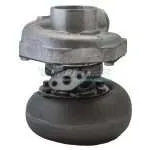
Mack MP7 Turbocharger Guide: Shared with Volvo D11 & What That Means for Parts
If you run a Mack MP7 or its Volvo twin, the D11, you already know these two engines share more DNA than most fleets realize. The Mack MP7 turbocharger is not a Mack-only part. Volvo and Mack merged their heavy-duty engine platforms years ago, and that decision reaches all the way down to the turbo, the actuator, the EGR plumbing, and the aftertreatment logic. For a mechanic sourcing parts on a Monday morning, that shared architecture is either a headache or a shortcut, depending on whether you understand it. Let’s break down exactly what the MP7 shares with the D11, what that means when you’re ordering a turbo, and how to avoid buying the wrong unit.
Why the Mack MP7 and Volvo D11 Are Essentially the Same Engine
When Volvo acquired Mack, the two brands consolidated onto a common medium-heavy engine family. The Mack MP7 is an 11-liter inline-six, and the Volvo D11 is also an 11-liter inline-six. That is not a coincidence. They come off the same engineering platform, share the same displacement, the same basic block casting philosophy, and in many model years the same emissions strategy. Mack calls it MP7, Volvo calls it D11, but on the shop floor they behave like cousins that grew up in the same house.
For turbo work, the important takeaway is this: many of the rotating assemblies, actuators, and variable geometry components cross-reference between the two. A part that’s cataloged under a Volvo number will frequently physically fit and function on the Mack, and vice versa. That opens up your sourcing options considerably, especially when one brand’s part number is backordered and the other is sitting on the shelf.
PT Turbo has been rebuilding and supplying heavy-duty turbochargers since 1978, more than 45 years, and this Mack/Volvo overlap is exactly the kind of thing our team cross-references daily. When a customer calls with an MP7 turbo number, we know to check the D11 equivalents before telling anyone a part is unavailable.
The Turbocharger on the MP7 and D11: What You’re Actually Working With
Both the MP7 and D11 in their modern emissions configurations run a variable geometry turbocharger (VGT). The VGT uses a nozzle ring that slides inside the turbine housing to change exhaust gas velocity across the RPM range, which gives you strong low-end response and controlled boost up top. On these engines, nozzle position is commanded by the ECM and moved through an electronic actuator bolted to the turbo.
The turbo is the Holset HE431VE, a sliding-nozzle design. The actuator is one of the most common failure points on the whole assembly, and it’s often replaceable without pulling the entire turbo.
The electronic actuator is a serviceable part. Replacing and calibrating it costs less than a complete turbo, and when the nozzle is free it restores proper control and clears boost-related fault codes.
Common Failure Points on MP7 / D11 Turbos
- Sticking VGT nozzle from soot and carbon buildup, especially on trucks doing short-haul, low-load duty cycles
- Failed actuator that can no longer set nozzle position accurately, throwing boost pressure faults
- Worn thrust bearings and shaft play from oil contamination or extended drain intervals
- Oil leaks at the seals caused by restricted drain lines or crankcase pressure problems
- Cracked turbine housings from thermal cycling on high-mileage units
Symptoms That Point to the Turbo (Not Something Else)
Diesel guys know a low-power complaint can come from a dozen sources. Here’s how to sort turbo-related symptoms by severity so you’re not chasing your tail.
| Severity | Symptom | Likely Cause |
|---|---|---|
| Mild | Slow throttle response, minor power loss | Sticking VGT nozzle, early actuator wear |
| Moderate | Boost pressure fault codes, derate events | Failing actuator, actuator position sensor drift |
| Moderate | Blue or black smoke, oil in charge piping | Seal failure, worn bearings |
| Severe | Whistling or grinding, excessive shaft play | Bearing failure, imminent turbo destruction |
| Severe | Complete loss of boost, limp mode | Seized nozzle, dead actuator, or catastrophic failure |
A smart diagnostic step before condemning the turbo: pull the actuator readings and command the nozzle through its full sweep. If the actuator can’t hit its commanded positions, you may only need the actuator, not the whole unit. This is the same logic we cover in our engine-specific guides like the VW & Audi 1.9 TDI Turbocharger Guide and the All Turbo Guides, where actuator and vane diagnostics separate a cheap fix from an expensive one.
Parts Sourcing: How the Shared Platform Saves You Money
Because the MP7 and D11 share so many components, you have more sourcing paths than a single-brand engine would give you. Here’s how the numbers typically shake out when you’re deciding between a new OEM turbo, a remanufactured unit, and a targeted component repair.
| Option | Typical Cost Range | Best For |
|---|---|---|
| New OEM turbocharger | $4,033 to $5,558 (2 listings) at PT Turbo | Fleets under warranty requirements, brand-new spec builds |
| Remanufactured turbocharger | None listed today at PT Turbo | Owner-operators and fleets wanting OEM performance at lower cost |
| Turbo rebuild service (your core) | Varies by condition | Keeping a specific unit, matched calibration, fastest core turnaround |
| Actuator replacement only | Quoted by part number | Boost fault codes with a mechanically sound turbo |
Price ranges in this article are general estimates to help with budgeting, not PT Turbo quotes. Our current prices are on each product listing, and our rebuild prices are on the turbo rebuild price list.
A quality remanufactured turbocharger is usually the sweet spot for these engines. A properly reman’d unit gets new bearings, new seals, a balanced rotating assembly, and a calibrated actuator, and it costs a fraction of new. If you’d rather keep your original casting, our turbocharger rebuild service restores your core to spec with the same shop that’s been doing this since 1978.
The key when ordering: have the turbo part number from the nameplate and the actuator part number ready. Because Mack and Volvo cross-reference, giving our team both the MP7 and any D11 numbers you can find speeds up matching you to the correct unit. When in doubt, contact PT Turbo and let a specialist verify the fitment before anything ships.
Installation and First-Start Tips for MP7 / D11 Turbos
Getting the new or reman turbo on the truck is only half the job. These VGT units are sensitive to oil quality and installation discipline. Follow these steps to protect your investment:
- Prime the turbo before startup. Pre-fill the oil inlet and crank with fuel cut until you see pressure to avoid a dry start.
- Inspect the oil drain line. A restricted or coked drain is the number one killer of freshly installed turbos. If the seals blew on the last one, the drain is guilty until proven innocent.
- Clean the charge air system. Any oil pooled in the intercooler or piping from the old failure will get ingested. Flush it.
- Verify actuator calibration. After install, run the VGT sweep test with your diagnostic tool and confirm the nozzle hits commanded positions cleanly.
- Check EGR and aftertreatment health. A plugged DPF or failing EGR cooler drives excess exhaust backpressure that will cook a new turbo. Shared MP7/D11 emissions logic means the same aftertreatment stresses apply to both.
Skipping these steps is how a good turbo dies in 5,000 miles. The same install discipline applies across heavy-duty diesels, and it’s a theme we hit hard in guides like the Ford 6.4L Powerstroke Twin Turbo Guide and the Audi 2.0L TDI Turbocharger Guide.
When to Repair vs Replace
Use a simple rule. If the rotating assembly is mechanically healthy, meaning no excess shaft play, no bearing noise, no seal leakage, and your only problem is boost control or fault codes, start with the actuator. A replacement actuator, calibrated to the turbo, solves many MP7 and D11 boost complaints without a full teardown.
If you’ve got in-and-out shaft play you can feel, a wheel touching its housing, oil in the piping, or audible bearing noise, the turbo is done. At that point a remanufactured unit or a rebuild is the correct move, not another actuator. Trying to nurse a mechanically failed turbo along only risks throwing debris downstream into an intercooler or, worse, the engine.
Frequently Asked Questions
Is the Mack MP7 turbocharger the same as the Volvo D11?
Largely, yes. Mack and Volvo merged their heavy-duty engine platforms, so the MP7 and D11 use the same turbocharger family and many parts cross-reference. Part numbers still differ by year and rating, so match the number on the turbo.
What parts do the Mack MP7 and Volvo D11 share?
Beyond the turbocharger family, the MP7 and D11 share the same actuator design, EGR layout, and aftertreatment logic, though part numbers differ by year and rating. This shared DNA simplifies parts sourcing for fleets running either engine.
Can I use Volvo D11 turbo parts on a Mack MP7?
In many cases yes, because the engines share the same core turbo platform. Always verify the specific part number and application to ensure proper fitment before installation.
Further reading: Learn more about turbocharger technology.
Need a Turbocharger?
PT Turbo has rebuilt and sold turbochargers since 1978. We stock remanufactured units for Cummins, Duramax, Power Stroke, Detroit Diesel, and more — backed by a 12-month unlimited mileage warranty. Units in stock at our shop in San Bernardino, CA ship the same day when ordered before 2 PM Pacific, Monday through Friday.
📞 (909) 824-1020 · 346 S I St. #3, San Bernardino, CA 92410 · [email protected]
More From PT Turbo
- Duramax LMM Turbocharger Guide: Variable Geometry Failure & Replacement
- Cummins ISC Turbocharger Guide: HX40 & Replacement Options for Medium Duty Trucks
 Ford 6.0L Powerstroke Turbocharger: Failure Symptoms, Replacement & Best Options
- Caterpillar 3126 Turbocharger Guide: School Bus & Medium Duty Replacement