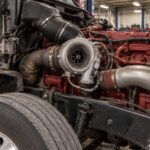
Understanding how a clogged DPF destroys your turbocharger is one of the most valuable pieces of knowledge a diesel owner or fleet manager can have, because the two components are far more connected than most people realize. The diesel particulate filter and the turbocharger sit inches apart in the exhaust stream, and what happens to one directly affects the survival of the other. At PT Turbo, we have spent more than 45 years rebuilding turbos, and many of the failed units that cross our bench were killed not by the turbo itself, but by exhaust restriction downstream.
This article breaks down the mechanical relationship between backpressure, exhaust temperature, and turbo failure, so you can catch the problem before it costs you a turbocharger and a tow bill.
What a DPF Actually Does (and Why It Restricts Flow)
The diesel particulate filter is a honeycomb ceramic substrate that traps soot particles before they exit the tailpipe. As soot accumulates, the filter periodically enters a regeneration cycle, burning off the trapped carbon at high temperature to keep flow open.
The problem starts when regeneration cannot keep up. Short-haul driving, failed EGR components, bad sensors, or contaminated fuel all lead to incomplete regens. The soot load climbs, the filter chokes down, and exhaust that used to flow freely now hits a wall of resistance.
That resistance has a name: backpressure. And backpressure is the enemy of every turbocharger ever built.
How a Clogged DPF Destroys Your Turbocharger Step by Step
The turbine wheel spins because exhaust gas flows through it and exits cleanly out the back. When the DPF plugs, that exit door slams shut. Here is the chain reaction that follows.
1. Backpressure spikes on the turbine side
A healthy diesel exhaust system runs low backpressure under load. A clogged DPF can push pre-turbo backpressure well beyond spec. That pressure works against the turbine wheel, forcing it to fight to spin and dumping heat energy right back into the turbo housing.
2. Exhaust gas temperatures climb
Restriction traps heat. When exhaust cannot escape, EGTs rise fast, sometimes exceeding 1,300 to 1,400 degrees F at the turbine inlet. Turbine wheels and bearing housings are built for heat, but sustained temperatures beyond design limits cook the oil, warp components, and break down the metallurgy.
3. The oil in the center housing cokes
The turbo’s center housing relies on a constant flow of engine oil for lubrication and cooling. Excess heat from backpressure bakes that oil into hard carbon deposits, a process called coking. Coked oil starves the bearings and scores the shaft.
4. Bearings fail and the shaft develops play
Once the journal bearings or thrust bearing lose their oil film, the shaft begins to wobble. That play lets the compressor and turbine wheels contact their housings. Now you have wheel rub, shaft failure, and metal debris in the intake.
5. VGT and actuator components seize
On variable geometry turbos, the story gets worse. The variable-geometry turbocharger uses movable vanes controlled by an actuator to adjust exhaust flow. Excess soot and heat from a clogged DPF cause those vanes to gum up and stick, and the actuator burns out trying to move them.
When an actuator fails from fighting a restricted, sooty turbine, replacing it is often the fix that gets you running again.
Warning Signs by Severity
The earlier you catch DPF restriction, the more likely you save the turbo. Use this table to gauge where your truck sits.
| Severity | Symptoms | Turbo Risk |
|---|---|---|
| Early | Frequent regens, mild power loss, slight fuel economy drop | Low, but monitor closely |
| Moderate | Active regen warning lights, noticeable sluggishness, higher EGTs, limp mode occasionally | Rising, vanes beginning to soot up |
| Severe | Persistent limp mode, black smoke, whistling or grinding noises, oil in the intake | Critical, bearing and shaft damage likely |
If you hear a metallic grinding or a new high-pitched whistle, stop driving. That noise is usually the compressor or turbine wheel making contact, and every mile after that spreads debris deeper into the engine.
The EGR Connection You Cannot Ignore
DPF problems rarely travel alone. A failing exhaust gas recirculation system pumps extra soot into the exhaust stream, accelerating DPF loading and coating the VGT vanes with carbon.
When we tear down a soot-choked turbo at our shop, we almost always find EGR issues upstream. Fixing the turbo without addressing the EGR and DPF guarantees a repeat failure. Treat the whole emissions system as one connected loop, not separate parts.
This pattern shows up across brands. Whether you run a Cummins, a Powerstroke, or a Duramax, the physics do not change. Our Cummins ISX turbocharger guide covers how VGT-equipped units handle exhaust flow, and it is a useful read if you run heavy highway miles.
Cost of Ignoring It: New vs Remanufactured Repair Paths
Once a turbo is damaged by DPF-induced backpressure, you have a decision to make. Here is how the real-world options stack up.
| Option | Typical Cost Range | Best For |
|---|---|---|
| Actuator replacement only | see actuator prices | Vanes still free, actuator burned out from fighting restriction |
| Turbocharger rebuild service | Varies by core condition | Housings good, bearings and shaft need attention |
| Remanufactured turbocharger | Mid-range, warranty backed | Severe damage, want reliability without new OEM pricing |
| New OEM turbocharger | Highest | Warranty compliance, latest revision needed |
If the damage is limited to the actuator, you can often save serious money.
When the core is too far gone for an actuator swap, our turbo rebuild service restores your original unit to spec, or you can step into a warranty-backed remanufactured turbocharger. PT Turbo has stocked both new and remanufactured parts for over 45 years, so we can point you to the right path for your budget and duty cycle.
How to Protect Your Turbo From DPF Damage
Prevention is cheaper than any repair. These habits keep backpressure in check and your turbo alive.
- Complete active regens instead of shutting the engine down mid-cycle.
- Run enough highway miles to allow passive regeneration to occur.
- Monitor pre-turbo backpressure and EGTs with a gauge or scan tool.
- Fix EGR faults immediately, do not let soot flood the DPF.
- Use the low-ash engine oil your engine maker specifies (API CK-4 for most current diesels, FA-4 only where the maker calls for it).
- Replace failing pressure and temperature sensors promptly.
- Address check-engine and DPF warning lights the day they appear.
For platform-specific turbo details, our Cummins ISB 6.7L turbocharger guide and our Ford 6.4L Powerstroke turbocharger guide break down what each unit can and cannot tolerate.
None of these steps are complicated or expensive on their own. The trucks that eat turbos are almost always the ones where small warnings got ignored for weeks until the restriction became severe enough to cook the center housing. Treat the DPF as part of your turbo’s survival system, not a separate emissions nuisance.
Watch your backpressure and EGT numbers, keep the regens finishing, and chase down soot sources the moment they appear. Do that and the turbo you have will outlast the clogged-filter horror stories that fill our rebuild bench every week.
Frequently Asked Questions
How does a clogged DPF damage a turbocharger?
A clogged DPF increases exhaust backpressure, which forces the turbocharger to work harder and can cause overheating, seal failure, and eventual turbo destruction.
What are the warning signs of a clogged DPF affecting my turbo?
Common signs include reduced power, poor fuel economy, excessive smoke, warning lights, and unusual turbo noises or oil leaks from added strain.
Can I prevent turbo damage caused by a clogged DPF?
Yes, by performing regular DPF regeneration, keeping up with maintenance, and addressing warning signs early you can avoid excess backpressure and protect your turbocharger.
Need a Turbocharger?
PT Turbo has rebuilt and sold turbochargers since 1978. We stock remanufactured units for Cummins, Duramax, Power Stroke, Detroit Diesel, and more — backed by a 12-month unlimited mileage warranty and same-week shipping from San Bernardino, CA.
📞 (909) 824-1020 · 346 S I St. #3, San Bernardino, CA 92410 · [email protected]