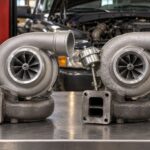
PT Turbo rebuild prices: most turbos cost $450 to $975 to rebuild at our shop. See the turbo rebuild price list for yours.
Should you rebuild or replace your turbocharger? That is the question that stops most owner-operators and fleet managers cold the moment a turbo starts smoking, whining, or leaking oil. Get the answer wrong and you either pay to rebuild a core that was past saving, or you throw away a perfectly good unit that needed nothing more than an actuator. After 45+ years rebuilding turbochargers, PT Turbo has seen both mistakes cost real money. This breakdown gives you the numbers, the decision points, and the part-level detail to make the right call.
The Real Cost Difference: Rebuild vs Replace
Before you decide anything, understand what each path actually costs. A “rebuild” restores your existing core. A “replacement” means a new OEM unit or a remanufactured turbo built on a factory core. The gap between them is bigger than most people think.
| Option | Typical Cost Range | Turnaround | Best For |
|---|---|---|---|
| DIY rebuild (kit only) | $90 – $350 | 4 – 8 hours labor | Worn seals, minor shaft play, no housing damage |
| Professional rebuild service | $450 to $975 for most turbos at PT Turbo (turbo rebuild price list) | 3 – 5 business days | Balanced CHRA, VGT recalibration needed |
| Remanufactured turbo | $525 to $8,461 (259 listings) | Same day (in stock) | Fast fleet turnaround, warranty coverage |
| New OEM turbocharger | $442 to $13,412 (1904 listings) | Varies by availability | Warranty-critical or emissions-tied applications |
Price ranges in this article are general estimates to help with budgeting, not PT Turbo quotes. Our current prices are on each product listing, and our rebuild prices are on the turbo rebuild price list.
The key insight: a professional rebuild often lands at 40 to 60 percent of a new OEM unit. But a rebuild only makes sense when the core is savable. That is where diagnosis matters.
When a Rebuild Is the Right Call
A turbocharger is a simple machine at its heart: a shaft riding on bearings, spun by exhaust gas. Most failures come from oil, heat, or foreign object damage. If the failure is contained to wear parts, rebuilding is almost always the smarter spend.
Rebuild when you see these conditions:
- Excessive shaft play with no wheel contact. Play beyond the limits (more than about 0.004 in of end play, or side play that brings a wheel close to its housing) but blades still clean means bearings and seals, not a scrapped core.
- Oil seepage at the compressor or turbine seal. Classic seal wear. A rebuild kit restores it.
- Blue smoke under boost but intact wheels. Oil is passing worn seals, not a cracked housing.
- Actuator or wastegate failure with a healthy center section. Often you replace only the actuator, not the whole turbo.
That last point saves fleets thousands every year. A sticking or dead pneumatic actuator throws boost codes and limp mode, but the CHRA is perfectly fine. Swapping the actuator is a fraction of a full replacement.
Replacing only a failed actuator instead of the whole turbo is the definition of a smart repair.
When You Should Replace, Not Rebuild
Some failures kill the core outright. No rebuild kit fixes cracked castings or spun bearings that have gouged the housing. Trying to rebuild these wastes labor and comes back to bite you.
Replace when you find:
- Compressor or turbine wheel contact. Rubbed blade tips mean the housing bore is scored and the wheel is out of balance for good.
- Cracked turbine housing. Thermal cycling cracks cannot be safely welded on most modern castings.
- Shaft scoring or spun bearings from oil starvation. Once the shaft journals are damaged, balance and clearance are unrecoverable.
- Foreign object damage. A broken injector tip or valve fragment that went through the turbine usually destroys both wheels.
- Seized VGT vanes. On variable-geometry units, carbon-locked vanes often mean the whole cartridge is done. Learn how variable-geometry turbochargers work to understand why.
When replacement is the answer, a remanufactured turbocharger is the value sweet spot for most work trucks. A quality reman is disassembled, cleaned, machined to OEM tolerances, fitted with new bearings and seals, and dynamically balanced. It carries a warranty and costs well below new.
Should You Rebuild or Replace Your Turbocharger Based on Your Engine?
The right decision changes with the platform. Emissions-controlled diesels with variable geometry are more complex to rebuild correctly than older wastegated units. Here is how it shakes out on common trucks.
Ford 6.7L Powerstroke
The Garrett GT32 SST on early 6.7L trucks is notorious for bearing and turbine issues. Because it uses a single-sequential variable-geometry design, precise balancing matters. Many shops opt for a reman over a field rebuild. See our full breakdown in the Ford 6.7L Powerstroke Turbocharger Guide.
Ram 6.7L Cummins
The Holset HE351VE and HE300VG are stout units, and the sliding-nozzle VGT actuator is a common failure point that does not require a full turbo. Diagnosis before purchase is critical. Our Ram 6.7L Cummins Turbocharger Guide covers the differences.
Duramax LLY
The Garrett GT3788VA on 2004-2005 LLY trucks suffers from overheating and vane sticking. Many can be rebuilt if caught early. Details are in our Duramax LLY Turbocharger guide.
Caterpillar C15
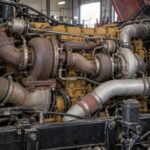
Heavy-duty C15 turbos are prime rebuild candidates thanks to robust castings and available parts. The economics almost always favor a rebuild over new. See the Caterpillar C15 Turbocharger Guide.
Diagnose Before You Buy Anything
The most expensive mistake in this whole decision is skipping diagnosis. Many of the “bad turbos” that come across the bench are victims of an upstream problem: a clogged air filter, a leaking boot, a failing EGR system, or a plugged diesel particulate filter creating backpressure.
Run this checklist before spending a dime on parts:
- Check shaft play by hand. Some radial movement is normal. Blade contact is not.
- Inspect both wheels with a borescope. Look for bent, chipped, or rubbed blades.
- Verify oil supply and drain. Restricted drain lines cause seal blowout and false diagnoses.
- Test the actuator and boost control. Command the actuator and confirm it strokes fully. A dead actuator mimics a dead turbo.
- Rule out intake and exhaust restriction. A plugged DPF or crushed pipe can spike EGTs and starve boost.
If the core checks out and only the actuator or wear parts are bad, you have your answer. When you want a second set of expert eyes, contact PT Turbo with your part number and symptoms.
The PT Turbo Bottom Line
Rebuild when the core is healthy and the failure is limited to seals, bearings, or an actuator. Replace with a reman or new unit when wheels, shafts, or housings are damaged. The math almost always favors rebuilding a savable core, and it almost always favors a remanufactured unit over new when the core is not savable.
PT Turbo has been building and supplying turbochargers since 1978, more than 45 years, and we stock both new and remanufactured parts for Garrett, Holset, BorgWarner, and Mitsubishi applications.
The brands do not change the logic, only the parts availability. A healthy Garrett or Holset core with a dead actuator gets you back on the road for a fraction of a replacement, while a spun BorgWarner or Mitsubishi unit is reman territory every time.
Make the call on evidence, not on the symptom that got your attention. Diagnose the core, confirm what actually failed, and match the fix to the damage. That is how you avoid both the failed rebuild and the wasted replacement.
Frequently Asked Questions
Is it cheaper to rebuild or replace a turbocharger?
Rebuilding is often cheaper upfront: most rebuilds at our shop cost $450 to $975 (see the turbo rebuild price list), while a new replacement usually costs more. The right choice depends on the extent of the damage and the condition of the core.
How long does a rebuilt turbocharger last?
A quality rebuild using proper parts and balancing can last 100,000+ miles, comparable to a new unit. A poorly done rebuild, however, may fail within 30,000 miles.
What are the signs that a turbocharger needs repair?
Common warning signs include excessive smoke, whining noises, oil leaks, and a noticeable loss of power. These symptoms often point to worn seals, bearings, or a failing actuator.
If rebuilding makes sense for your turbo, PT Turbo’s turbo rebuild service can handle it start to finish.
Need a Turbocharger?
PT Turbo has rebuilt and sold turbochargers since 1978. We stock remanufactured units for Cummins, Duramax, Power Stroke, Detroit Diesel, and more — backed by a 12-month unlimited mileage warranty and same-week shipping from San Bernardino, CA.
📞 (909) 824-1020 · 346 S I St. #3, San Bernardino, CA 92410 · [email protected]
More From PT Turbo
- Semi Truck Turbocharger Guide: Maintenance, Replacement Intervals & Cost
 How to Spot a Counterfeit Turbocharger: Fake Holset, Garrett & BorgWarner Identification
- Caterpillar C15 Turbocharger Replacement Cost: New, Reman & Rebuild Compared
- Exhaust Back Pressure and Turbocharger Performance: The Relationship Explained