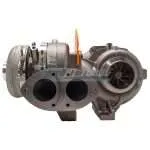
PACCAR MX-11 Turbocharger Guide: Replacement Cost & Kenworth/Peterbilt Fitment
The PACCAR MX-11 turbocharger is the beating heart of the 10.8-liter workhorse found under the hoods of thousands of Kenworth T680s and Peterbilt 579s. When it goes down, you lose boost, you lose fuel economy, and you lose money by the mile. If you run a fleet or wrench on these trucks for a living, knowing how the MX-11 variable geometry turbo behaves, what it costs to replace, and which parts actually fit your chassis will save you a breakdown call and a five-figure repair bill. This guide breaks it all down.
What Turbocharger Does the PACCAR MX-11 Use?
The MX-11 is PACCAR’s mid-displacement engine, rated at 355 to 445 horsepower and 1,250 to 1,700 lb-ft of torque in PACCAR’s current ratings. It shares a lot of DNA with the larger MX-13, including the fundamentals of its air management. The MX-11 runs a variable geometry turbocharger (VGT) with a sliding nozzle in the turbine housing that changes the effective aspect ratio of the exhaust flow. That lets the turbo spool fast at low RPM for torque off the line, then open up at highway speed to keep exhaust backpressure and EGTs under control.
On the exhaust side, the VGT also does double duty as the engine’s exhaust brake. When you’re descending a grade, the ECM closes the nozzle to build backpressure and hold the truck back. That constant actuation is exactly why the actuator and the nozzle mechanism are the two components that wear out first on high-mileage MX-11 units.
The turbo is a Holset HE400VG, a sliding-nozzle variable geometry unit moved by an electronic actuator. A replacement actuator has to match the turbo and be calibrated to it with a diagnostic tool.
Common MX-11 Turbo Failure Symptoms
VGT failures rarely happen all at once. The turbo tells you it’s dying weeks before it strands you, if you know what to listen and watch for. Here is how the symptoms typically progress.
| Severity | Symptoms | Likely Cause |
|---|---|---|
| Early | Sluggish throttle response, slight loss of low-end torque, occasional fault code for turbo actuator position | Sticking nozzle from soot, actuator drifting out of range |
| Moderate | Active regen frequency climbing, low boost codes, weak exhaust brake, derate warnings | Carbon buildup on the nozzle mechanism, failing actuator |
| Severe | Limp mode, no boost, whistling or grinding, oil in the charge pipe, visible shaft play | Seized VGT mechanism, failed thrust bearing, worn journal bearings |
The single most common issue we see on MX-11 turbos is a sticking VGT mechanism caused by soot accumulation, followed closely by actuator failure. When the actuator can no longer move the nozzle through its full range, the ECM logs a position fault and often derates the engine to protect it. That derate is your cue to act before the turbo grenades and sends debris downstream into the aftertreatment.
Don’t Ignore the Exhaust Brake Clue
A weak or dead exhaust brake is one of the earliest and most reliable warning signs of a tired VGT. Because the brake relies on the nozzle closing fully, any loss of braking power usually means the nozzle or actuator is on its way out. Drivers notice this first, so train them to report it.
MX-11 Turbo Actuator: The Repair That Saves You Thousands
Here’s the good news for anyone facing a turbo fault code: many MX-11 “turbo failures” are actually actuator failures. The cartridge and bearings are fine, but the electronic actuator that drives the nozzle has failed or lost its calibration. Replacing the actuator instead of the whole turbo costs far less, provided the nozzle moves freely.
Always match the actuator to your specific turbo part number and plan to calibrate it to the turbo with a diagnostic tool. If you’re not sure which unit is on your truck, the team at PT Turbo can cross-reference it for you. Reach out through the contact page with your turbo casting numbers and we’ll point you to the right part.
Replacement Cost: New vs Remanufactured MX-11 Turbos
When the cartridge itself is toast, whether from bearing failure or a seized VGT that can’t be freed, you’re replacing the turbo. This is where your decision on new versus remanufactured makes a real difference to the bottom line. A genuine PACCAR OEM turbo carries the highest price and the longest wait through a dealer. A quality remanufactured unit built to OEM spec delivers the same performance for a fraction of the cost, usually in stock and ready to ship.
| Option | Typical Price Range | Notes |
|---|---|---|
| Genuine PACCAR OEM turbo | Quoted by part number | Dealer only, longest lead time, full warranty |
| Quality remanufactured turbo | Quoted by part number | OEM-spec internals, balanced, warranty backed, often in stock |
| Actuator-only repair | see actuator prices | Only if cartridge is healthy, huge savings |
| Full rebuild service | From $575 at PT Turbo (price list) | Reuses your core, restores to spec |
Add roughly 4 to 6 hours of labor for the swap depending on how the truck is configured and whether the aftertreatment plumbing needs to come apart. Total installed cost for a reman unit typically lands well under what a dealer OEM job runs, which is why most owner-operators and fleets go the reman route.
PT Turbo has been building and supplying turbochargers since 1978, more than 45 years of getting diesel trucks back on the road. We stock both new and remanufactured turbochargers built to meet or exceed OEM specifications, every one balanced and tested before it ships. If you’d rather keep your original core, our turbocharger rebuild service restores your unit with new bearings, seals, and a fresh VGT mechanism.
Kenworth and Peterbilt Fitment Notes
The MX-11 turbo you need depends on the truck, the model year, and the exact engine rating. The same basic turbo family spans multiple chassis, but part numbers change with emissions configuration and horsepower tune. Here’s what to verify before you order.
- Kenworth T680, T880, and W990: MX-11 equipped units from roughly 2016 forward. Confirm the part number on the turbo’s tag against your engine serial.
- Peterbilt 579, 567, and 520: Same MX-11 turbo family, but match the actuator to the turbo part number.
- DEF and emissions year: Post-2017 GHG17 configurations may use different actuator calibration than earlier units, so match the year.
The most reliable way to nail fitment is the number stamped on the compressor housing or the CHRA, not the truck model alone. Two identical-looking trucks can carry different turbo part numbers based on their power rating. When in doubt, send us the numbers and we’ll confirm before anything ships.
For readers cross-shopping other platforms, our Borg Warner turbocharger fitment guide and our Ram 6.7L Cummins HE351VE vs HE300VG guide cover VGT diagnosis on similar variable geometry systems. If you also service light-duty diesels, the Ford 6.7L Powerstroke GT32 guide and the Duramax LLY Garrett GT3788VA guide are worth bookmarking.
Frequently Asked Questions
How much does it cost to replace a PACCAR MX-11 turbocharger?
Turbocharger replacement cost varies by part quality and labor, typically ranging from a few thousand dollars for the turbo plus installation. Fleet pricing and remanufactured units can lower the total.
Which trucks use the PACCAR MX-11 turbocharger?
The MX-11 turbo is found on the 10.8-liter PACCAR engine used in thousands of Kenworth T680 and Peterbilt 579 trucks.
What type of turbocharger does the PACCAR MX-11 use?
The MX-11 uses a variable geometry turbocharger (VGT) that adjusts boost to optimize performance and fuel economy across the RPM range.
Further reading: Learn more about turbocharger technology.
Need a Turbocharger?
PT Turbo has rebuilt and sold turbochargers since 1978. We stock remanufactured units for Cummins, Duramax, Power Stroke, Detroit Diesel, and more — backed by a 12-month unlimited mileage warranty. Units in stock at our shop in San Bernardino, CA ship the same day when ordered before 2 PM Pacific, Monday through Friday.
📞 (909) 824-1020 · 346 S I St. #3, San Bernardino, CA 92410 · [email protected]
More From PT Turbo
- International MaxxForce 13 Turbocharger: Common Failures & Best Replacements
 Ford 7.3L Powerstroke Turbocharger Guide: TP38, E99 & GTP38 Models Explained
- Detroit Diesel Series 60 Turbocharger Guide: Garrett & BorgWarner S400 Replacement & Cost
- International T444E Turbocharger Guide: Ford 7.3L Powerstroke Connection Explained