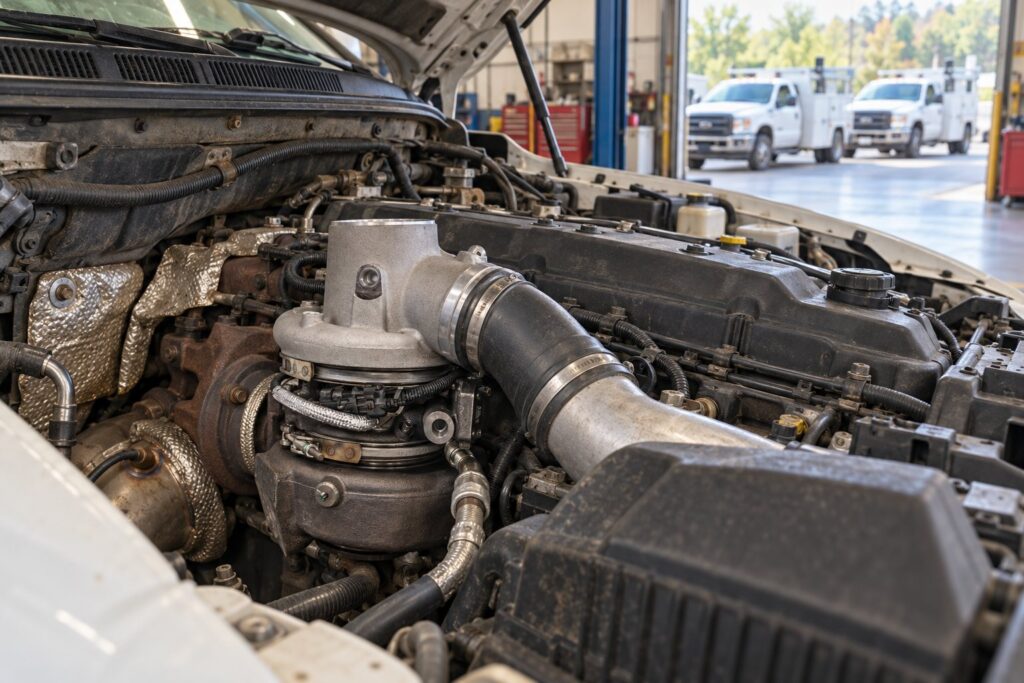
Fleet Turbocharger Pricing is the single line item most commercial operators underestimate, yet across a mixed fleet of trucks, buses, and heavy equipment it can quietly become one of your largest maintenance expenses. When a turbo fails on a Class 8 tractor or a loader on a job site, the cost is never just the part. It is downtime, towing, a sidelined driver, and a missed delivery window. Managing per-unit turbo cost across dozens or hundreds of assets takes a different strategy than replacing a single unit on a personal truck.
PT Turbo has been doing exactly this since 1978. Over 45 years we have supplied new and remanufactured turbochargers to owner-operators, municipal fleets, and heavy equipment outfits, and the operators who control their costs best all follow a handful of the same practices. Here is how to bring your per-unit turbo spend down without gambling on reliability.
Why Fleet Turbo Costs Spiral
The biggest driver of fleet turbo cost is not the price tag on any single turbocharger. It is unplanned failure. A turbo that lets go on the road forces a reactive purchase at whatever price is available locally, often a dealer OEM unit at full retail.
Reactive buying also means you pay for expedited shipping, pay a tech premium for emergency labor, and lose revenue while the asset sits. Multiply that across a fleet running high-mileage engines and the numbers add up fast.
The second driver is buying the wrong part. A variable geometry turbo installed without addressing the root cause, like soot loading from a clogged diesel particulate filter or a failing EGR system, will fail again. You end up paying twice.
New vs Remanufactured: Where the Real Savings Live
For most fleet applications, remanufactured turbochargers are where per-unit cost drops the most. A properly remanufactured turbo is not a used part. The core is fully disassembled, cleaned, inspected, fitted with new bearings, seals, and thrust components, and balanced to OEM tolerance.
The savings come from reusing the housings and the CHRA core, which are the expensive cast components that do not wear out under normal service. You pay for the wear parts and the labor, not the raw castings again.
| Factor | New OEM | Remanufactured |
|---|---|---|
| Per-unit cost | Highest | Significantly lower |
| Wear components | All new | All new |
| Housings / core | New casting | Inspected, reused if in spec |
| Balancing | Factory VSR balanced | VSR balanced to OEM spec |
| Core deposit | None | Refundable on return |
| Lead time | Varies by model | Often in stock |
For a fleet, the core exchange program is a hidden lever. Your failed units have value. Returning cores offsets the cost of replacements and keeps a steady supply of rebuildable stock in the pipeline. Pricing on individual reman units is listed on each product page, or call us at (909) 824-1020 for fleet quantities.
Fleet Turbocharger Pricing by Platform
What you run determines what you pay. Light and medium commercial platforms built around the Cummins ISB and B-series engines use HE351VE and HE300VG variable geometry units, which carry a higher price than the older wastegated designs because of the VGT actuator and vane assembly. Our Ram 6.7L Cummins turbocharger guide breaks down the difference in detail.
Older and fixed-geometry Holset units like the HX35, HX40, and HX55 are simpler, more durable, and generally cheaper to replace or rebuild. These are workhorses across agricultural and vocational fleets and remain some of the most cost-effective turbos to maintain.
Heavy on-highway and off-road equipment running Caterpillar C15 power uses larger, more specialized turbos, and pricing reflects that. Our Caterpillar C15 turbocharger guide covers the common failure modes that drive those replacement decisions.
Match the Turbo to the Duty Cycle
Spec’ing by duty cycle protects per-unit cost over the asset’s life. A regional hauler that idles heavily and runs short routes punishes VGT vanes with soot. A long-haul truck at steady cruise is far gentler on the same hardware.
- High idle / stop-start: Expect more carbon loading on variable geometry units. Budget for more frequent service intervals.
- Steady highway cruise: Longer service life, lower replacement frequency.
- Severe off-road / high EGT: Prioritize proven durable models and verify oil supply health before every install.
Rebuild vs Replace Across a Fleet
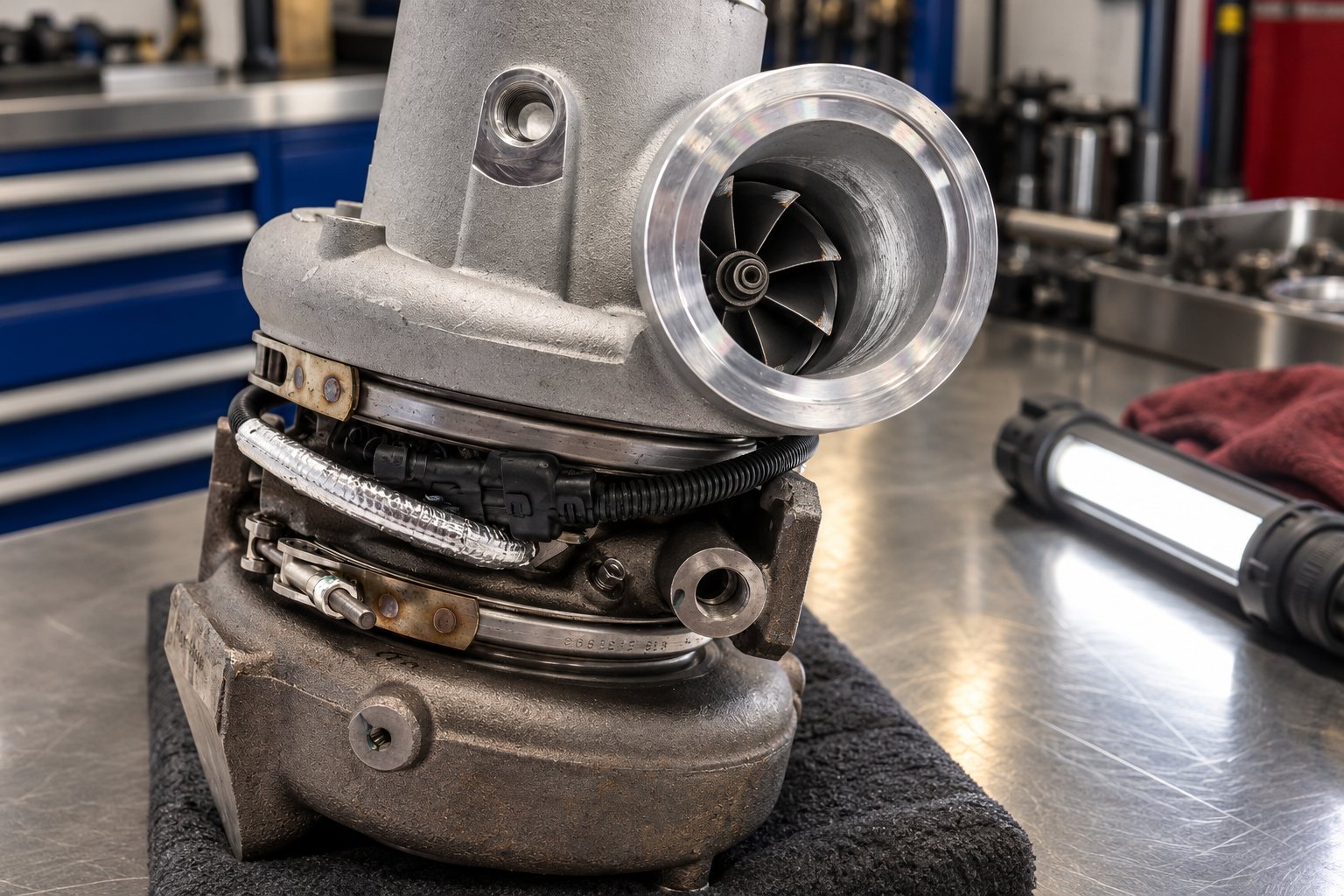
When you run many identical units, in-house or outsourced rebuilding becomes a serious cost tool. A turbocharger rebuild service restores your existing core to spec, which can cost less than a reman exchange when the housings and shaft are in good condition.
Rebuilding makes the most sense when the failure is bearing or seal related and the core is clean. It makes less sense when there is wheel contact damage, shaft scoring, or a cracked turbine housing, where a reman unit is the better value.
| Scenario | Best Option | Why |
|---|---|---|
| Bearing/seal wear, clean core | Rebuild | Reuses your good housings, lowest cost |
| Compressor wheel contact damage | Reman exchange | Faster turnaround, warrantied core |
| Cracked turbine housing | Reman or new | Housing is not salvageable |
| Need truck back today | In-stock reman | Minimizes downtime cost |
| VGT actuator failure only | Depends on model | Some actuators serviceable, many are not |
A balanced fleet strategy keeps a small buffer of in-stock reman units for emergency swaps while cycling failed cores through rebuild. That combination minimizes both downtime and per-unit cost. For current rebuild pricing and turnaround on your specific models, contact PT Turbo directly.
Buying Smart: Volume, Timing, and Diagnosis
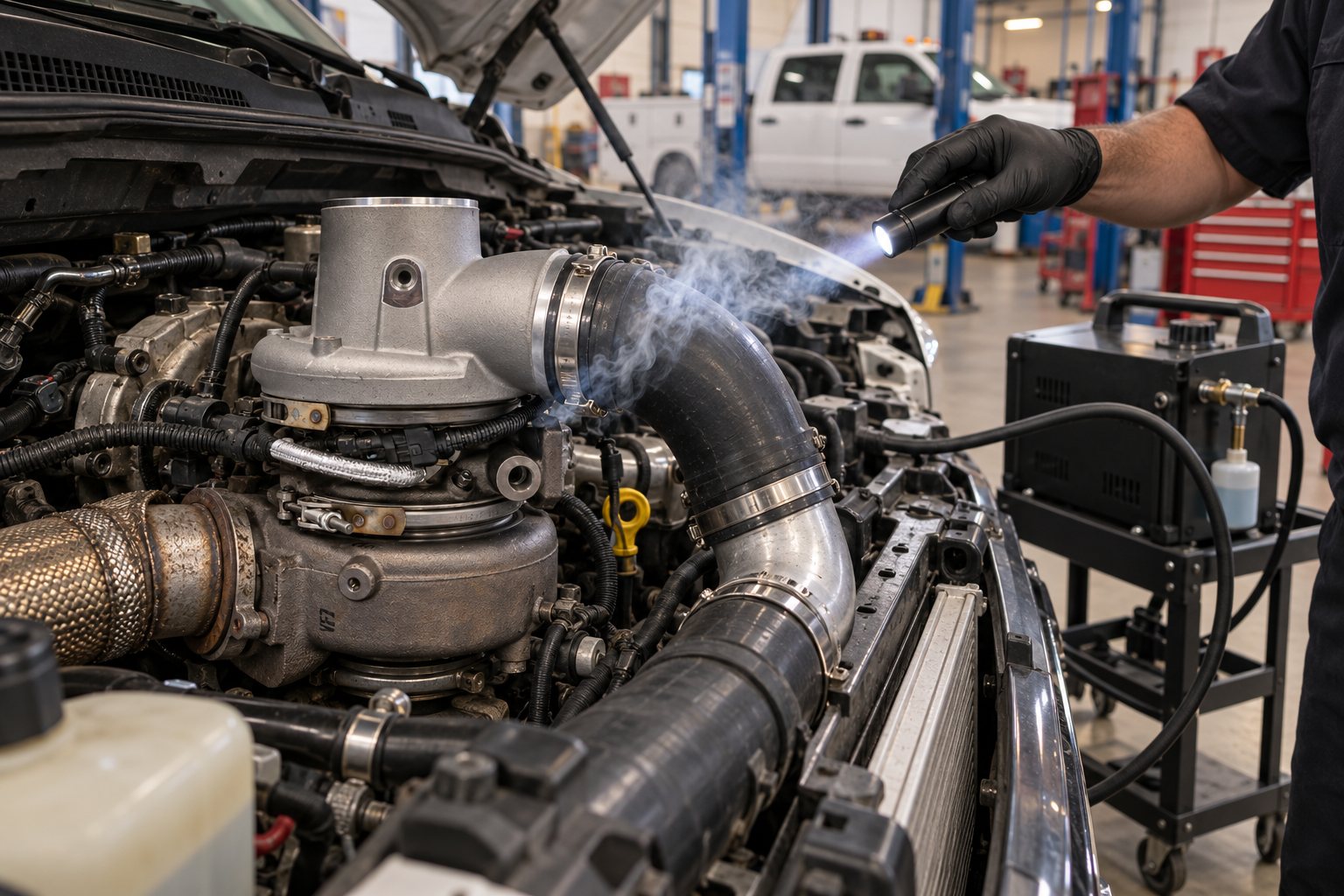
The operators who get the best Fleet Turbocharger Pricing plan their purchases instead of reacting to breakdowns. Three practices consistently lower cost per unit.
1. Diagnose before you order
A whistling or smoking turbo is not always a dead turbo. Oil leaks are often a failed seal downstream of a restricted drain or a plugged crankcase vent, not the turbo itself. Confirm shaft play, check boost pressure, and inspect the charge air plumbing before condemning the unit.
On light-duty platforms this matters just as much. The GT32-series units on the Ford 6.7L Powerstroke have well-documented failure patterns worth reviewing before you buy, laid out in our Ford 6.7L Powerstroke turbocharger guide.
2. Standardize where you can
Fleets that consolidate around fewer engine platforms carry less inventory and negotiate better on volume. If half your trucks share a HX40W or an S400, you can stock one or two spares that cover many assets.
3. Address the root cause
Most repeat turbo failures trace to oil supply, soot loading, or overspeed from a boost leak. The turbocharger is frequently the victim, not the cause. Fixing the underlying problem is the single biggest factor in avoiding a second purchase. The basics of how these units work are covered well in this overview of the turbocharger and the specifics of variable-geometry turbochargers.
Building a Fleet Turbo Cost Strategy
Treat turbochargers as a managed category, not a surprise expense. Track failures by model, mileage, and duty cycle so you can predict which assets are approaching replacement and buy ahead of the failure.
Keep a core return discipline. Every failed unit that comes off a truck has exchange value, and losing cores to the scrap bin is throwing away part of your next purchase. Partner with a supplier who stocks both new and remanufactured parts across your platforms so you are never forced into a single expensive option.
That is the advantage of working with a shop that has been rebuilding and supplying turbos since 1978. We can quote a whole-platform package, manage your core exchanges, and keep spares on the shelf for the models you run hardest. Browse everything we stock in the turbo store or reach out for a fleet quote.
Frequently Asked Questions
Are remanufactured turbos reliable enough for commercial fleet use?
Yes. A properly remanufactured turbo uses all-new wear components, is balanced to OEM specification, and is backed by warranty. For the vast majority of fleet applications it delivers OEM-equivalent service life at a lower per-unit cost than a new unit. The key is sourcing from a shop that balances every core and inspects housings to spec.
How do I get fleet pricing on turbochargers?
Call PT Turbo at (909) 824-1020 or use the contact page with your list of engine platforms and quantities. Volume, core exchange, and standardizing on common models all factor into the quote. Pricing on individual units is listed on each product page, and fleet packages are quoted directly based on your mix.
Should I rebuild my existing cores or buy reman exchange units?
Rebuild when the core is clean and the failure is limited to bearings or seals, since reusing your good housings is the lowest-cost route. Choose a reman exchange when you need the truck back immediately or when the core has wheel contact damage, shaft scoring, or a cracked housing. Many fleets run both, keeping reman spares for emergencies while cycling cores through rebuild.
Cross-Reference & Superseded Part Numbers
The turbochargers covered in this article match or supersede the following OEM and manufacturer part numbers. If you are searching by part number, these are the units stocked by PT Turbo for this application:
53047109901-BILLET • 5327347-RMN • H30-RBL-KIT-UP • H43-RBL-KIT-FLL • H45-RBL-KIT-FLL • NEW-FTR-TWN-TRB • PTT-TBO-386 • PTT-TBO-430 • PTT-TBO-455 • PTT-TBO-480 • PTT-TBO-495 • PTT-TBO-602 • PTT-TBO-612 • PTT-TBO-901 • PTT-TBO-902 • PTT-TBO-911 • PTT-TBO-913 • PTT-TBO-B84 • PTT-TBO-H35 • PTT-TBO-H36 • PTT-TBO-H62 • PTT-TBO-H63 • PTT-TBO-H64 • PTT-TBO-H75 • PTT-TBO-H76 • PTT-TBO-Q11 • PTT-TBO-Q12 • PTT-TBO-Q13 • PTT-TBO-Q14 • PTT-TBO-R97 • PTT-TBO-R99 • RMN-5326058 • RMN-5358484HX • RMN-BRG-V2S-TWN • RMN-GRR-GT3-TRB1 • RMN-HLS-H40-TRB • RMN-HLS-H45-TRB • RMN-HLS-H53-TRB
Can’t find your number above? Contact PT Turbo — our team has been matching part numbers since 1978.
Need a Turbocharger?
PT Turbo has rebuilt and sold turbochargers since 1978. We stock remanufactured units for Cummins, Duramax, Power Stroke, Detroit Diesel, and more — backed by a 12-month unlimited mileage warranty and same-week shipping from San Bernardino, CA.
📞 (909) 824-1020 · 346 S I St. #3, San Bernardino, CA 92410 · [email protected]