This Semi Truck Turbocharger Guide is built for the people who actually keep freight moving: owner-operators, fleet managers, and diesel techs who need straight answers on maintenance, replacement timing, and real-world cost. A turbocharger on a Class 8 truck spins up to 130,000 RPM under boost pressures north of 30 PSI, so when it fails, downtime is measured in thousands of dollars, not just parts. Getting the maintenance right is the difference between 500,000 trouble-free miles and a roadside tow.
PT Turbo has been in the turbocharger business since 1978, more than 45 years of building, rebuilding, and diagnosing forced-induction systems. We stock both new and remanufactured units for nearly every heavy-duty diesel platform on the road. Here is what you need to know.
How a Semi Truck Turbocharger Works (and Why It Fails)
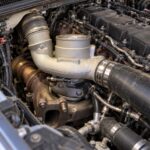
A turbocharger uses exhaust energy to spin a turbine wheel, which drives a compressor wheel on a shared shaft. That compressor forces more air into the cylinders, letting the engine burn more fuel and make more power. On modern heavy-duty diesels, that assembly floats on a film of pressurized oil measured in microns.
Most turbo failures come down to four root causes, and none of them are the turbo’s fault by design:
- Oil starvation: delayed oil supply, clogged feed lines, or extended drain intervals wipe out the bearings.
- Oil contamination: carbon, coolant, or metal in the oil scores the journal bearings and thrust surfaces.
- Foreign object damage: a broken valve, gasket debris, or a failed air filter lets debris hit the wheels.
- Actuator and control failure: on variable-geometry units, a stuck vane mechanism or dead actuator kills boost control.
Many current on-highway diesels run a variable-geometry turbocharger (VGT), which uses moving vanes to change exhaust flow across the RPM range. These deliver better throttle response and support emissions systems like EGR and the diesel particulate filter, but they add a control actuator that becomes its own wear point.
Turbocharger Replacement Intervals for Heavy-Duty Trucks
There is no single mileage number, because duty cycle drives turbo life more than odometer readings. A long-haul truck cruising at steady load treats its turbo far better than a vocational dump truck doing constant stop-and-go under heavy grade.
Here are general service-life expectations; real life depends on oil care, duty cycle and tuning:
| Application | Typical Turbo Life | Primary Wear Driver |
|---|---|---|
| Long-haul on-highway (steady load) | 400,000 to 600,000 miles | Bearing wear, actuator fatigue |
| Regional / mixed duty | 300,000 to 450,000 miles | Thermal cycling, VGT vane carbon |
| Vocational / heavy load (dump, mixer) | 150,000 to 300,000 miles | Heat, soot, oil contamination |
| VGT actuator (electronic or pneumatic) | 200,000 to 400,000 miles | Carbon buildup, diaphragm wear |
The takeaway: on a VGT engine, the actuator often fails before the turbo cartridge does. Replacing a bad actuator is a fraction of the cost of a full turbo, so diagnosing correctly saves real money.
Semi Truck Turbocharger Guide to Warning Signs and Symptoms
Catching a failing turbo early prevents collateral engine damage. Watch for these symptoms, grouped by how urgent they are.
| Severity | Symptoms | Action |
|---|---|---|
| Early warning | Slow throttle response, minor power loss, higher fuel burn | Inspect actuator and boost control |
| Moderate | Blue/gray exhaust smoke, whining or whistling noise, boost codes | Check for shaft play and oil in ductwork |
| Severe | Excessive oil consumption, grinding, no boost, derate/limp mode | Stop driving, remove and inspect turbo |
A whistle that changes pitch usually points to a boost leak or worn seal. A grinding or metal-on-metal sound means the wheels are contacting the housing, which is bearing failure in progress. Do not keep driving a truck that is dumping oil into the intake, because in the worst case the engine runs away on its own oil.
Quick Field Checks Before You Condemn the Turbo
- Check shaft play by hand: axial and radial movement should be minimal, with no wheel contact.
- Inspect the compressor wheel for chips, bent blades, or oil film.
- Verify the oil feed and drain lines are clear and not coked.
- Test the actuator movement and confirm it strokes fully and holds position.
Actuators: The Most Common Repairable Failure
On pneumatic VGT and wastegate turbos, the actuator controls vane position or wastegate opening using boost or a control solenoid. When the diaphragm cracks, the rod seizes, or carbon binds the linkage, you lose boost control and often trigger a derate. The good news is the actuator is serviceable without replacing the entire turbo on many platforms.
Always confirm the part number stamped on your existing actuator before ordering, and note that many VGT actuators require calibration after installation. If you are not sure whether your turbo needs an actuator or a full replacement, contact PT Turbo and our techs can walk you through the diagnosis.
New vs Remanufactured: Cost Breakdown
When the cartridge is done, you have three real options: a new OEM turbo, a quality remanufactured unit, or rebuilding your existing core. For most fleets, a remanufactured turbo delivers new-unit performance at a substantial discount.
| Option | Typical Cost (Class 8 VGT) | Best For |
|---|---|---|
| New OEM turbo | $442 to $13,412 (1904 listings) | Warranty-critical, latest revisions |
| Remanufactured turbo | $525 to $8,461 (259 listings) | Best value, proven reliability |
| Rebuild your core | $450 to $975 for most turbos at PT Turbo (price list) | Keeping your OEM housing/casting |
| Actuator only | see actuator prices | Boost control faults, no shaft damage |
Price ranges in this article are general estimates to help with budgeting, not PT Turbo quotes. Our current prices are on each product listing, and our rebuild prices are on the turbo rebuild price list.
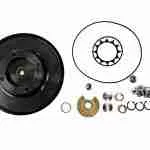
A properly remanufactured turbo is disassembled, cleaned, inspected, and rebuilt with new bearings, seals, and a balanced rotating assembly, then flow-tested. Browse our remanufactured turbochargers or explore our full turbo catalog to match your application.
If you want to keep your original casting, our turbocharger rebuild service restores your unit to spec with balanced components and a full test cycle. Add labor of roughly $400 to $900 for R&R depending on chassis and access.
Maintenance Practices That Double Turbo Life
Turbo longevity comes down to oil and heat management. These habits cost almost nothing and prevent the majority of premature failures.
- Idle down before shutdown: give the turbo two to three minutes at idle after hard pulls so the bearings keep getting oil while the housing sheds heat. Shutting off hot cokes the oil in the center section.
- Stay on top of oil and filter changes: clean oil is the single biggest factor in bearing life. Stretched drain intervals and contaminated oil kill more turbos than mileage ever will.
- Service the air filter on schedule: a restricted or failed filter lets grit reach the compressor wheel, and that damage is not repairable once it starts.
- Prime after service: before firing up a fresh install, pre-oil the center section or crank with fuel off so the bearings are not running dry on startup.
- Keep the actuator linkage clean: on VGT units, soot and carbon bind the vanes and overwork the actuator. Catching a sticky mechanism early saves the whole assembly.
None of this is complicated, but it has to be consistent. The fleets that hit the high end of those service-life numbers are the ones that treat warm-down and clean oil as non-negotiable, not the ones chasing the newest part on the shelf.
Frequently Asked Questions
How often should a semi truck turbocharger be replaced?
Most Class 8 turbochargers last between 300,000 and 600,000 miles with proper maintenance, the top of that range on steady long-haul work. Replacement timing depends on oil quality, driving conditions, and how well the engine is maintained.
What are the signs of a failing semi truck turbocharger?
Common warning signs include loss of power, excessive black or blue exhaust smoke, whining or whistling noises, and increased oil consumption. Catching these early can prevent costly engine damage.
How much does it cost to replace a semi truck turbocharger?
Cost depends on the engine and on whether you choose a new, remanufactured or rebuilt unit; see the cost table above. Costs vary by engine model, turbo type, and whether you use new or remanufactured units.
Need a Turbocharger?
PT Turbo has rebuilt and sold turbochargers since 1978. We stock remanufactured units for Cummins, Duramax, Power Stroke, Detroit Diesel, and more — backed by a 12-month unlimited mileage warranty and same-week shipping from San Bernardino, CA.
📞 (909) 824-1020 · 346 S I St. #3, San Bernardino, CA 92410 · [email protected]