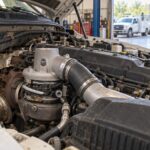
A well-run Fleet Diesel Turbocharger Maintenance Program is the difference between a truck that logs 500,000 miles on its original turbo and one that grenades a compressor wheel at 180,000 and takes the engine with it. For commercial operations running dozens or hundreds of units, the turbocharger is one of the most expensive and most abused components in the powertrain, and it responds directly to how well you manage oil, air, and boost control.
PT Turbo has been rebuilding and supplying turbochargers since 1978, giving us more than 45 years of hands-on experience diagnosing what actually kills these units in the field. This guide lays out the maintenance practices that keep fleet turbos alive, cut unplanned downtime, and control your parts spend.
Why Turbochargers Fail in Commercial Fleets
The vast majority of turbo failures we see on the bench are not manufacturing defects. They are the downstream result of something else going wrong in the engine or a maintenance step that got skipped. Understand the root causes and you eliminate most of your replacements.
Oil is the number one killer. A turbo shaft spins between 80,000 and 200,000 RPM and rides on a thin film of pressurized oil. Contaminated oil, delayed oil changes, coking from hot shutdowns, and restricted feed lines all destroy the bearing system fast.
Air side problems come second. A torn air filter, a collapsed intake boot, or debris ingested through a cracked charge pipe will chip a compressor wheel in seconds. On the exhaust side, a failed EGR system or a clogged diesel particulate filter drives up backpressure and heat, cooking the turbine end.
- Oil starvation and contamination: bearing and shaft failure
- Hot shutdowns: oil coking in the center housing
- Foreign object damage: chipped compressor or turbine blades
- Overspeed from tuning or leaks: shaft failure and wheel burst
- Actuator and VGT faults: boost control loss, poor drivability, derates
Building a Fleet Diesel Turbocharger Maintenance Program That Works
A real maintenance program is scheduled, documented, and tied to your existing PM intervals. It does not rely on drivers reporting problems, because by the time a driver notices a boost problem, the damage is usually done.
Anchor turbo inspections to your A, B, and C service intervals. At every oil change, check the intake tract and boost pressure. At extended intervals, inspect the actuator, wastegate, and VGT mechanism for the units that use one.
Recommended Fleet Inspection Intervals
| Interval | Task | What You Are Looking For |
|---|---|---|
| Every oil change | Inspect air filter, intake boots, oil feed line | Cracks, oil residue, restriction, debris |
| 15,000 to 25,000 mi | Check shaft play, compressor wheel, boost readings | Excessive axial/radial play, blade damage, low boost |
| 50,000 mi | Actuator and wastegate function test | Sticking, slow response, calibration drift |
| 100,000+ mi | Full assessment or planned reman swap | Cumulative wear, oil seal leakage, bearing wear |
Log every inspection against the unit number. Over time this data tells you which chassis, routes, and drivers are hardest on turbos, and it lets you forecast replacements instead of reacting to failures on the roadside.
Oil, Cooling, and Shutdown Discipline
If you fix only one thing in your fleet, make it oil discipline. Use the OEM-specified oil grade and change interval, and do not stretch drains to save money. Extended-drain oil that is out of spec shears down and loses the film strength the turbo bearings depend on.
Train drivers on cool-down. After hard pulling or heavy grades, the turbine housing can glow at over 1,000 degrees. Shutting off immediately stops oil flow and lets the residual oil in the center housing bake into carbon, which then blocks the oil passages and destroys the next set of bearings.
- Idle for 2 to 3 minutes after heavy load before shutdown
- Replace oil feed lines when they show any internal coking
- Keep coolant lines clear on water-cooled center housings
- Prime a new or rebuilt turbo with oil before first start
These habits cost nothing and prevent the exact failures that fill our rebuild bench. A turbocharger is a simple machine at heart, as the basic operating principle shows, but it is unforgiving of dirty or interrupted oil.
Actuators and Boost Control: The Overlooked Wear Items
On modern fleet diesels, the actuator and the variable geometry mechanism fail more often than the rotating assembly itself. A sticking or out-of-calibration actuator causes low boost, black smoke, derates, and fault codes long before the turbo core is worn out.
The good news is that replacing the actuator is far cheaper than replacing the entire turbo. Keeping the right actuators on the shelf keeps trucks moving. PT Turbo stocks both new and remanufactured actuators for the most common commercial applications.
Learn more about Garrett hardware at garrettmotion.com.
If you are running variable geometry turbos, understand how the VGT vane mechanism can gum up with soot, especially on trucks that do a lot of idling and short-run city work. Periodic actuation and, where the OEM allows, a cleaning cycle keeps the vanes moving freely.
New vs Remanufactured: Controlling Fleet Parts Cost
For a single owner-operator, a new turbo may make sense. For a fleet buying in volume, remanufactured turbochargers are usually the smarter play. A quality reman unit is built to the same tolerances as new, tested, and warrantied, at a meaningful discount.
PT Turbo builds remanufactured turbochargers to OEM spec with new bearings, seals, and balanced rotating assemblies. When a core is worth saving, our turbocharger rebuild service restores your existing unit and preserves any application-specific calibration.
| Factor | New OEM | Remanufactured |
|---|---|---|
| Typical cost vs new | 100% | 40% to 70% |
| Tolerances | OEM spec | OEM spec when properly built |
| Lead time (common apps) | Varies, can be long | Often in stock |
| Core credit available | No | Yes |
| Best for | Latest models, warranty units | Fleet volume, cost control |
Standardizing on a preferred reman supplier also simplifies your parts room. You stock fewer part numbers, get consistent quality, and build a relationship that gets you priority when a truck is down.
Application-Specific Guidance for Common Fleet Engines
Different engines fail in different ways, and knowing the pattern for your fleet speeds diagnosis. The same turbo platforms show up across many medium-duty and heavy-duty applications, and we have detailed breakdowns for the most common ones.
- See the Cummins ISB 6.7L Turbocharger Guide for symptoms and replacement parts
- Review the All Turbo Guides for mid-range units
- Check the Cummins ISX Turbocharger Guide for heavy-duty applications
Match the symptom to the platform before you pull a turbo. A low-boost complaint on a unit that idles all day points at a sooted VGT or a lazy actuator, while a sudden noise and oil in the intake on a hard-worked chassis points at the rotating assembly. The patterns in those guides let your techs confirm the failure mode first and order the right part once.
The fleets that run turbos to high mileage are not lucky. They are disciplined about oil, honest about cool-down, and proactive on actuators and inspections. Put those habits on a schedule, log the results against each unit, and the turbocharger stops being a surprise line item and becomes a component you replace on your terms.
Frequently Asked Questions
What causes premature turbocharger failure in fleet diesel engines?
The most common causes are oil contamination, poor lubrication, foreign object damage, and improper shutdown procedures that lead to heat soak. Regular oil changes and driver training on cool-down periods dramatically reduce these failures.
How often should fleet turbochargers be inspected?
Turbochargers should be inspected at every major service interval, typically every 15,000 to 25,000 miles, with attention to shaft play, oil leaks, and boost pressure. High-mileage or severe-duty units may require more frequent checks.
Is it cheaper to rebuild or replace a fleet diesel turbocharger?
For most commercial operations, a quality remanufactured or rebuilt turbocharger costs 40 to 60 percent less than a new OEM unit while offering comparable reliability. Replacement is usually preferred only when the housing or core is damaged beyond repair.
Need a Turbocharger?
PT Turbo has rebuilt and sold turbochargers since 1978. We stock remanufactured units for Cummins, Duramax, Power Stroke, Detroit Diesel, and more — backed by a 12-month unlimited mileage warranty and same-week shipping from San Bernardino, CA.
📞 (909) 824-1020 · 346 S I St. #3, San Bernardino, CA 92410 · [email protected]