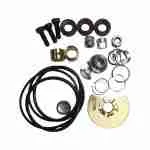
This Remanufactured Turbocharger Buying Guide exists because too many good diesel engines get killed by bad reman turbos, and most of those failures were avoidable at the point of purchase. A properly remanufactured unit can perform identically to new and cost 30 to 50 percent less. A poorly rebuilt one will smoke, surge, and grenade itself inside a few thousand miles. Knowing the difference is the whole game.
PT Turbo has been in the turbocharger business since 1978, more than 45 years, and in that time we have torn down thousands of “remanufactured” units that never should have left the shop they came from. This guide covers exactly what separates a legitimate reman turbo from a repainted core, and what to check before you spend a dime.
Remanufactured vs. Rebuilt vs. New: Know What You Are Actually Buying
These three terms get used interchangeably, and that sloppiness costs people money. They are not the same thing, and the price you pay should reflect the process behind the part.
New means an OEM or aftermarket unit built entirely from new components. Remanufactured means a used core disassembled to the last washer, cleaned, inspected, and rebuilt to factory tolerances with new wear parts and a balanced rotating assembly. Rebuilt is the loosest term of the three and often means someone slapped a cartridge in without balancing or fully inspecting the housings.
| Factor | New OEM | Quality Remanufactured | Cheap “Rebuilt” |
|---|---|---|---|
| Typical cost vs. new | 100% | 50–70% | 25–40% |
| CHRA balanced (VSR) | Yes | Yes | Often no |
| New bearings and seals | Yes | Yes | Sometimes |
| Housings inspected/machined | N/A | Yes | Rarely |
| Warranty | 12–24 months | 12 months typical | 30–90 days or none |
The sweet spot for most fleets and owner-operators is a quality remanufactured turbo. You get factory performance and a real warranty at a meaningful discount. Browse what we keep in stock on our remanufactured turbochargers page.
What a Real Remanufacturing Process Looks Like
If a seller cannot tell you their process step by step, assume there is not one. A legitimate reman follows a repeatable sequence, and every step matters to the unit landing on your bench.
- Complete teardown. The center housing rotating assembly (CHRA) comes fully apart. No shortcuts, no “cartridge swaps” without inspection.
- Cleaning and inspection. Housings get blasted or chemically cleaned, then measured. Cracked turbine housings and worn journal bores get rejected, not reused.
- New wear components. Journal bearings, thrust bearings, piston ring seals, and O-rings are replaced with new parts every time.
- Shaft and wheel inspection. The compressor and turbine wheels are checked for blade damage, and the shaft is checked for runout.
- Balancing. The rotating assembly is spin-balanced, ideally on a VSR (vibration sorting rig) at operating speeds, not just static balanced.
- Actuator and calibration. Wastegate or variable geometry actuators are tested and set to spec.
That last point trips up more buyers than any other. A perfectly rebuilt CHRA with a dead or out-of-calibration actuator will still overboost or underboost. For a deeper walkthrough on verifying a unit yourself, read our companion piece on how to inspect a used or remanufactured turbocharger before installing it.
The Actuator: The Most Overlooked Part of Any Reman Turbo
On modern diesels, the actuator controls boost. On a variable-geometry turbocharger, it moves the vanes that change exhaust flow across the RPM range. On a wastegated unit, it bleeds off excess boost. A tired or mismatched actuator will throw boost codes, cause limp mode, and mask an otherwise healthy turbo.
When you buy a reman turbo, confirm whether the actuator is included, and whether it was tested and calibrated. If you are replacing an actuator on its own, match the part number exactly.
Never assume the old actuator will bolt onto the new turbo and hold calibration. Rod length, spring rate, and preload all have to match the housing. When in doubt, contact PT Turbo with your engine and turbo numbers and we will confirm the right part.
Remanufactured Turbocharger Buying Guide: Red Flags to Avoid
After 45-plus years of teardowns, certain warning signs come up again and again. Any one of these should make you slow down and ask questions before you buy.
- No core charge and no core return. Legitimate remanufacturers want cores back. If nobody cares about your old unit, they may not be building from properly matched cores.
- Vague or missing warranty. A serious reman shop stands behind the work with a written warranty, typically 12 months. Thirty days tells you what they think of their own product.
- Fresh paint over old dirt. A repainted housing with oil-caked internals is a cosmetic job, not a rebuild.
- Excessive shaft play. Some side-to-side play is normal on a journal-bearing turbo, but in-and-out play you can feel, or a wheel that contacts the housing, means the unit needs a rebuild.
- Wheel blade damage. Bent, chipped, or filed compressor blades kill balance and efficiency. Reject the unit.
- No balancing documentation. If they cannot confirm the rotating assembly was balanced, expect vibration and premature bearing failure.
- Wrong part number or “universal” fitment. Turbos are not universal. Compressor and turbine trim, A/R ratio, and actuator calibration must match your engine.
Price that looks too good almost always is. A reman VGT turbo selling for a quarter of new pricing skipped steps somewhere, and those skipped steps land on your invoice later as a comeback.
Matching the Turbo to Your Engine and Emissions System
Fitment goes beyond the flange bolting up. On emissions-equipped diesels, the turbo works as part of a system that includes the EGR circuit and the diesel particulate filter. A turbo that does not deliver correct boost and drive pressure will throw the whole aftertreatment system out of balance and trigger regen and DPF faults.
Confirm these before buying any reman unit:
- OEM part number match to your original turbo, or a documented superseding number.
- Actuator type (pneumatic, electronic, or hydraulic) and its calibration.
- Compressor and turbine housing A/R if you run a modified or non-stock application.
- Oil and coolant fittings, since water-cooled and oil-only center sections are not interchangeable.
Both Garrett and BorgWarner publish application data that helps confirm the right unit for your engine. You can cross-reference through Garrett Motion and BorgWarner. If you want the guesswork removed entirely, we cross-reference numbers every day and stock both new and remanufactured units across the major platforms on our main shop page.
When to Buy Reman vs. When to Rebuild Your Own Core
Sometimes the smartest move is not buying a reman turbo off the shelf at all. If your original core is in good shape and it is an uncommon or high-value unit, rebuilding your existing turbo often gives you the best result and keeps your matched core in the truck.
Rebuilding your own core makes sense when the housings are crack-free, the part is expensive or hard to source, or you need it turned around fast on a specific unit.
Buying a reman off the shelf wins when your core is cracked or heat-damaged, when downtime matters more than keeping the original unit, or when the application is common enough that a properly built exchange turbo is sitting ready to ship. A fleet that cannot afford a truck down for a rebuild turnaround is almost always better served by a quality reman and a core return.
The deciding factors come down to the condition of your core, how fast you need the truck back, and how hard the part is to find. Weigh those three honestly and the right path is usually obvious. When the call is close, send us your numbers and we will tell you straight whether your core is worth rebuilding or whether an exchange unit gets you back on the road for less.
Frequently Asked Questions
How much can a remanufactured turbocharger save me?
A properly remanufactured turbocharger typically costs 30 to 50 percent less than a new unit while performing identically when done right.
What are signs of a poorly rebuilt turbocharger?
Watch for excessive smoke, surging, and rapid failure within a few thousand miles, which usually point to cut corners during the rebuild process.
What should I look for when buying a reman turbo?
Check for balanced CHRA cores, new bearings and seals, proper testing documentation, and a solid warranty to ensure quality and reliability.
Prefer to keep your original unit? PT Turbo’s turbo rebuild service remanufactures your own turbo to spec.
Need a Turbocharger?
PT Turbo has rebuilt and sold turbochargers since 1978. We stock remanufactured units for Cummins, Duramax, Power Stroke, Detroit Diesel, and more — backed by a 12-month unlimited mileage warranty and same-week shipping from San Bernardino, CA.
📞 (909) 824-1020 · 346 S I St. #3, San Bernardino, CA 92410 · [email protected]