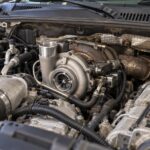
Cummins Turbo Technologies is the engineering division behind the Holset name, and it quietly grew into one of the largest medium and heavy-duty turbocharger manufacturers on the planet. If you’ve ever worked on a Dodge or Ram Cummins, an ISX over-the-road engine, or a piece of heavy equipment running a B or C series block, chances are you’ve had a Holset unit in your hands. Here at PT Turbo, we’ve been rebuilding these turbos since 1978, so we know exactly why they earned that reputation.
This is the story of how a small British company became a global powerhouse, plus the practical technical knowledge you actually need when servicing one of these units in the field.
From Holset Engineering to a Global Turbo Giant
Holset Engineering Company was founded in 1952 in Yorkshire, England. The name combines the surnames of its founders, Holmes and Croset. Early on, the company made torsional dampers and couplings, not turbochargers.
Holset took up turbocharging in the 1950s, at first under license, and the timing was perfect. Diesel truck manufacturers were beginning to demand forced induction to meet power and emissions targets. Holset’s reputation for rugged, no-nonsense engineering made it a natural fit for the commercial truck market.
Cummins bought Holset in 1973. That relationship gave Holset a captive customer for millions of engines and gave Cummins vertical control over a critical component. In 2006, the Holset operation was rebranded as Cummins Turbo Technologies, though the industry still calls the turbos “Holsets” out of habit and respect.
Today the division produces turbochargers at plants across the UK, India, China, Brazil, and the United States, supplying not just Cummins but numerous other OEMs. If you want a broad primer on how these devices work, the turbocharger overview on Wikipedia is a solid starting point.
Why Cummins Turbo Technologies Dominates Heavy-Duty Applications
Plenty of companies build turbochargers. Garrett and BorgWarner are formidable competitors in both passenger and commercial segments. So what made Holset one of the leaders of the medium and heavy-duty world?
The answer comes down to three things: durability, integration, and innovation. Holset units are built to survive the brutal duty cycles of Class 8 trucks that run a million miles. The bearing systems, wheel materials, and housing castings are engineered for heat and sustained boost that would cook a lesser turbo.
Integration matters too. Because Cummins owns the turbo division, the turbo and engine are developed together. That tight matching of the compressor and turbine to a specific engine’s airflow curve produces better transient response and fuel economy than a bolt-on part ever could.
Then there’s the VGT breakthrough. Holset commercialized a rugged sliding-nozzle variable geometry turbocharger that could handle the soot and heat of diesel exhaust reliably. If you want the engineering background, the variable-geometry turbocharger article explains the core concept well.
The Holset Model Lineup You’ll Actually See
Over the decades Holset built a huge catalog, but a handful of families cover the vast majority of what rolls into a shop. Knowing the naming logic saves you time when sourcing parts.
- HX series (HX35, HX40, HX50, HX55): fixed-geometry wastegated or non-wastegated units found on 5.9L 12-valve and early 24-valve engines, plus many industrial applications.
- HY series (HY35): a wastegated variant used on automatic-transmission 5.9L trucks for improved low-end response.
- HE series (HE341VE, HE351VE, HE300VG, HE400VG, HE500VG): variable geometry turbos covering everything from the medium-duty ISB up through the biggest ISX engines.
The transition from fixed to variable geometry is the single most important shift in Cummins turbocharging. For a deep dive on the older fixed-geometry units, read our 5.9L Cummins turbocharger guide covering the HX35, HY35, and HE351CW.
For the modern 6.7L trucks, the choice between two VGT units comes up constantly. Our HE351VE vs HE300VG comparison and the broader 6.7L Cummins turbocharger guide with replacement costs break down exactly which unit fits your model year.
Variable Geometry: The Technology That Sealed Their Lead
The Holset VGT uses a sliding nozzle ring that moves along the turbine housing to change the effective exhaust flow area. At low RPM the nozzle closes down, accelerating exhaust gas across the turbine wheel for fast spool and strong low-end torque. At high RPM it opens up to relieve backpressure and prevent overspeed.
This design also enables integrated exhaust braking, a huge advantage for heavy trucks descending grades. By closing the vanes, the turbo creates backpressure that helps slow the vehicle without wearing the service brakes.
VGT operation is tightly linked to emissions systems. The turbo works alongside exhaust gas recirculation and the diesel particulate filter to manage exhaust temperatures for regeneration cycles. When the VGT actuator or vanes fail, you’ll often see regen problems and derate codes before you see obvious power loss.
The tradeoff is complexity. Soot buildup can seize the sliding mechanism, and the electronic actuator is a known wear point. Our Cummins ISB 6.7L turbocharger guide covers the VGT failure modes in detail.
Common Failure Points and How to Diagnose Them
No turbo lasts forever, and even bulletproof Holsets have predictable failure patterns. Catching them early prevents a spun bearing from destroying the engine downstream.
| Symptom | Likely Cause | Severity |
|---|---|---|
| Sluggish spool, poor low-end torque | Stuck VGT vanes from soot, failing actuator | Moderate |
| Regen failures, active regen codes | VGT position error, actuator calibration fault | Moderate |
| Blue or gray exhaust smoke | Failed seals, oil in the charge air | High |
| Whining or grinding noise | Worn or spun bearings, shaft play | High |
| Boost leak, whistle under load | Cracked housing, loose clamps, bad gasket | Low to Moderate |
On older wastegated HX and HY units, the pneumatic actuator is the most common wear item. These diaphragm-style actuators use manifold pressure to open the wastegate, and over years of heat cycling the diaphragm cracks or the spring fatigues, causing overboost or underboost.
Replacing a tired actuator is far cheaper than replacing the whole turbo.
Matching the correct actuator to your boost target is critical, so call us if you’re unsure which spring rate you need.
New, Remanufactured, or Rebuild: Choosing the Right Fix
When a Holset unit fails, you have three realistic paths. The best choice depends on your budget, downtime tolerance, and whether the core is salvageable.
| Option | Typical Cost Range | Best For |
|---|---|---|
| New OEM Holset | $1,200 to $2,800+ | Warranty-sensitive fleets, latest revision parts |
| Remanufactured unit | $700 to $1,600 | Best value, OEM performance at lower cost |
| Rebuild your existing core | $450 to $975 for most turbos at PT Turbo (price list) | Salvageable housings, keeping your original casting |
Price ranges in this article are general estimates to help with budgeting, not PT Turbo quotes. Our current prices are on each product listing, and our rebuild prices are on the turbo rebuild price list.
A quality reman is where most owner-operators land.
You get a unit that’s been disassembled to the last bearing, inspected, fitted with new wheels and seals where needed, and balanced back to spec. The compressor and turbine housings get reused if they’re sound, which keeps the cost down without giving up OEM-level performance. For most trucks still earning their keep, that’s the sweet spot between a full new unit and gambling on a tired core.
Rebuilding your own core makes sense when the housings are clean and uncracked and you want to keep your original casting on the engine. The limiting factor is always core condition. Heat damage, shaft scoring, or a cracked turbine housing can push a rebuild past the point where a reman is the smarter spend.
Whichever route you take, fix the root cause before you bolt on the replacement. A failed turbo is often a symptom of oil supply problems, a clogged air filter, or soot-laden exhaust, and none of that goes away with a fresh unit. Flush the oil feed line, confirm clean supply pressure, and sort out any restriction so the new turbo lives as long as the one it replaced.
Frequently Asked Questions
What is the relationship between Holset and Cummins Turbo Technologies?
Cummins Turbo Technologies is the engineering division that produces turbochargers under the Holset name. Holset was acquired by Cummins and rebranded, but the Holset name still identifies the turbo units.
Which engines commonly use Holset turbochargers?
Holset turbos are found on Dodge and Ram Cummins engines, ISX over-the-road engines, and heavy equipment running Cummins B or C series blocks. They’re widely used in medium and heavy-duty applications.
Why is Cummins Turbo Technologies one of the largest turbo manufacturers?
Cummins Turbo Technologies is one of the world’s largest manufacturers of medium and heavy-duty turbochargers, thanks to its widespread use across commercial trucks, industrial engines, and heavy equipment worldwide.
PT Turbo rebuilds the full range of Holset turbochargers. See our turbo rebuild service.
Need a Turbocharger?
PT Turbo has rebuilt and sold turbochargers since 1978. We stock remanufactured units for Cummins, Duramax, Power Stroke, Detroit Diesel, and more — backed by a 12-month unlimited mileage warranty and same-week shipping from San Bernardino, CA.
📞 (909) 824-1020 · 346 S I St. #3, San Bernardino, CA 92410 · [email protected]