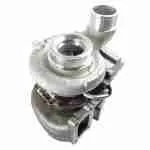
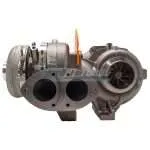
The Kenworth T680 turbocharger is one of the hardest-working components on the highway, and when it starts to fail, your PACCAR MX-13 loses power, throws codes, and burns fuel like a diesel space heater. Whether you’re running a single truck or managing a fleet, understanding how the MX-13 turbo system works, how to diagnose it, and what a replacement actually costs will save you downtime and money. PT Turbo has been rebuilding and supplying turbochargers since 1978, and we’ve seen every failure mode this engine can throw. Here’s the practical guide.
The PACCAR MX-13 Turbocharger System Explained
The 12.9L PACCAR MX-13 powers the majority of Kenworth T680 tractors on the road today, producing anywhere from 405 to 510 horsepower and up to 1,850 lb-ft of torque depending on the rating. To move that kind of air, the MX-13 relies on a variable geometry turbocharger (VGT) that adjusts exhaust flow across the RPM range for better throttle response, lower emissions, and improved fuel economy.
The VGT uses a moving nozzle inside the turbine housing controlled by an actuator. On the MX-13 it is an electronic actuator on a Holset sliding-nozzle turbo (the HE531VE on EPA10 engines, the HE500VG on later ones), commanded by the engine computer as part of its EGR and aftertreatment strategy. When that actuator sticks, drifts, or fails, the whole system suffers. You’ll see loss of boost, excessive regens, and derate conditions long before the turbo itself is mechanically worn out.
Because the actuator is such a common failure point, it’s worth knowing that many “bad turbo” complaints are actually actuator problems that can be corrected far more cheaply than a full turbo replacement. For a deeper dive into fitment across platforms, see our companion PACCAR MX-13 Turbocharger Guide for the Kenworth T680 and Peterbilt 579.
Symptoms of a Failing T680 Turbocharger
The MX-13 gives you plenty of warning before a catastrophic failure, if you know what to watch for. Catching these early is the difference between an actuator repair and a new turbo plus a scored engine.
| Symptom | Likely Cause | Severity |
|---|---|---|
| Sluggish acceleration, low boost | Sticking VGT nozzle or failing actuator | Moderate |
| Frequent or incomplete DPF regens | Poor exhaust flow control from VGT | Moderate |
| Whining or grinding noise | Worn shaft bearings or wheel contact | High |
| Blue or black smoke | Oil seal failure or overfueling from low boost | High |
| Engine derate / limp mode | VGT position fault codes (SPN 641) | Critical |
| Oil in charge pipes / boots | Failed center housing seals | Critical |
The single most common code we hear about is SPN 641 (VGT actuator or position fault). Before condemning the turbo, verify the actuator calibration, check the linkage for carbon buildup, and confirm boost line integrity. A sticky VGT mechanism can often be cleaned and recalibrated, but a failed actuator needs replacement.
Actuator Replacement: The Smart First Move
When the turbo hardware is sound but the actuator has failed, replacing just the actuator restores full function at a fraction of the cost of a complete turbo. This is where a lot of shops overspend, swapping a whole assembly when a bolt-on actuator would have solved it.
PT Turbo lists electronic actuators for Holset variable geometry turbos. Matching the correct part number to your specific turbo build is critical, and a new actuator has to be calibrated to the turbo, so verify the numbers on your unit before ordering.
If you’re not sure which actuator matches your turbo, send us your turbo part number and casting details through our contact page and we’ll confirm the correct fit before you buy.
New vs Remanufactured Turbocharger: What Makes Sense
When the turbo itself is done, whether from bearing failure, wheel damage, or a seized VGT mechanism, you have three real options: a new OEM unit, a quality remanufactured turbo, or rebuilding your existing core. Here’s how they stack up for a typical MX-13 application.
| Option | Typical Cost | Lead Time | Best For |
|---|---|---|---|
| New OEM turbocharger | Quoted by part number | In stock to several days | Warranty-sensitive fleets, brand-new failures |
| Remanufactured turbocharger | Quoted by part number | In stock, fast turnaround | Best value for most owner-operators |
| Rebuild your core | From $575 at PT Turbo (price list) | 3 to 5 business days after inspection | Keeping your matched unit, minimizing cost |
A properly remanufactured turbo is not a used part. Every component is disassembled, cleaned, inspected, and rebuilt to OEM tolerances with new bearings, seals, and balanced rotating assemblies. For the vast majority of T680 owners, a remanufactured turbocharger delivers OEM performance at a substantially lower price. PT Turbo stocks both new and remanufactured units, so you can choose based on your budget and downtime tolerance.
If your turbo is a hard-to-source unit or you want to retain your exact factory-matched hardware, our turbocharger rebuild service restores your core to spec with a full balance and inspection. Running a different PACCAR platform? Our PACCAR MX-11 Turbocharger Guide covers replacement cost and fitment for that engine family.
Installation and Break-In Best Practices
A turbo replacement is only as good as the installation. We’ve seen brand-new units fail within hours because of a skipped step. Follow these to protect your investment.
- Prime the oil supply. Before startup, pre-oil the center housing by cranking with the fuel shut off, or pour clean oil into the oil feed port. Dry starts kill bearings.
- Replace the oil feed and drain lines. Restricted or coked oil lines are a leading cause of repeat failure. Do not reuse questionable lines on a new turbo.
- Clean the charge air system. Inspect the CAC, intercooler, and boots for debris from the old failure. Metal fragments will destroy a new compressor wheel instantly.
- Change the oil and filter. Start the new turbo with fresh oil to remove any contamination left from the previous unit.
- Calibrate the VGT actuator. After installing, run the actuator calibration through your diagnostic tool so the ECM learns the correct nozzle positions.
- Idle before load. Let the engine idle 3 to 5 minutes after startup and again before shutdown after hard runs. This protects the bearings and prevents oil coking.
Skipping the CAC cleanout after a compressor wheel failure is the most expensive mistake we see. If the old wheel came apart, assume debris is somewhere in the intake tract and flush it thoroughly.
Preventive Maintenance That Extends Turbo Life
The MX-13 turbo can easily clear 500,000 miles when the supporting systems are maintained. Neglect them and you’ll be buying turbos on a schedule.
- Stick to oil intervals. The turbo bearings live on clean oil at pressure. Extended drains and cheap filters are the fastest path to bearing failure.
- Keep the air filter fresh. Restricted intake pulls the compressor into surge and lets fine grit past worn seals.
- Watch the EGR and DPF health. Excessive soot loading forces the VGT to work harder and accelerates nozzle fouling. Address regen problems promptly.
- Inspect boost lines and clamps. A small charge air leak makes the turbo overspeed trying to hit target boost, shortening its life.
Clean the actuator linkage. Carbon buildup on the VGT mechanism is what turns a healthy turbo into an SPN 641 derate. Exercising and cleaning the nozzle mechanism during routine service keeps the actuator moving freely and catches a sticking mechanism before it strands you.
None of this is complicated, but it has to be consistent. The owners who get half a million miles out of an MX-13 turbo are the ones who treat oil quality, air filtration, and aftertreatment health as one connected system. Let any one of them slide and the turbo is usually the part that pays for it.
Running Peterbilts as well? See our Peterbilt 389 turbocharger guide.
Frequently Asked Questions
What are the signs of a failing Kenworth T680 turbocharger?
Common symptoms include power loss, fault codes, excessive fuel consumption, and unusual whining or whistling noises. Blue or black exhaust smoke can also indicate turbo failure.
How much does a PACCAR MX-13 turbocharger replacement cost?
Replacement costs vary based on parts and labor, but expect a significant investment when factoring in the turbo unit, gaskets, and shop time. Getting a proper diagnosis first can help avoid unnecessary replacement.
How can I extend the life of my MX-13 turbocharger?
Regular oil changes with the correct grade, allowing proper warm-up and cool-down cycles, and keeping the air filtration system clean all help maximize turbo lifespan. Addressing codes early also prevents costly damage.
Further reading: Learn more about turbocharger technology.
Need a Turbocharger?
PT Turbo has rebuilt and sold turbochargers since 1978. We stock remanufactured units for Cummins, Duramax, Power Stroke, Detroit Diesel, and more — backed by a 12-month unlimited mileage warranty and same-week shipping from San Bernardino, CA.
📞 (909) 824-1020 · 346 S I St. #3, San Bernardino, CA 92410 · [email protected]
More From PT Turbo
 Cummins ISB 5.9L Turbocharger Guide: HX35 vs HE351CW for Dodge Ram Applications
- Mack MP8 Turbocharger Replacement Guide: Symptoms, Parts & Cost
- Chevy Silverado HD & GMC Sierra HD Duramax Turbocharger Guide: All Generations
- International T444E Turbocharger Guide: Ford 7.3L Powerstroke Connection Explained