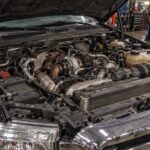
Freightliner Cascadia Turbocharger Guide: DD13, DD15 & DD16 Applications by Year
A Freightliner Cascadia turbocharger is a Detroit turbocharger in most trucks: the DD13, DD15 or DD16. The three engines share one design choice that sets them apart from the Cummins and PACCAR engines in other trucks. None of them uses a variable geometry turbo. There are no vanes to carbon up and no VGT actuator to replace, so the diagnosis runs differently, and a lot of general advice about heavy-truck turbos does not apply.
This guide lists the turbo each Detroit engine uses by emissions generation, the faults that are usually behind a boost complaint, and the new, remanufactured and rebuild options at PT Turbo.
Detroit Engines in the Cascadia
| Engine | Size and power | Turbo system |
|---|---|---|
| DD13 | 12.8L, 350 to 525 hp | One fixed geometry turbocharger. No turbo-compound. |
| DD15 | 14.8L, 400 to 560 hp (up to 505 hp on later engines) | One fixed geometry turbocharger; early engines and the DD15 TC add a turbo-compound power turbine behind it. |
| DD16 | 15.6L, 500 to 600 hp | One fixed geometry turbocharger with a turbo-compound power turbine. |
A turbo-compound engine has a second turbine in the exhaust after the turbocharger. It does not compress air. It is geared to the crankshaft and returns exhaust energy to the engine as power, and it holds the exhaust pressure the EGR system needs.
Turbocharger by Emissions Generation
| Generation | DD13 | DD15 |
|---|---|---|
| EPA07 and EPA10 | Fixed geometry turbo | Fixed geometry Holset HX55 (no wastegate) with turbo-compound |
| GHG14 (from 2013) | Detroit asymmetric turbo with an air-operated wastegate | DD15 AT: asymmetric turbo with an air-operated wastegate, no turbo-compound. DD15 TC: turbo-compound kept. |
| GHG17 (from 2016) | Asymmetric turbo, no wastegate | Asymmetric turbo, no wastegate |
| Gen 5 | Asymmetric fixed geometry turbo; ball bearing version on highway ratings | Asymmetric turbo with a ball bearing cartridge |
The asymmetric turbo has a turbine housing with two passages of different size. Half of the cylinders feed the smaller one, which backs up enough exhaust pressure to drive EGR flow; the rest feed the larger one. Detroit uses it in place of a variable geometry turbo.
Order by the part number on the turbo tag and the engine serial number, not by model year. Detroit made running changes, and trucks built in the same year can carry different turbos.
What Is Usually Behind a Boost Complaint
- Charge air leaks. A split boot, a loose clamp or a leaking charge air cooler lowers boost and makes the turbo overspeed to make up for it. Pressure test the intake side first; our boost leak test guide shows how.
- Wastegate air supply on GHG14 engines. The gate is moved by an air actuator through a control solenoid. A leaking air line or a failed solenoid holds boost down and sets a low boost or low air flow code (SPN 102 or SPN 2631) with nothing wrong inside the turbo.
- EGR faults. An EGR valve stuck open takes exhaust energy away from the turbine, and a plugged cooler cuts EGR flow and sets flow faults and derates. See how a failed EGR system damages a turbocharger.
- Oil supply. Overdue oil, a restricted feed line or hot shutdowns wear the bearings. Shaft play, oil in the charge pipes and blue smoke follow.
- Exhaust restriction. A loaded DPF raises turbine temperature and pressure and shortens bearing and seal life.
- Turbo-compound power turbine. On engines that have it, the power turbine has its own bearings, seals and gear drive, and fails separately from the turbocharger.
Failure Symptoms and Urgency
| Symptom | Likely cause | Urgency |
|---|---|---|
| Slow response, minor power loss | Boost leak, wastegate air leak (GHG14), EGR fault | Low: diagnose soon |
| Low boost code, intermittent derate | Boost leak, wastegate solenoid or line, worn turbo | Medium |
| Blue smoke, oil in the charge pipe | Worn bearings and seals, restricted oil drain | High: rebuild or replace |
| Whine, grinding, metallic noise | Bearing failure, shaft play | Critical: stop driving |
| Sudden loss of all boost | Compressor wheel damage, blown charge pipe | Critical: full inspection |
A grinding turbo is close to failing. If a wheel breaks up, the pieces go into the charge air cooler and the engine, so the truck should be towed, not driven in.
New, Remanufactured or Rebuilt
| Engine | New at PT Turbo | Remanufactured at PT Turbo |
|---|---|---|
| DD13 | $1,249 to $3,814 (2 listings) | $3,283 to $3,284 (2 listings) |
| DD15 | $1,249 to $1,736 (3 listings) | None listed today |
Prices are read from the live catalog; remanufactured prices include a refundable core deposit. Listings for these engines include the Holset HX55 4034194H and the Garrett GT4594S 887393-5005S for the early DD15, the BorgWarner 57909882500 for the later DD15, and the Detroit Diesel remanufactured RA4710907280 for the DD13. All Detroit listings are in the Detroit Diesel turbochargers category.
If the housings and wheels of your own turbo are sound, a rebuild costs less than either. Our turbo rebuild service inspects the core and confirms the price before any work starts: $650 for the DD15 Holset HX55 and $850 for the DD15 BorgWarner version (price list). Every rebuild is VSR balanced and carries a 12-month unlimited-mileage warranty, and most rebuilds ship in 3 days or less.
Notes for Mixed Fleets
The checks that apply to every turbo apply here: shaft play, wheel condition, oil in the charge piping, oil supply and drain. What does not carry over from a Cummins or PACCAR engine is the variable geometry diagnosis. Those engines use a Holset VGT with a sliding nozzle and an electronic actuator, and actuator and nozzle faults are common on them. A Detroit DD-series engine has neither part, so a boost code on a Cascadia sends you to the charge air system, the wastegate plumbing where there is one, and the EGR system before the turbo.
Price ranges in this article are general estimates to help with budgeting, not PT Turbo quotes. Our current prices are on each product listing, and our rebuild prices are on the turbo rebuild price list.
Turbos we list for the HX55
Listings for the turbo models named in this guide that can be ordered online today. Several part numbers can fit one engine by year and rating, so match the number on your turbo’s tag, or call (909) 824-1020 and we will match it for you.
Frequently Asked Questions
Do the Detroit engines in a Freightliner Cascadia use a variable geometry turbo?
No. The DD13, DD15 and DD16 all use fixed geometry turbochargers. From GHG14 on the DD13 and DD15 use Detroit’s asymmetric turbo, with a wastegate on GHG14 engines and none on GHG17 engines. Some DD15 versions and the DD16 add a turbo-compound power turbine.
Which turbocharger fits my Detroit DD15 engine?
It depends on the emissions generation. Early DD15 engines use a Holset HX55 (the Garrett GT4594S replaces the same numbers); GHG14 and later engines use the asymmetric turbo. Confirm by the part number on the turbo tag and the engine serial number.
What is the difference between DD13, DD15 and DD16 turbochargers?
Each is sized for its engine, and the parts do not interchange. The DD13 has a single turbo and no turbo-compound. The DD15 has a single turbo, with a turbo-compound power turbine on early engines and the DD15 TC. The DD16 has a single turbo with turbo-compound.
How do I know if my Cascadia turbocharger is failing?
Loss of power, black or blue smoke, a whine or grinding noise, oil in the charge pipes and low boost codes are the common signs. A charge air pressure test and a check of shaft play and wheel condition separate a failing turbo from a boost leak or an EGR fault.
Further reading: Learn more about turbo-compound engines.
Need a Turbocharger?
PT Turbo has rebuilt and sold turbochargers since 1978. We stock remanufactured units for Cummins, Duramax, Power Stroke, Detroit Diesel, and more — backed by a 12-month unlimited mileage warranty. Units in stock at our shop in San Bernardino, CA ship the same day when ordered before 2 PM Pacific, Monday through Friday.
📞 (909) 824-1020 · 346 S I St. #3, San Bernardino, CA 92410 · [email protected]
More From PT Turbo
- International DT466 Turbocharger Guide: School Bus & Medium Duty Applications
- Cummins ISC Turbocharger Guide: HX40 & Replacement Options for Medium Duty Trucks
- Detroit Diesel Series 60 Turbocharger Guide: Garrett & BorgWarner S400 Replacement & Cost
 Ford 6.7L Powerstroke Turbocharger: Problems, Symptoms and Replacement Guide